

If Israel builds it, will they come? 8 things to know for December 12
A minister is planning a diplomatic quarter in Jerusalem, but it’s not clear who will populate it; and a poll and maps raise worries about peace prospects and Iran
 Add ToI as a Preferred Source on Google
Joshua Davidovich is The Times of Israel's Deputy Editor
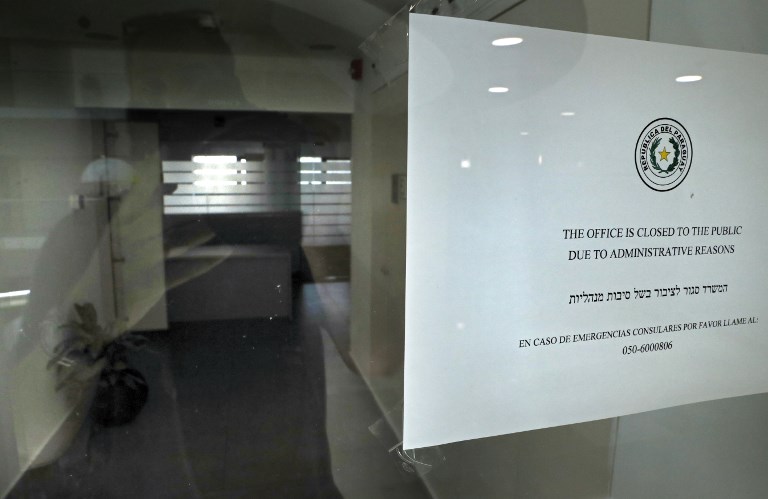
1. Plot of dreams: Housing minister Ray Kinsella Yoav Gallant is pushing a plan to construct a diplomatic quarter in Jerusalem, underlining Israeli hopes of an influx of embassies in the capital.
- The plan is still somewhat modest, comprising some 25 acres set aside to house nine separate compounds for diplomatic missions, or some 60,000 square meters (650,000 square feet) of space for offices, housing and other services.
- According to Yedioth Ahronoth, the compound is planned for an area in East Talpiot (known to locals as Armon Hanatziv) across the street from the UN headquarters in an area of no man’s land between East and West Jerusalem that currently sits empty. Another spot known as Reches Lavan, in southwest Jerusalem, would also be set aside if even more countries clamor to be let in.
- “I’m sure many countries will be moving their embassies to Jerusalem,” Gallant tells the paper.
2. Not so fast: So far, only Guatemala has followed the US in moving its embassy to Jerusalem and stuck with it and there are questions about others who have pledged to do so.
- On Tuesday, Italian Interior Minister Matteo Salvini, who has made many comments in support of moving the embassy, told reporters in Jerusalem that moving the embassy was not on the table from Rome as he is not in charge of that portfolio.
- Later, when visiting the Western Wall, he deflected when asked if he considered the site to be Israeli.
- Australian officials also huddled Tuesday to discuss Jerusalem, but according to The Australian, while they may recognize Jerusalem, moving the embassy is being pushed off because of cost concerns.
- Brazil has also promised to move the embassy, but has come under pressure from the Arab League. On Tuesday, Arab ministers in Cairo passed a resolution calling for “doing something” to stop Brazil and the Czech Republic (which is not moving its embassy, but opened a cultural mission in Jerusalem), Turkey’s Anadolu news agency reports.
- According to Reuters, meat importers in Brazil, who are among the largest suppliers of halal meat to the Muslim world, are leaning on President-elect Jair Bolsonaro to reconsider the move, fearing they will lose that market.
3. Abbas in the crosshairs: Palestinian are fuming after a far-right Israeli organization plastered the West Bank with posters showing PA leader Mahmoud Abbas in rifle crosshairs, and calling for those who fund terror (as the PLO does) to be assassinated.
- The Palestinian foreign ministry urged international condemnation, and several Palestinian officials said they hold Israel responsible if any harm comes to Abbas.
- According to Palestinian news outlet Ma’an, the Palestinian cabinet strongly condemned “the public Israeli settlers’ calls to attack President Mahmoud Abbas, holding the Israeli occupation government fully responsible for the consequences of such flagrant incitement to assassinate President Abbas.”
- Asked by ToI whether the posters would be taken down or the far-right group who put them up prosecuted, Israeli police say only that they are aware of the campaign and are looking into it.
- The story gets little to no attention in the Hebrew press.
4. One-state support growing in US: A new poll out of the University of Maryland (go Terps) shows Americans are increasingly downbeat about the prospects for a two-state solution and Israel’s survival as a Jewish state.
- According to the poll, an almost equal number of Americans support a one-state solution with equal rights for all (35%) as support a two-state solution (36%), and most two-state solution backers would switch to one-state. Furthermore, a large majority (64%) prefer that Israel stay democratic and lose its Jewish character, over 26% who say the opposite.
- In 2017, the same survey found that 41% of Americans backed the two-state solution and only 29% backed one state. And while the question was asked differently last year — in the case where no two-state solution is possible — 55 percent said they supported a one-state solution with democracy for all, 34 percent preferred maintaining the status quo in the Palestinian territories, and only 10 percent backed annexation.
- However, the poll also shows shrinking support for sanctions or other measures against Israel. While in 2017, 32% of Americans said the US should back economic sanctions against the settlements, in 2018 that number is down to 28%. The number of those calling for more serious action is steady at 12%, while those saying the US should do nothing is up from 25% to 28%.
- Even among Democrats, the number who approve of economic sanctions shrinks from 43% to 41%.
- Nonetheless (and without mentioning the shrinking support), in Foreign Policy, UMD Prof. Shibley Telhami writes that his “poll shows that a large number of Americans support imposing sanctions or more serious measures if Israeli settlements in the West Bank continue to expand.”
5. Losing hope for the ultimate deal: White House adviser Jared Kushner’s appearance on Fox News’s “Hannity,” in which he was asked about justice for Jamal Khashoggi but answered about Israeli-Palestinian peace instead, managed to generate a few headlines.
- While some Israeli news sites picked up on his claim that the peace plan would be released in the next couple months as news, JTA’s Ron Kampeas finds little in what he said to indicate that is actually the case.
- “There’s a chance we may never see the peace deal,” Kampeas writes, noting that Kushner’s repetition of the word “hopeful” sounded anything but, with the administration finding little support for the plan.
- “A dead-on-arrival peace process may be the last thing Trump needs as he heads into a Congress in which the Democrats control the US House of Representatives and are pledging many investigations, including into Trump’s alleged Russian ties,” he writes.
- In Yedioth, columnist Smadar Peri writes that the strange public pronouncements on the Khashoggi killing seem to indicate that Kushner and President Donald Trump are directing Saudi Prince Mohammed bin Salman “on how to get out of the affair with his hands clean, how to gain public support and how to deal with his many enemies at home.”
6. Blasting away: Prime Minister Benjamin Netanyahu paid another visit to the northern border Tuesday, this time threatening Hezbollah with “unimaginable blows” if it tries to disrupt the tunnel-digging operation in any way.
- Several Israeli analysts have noted that tensions are especially high given the fact that troops are now operating north of the border wall, albeit south of the border, putting them face to face with Lebanese troops and maybe Hezbollah fighters as well.
- Meanwhile, the army said it uncovered a third tunnel. The Israel Hayom tabloid reports that assessments (presumably from Israel) say that there just a few more tunnels snaking into Israel.
- After announcing the tunnel’s discovery, the army said it filled it with explosives to make sure it’s unusable. My question: Is the army/government bringing foreign dignitaries (like Salvini) on tours of tunnels that are filled with explosives, potentially risking their lives? Forget a tunnel, would anyone go on a tour of an above-ground building if they knew it was filled with explosive charges?
7. No sanctions for Lebanon: Despite Israel’s intense PR drive on the backs of the tunnels, Haaretz reports that the US has rejected an Israeli request to impose sanctions on Lebanon over the tunnels.
- “Since the operation began, Israeli political and military leaders have been trying to make it look as if Lebanon and Hezbollah were one and the same,” the paper reports. “But the Americans reject Israel’s formula, saying that despite Israel’s right to defend itself, the problem is Hezbollah – therefore the agreement for sanctions against the organization directly. Washington made clear that the United States and Lebanon have close military ties and there is no interest in undermining them.”
- According to the report, the US agreed to up financial pressure on Hezbollah instead.
8. Iran in Golan shrinking or spreading? Israel Hayom reports that Military Intelligence head Tamir Heyman told a Knesset committee that Iran’s presence in southern Syria near the Golan border has shrunk, with Tehran split on whether to invest in trying to maintain bases of operations there.
- However, a map put out by the Etana Syria research group claims that Iran’s presence in the region has actually metastasized considerably since the Syrian regime recaptured the area in June.
-
In 6 months #Iran’s area influence in south #Syria has increased 74% since regime’s takeover of the south#Daraa #Suwayda #Quneitra pic.twitter.com/sSKPggK03q
— ETANA Syria (@ETANA_Syria) December 12, 2018
- While the maps show a considerable spread of Iranian influence throughout southern Syria, especially around Suweida, it shows little change in the area immediately bordering Israel, with even a slight decrease of Iranians north of Quneitra, where it previously had the heaviest presence along the border.





The Times of Israel Community.