

‘Fake info’: Iran protests Austrian intel report that says its nuke program is ‘well-advanced’
In annual report, Austria’s domestic intelligence service warns that ‘all efforts’ to stop Iran’s march to the bomb ‘through sanctions and agreements have proved ineffective’
 Add ToI as a Preferred Source on Google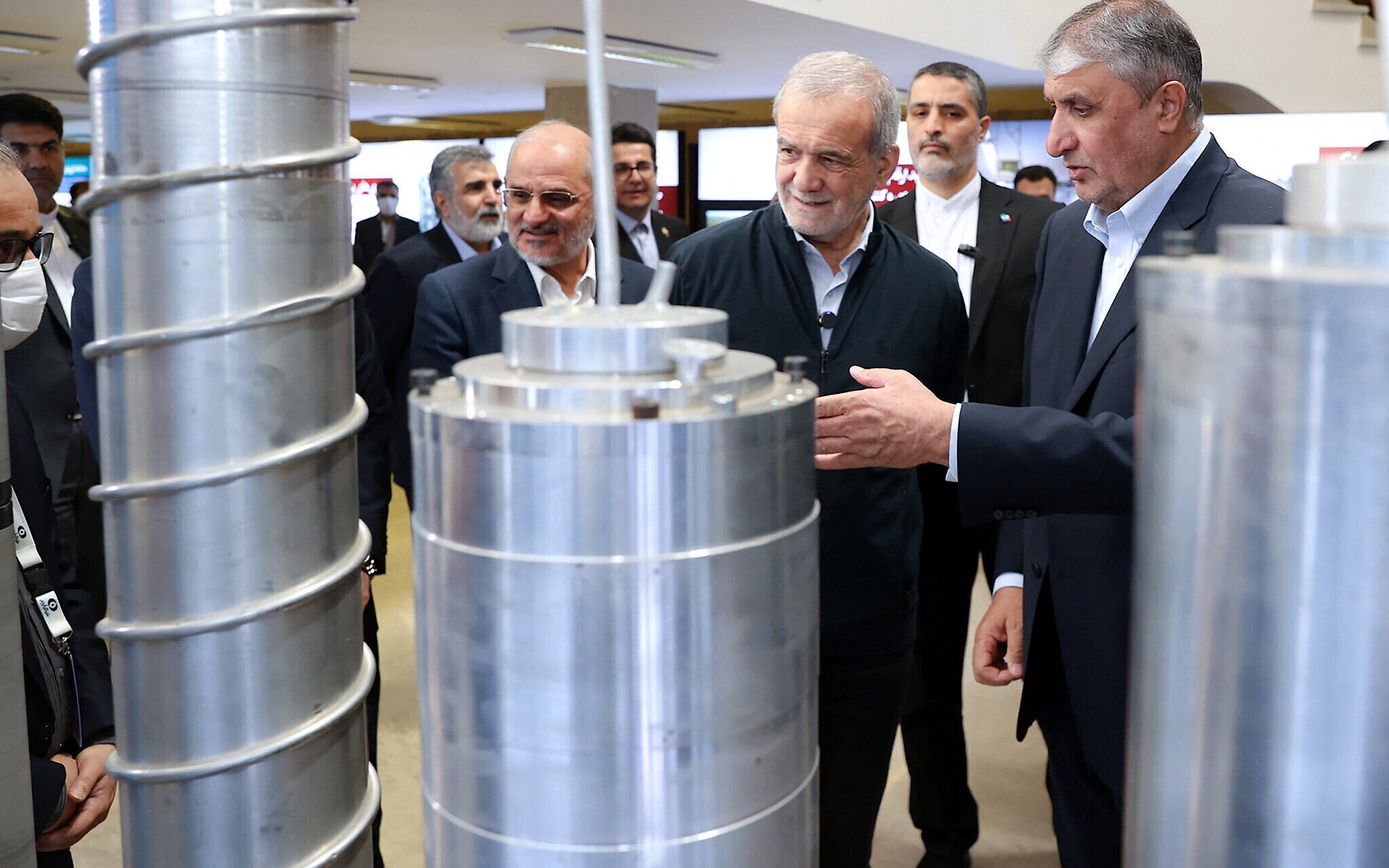
Iran on Friday summoned Austria’s charge d’affaires after it branded as “fake” an Austrian intelligence report that said Tehran is seeking to acquire atomic weapons.
The spat comes even as Tehran pursues delicate negotiations with the United States on its nuclear program.
In its annual report on global threats, Austria’s domestic intelligence service (DSN) said Monday that Iran’s “nuclear weapons development program is well advanced.”
Iran, which avowedly seeks Israel’s destruction, has consistently denied seeking to acquire nuclear weapons. However, it has been enriching uranium to levels that have no peaceful application, has obstructed international inspectors from checking its nuclear facilities and expanded its ballistic missile capabilities, and its officials have increasingly warned that they could pursue the bomb.
According to the International Atomic Energy Agency (IAEA), Iran is the only country in the world that enriches uranium up to 60 percent, a number that has no civilian use. That rate is still just below the 90% threshold required for a nuclear weapon, but far above the 3.67% limit set under a 2015 agreement with world powers.
“All efforts to prevent Iran’s armament through sanctions and agreements have so far proved ineffective,” the Austrian report said.
On Friday, Iran’s foreign ministry condemned “the fake information” disseminated in the report and demanded an explanation from Austria’s government.
It later summoned Austria’s charge d’affaires in Tehran Michaela Pacher to “convey Iran’s strong protest,” the official IRNA news agency reported.
It said that during the meeting, the ministry “emphasized the complete contradiction of the Austrian report with numerous IAEA reports.”
The IAEA, whose headquarters are in the Austrian capital, will in the coming days publish its own review of Iran’s nuclear activities.
Iran and the United States are engaged in an Omani-mediated effort to reach a deal on Tehran’s nuclear program, after Donald Trump during his first presidency pulled out of the 2015 agreement.
No date has yet been set for the next Iran-US meeting since last week’s discussions in Rome.
On Thursday, Iranian Foreign Minister Abbas Araghchi said he was “not sure” that a deal with the United States was imminent.
His statement came after Trump said on Wednesday that the two sides were “very close to a solution.”
Times of Israel Staff contributed to this report







The Times of Israel Community.