

Iraq forces eye Mosul after Fallujah breakthrough
City is last major urban center in country that is still under islamic State control
 Add ToI as a Preferred Source on Google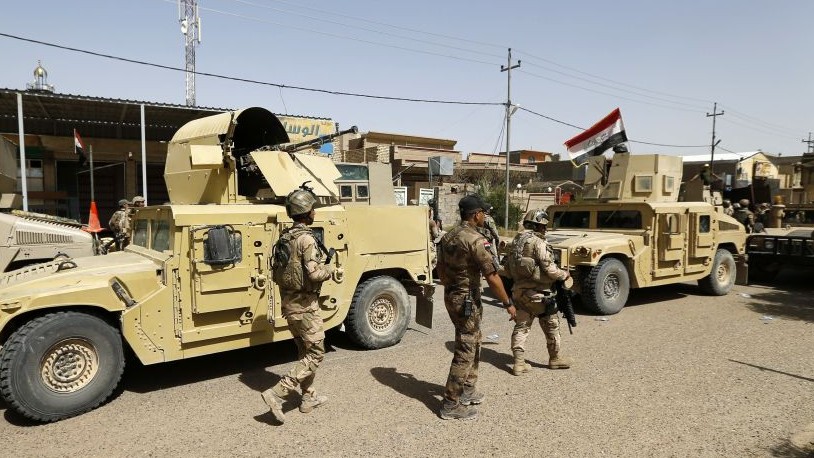
Iraqi forces renewed their offensive against the Islamic State group around second city Mosul on Saturday after driving the jihadists out of most of Fallujah, the defence minister said.
Mosul is the last major urban center in Iraq still under IS control after Iraqi forces raised the national flag over government headquarters in the heart of Fallujah on Friday.
Iraqi commanders announced the launch of an offensive to retake Mosul and surrounding Nineveh province in March but under domestic political pressure the government diverted its forces to Fallujah, just west of Baghdad, last month.
“We started at 5:00 am (0200 GMT) the second phase of the liberation of Nineveh,” Defence Minister Khaled al-Obeidi told AFP.
“The target of the operation is to take Qayyarah and make it a launchpad for Mosul,” Obeidi said.
Qayyarah, which has an airfield, lies across the River Tigris from the main base for pro-government forces in the Kurdish-controlled area of Makhmur.
It is some 60 kilometres (35 miles) south of Mosul.
The offensive, which has been repeatedly pushed by Washington, has support from US-led forces, notably in the shape of a US Marine artillery post outside Makhmur.
On Friday, Prime Minister Haider al-Abadi promised that the liberation of Mosul was “very near” as he declared victory in the four-week offensive to retake Fallujah.
Abadi said that only small pockets of IS resistance remained to be cleared from the jihadists’ emblematic bastion.
But IS still firmly controls northern neighbourhoods of Fallujah where it is believed to be holding thousands of civilians as human shields.





The Times of Israel Community.