

‘It’s late. Sign this or be locked up’: Woman says Cyprus forced rape retraction
After conviction for false rape claim, UK tourist insists Israelis assaulted her; says she believes attack was premeditated, details events she says began with ‘holiday fling’
 Add ToI as a Preferred Source on Google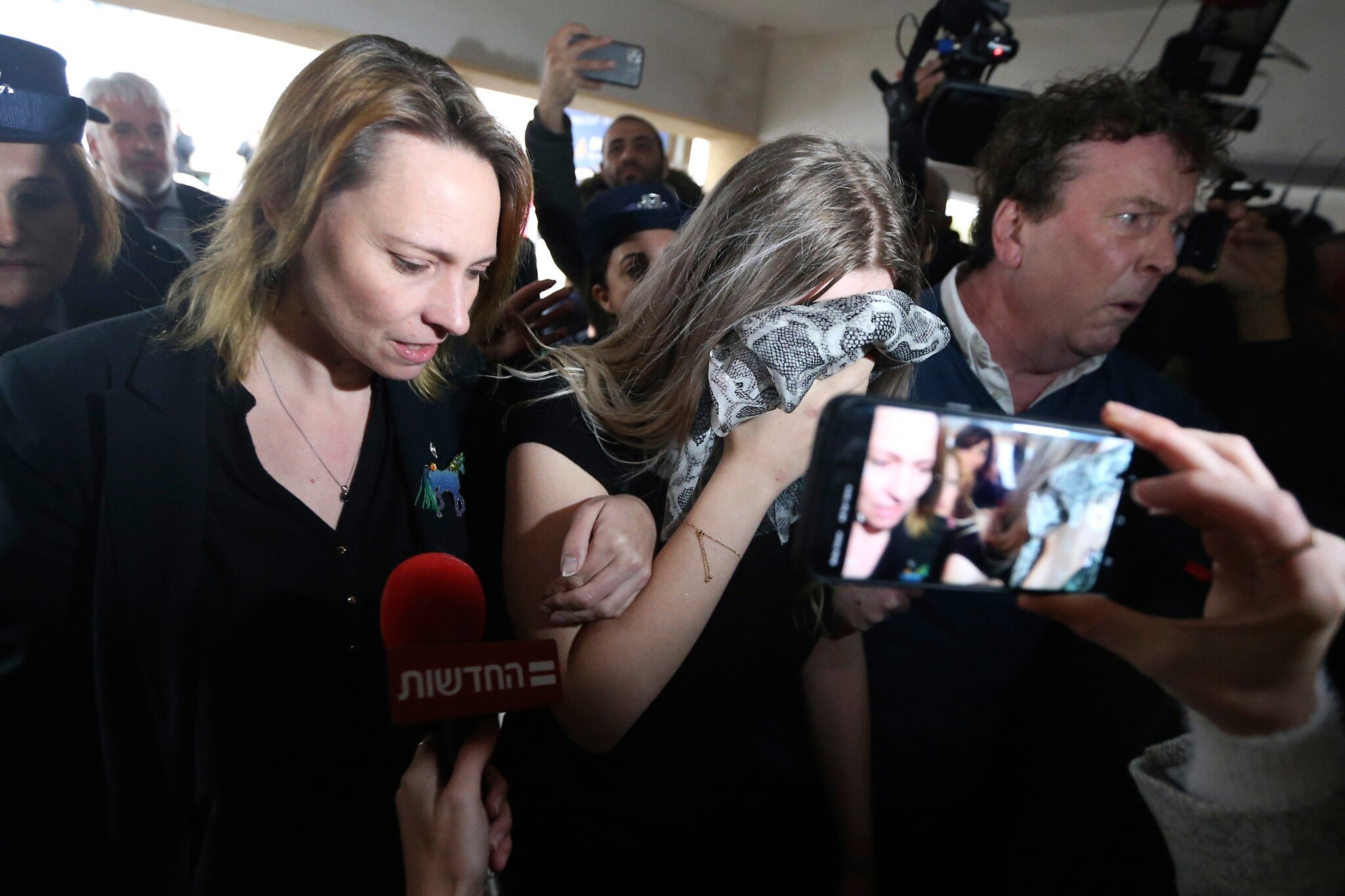
A British tourist found guilty in Cyprus of lying about an alleged gang-rape stood by her account of the July incident in an interview published Friday, and asserted that the actions of the Israelis she has accused were “pre-meditated.”
She said her retraction of her initial rape allegations was coerced out of her by investigators under intense pressure, in an oppressive situation and after long hours of interrogation.
“‘It’s late and I’ve got a family to go home to,'” she said one police official told her. “‘You’re going to be locked up if you don’t sign this retraction statement.'”
In a lengthy conversation with the British Daily Mail, the 19-year-old whose name is barred from publication described in detail the events before, during and after the night in question.
Her interaction with the group of Israelis began several days before the alleged rape, she said. She was having drinks with four or five girls at their Ayia Napa hotel when a group of about 20 Israelis approached them.
“They were drinking designer vodka, clearly trying to impress us,” the woman told the Mail.
Among the young men was one nicknamed Sam, who struck up a conversation with the accuser. While she was initially hesitant, as he seemed “possessive,” she said she was happy at the opportunity to have a “holiday fling.”
“On the first day of our holiday romance he was confessing his love for me, telling all his friends how he wanted to marry me and asking me to move to Israel. I wondered if it was Israeli culture to be like that, but it was odd,” she said.
The two of them got intimate several times thereafter, but the woman was quickly made uncomfortable by Sam’s friends who “always seemed desperate to burst into the room when she and Sam were together.”
“Looking back, it’s quite obvious I wasn’t in control of the situation; that it was spinning off in the wrong direction,” she said.
Four days after they met and on the day Sam, 21, was slated to fly back to Israel, the alleged rape took place. “It was definitely pre-meditated,” she told the Mail.
Describing the night in question, she said the two of them began kissing in his hotel room. “Then everything changed. I remember seeing light from under the door and a group of Sam’s Israeli friends came in. They were shouting and jeering.
“He was shouting in Hebrew to his Israeli friends and they were jumping around laughing. I was in distress. I shouted, ‘No! Get out! No!’ I tried to cross my legs.”
“Then Sam was kneeling on my chest and he began to rape me orally, so I could hardly breathe. My arms were flailing. I was trying desperately to get away. Then Sam got annoyed. He grabbed my left knee and pinned it down so I was accessible.”
“I couldn’t see what was happening. Sam was in the way. Then other lads got hold of my ankles and they took turns to rape me. And then I managed to pull myself out. I scrabbled across the floor, pulled on my shorts and grabbed my bag.”
She went on to describe how she slipped and hit her head while fleeing the scene. She rushed to a friend of hers and told her she’d been attacks, she said.
“I don’t think I told her explicitly what had happened. I just said, ‘They’ve all done it to me.'”
She said they went to police that night and waited until morning before her statement was taken. She was seen by a doctor only at 3 p.m. “I had finger-mark bruising all over my legs and a terrible throat infection. My neck and lymph nodes were swollen. My eyes were bruised,” she said.

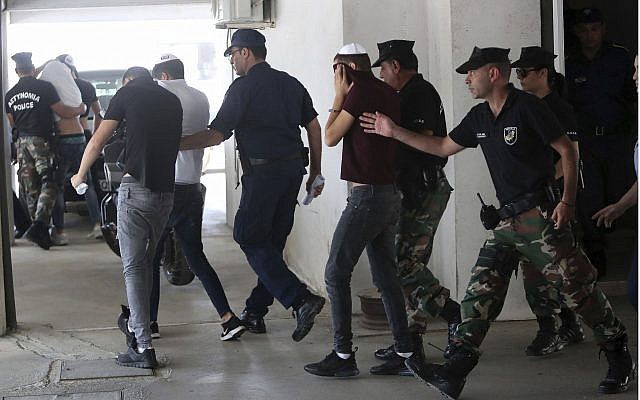
After a police complaint was filed, Cyprus police arrested 12 Israelis suspected of involvement in the alleged rape. The woman’s mom flew in from Britain to support her.
But nine days after the night in question, an officer who had taken the woman’s testimony asked to meet her to clarify details regarding her account.
An investigator “called Jorja, who I’d grown to trust, phoned me and said they needed to clarify a few points. She asked to meet me in the lobby. A few seconds later she was there. I went down. Mum wanted to come with me but I insisted I’d be fine, that it was just a formality and I wouldn’t be long.
“I expected to go to the nearby police station in Ayia Napa but we went off in an unmarked car to Paralimni. Everything there was shut down, dark, except one corridor. I had a panic attack,” she said.
“They started to question me, rapid-fire questions, and they told me they’d seen a video showing me having consensual group sex, that I’d been lying about the rape.”
She said the interrogation continued for eight hours in a dark, locked wing of the police station.
“Nothing was recorded. I didn’t have a lawyer. I wanted to message Mum. I felt cornered but I stood my ground,” she recalled.
One of the officers then lost his patience and threatened to arrest her if she didn’t sign a retraction statement, she claimed.
“One of the male officers started getting really annoyed. He said, ‘It’s late and I’ve got a family to go home to. You’re going to be locked up if you don’t sign this retraction statement.’
“I felt trapped. It was surreal. You can only understand if you’ve been interrogated relentlessly for hours,” she said, explaining her decision to sign a “concocted” statement.
“He’d won. At the same time I knew I’d done something totally wrong. I thought, ‘Why on earth did I sign that confession?'”
“And at that point everything started unraveling. They handed me a warrant for my arrest and told me I’d been charged with public mischief — falsifying an offense that hadn’t happened. I was dumbstruck.”
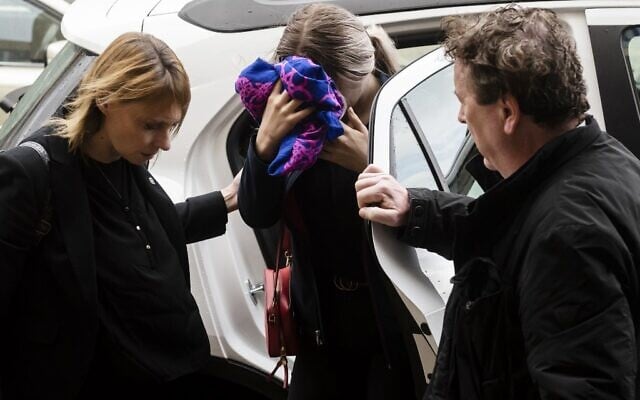
The woman was convicted by a Cypriot court on December 30 of lying about being gang-raped. She was found guilty of “public mischief” and was told she could face up to a year in jail along with a fine.

The judge said the woman had admitted to investigators that she made up the claims because she was “ashamed,” after finding out that some of the Israelis had taken cellphone video of her having consensual sex. Police have reportedly claimed the content of the video contradicts the woman’s initial rape claims.
Last month, she was given a four-month suspended sentence in the case and reportedly fined €140 (approximately $150), before being allowed to return home.
Lawyers for the British tourist subsequently filed an appeal to the Cypriot Supreme Court against the conviction.
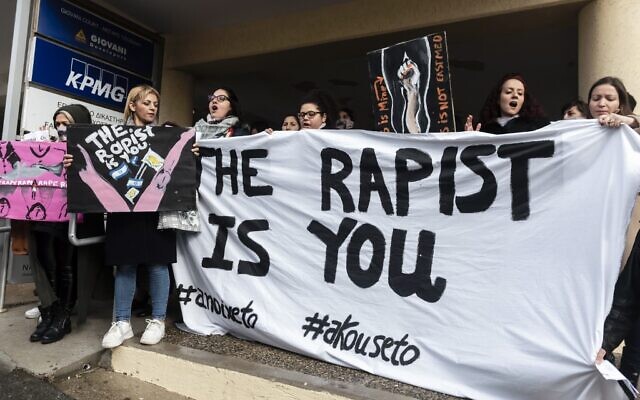
The case received intense media attention in both Israel and the UK, with women’s rights activists, including many Israelis, protesting the woman’s treatment by Cypriot authorities. In Britain, activists on social media called to boycott the island nation over the authorities’ conduct in the case. Over 50 Israelis flew to Cyprus to stand by the British woman during her trial.
The British Foreign Office has said it was “seriously concerned about the fair-trial guarantees in this deeply distressing case.”
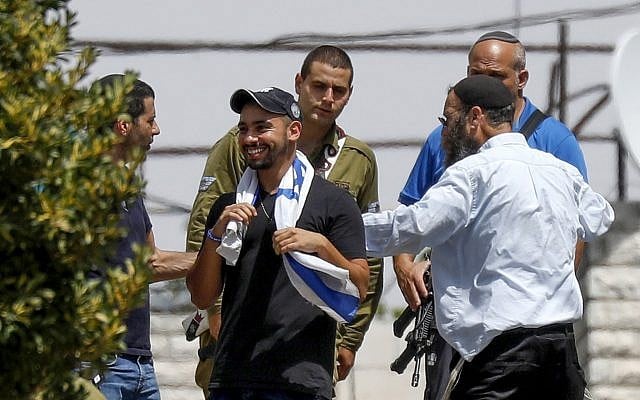
After their release without charge, the accused Israelis received a heroes’ welcome when they arrived back in Israel. The Israelis have not denied that they had sexual relations with the woman, but claim it was consensual. None were called as witnesses in the case.








The Times of Israel Community.