

Jordanian PM says ties with Israel at a nadir, peace treaty ‘at risk’
Omar Razzaz warns West Bank annexation could send relations into ‘deep freeze mode’; denounces ‘violation’ of Muslim, Christian sites in Jerusalem
 Add ToI as a Preferred Source on Google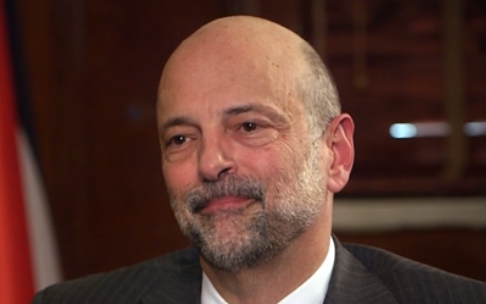
Jordanian Prime Minister Omar Razzaz told CNN on Monday that relations with Israel are at their lowest point since the peace treaty between the nations was signed in 1994, and warned that the peace treaty itself could be at risk.
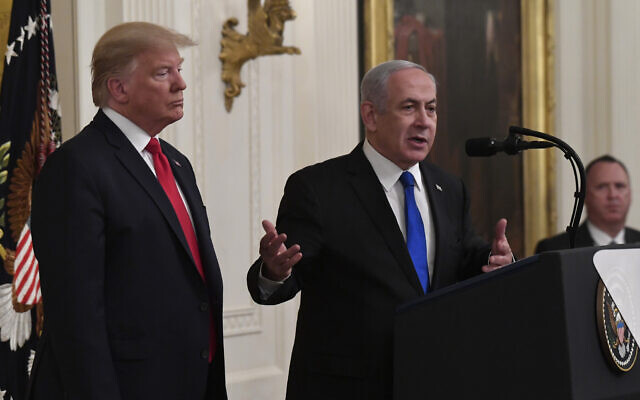
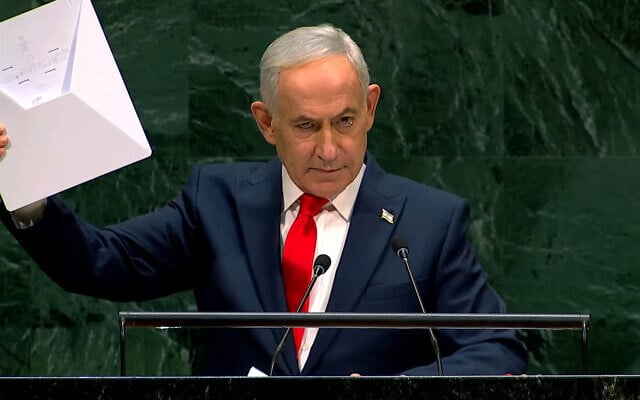
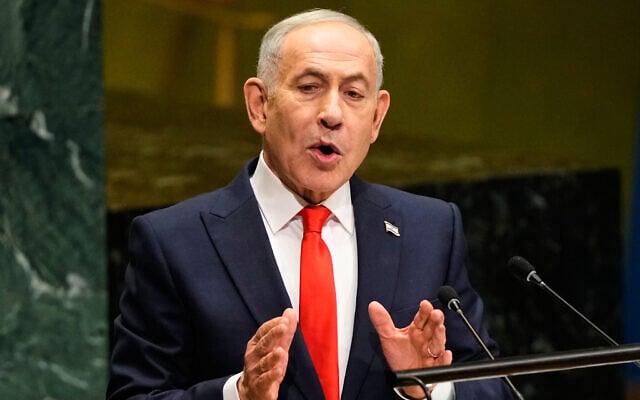
While security ties between Israel and Jordan have flourished, political relations have soured recently over a number of matters, including Prime Minister Benjamin Netanyahu’s pledge in September to annex the Jordan Valley in the West Bank, if he is given another term in office.
“Today, we are at the lowest level in the relationship that has been since signing the peace treaty,” Razzaz said in the interview.
He spoke of Israeli “unilateral measures” and the climate created by the peace plan proposed by the administration of US President Donald Trump, details of which he said Washington did not give him before its unveiling.
“The peace treaty can go into a deep freeze mode and therefore it is definitely at risk,” he said.
Razzaz also denounced Israel’s alleged “violations of the sanctity of Muslim and Christian endowments in Jerusalem.”
In January, Jordan’s King Abdullah II said that Israel has been trying to “impose an unthinkable solution” on the Palestinians, lamenting that hopes were fading for the two-state solution backed by the international community.
In a speech in front of the European Union Parliament on the tensions boiling across the Middle East, the Jordanian monarch said at the time that Israel’s construction of settlements in the West Bank and “disregard of international law” could be summed up as “one state turning its back on its neighborhood, perpetuating divisions among peoples and faiths worldwide.”
Abdullah accused the Israeli government of being “propped up by structural inequalities with Palestinians as second-class citizens.”
In an separate January interview, Abdullah said that the Hashemite Kingdom’s relationship with Israel “has been on pause for the past two years,” expressing hope that Israelis would succeed in electing a lasting government to increase stability in the region.
“We understand, unfortunately, that the issue of elections that have being going on for over a year means that Israel is looking inwards as it’s dealing with its domestic issues, and as a result our relationship is on pause,” the monarch told TV channel France 24 in an English-language interview.
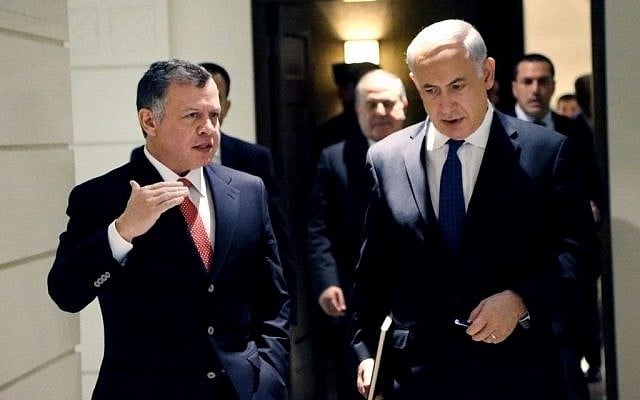
“Because of the electioneering season, which has unfortunately taken a long time, there have been no bilateral communications or movement,” he said. “We hope that the Israeli people will decide on a government sooner rather than later, and then we could all see how to move forward.”
Recent months have seen Amman recall its ambassador to Israel, no joint ceremony marking the quarter-century anniversary of the peace agreement between the two countries, and the termination of special arrangements that allowed Israeli farmers to easily access plots of land inside Jordan.
Amman also briefly recalled its ambassador to protest the arrests of two Jordanian nationals, who were eventually released by Israel.
Jordan and Egypt are the only two Arab states that have formal peace treaties and diplomatic relations with Israel.
AFP contributed to this report.





The Times of Israel Community.