

Lebanon’s Magen Avraham synagogue set to reopen
After 5-year restoration project of Beirut’s only shul, community leaders hope to revive Jewish community
 Add ToI as a Preferred Source on Google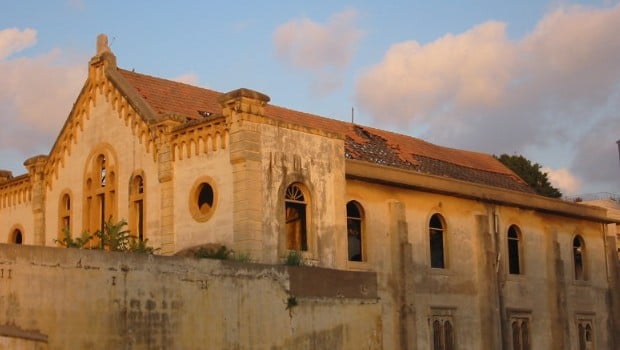
Lebanese Jews are preparing for the reopening of the Magen Avraham synagogue in Beirut after extensive renovations, according to a report in the London-based Arabic daily A-Sharq al-Awsat.
Built in 1926, it sat in the Wadi Abu Jamil quarter, a predominantly Jewish neighborhood at the time. Now, Lebanon’s Jews number about 100, according to the head of the country’s Jewish Community Isaac Arazi.
“There are efforts to revive the Jewish community by reopening the synagogue, which sits in an area where Jews lived,” Arazi told the Arab daily. “We raised money from Lebanese Jews in the Diaspora but Christians and Muslims too helped us renovate.”
In 2008, Arazi estimated that the project would cost $1 million.
The Lebanese capital’s only synagogue, its structure was destroyed at the beginning of Lebanon’s brutal 15-year civil war and restoration projects began in 2009, under the authorization of the Lebanese government and with a nod from the terror group Hezbollah.
“We respect the Jewish religion just like we do Christianity. The Jews have always lived among us. We have an issue with Israel’s occupation of land, said a spokesman for Hezbollah in 2008.
The A-Sharq al-Awsat report tried to give a glimpse into Lebanese Jewish life, publishing depressing photos of a neglected Jewish cemetery in the city of Sidon, and delve into the political-religious mindset of some of the community’s members.
“You can rest assured that if I was a Zionist-Israeli, I would not stay in Lebanon for a second,” Arazi told the paper. “We [the Lebanese Jewish community] have no connection to those who wanted to live in Palestine and kill innocent people.”
“We identify as Lebanese 100%,” said Arazi.
Another interviewee, unnamed, told of a time in Lebanon where the Jews numbered several thousands and served in political and civil service posts.
The report mentions the alleged phenomenon of “hidden Jews” in Lebanon — Jews who changed their religion after the establishment of the State of Israel in 1948, but who may practice in private.
On such interviewee, who gave his first name as Ibrahim, said he became a Muslim to avoid problems because “some Lebanese do not accept our presence among them and we have concerns about living openly as Jews.”







The Times of Israel Community.