

Live updates (closed)
 Add ToI as a Preferred Source on Google




The Times of Israel liveblogged Monday’s news as it unfolded.
Rivlin: Annex West Bank, give Palestinians the vote
President Reuven Rivlin on Monday expresses support for annexing the West Bank, amid ongoing efforts by coalition lawmakers to extend Israeli sovereignty to Jewish settlements, but warns the move must include full citizenship for all the Palestinians in the area.
“Everyone must know that when we extend sovereignty over our land, all of its residents will become citizens of the state,” Rivlin tells a conference in Jerusalem.
Underlining that he is speaking “as Reuven Rivlin,” rather than in his role as president, the longtime annexationist says, “As Reuven Rivlin, I was born into the belief that the Land of Israel is entirely ours.”
“I am in favor of extending sovereignty, on the condition of equal rights for all of the residents of the area,” he adds.
— Marissa Newman
David Grossman wins 2017 Israel Prize for Literature
Education Minister Naftali Bennett announces Monday the awarding of Israel’s top civilian honor, the Israel Prize, to author David Grossman.
Grossman is already one of Israel’s most celebrated writers, a winner of three top Hebrew-language honors: the prestigious Sapir literary prize in 2001, the city of Tel Aviv’s Bialik literary prize in 2004 and the 2007 Emet prize for his contributions to Israeli culture.
Last year, he won the Man Booker International Prize, one of the most prestigious literary awards in the world, for his novel “A Horse Walks into a Bar.”
“I’m thrilled to have just told David Grossman that he won the Israel Prize for Literature on the State of Israel’s 70th anniversary,” Bennett announces at a conference in Jerusalem.
“Grossman is one of the most exciting, profound and influential voices in Israeli literature. With deep wisdom, sensitivity to fellow human beings and a unique linguistic style, he has become an internationally renowned artist. We are honored that he is one of our own,” Bennett adds.
Deputy FM confident Israel, Trump will reach deal on annexation
Deputy Foreign Minister Tzipi Hotovely says she has “no doubt” Israel would reach “agreements” with the Trump administration on extending sovereignty to the West Bank.
Speaking at the Jerusalem Conference organized by the right-wing B’Sheva paper, the Likud lawmaker laments that “for many years, we said no to a Palestinian state, instead of saying yes to sovereignty.”
“I have no doubt that with this current American administration, with the right cooperation and work, we can reach agreements on this topic — something that never existed on the past,” says Hotovely. “There was never [before] a [US] administration that said settlements are not an obstacle to peace.”
She was referring to a statement by the White House in February 2017 in which the nascent administration declared that settlements are not an “impediment to peace.”
That statement, however, further said that “the construction of new settlements or the expansion of existing settlements beyond their current borders may not be helpful.”
Her comments also came a day after US President Donald Trump, in an interview with the Israel Hayom daily, said the settlements “complicate” peace efforts.
Minister: Russia won’t abide Iran’s presence in Syria for long
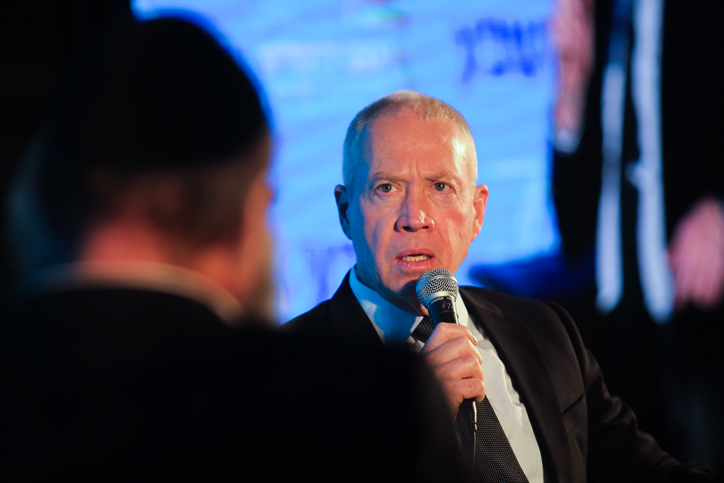
Housing Minister Yoav Galant, a member of the high-level security cabinet, cautiously predicts Moscow will ultimately seek to uproot the growing Iranian military presence in Syria.
He addresses recent tensions on the northern border, after Israel shot down an Iranian drone over its territory on Saturday. The Israeli Air Force also carried out a series of reprisal strikes in Syria, and an Israeli F-16 crashed during the exchange, apparently as a result of Syrian anti-aircraft fire.
Israeli officials have warned of efforts by Iran to “entrench” itself militarily on Syrian soil, and have been in talks on the matter with Russia, which has a powerful military presence in the neighboring, war-wracked country.
“Overall, I can say the following: No one wants the Iranians in this place. Not the moderate Sunni countries: Jordan, Egypt, Saudi Arabia, Turkey. Not the Europeans, who are worried about millions of Syrians who have left Syria and are on their way to Europe as a result of Alawite control. And certainly not us or the Americans,” Galant, a former IDF general, tells a right-wing conference in Jerusalem.
“As for the Russians, they served for a certain time as ‘boots on the ground,’ a player in the field who is doing the dirty work. At a later stage, we will reach a situation in which they will be competing over the same resources, and the Russians, too, won’t want the Iranians in the area.
“Iran is trying to take control of the Middle East, plain and simple,” says Galant.
He says Tehran has long been aware of the potential for establishing a land corridor through Iraq and Lebanon.
“As a result, there is heavy Iranian pressure to control Syria under Russian patronage. The Iranians are building an army in Syria, they are interested in building a front — Hezbollah 2.0 — on the Golan Heights, and to use Syrian territory” to transfer weaponry to Lebanon, he says.
“We will not allow it. At the same time, we must remember that… there is more than one player here,” adds Galant, alluding to Russia, “who is coming with its own interest, but is very influential and very important in the region.”
“They aren’t against us, which is incredible,” Galant says of Moscow, attributing the Russian position to ties between Prime Minister Benjamin Netanyahu and Russian President Vladimir Putin and the relationship between the two militaries.
“Culturally, they are a lot closer to us than to the Iranians and the Muslims,” he adds.
— Marissa Newman
Egypt sentences to death suspect in Coptic priest’s killing
CAIRO — An Egyptian court convicts a suspect for killing a Coptic priest in a poor Cairo district last year and sentences him to death.
The Cairo Criminal Court says the defendant, Ahmed Saeed, attacked the 40-year-old cleric, Samaan Shehata, with a knife in the city of al-Salam, northeast of Cairo in October. Another priest was wounded in the attack.
Today’s verdict can be appealed.
Attacks on Egypt’s Christians, who account for about 10 percent of the country’s predominantly Muslim population of nearly 95 million, have surged recently with a series of suicide bombings claimed by the Islamic State group.
In April, twin suicide bombings, also claimed by IS, struck two Coptic churches, killing at least 47 people. The Palm Sunday bombings prompted Egypt to declare a nationwide state of emergency.
— AP
Government approves immigration of 1,000 Ethiopian Jews for 2018
At least 1,000 Ethiopian Jews still living in Ethiopia will be able to immigrate to Israel in the coming year, after the Prime Minister’s Office and the Interior Ministry say they have worked out an initial list of potential immigrants and expect to approve them within four weeks.
There are approximately 8,000 Jews in Ethiopia with close relatives in Israel who are waiting to emigrate.
The last flight of Ethiopian immigrants arrived in Israel on December 28, 2017, among a total of 1,300 immigrants who arrived last year.
But the cabinet did not approve the approximately NIS 200 million needed to absorb the 1,300 immigrants initially planned to arrive 2018, putting the flights on hold until today.
“I am serving the state and fighting the state at the same time,” Belaynich Indishu, who was soldier in the Duvduvan combat unit and now works in security for the government, tells today’s Knesset meeting.
Indishu moved to Israel in 2007 and has two sisters still in Ethiopia. “For what? So that I can’t be with my sisters?” he asks.
— Melanie Lidman
Australian school principal accused of molesting kids arrested in Israel
Malka Leifer, a former school principal in Australia who fled to Israel to escape accusations that she molested minors, is arrested, and authorities are seeking to resume extradition procedures against her.
“This morning police officers arrested a female in her 50s from Samaria suspected of obstructing court proceedings and attempting to hide evidence of a case,” the Justice Ministry says in an email.
“A police undercover investigation has been underway for a month, following an Interpol request to investigate the suspect, who is wanted in Australia for sexual offenses to sisters (minors) while being a teacher and principal at the school where they studied. During the investigation evidence was gathered against the suspect,” it says.
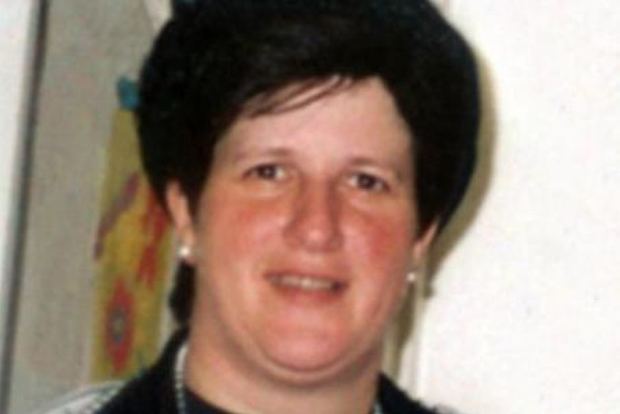
Leifer, who left Australia for Israel in 2008 shortly after molestation accusations against her surfaced, had skipped several extradition hearings in Israel. She had committed herself into psychiatric institutions for short periods coinciding with her court dates.
Leifer is wanted for questioning in Australia in connection with 74 charges of molestation, including rape, of several teenage girls, the ABC broadcaster has reported.
Last October, the Victoria Police confirmed that it was investigating members of the ultra-Orthodox community in Melbourne, Australia, for allegedly helping Leifer escape Israel.
Manny Waks, an activist against sexual molestation in Australia’s Orthodox community, says he hopes Leifer will be extradited.
“I’m delighted to hear of Malka Leifer’s arrest and hope that it is the re-commencement of a process that leads to her extradition to Australia to face her accusers,” he says in a statement. “Her arrest is a credit to the many people who have worked tirelessly to ensure that she will be held to account and can no longer be a potential threat to children in Israel. I’m especially happy for her courageous alleged victims.”
— With agencies
Lapid urges US to up its presence in Syria to counter Iran
Yesh Atid leader Yair Lapid calls on the United States to deepen its involvement in Syria, while terming the Russian military relationship with Iran-backed forces in the country “very worrying and dangerous.”
“Israel must make this its top priority — to make the Americans partners in the effort to remove the Iranians from Syria,” says Lapid. “We must do a good job in explaining to our great friend that what they don’t deal with now will come back later in a worse form.
“The fact that the Russians are supporting Iranian efforts is very worrying and dangerous,” he continues. “Our friendship with Russia is important, but friendship can’t be limited to press conferences and festive photos. It must be a partnership in which we recognize their interests in the region, but they must also recognize, and take into account, our interests.
“Russia must know that as long as the Iranians are here, there will be no stability in Syria and Assad’s regime will be in danger,” he adds.
Video shows 2 Israeli soldiers before they are attacked in Jenin
Footage from Jenin shows two Israeli soldiers minutes before they came under attack by an angry mob earlier today.
In the attack, one of the soldiers’ guns was stolen by the rioting Palestinians, according to the Israel Defense Forces.
The army said forces were searching the area for the weapon.
When the two soldiers, one male and one female, drove into the city on Monday afternoon, local residents began pelting their vehicle with rocks, lightly injuring them both, the army said.
The two entered the city inadvertently, according to the army.
— with Judah Ari Gross
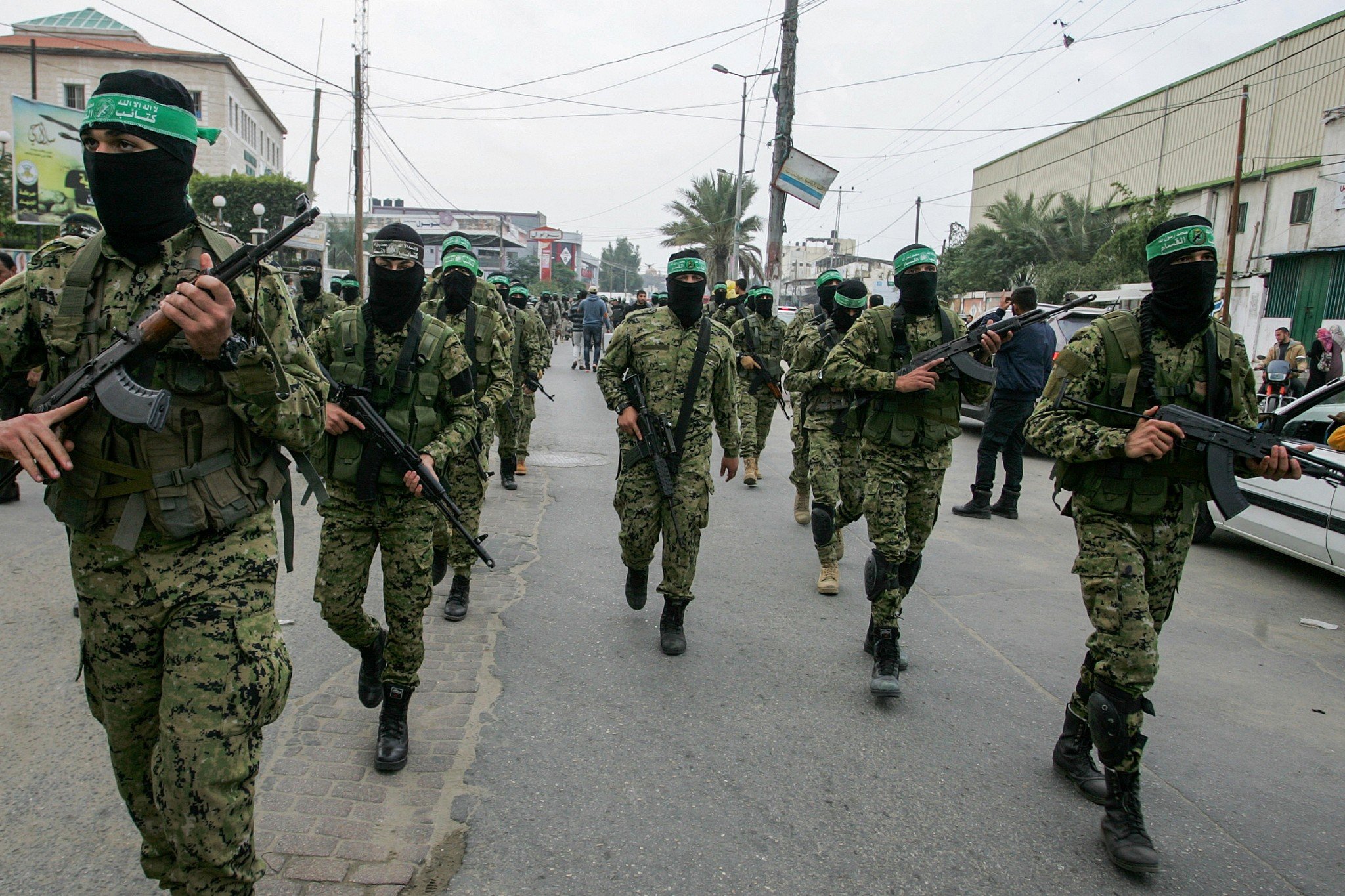
Arab Israeli man, Turkish citizen arrested for helping to fund Hamas
The Shin Bet security service announces it has arrested an Arab Israeli man and a Turkish citizen whom it suspects were helping the Hamas terrorist group raise and launder money to fund its military activities against Israel.
Kamil Takli, the Turkish national, was enlisted by Zaher Jabarin, a senior figure in Hamas responsible for its finances, the Shin Bet says. Jabarin was one of a thousand convicted Palestinian terrorists released from Israeli prison as part of a 2011 deal to secure the return of captured soldier Gilad Shalit.
According to the security service, he is suspected of setting up a shell company to help Hamas launder millions of dollars for its military activities in Gaza.
The Shin Bet implies Turkey gave tacit approval for his actions, saying authorities there “turned a blind eye” to the fact that the terrorist group was the source of the money.
Takli was kicked out of Israel after his interrogation, the Shin Bet says.
The Arab Israeli suspect, Durgham Jabarin, a resident of Umm al-Fahm, is expected to be charged in the coming days, the security service says.
Jabarin is suspected of transporting large sums of money in euros from Turkey to the West Bank on Hamas’s behalf, the Shin Bet says. When the two were arrested last month, security forces found 91,000 euros in Jabarin’s home, the service says.
— Judah Ari Gross
Rivlin hints Netanyahu should resign if indicted
President Reuven Rivlin appears to hint that he believes Prime Minister Benjamin Netanyahu should resign from his post if an indictment is filed against him.
“I’ll only express my own opinion in 3.5 years,” when his term as president concludes, Rivlin tells Hashadot TV news in an interview at the Jerusalem Conference on Monday.
But, he added, “in the past senior politicians have expressed their opinion about an indictment, and my opinion was influenced by theirs.”
Rivlin’s comment is understood to be a reference to Netanyahu’s own demand in May 2008 that then-prime minister Ehud Olmert resign over an investigation into multiple allegations of serious corruption on his part.
Netanyahu, then the leader of the opposition, argued that a prime minister who is “neck-deep in investigations” cannot be trusted to give his full attention to running state affairs.
In two separate investigations, Netanyahu is suspected of receiving expensive gifts from billionaire benefactors that may have amounted to bribes, and of seeking to hobble a newspaper in exchange for favorable coverage from its rival.
Iraqi official says wounded IS chief alive in Syria
An Iraqi interior ministry official says the Islamic State group’s head, Abu Bakr al-Baghdadi, is alive and being treated at a field hospital in Syria after being wounded in an airstrike.
“We have irrefutable information and documents from sources within the terrorist organization that al-Baghdadi is still alive and hiding” in Syria’s northeastern Jazira region, says intelligence and counterterrorism department head Abu Ali al-Basri, quoted today in the government daily As-Sabah.
IS retains a significant presence in the desert plains of northeastern Syria’s Hasakeh province despite having lost most of its cross-border “caliphate,” which once also covered a third of neighboring Iraq.
Basri says that Baghdadi is suffering from “injuries, diabetes and fractures to the body and legs that prevent him from walking without assistance.”
The jihadist chief had been wounded in “air raids against IS strongholds in Iraq.”
Last June, Russia said it had probably killed Abu Bakr al-Baghdadi in a late May air raid near Raqqa in Syria, but later said it was still trying to verify his fate.
In September, an American military chief said the jihadist chief was still alive and probably hiding in eastern Syria’s Euphrates Valley.
— AFP
Turkey assails US over ties with Syrian Kurdish militia
Turkey’s foreign minister assails the United States, claiming that American forces in Syria are intentionally stalling the fight against Islamic State militants as an excuse not to cut ties with Syrian Kurdish militiamen as Ankara has demanded.
Mevlut Cavusoglu tells reporters in Istanbul that US forces are leaving “pockets” with IS militants intact to justify continued cooperation with the Kurdish militia.
Speaking ahead of a visit by US Secretary of State Rex Tillerson later this week, Cavusoglu says Turkey’s ties with the US are at a make-or-break stage and that Washington needs to take “concrete steps” to regain Turkey’s trust.
“Our relations are at a very critical stage,” Cavusoglu says. “Either we will improve ties or these ties will totally break down.”
Ankara is riled over Washington’s support for the Syrian Kurdish People’s Protection Units, or YPG — the top US ally in the fight against the Islamic State group.
Turkey considers the YPG a “terrorist” group linked to Kurdish insurgents fighting within Turkey’s own borders.
— AP
UK backs Israel’s actions in Syria, is ‘concerned’ by Iranian activity
The UK’s foreign secretary expresses support for Israel’s actions on Saturday, in which it shot down a Iranian drone and later attacked Iranian targets in Syria.
“We support Israel’s right to defend itself against any incursions into its territory,” Boris Johnson says in a statement that also expresses concern over the Iran activities that precipitated the clash.
“We are concerned at the Iranian actions, which detract from efforts to get a genuine peace process underway,” he says. “We encourage Russia to use its influence to press the regime and its backers to avoid provocative actions and to support de-escalation in pursuit of a broader political settlement.”
France hands back Nazi-looted art to Jewish family
France will return three paintings by the Flemish master Joachim Patinir today to the descendants of a Jewish family which was forced to sell them as they fled the Nazis.
The Bromberg family fled to Paris from Germany in late 1938 and was forced the following year to sell the 16th-century “Triptych of the Crucifixion” depicting Christ on the cross, along with several other paintings, so they could get to the United States via Switzerland.
The paintings are to be formally handed over to the descendants of Herta and Henry Bromberg at the Louvre Museum by French Culture Minister Francoise Nyssen.
It is the second time in two years that the French state has returned despoiled art to the family.
In 2016 it handed over another 16th-century painting, “Portrait of a Man,” by one of the followers of Antwerp artist Joos van Cleve.
The Patinir paintings had languished for nearly seven decades unclaimed in the French state collections after they were recovered in Munich after World War II.
The triptych had been bought at a knock-down price after the German occupation of Paris and was destined for Hitler’s Fuhrermuseum in his home town of Linz in Austria, where he wanted to build “the ideal museum.”
Patinir, regarded as the father of landscape painting, developed the panoramic style that became a hallmark of the northern Renaissance.
France has stepped up its efforts to returned art looted during World War II to its rightful owners, using genealogical experts to try and trace families.
— AFP
Netanyahu says he’s in talks with Trump on settlement annexation
Prime Minister Benjamin Netanyahu says he’s been in talks with US President Donald Trump’s administration on a “historic” initiative to annex Israeli settlement areas in the West Bank.
“I can tell you that for a while now I’ve been talking about it with the Americans,” Netanyahu tells a faction meeting of his Likud party.
“I’m guided by two principles in this issue… optimal coordination with the Americans, whose relations with us are a strategic asset for Israel and the settlements, and it must be a government initiative rather than a private one because it would be a historic move,” he adds.
His remarks come with coalition lawmakers seeking to advance a bill that would apply Israeli sovereignty over all areas of Jewish settlement in the West Bank.
But the bid encountered obstacles on Sunday, when the heads of coalition parties pulled the so-called Sovereignty Bill — drafted by Yoav Kisch (Likud) and Bezalel Smotrich (Jewish Home) — from the agenda of a meeting on the coming week’s legislative timetable.
Last Thursday, a spokesman for a senior member of the Ministerial Committee for Legislation told The Times of Israel that Netanyahu had pulled the legislation from its agenda in order to provide time to coordinate the measure with the White House.
— with Marissa Newman
Settlement security guard released from hospital 6 days after stabbing attack
An Israeli security guard is released from the hospital today, six days after being lightly injured by a Palestinian assailant who attacked him with a knife at the entrance to a West Bank settlement.
The 34-year-old man underwent surgery on the palm of his hand, which was hurt during the attack at the entrance to Karmei Tzur last Wednesday, a spokeswoman for Hadassah Hospital Ein Kerem says.
The assailant arrived at the settlement in the Etzion bloc by car, opened the door to the guard post at the entrance and stabbed the guard in the palm. A second guard then shot and killed the attacker, 19-year-old Hamzeh Yousef Zamaareh.
The security guard exited the hospital Monday in good condition, but will still need to undergo rehabilitation, the hospital spokesman added.
— Jacob Magid
Palestinian policeman arrested for throwing rocks
A Palestinian Authority police officer is arrested by Israeli police in Bethelem on suspicion that he threw rocks at Israeli security forces outside the Rachel’s Tomb shrine in the city.
The Palestinian officer, who is said to be 36 years old, was arrested last week and is suspected of taking part in a number of violent riots, police say.
He will be indicted in the coming days, police say.
State rejects bid to muffle Netanyahu recommendations
The state registers its opposition to a High Court petition that would ban the publication of police’s conclusions from their investigations of Prime Minister Netanyahu.
The state also urges the court to “hand down its decision as soon as possible, so as not to delay the conveyance of the summary of the investigation files on the prime minister from the police to the state prosecution, which, as police said, is expected to take place in the coming days.”
Attorney General Avichai Mandelblit on Sunday instructed police to wait before submitting their conclusions regarding the two graft investigations into Netanyahu’s affairs due to the petition, which demanded that no recommendations by police be made public — or even be included in the investigation materials submitted to the attorney general by police.
The appeal was submitted last week amid reports that police were poised to recommend indictments against the prime minister this week.
As a result of Mandelblit’s decision, publication of the police conclusions in Netanyahu’s cases is likely to be delayed by several days, assuming the High Court rejects the petition.
Yossi Fuchs, the attorney who filed the petition, defended it earlier today as a demand for “justice,” but also admitted it was bid to protect Netanyahu’s right-wing government.
— with Raoul Wootliff
Police detonate unattended package left at Pittsburgh-area JCC
Police detonate an unattended package left at a Pittsburgh-area JCC.
The small canvas bag was left on a ramp leading to the parking garage under the Jewish Community Center in Squirrel Hill building on Sunday afternoon, the local CBS affiliate KDKA reports.
The Pittsburgh Police Explosive Ordnance Disposal Unit detonated the bag after closing the two roads around the building to traffic. The JCC was closed off for less than two hours.
The package turned out to be a bag of tools left behind by a worker.
More than 100 bomb threats were made against JCCs throughout the United States in early 2017. An Israeli-American teen from Ashkelon was arrested and accused of making most of the threats, which were hoaxes.
— JTA
Palestinians ask Egypt to keep Rafah terminal open, stop humiliations at checkpoints
Palestinian factions in the Gaza Strip appeal to Egyptian President Abdel-Fattah el-Sissi to reopen the Rafah border crossing on a permanent basis and end the “suffering” of hundreds of stranded passengers.
They also call on Sissi to order the Egyptian army to stop harassing and humiliating Palestinian passengers at military checkpoints in Sinai.
Last week, the Egyptian authorities opened the Rafah terminal for three days, on Wednesday through Friday, for the past time since the beginning of 2018.
Since the terminal was closed last Friday, hundreds of Palestinian passengers wishing to enter the Gaza Strip have been stranded on the Egyptian side of the border crossing.
Other passengers who left the Gaza Strip through the terminal last week have been unable to continue their trip to Cairo due to severe restrictions imposed by the Egyptian authorities. These passengers have found shelter in the Egyptian towns of El Arish and Rafah.
— Khaled Abu Toameh
Paul McCartney to come to Israel in May to receive prize
The President’s Residence announces that Sir Paul McCartney, of Beatles fame, will be awarded the Wolf Prize for Music “for his seminal contribution to music in the modern era.”
In a press release, a spokesman for President Rivlin says McCartney and the other recipients are expected to arrive in Israel for the award ceremony and a series of related events at the end of May.
He will share the music prize with conductor Adam Fischer, whom the press release describes as an “eloquent defender of human rights.”
Lebanese PM warns of ‘new wars’ over multiple disputes with Israel
Lebanese Prime Minister Michel Aoun warns that a number of mounting disputes with Israel, including contested rights to offshore natural gas exploration and the construction of a border wall by Israel, could lead to war.
“Lebanon has taken a decision to defend itself whether there is an Israeli attack on its land or on its oil rights,” Aoun says in an interview on the Egyptian news program ON Live.
“Until now,” he adds, “there hasn’t been an attack… There are forces intervening diplomatically and politically to help resolve this dispute.”
On Thursday Reuters reported that a senior American envoy, David Satterfield, the acting assistant US secretary of state, had relayed a message from Israel to the Lebanese that Jerusalem does not want an escalation.
Aoun, however, warns that should Israel carry out its verbal threats, it could lead to a new round of military conflict between the two sides.
“The Israeli verbal provocation does not matter to us, but if it comes into effect, there will be new wars,” he says.
— Dov Lieber
Egypt orders detention of prominent activist
An Egyptian rights lawyer says the country’s prosecutors have ordered the detention for 15 days of a prominent activist pending investigations into charges that include joining a terrorist group and disseminating fake news.
Mokhtar Mounir tells The Associated Press that police forces arrested Mohamed el-Kassas, the deputy head of the Egyptian opposition party Misr al-Qawia, four days ago and raided his home in Cairo.
He says el-Kassas is being held in solitary confinement in Cairo’s sprawling Tora Prison complex. No trial date has been set.
It is the latest in a crackdown on opposition overseen by President Abdel-Fatah el-Sissi, who led the military’s 2013 ouster of Egypt’s first freely elected leader, the Islamist Mohammed Morsi. The crackdown has led to the imprisonment of tens of thousands of dissidents.
— AP
Abbas blasts reported Israel-US talks on annexation
After Netanyahu says he is in talks with the US about annexing the settlements, a spokesman for Palestinian Authority President Mahmoud Abbas says implementing such a step will “eliminate” all international efforts to revive the peace process.
Nabil Abu Rudeineh asserts in a statement carried by the PA’s official Wafa news agency that because the settlements are “illegal,” any unilateral Israeli imposition of sovereignty “will not change anything.”
Earlier, Netanyahu said he’s been in talks with Donald Trump’s administration on a “historic” initiative to annex Israeli settlement areas in the West Bank.
“I can tell you that for a while now I’ve been talking about it with the Americans,” Netanyahu told a faction meeting of his Likud party.
“I’m guided by two principles in this issue… optimal coordination with the Americans, whose relations with us are a strategic asset for Israel and the settlements, and it must be a government initiative rather than a private one because it would be a historic move,” he said.
Netanyahu not discussing specific annexation proposals with US — official
Netanyahu did not present the US administration with specific proposals for West Bank annexation, a senior Israeli diplomatic official says, hours after the prime minister told lawmakers that he has been discussing such initiatives with Washington.
The official says that since no specific annexation proposals were presented to the administration — but only “Israel’s national interests under any future peace deal” — “in any case the US did not express support for the proposals.”
“Israel updated the US on various proposals that are being brought up in the Knesset, and the US expressed its clear position that it hopes to present President [Donald] Trump’s peace plan,” the official says. “PM Netanyahu’s position is that if the Palestinians continue to refuse negotiating peace, Israel will present its own alternatives.”
Earlier today, Netanyahu said he’s been in talks with the Trump administration on a “historic” initiative to annex Israeli settlement areas in the West Bank.
“I can tell you that for a while now, I’ve been talking about it with the Americans,” Netanyahu told a faction meeting of his Likud party.
“I’m guided by two principles in this issue… optimal coordination with the Americans, whose relations with us are a strategic asset for Israel and the settlements, and it must be a government initiative, rather than a private one, because it would be a historic move,” he added.
— with Raphael Ahren
Israel annexation plan is land theft with US ‘complicity’ — PLO
Netanyahu’s discussions with Washington on legislation that would effectively annex West Bank settlements amount to land theft, with US “complicity,” a top Palestinian official says.
“Netanyahu’s latest statement… confirms US complicity with Israeli colonial plans,” says Saeb Erekat, secretary general of the Palestine Liberation Organization, condemning the Israeli moves as “land theft.”
— AFP
Ahead of meeting with Abbas, Putin talks to Trump about conflict
Russian President Vladimir Putin says at the start of a meeting with Palestinian Authority leader Mahmoud Abbas that he had discussed the Israeli-Palestinian conflict with Trump.
“I have just spoken with US President Trump,” he says. “Obviously, we talked about the Israeli-Palestinian conflict.”
— AFP
White House: No talk of annexation bids with Israel
Also seeming to contradict Netanyahu’s comments earlier today, White House spokesman Josh Raffel denies that the Trump administration has been discussing settlement annexation initiatives with Israel.
“Reports that the United States discussed with Israel an annexation plan for the West Bank are false,” he says. “The United States and Israel have never discussed such a proposal, and the president’s focus remains squarely on his Israeli-Palestinian peace initiative.”
— Raphael Ahren
Netanyahu’s office: No annexation talks, US committed to Trump peace plan
In an apparent attempt at damage control, the Prime Minister’s Office puts out a statement clarifying that Netanyahu is not in talks with the White House on annexing settlements.
“Prime Minister Benjamin Netanyahu updated the Americans on the initiatives coming up in the Knesset,” the statement says, “and the Americans expressed unequivocally that they are committed to advancing President Trump’s peace plan.”
White House ordered Netanyahu to retract annexation comments — reports
Israeli news broadcasts report that the Israeli statements denying Netanyahu’s assertion earlier today that he is discussing annexation initiatives with the US were the result of direct pressure from the White House.
Both Hadashot and Channel 10 news report that Trump administration officials fumed when they heard Netanyahu’s comments and contacted his office to demand an official retraction.
US must be ‘just one of the mediators,’ Abbas tells Putin
Abbas, during his meeting with Putin in Moscow, seeks Russian support for a new framework to replace US-led peace talks.
“Given the atmosphere created by the United State’s actions, we… refuse any cooperation with the United States as a mediator,” says Abbas. “In case of an international meeting, we ask that the United States be not the only mediators, but just one of the mediators.”
“It is very important for us to know your personal opinion, in order to set the record straight and put in place a common approach to solve this problem,” Putin tells his guest.
— AFP
Trump wants NASA out of space station by 2025, businesses in
The Trump administration wants NASA out of the International Space Station by 2025, and private businesses running the place instead.
Under President Trump’s 2019 proposed budget released today, US government funding for the space station would cease by 2025. The government would set aside $150 million to encourage commercial development.
Many in the space arena have already expressed concern. Senator Bill Nelson, a Florida Democrat who rocketed into orbit in 1986, said it makes no sense to walk away from the space station.
NASA has spent close to $100 billion on the orbiting outpost since the 1990s.
Altogether, the budget seeks to increase NASA’s budget slightly, to $19.6 billion.
— AP
Court rejects bid to muffle police recommendations on Netanyahu
The High Court of Justice rejects a petition to prevent the publication of the police’s conclusions in the two corruption investigations against Netanyahu.
Earlier today, the state registers its opposition to the petition.
The appeal was submitted last week, amid reports that police were poised to recommend indictments against the prime minister this week.
The state said the recommendations are expected to be handed over to the public prosecution “in the coming days.”
Donald Trump Jr.’s wife exposed to white powder, hospitalized
Police say Donald Trump Jr.’s wife opened an envelope that contained white powder, felt ill and has been taken to New York City hospital.
They say Vanessa Trump called 911 Monday morning after opening a letter addressed to Donald Trump Jr. at their midtown Manhattan apartment. Police say she said she was coughing and felt nauseous.
The Trump Organization didn’t immediately respond to a request for comment. It’s unclear what the powder was.
Detectives from the New York Police Department’s intelligence division and Secret Service agents are investigating. A spokeswoman for the Secret Service hasn’t responded to a request for comment.
Police say a hazmat unit is also at the scene.
— AP
Lebanese man crosses into Israel, is arrested
The IDF says it arrested a mentally ill Lebanese national who crossed into Israeli territory yesterday afternoon, after he was forced to do so by the Hezbollah terror group.
The army says he was under surveillance as he approached the security fence. He was detained shortly after entering Israeli territory and questioned.
“During his interrogation, he stated that he was sent by two Hezbollah operatives, Mahadi and Ali Shahror from the village of Habush. The operatives, who are brothers, threatened him with forced mental hospitalization if he refused to infiltrate into Israeli territory in order to examine possibilities to enter and exit Israel,” the army says.
“Furthermore, he was brought to the point of infiltration by Mahadi Shahror on a motorcycle, and was told to test if the electric fence is intact,” the IDF says.
— Judah Ari Gross
Amid escalation on northern border, Tillerson has ‘no plans’ to stop in Israel
WASHINGTON — US Secretary of State Rex Tillerson does not plan to add a stop in Jerusalem during his visit to the Middle East this week, despite a recent Israeli military clash near Israel’s northern border with Iran, a State Department official tells The Times of Israel.
“There are no plans on this short trip for the secretary to make a stop in Israel,” the official says. “He is keeping close tabs on the situation.”
— Eric Cortellessa
Police: Powder Trump Jr’s wife exposed to not dangerous
New York police say that according to a preliminary test, the substance that Donald Trump Jr’s wife, Vanessa Trump, was exposed to, was not dangerous.
Trump, 40, opened the letter addressed to the president’s son this morning at their midtown Manhattan apartment, investigators says. She called 911 and said she was coughing and felt nauseous, police says.
The Trump Organization is not immediately responding to a request for comment.
Detectives from the New York Police Department’s intelligence division and Secret Service agents are investigating.
“The Secret Service and our law enforcement partners in New York City are investigating a suspicious package addressed to one of our protectees received today in New York, New York. This is an active investigation and we cannot comment any further,” Secret Service Special Agent Jeffrey Adams says in a statement.


read more: