

Live updates (closed)
 Add ToI as a Preferred Source on Google

The Times of Israel liveblogged Thursday’s events as they unfolded.
Rubio says he invited Trump’s son-in-law to meeting with UAE president because it was ‘chance to catch up’ with a ‘good friend’
US Secretary of State Marco Rubio defends his decision to include President Donald Trump’s son-in-law, Michael Boulos, who is a private citizen and businessman, in a meeting yesterday alongside senior US diplomats with UAE President Mohammed bin Zayed.
“He was just here because his brother lives here, and I’m a good friend of Michael, so we had a chance to catch up,” Rubio tells reporters in Kuwait, without explaining why his friendship with Boulos warranted a seat for the latter at a high-level government meeting, which sparked questions of potential conflicts of interest.
Boulos’s father, Massad, is Trump’s senior adviser on African affairs and is reportedly vying for ambassadorship in the UAE.
Met with UAE’s President @MohamedBinZayed in Abu Dhabi, where we discussed President Trump’s MOU with Iran, efforts to secure full and safe transit through the Strait of Hormuz, and regional stability. I thanked the UAE leadership for their unparalleled support, praised their… pic.twitter.com/J3u6bAKR2W
— Secretary Marco Rubio (@SecRubio) June 24, 2026
Trump says Iran won’t be allowed to charge fees in Hormuz under final deal
WASHINGTON — US President Donald Trump says a final deal with Iran cannot include any fees on shipping.
“It would be unacceptable to me,” Trump says in response to a question from a reporter in the Oval Office.
While the MOU he signed last week bars Iran from charging tolls in the Strait of Hormuz for the next 60 days, it leaves open the possibility that Tehran can do so afterward.
The MOU says that the issue of passage through Hormuz will be discussed together with the Gulf states, and the US argues that they won’t allow a system that prioritizes Iran at their expense.
However, analysts increasingly speculate that it will not be possible to return to the pre-war status quo in the Strait of Hormuz, given Iran’s newfound leverage there.
Current round of US-led talks between Israel and Lebanon the least productive yet, sources tell ToI
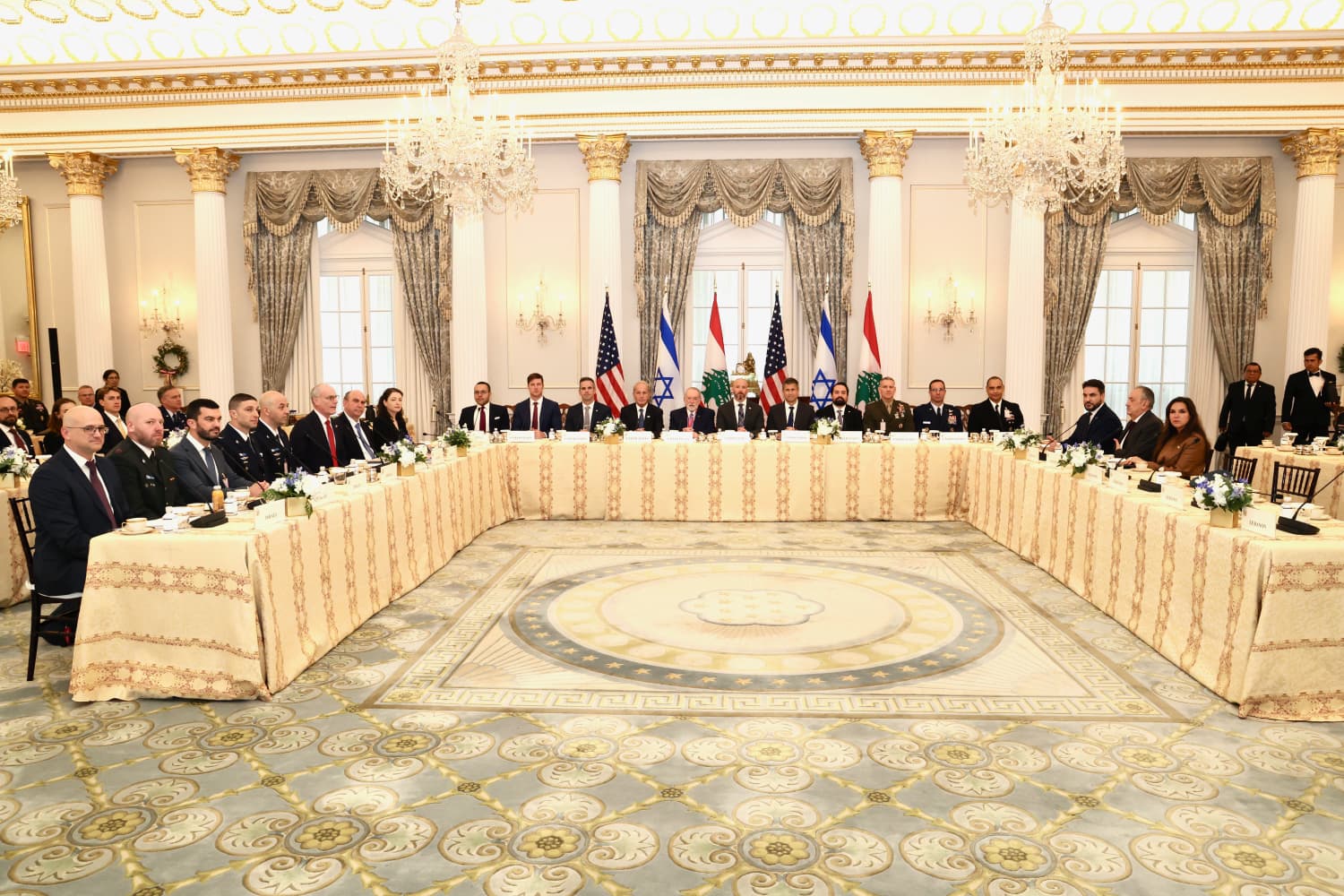
Diplomats take part in direct Israel-Lebanon talks hosted at the US State Department in Washington on June 23, 2026. (Courtesy Israeli Embassy)
WASHINGTON — This week’s round of talks between Israel and Lebanon have been the least productive to date, amid mutual frustration with the Trump administration’s decision to make a ceasefire in Lebanon part of the memorandum of understanding it inked last week with Iran, a government official and a second source familiar with the matter tell The Times of Israel.
Both Israel and Lebanon were opposed to the idea, arguing that it undermines the purpose of the channel between their two countries that Washington established in April specifically to prevent Iran from maintaining its influence over Hezbollah and Lebanon, the two sources say.
The Israeli anger at Washington has led it to be less inclined to accept US requests that it begin pulling back some of its troops from southern Lebanon, the government official says.
Lebanon meanwhile feels that it must take a harder line in negotiations with Israel to counter the notion that Iran wields greater influence over affairs in Lebanese territory than it does, the source familiar with the matter explains.
Accordingly, the Lebanese government has presented maps for a proposed withdrawal that are much more expansive than what Israel is willing to accept at this stage — which was already very little due the political pressures Prime Minister Benjamin Netanyahu’s government is facing, the source adds.
The US was hoping that the three-day talks set to wrap up on Thursday would conclude with an announcement of a pilot program whereby the IDF would withdraw from small areas of southern Lebanon and be replaced by the Lebanese military, with the latter being tasked with dismantling any remaining Hezbollah infrastructure there.
However, such a development currently appears less likely, the two sources tell The Times of Israel.
A State Department spokesperson doesn’t immediately respond to a request for comment.
Police extract bound IDF soldier from West Bank town in suspected criminal incident
Police say they extracted an IDF soldier from the southern West Bank Palestinian town of Tarkumiya, where he was found bound in an incident that investigators believe is crime-related and not terror.
The suspect, a conscript from the south, was brought to a police station for questioning and is expected to be probed by Military Police.
Sacramento Kings draft Tel Aviv-born Emanuel Sharp, who holds Israeli citizenship

Houston guard Emanuel Sharp prepares to shoot a free throw during the first half against Texas A&M in the second round of the NCAA college basketball tournament, March 21, 2026, in Oklahoma City. (AP Photo/Nate Billings)
The NBA’s Sacramento Kings draft Tel Aviv-born guard Emanuel Sharp from the University of Houston.
Sharp, who is the son of former Maccabi Tel Aviv star Derrick Sharp, holds Israeli citizenship and played for Israel’s U16 national basketball team.
He will be the fourth current NBA player with Israeli citizenship, joining Portland Trailblazers All-Star Deni Avdija, and Ben Saraf and Danny Wolf of the Brooklyn Nets.
Brent crude falls below pre-Iran war closing price
Brent crude has fallen more than one percent Thursday, slipping below its closing level on the eve of the Middle East war, as investors grow optimistic about US-Iran peace talks and tankers continue through the Strait of Hormuz.
The contract for August hit a low of $72.44 a barrel, compared with the February 27 close of $72.48. Brent soared as high as $119 in the weeks after the United States and Israel began their strikes on Iran on February 28.
IRGC threatens to target ships using new Hormuz route that forgoes Iran coordination
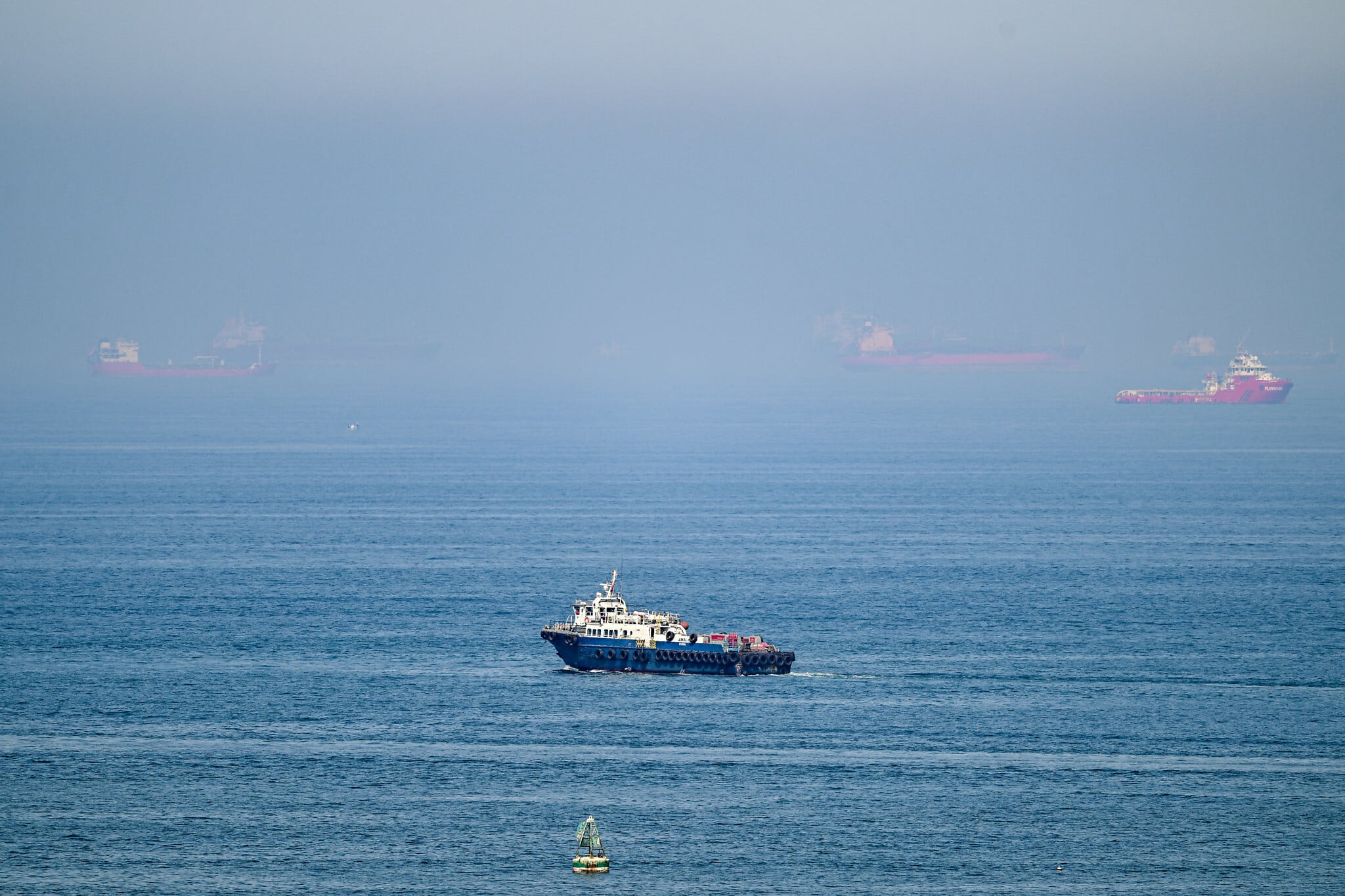
Cargo ships are pictured off the coast of the Khor Fakkan Container Terminal, the only natural deep-sea port in the region and one of the major container ports in Sharjah Emirate, along the Gulf of Oman on June 19, 2026 (AFP)
Iran’s Revolutionary Guards Corps says safe passage through the Strait of Hormuz is only possible through routes designated by Iran, and a new route announced without coordination with Iran is unacceptable and a safety risk.
IRGC says it will take action against vessels that fail to comply with the requirements.
Iran accuses NATO of ‘complicity’ in war after bloc chief’s comments on support for Epic Fury
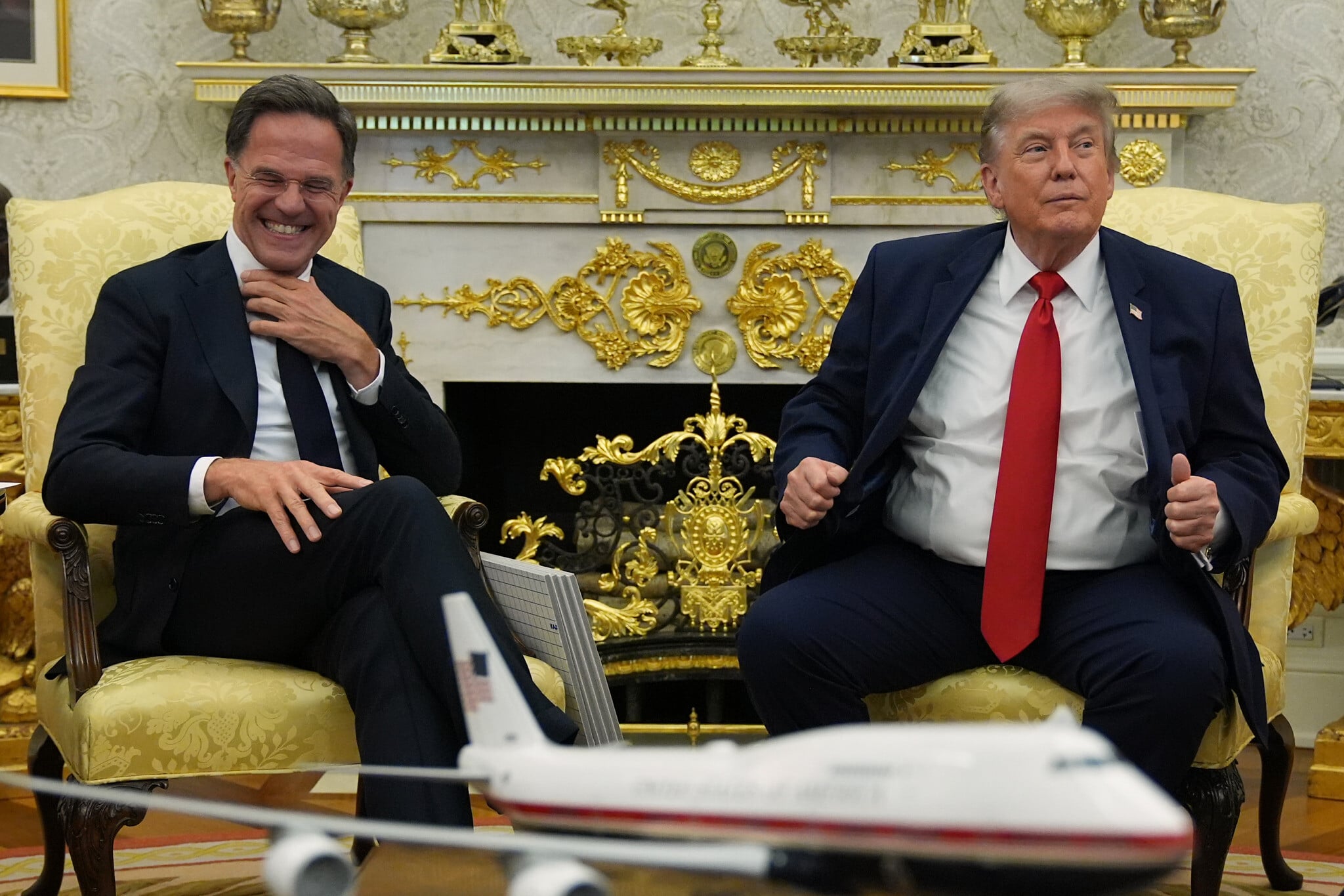
US President Donald Trump meets with NATO Secretary General Mark Rutte in the Oval Office at the White House, June 24, 2026, in Washington. (AP Photo/Jacquelyn Martin)
Tehran accuses NATO of “complicity” in the US-Israeli war against Iran, after the bloc’s chief noted its support for the United States in the conflict.
Responding to US President Donald Trump’s criticism of allies for not supporting the war, NATO boss Mark Rutte has told Fox News that hundreds of American planes launched from bases in Italy.
Trump’s second term has been marked by tensions with NATO allies, who have voiced skepticism over the need for the conflict in the Middle East.
“Country after country, ally after ally after ally, have made their bases available for Epic Fury,” Rutte told Fox News, referring to the US military operation in Iran. “Five hundred US planes took off from US bases in Italy to support Epic Fury.”
Trump told Rutte yesterday he was “let down” by members of the alliance who did not back his war against Iran.
Rutte also told Fox News that Romania “cut down on commercial air flights and airplanes because they had to use the airports for the tanker facilities” during the Iran war.
Iran’s foreign ministry spokesman Esmaeil Baghaei condemns the NATO chief’s purported admission of “active complicity” in the “unlawful war.”
“This is a clear and damning admission of NATO’s active complicity in an unlawful war of aggression against a sovereign UN Member State,” Baghaei writes on X.
He accuses NATO of “a flagrant violation of peremptory norms of international law and the core principles of the UN Charter.”
Italy has been quick to distance itself from Rutte’s words, which the defense ministry said gave “a completely misleading message by confusing the type of flights that were authorized.”
It said Italy had allowed only “technical and logistical” US flights during Epic Fury under existing agreements with the United States.
At least 32 dead, more than 700 injured in Venezuela as emergency declared after powerful twin quakes
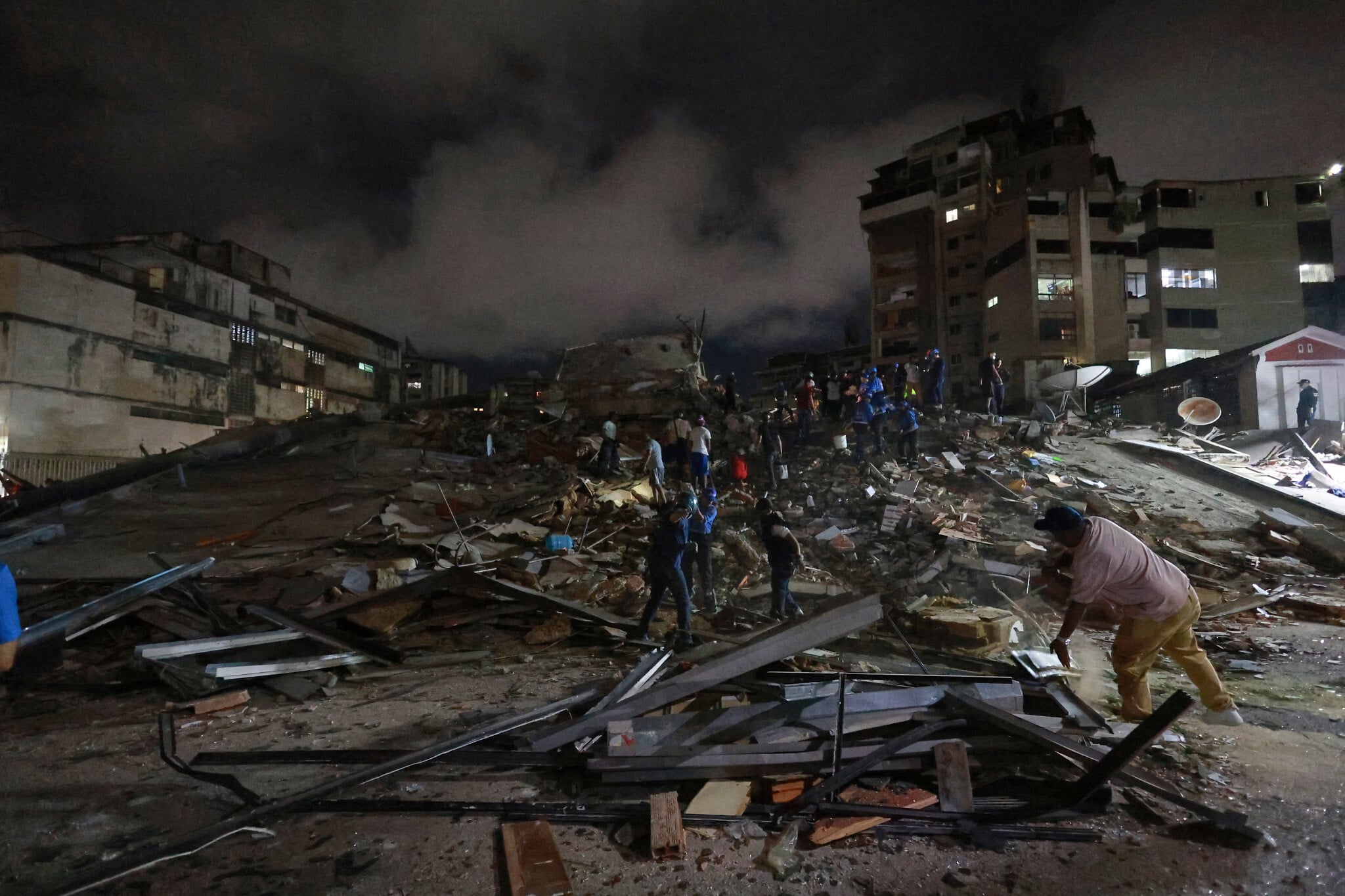
Rescue workers search through the rubble after an earthquake in Caracas, Venezuela, June 24, 2026. (AP/Javier Campos)
Powerful twin earthquakes that have shaken Venezuela killed at least 32 people and injured more than 700, interim president Delcy Rodriguez says.
Rodriguez has declared a state of emergency as two massive earthquakes cause buildings in the capital to crumble and force the closure of the country’s main airport, prompting US President Donald Trump to offer aid.
“At this time, we have received reports of 32 deaths” and “more than 700 injured,” Rodriguez says in an address to the nation, adding she does not yet have data on the “hardest-hit region” of La Guaira, located near the capital.
Rodriguez says 20 aftershocks followed the earthquakes of magnitude 7.2 and 7.5, which struck the same area of Venezuela, according to the United States Geological Survey.
The quakes triggered panic in the capital and drove people into the streets, AFP journalists saw.
“The stairs came away, the whole wall cracked. Things fell from the ceiling. It was horrible,” says 54-year-old bank employee Odalis Escalona.
IDF says reservist killed in truck accident in southern Lebanon
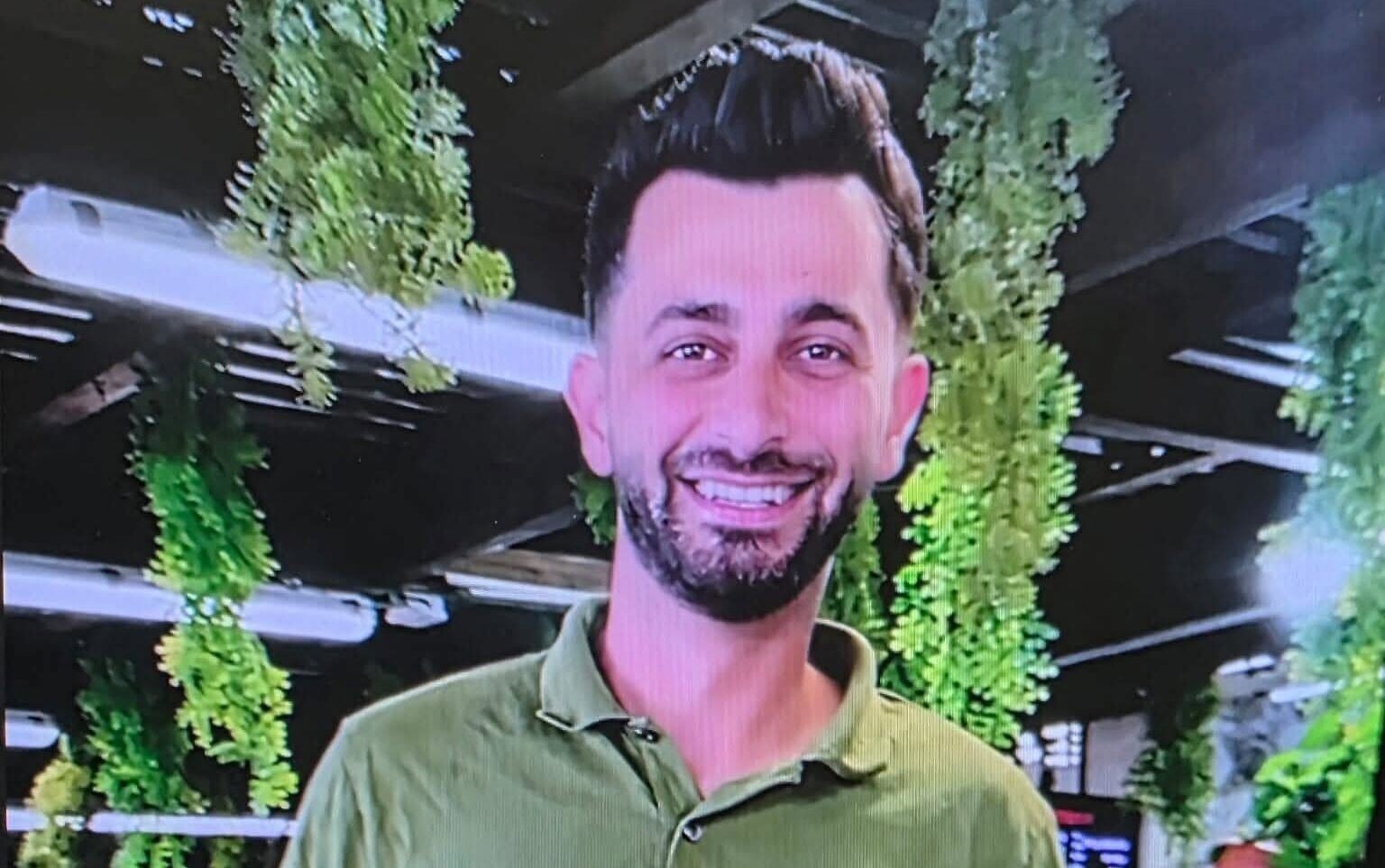
Master Sgt. (res.) Basil Sweid (courtesy)
The IDF announces the death of a reserve soldier in an “operational accident” in southern Lebanon last night.
He is named as Master Sgt. (res.) Basil Sweid, 32, a truck driver in the 7th Armored Brigade’s 75th Battalion, from Peki’in.
The military says Sweid was killed when his refueling truck overturned in the Rab al-Thalathine area at around 11 p.m. last night.
As a result of the truck overturning, Sweid was killed and a combat soldier was moderately injured.
The wounded soldier was hospitalized and his family has been notified.
Israeli rescue groups prepare to help Venezuelan authorities amid unfolding quake disaster
As thousands are potentially missing following powerful earthquakes in Venezuela, Israel’s ZAKA emergency response organization says its teams in the United States, Mexico and Israel are making preparations for possibly being sent to help local authorities rescue people from the rubble.
ZAKA says in a statement that as of now, it hasn’t received information of casualties among the country’s small Jewish community, but it is in contact with local community leaders and other officials.
Fellow rescue organization IsraAid says it is “urgently responding” to the unfolding disaster, promising more updates as the situation develops.
After Venezuela quake disaster, state comptroller repeats warning that Israel is unprepared
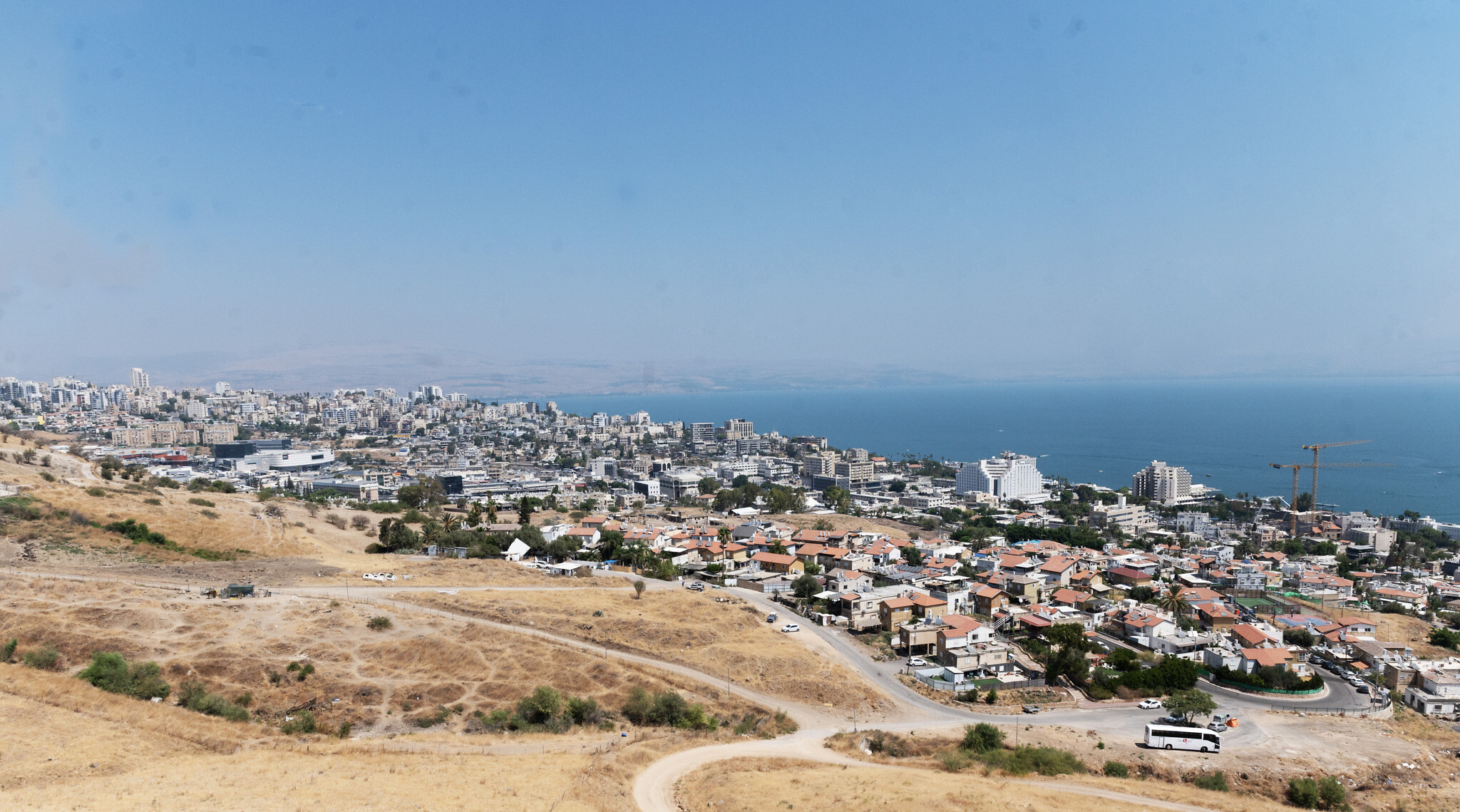
Downtown Tiberias, which lies on the western shores of Lake Kinneret in Israel, is pictured here on August 22, 2023. (Canaan Lidor / Times of Israel)
In the wake of the massive twin earthquakes in Venezuela, the state comptroller reiterates the multiple warnings he has given to authorities in recent years about Israel’s lack of preparedness for a tremor that experts believe is only a matter of time.
Areas in eastern Israel and the West Bank straddle the seismically active Syrian-African Rift, where a major earthquake occurs every 80 to 100 years. The last major tremor struck in 1927, killing 500 people.
As recently as this month, State Comptroller Matanyahu Englman stated that not enough buildings are being reinforced against earthquakes as part of urban renewal projects.
In earthquake-prone cities such as Beit She’an, Tiberias, Safed and Kiryat Shmona in the north, only 23 buildings since 2017 have been slated for a Pinui Binui urban renewal project — in which old buildings are torn down and replaced with new, reinforced ones — and none of those have gotten to the stage of receiving a construction permit.
In a 2024 report, Englman called on the state to study how other countries prepared for a quake and protected human life while limiting physical damage.
Since 1980, new residential buildings in Israel have been required to comply with Standard 413 for earthquake resistance. However, as the state comptroller warned last summer, 80,000 buildings of three or more stories, housing over 810,000 apartments, were built before this date and remain unreinforced.
Many are in central cities such as Tel Aviv, Holon and Bat Yam. And many public buildings, including hospitals, Magen David Adom emergency services points, and 400 schools, cannot be fortified but must be demolished and rebuilt.
Despite efforts to encourage upgrades through the urban renewal plan Tama 38, only 3,900 buildings — about 5% of those eligible — have been reinforced over two decades, according to a Knesset Research and Information Center report presented to the Knesset Internal Affairs and Environment Committee in November. Another 14% have requested permits.
After symbolic rebuke, US Senate sides with Trump in fresh vote on Iran war powers
The US Senate has rejected a resolution to rein in President Donald Trump’s handling of the Iran war — an apparent U-turn following pressure from the Republican leader.
The move comes just one day after the Senate voted 50-48 to pass a resolution calling for an end to the Iran war, delivering a rebuke to the White House as it seeks to negotiate a lasting deal with Tehran.
The legislation is seen as largely symbolic and has little chance of curbing executive authority because Trump has the presidential power of veto.
Trump slammed the Tuesday vote as “poorly timed and meaningless,” saying that it made his job more difficult.
The president lashed out yesterday at Republican lawmakers during a closed-door lunch on Capitol Hill.
Hours later, Republican Senators Rand Paul and Bill Cassidy — who had called for a check on the president’s war on Iran — changed their stance in the repeat vote to align with Trump, CNN reported.
The new resolution, which is defeated 50-47, does not nullify or change the outcome of Tuesday’s vote.
Trump takes a more positive view of the fresh result, writing on Truth Social that “This vote puts Iran on notice!”
Israel preparing to potentially send aid team to quake-stricken Venezuela; no Israelis known to be harmed
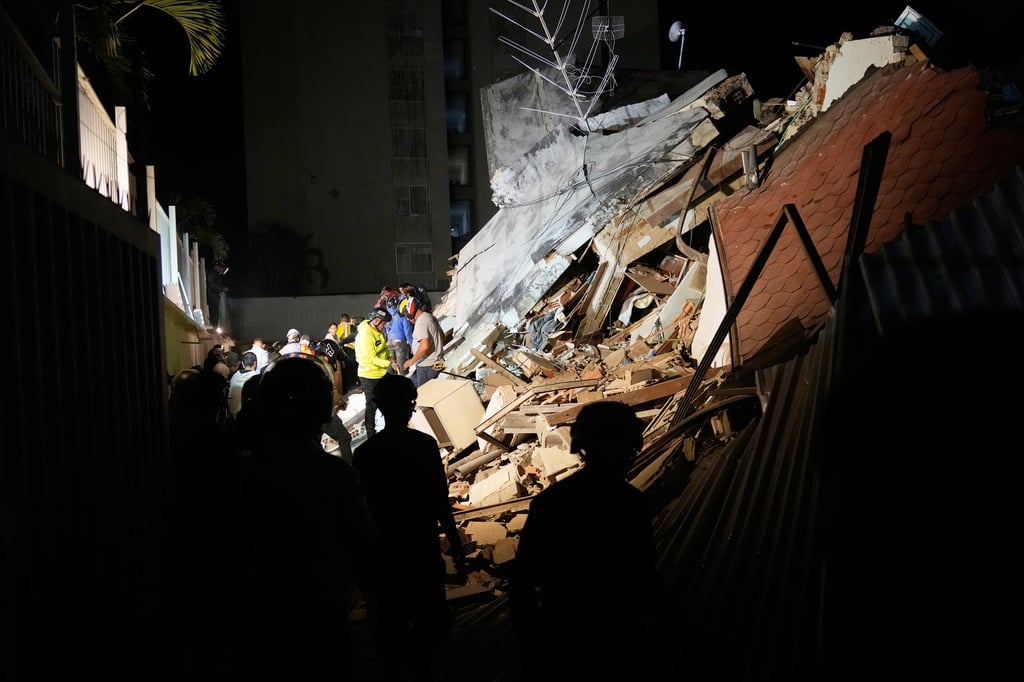
Rescue workers search through the rubble of a collapsed building for survivors after an earthquake in Caracas, Venezuela, June 24, 2026. (AP Photo/Ariana Cubillos)
Israel is making “immediate preparations” for the possible deployment of an aid delegation to Venezuela, the Foreign Ministry says in a statement, as thousands of people are potentially missing following powerful earthquakes in the South American country.
The ministry is “conducting a situational assessment with the relevant authorities in Israel and is examining possible avenues for assistance,” the statement adds.
There is currently no knowledge of any hurt or missing Israelis in the country amid the natural disaster, The Times of Israel understands.
Israel’s ZAKA emergency response organization said earlier that it is preparing teams to possibly be sent to help local authorities rescue people from the rubble, adding that it hasn’t received information of casualties among the country’s small Jewish community. Fellow rescue organization IsraAid also said it was “urgently responding” to the unfolding disaster.
The Foreign Ministry and Defense Ministry sent a delegation of experts to Thailand last year to assist in search and rescue efforts following a major earthquake in the region.
Ben Gurion Airport set for its busiest day since before Iran war broke out
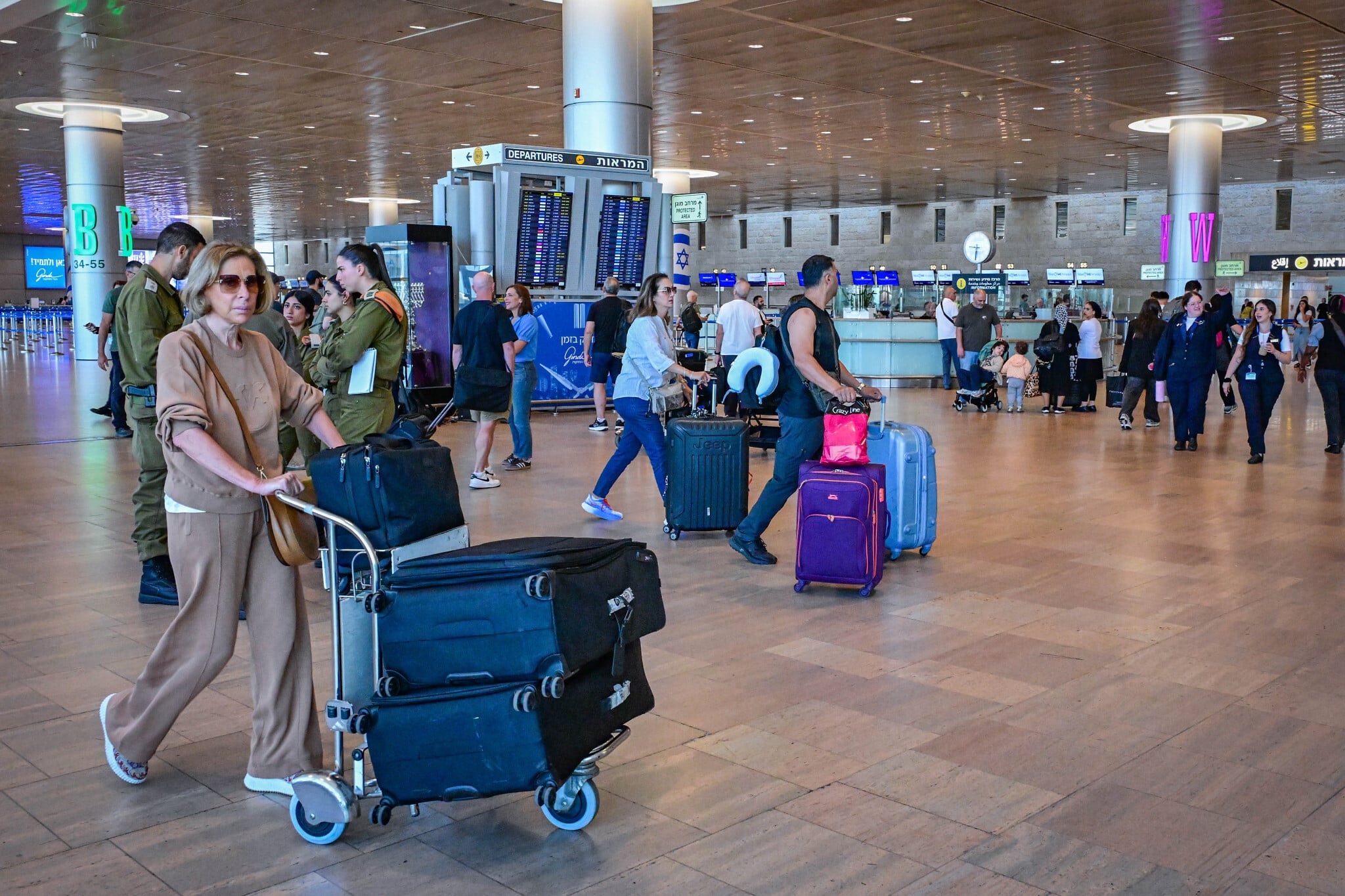
Passengers at Ben Gurion Airport near Tel Aviv on June 8, 2026. (Avshalom Sassoni/Flash90)
Tel Aviv’s Ben Gurion Airport is set to record the busiest day since the US-Israeli war with Iran, according to data by the Israel Airports Authority.
More than 75,000 passengers are expected to pass through Ben Gurion Airport today on incoming and outgoing international flights, the highest number of travelers in a single day since before the war broke out on February 28, the Israel Airports Authority says.
In July, more than 2 million passengers are expected to travel through the country’s main international airport, marking a 25% increase in traffic compared with the same month last year.
The US-Israeli war with Iran led to the closure of Israel’s airspace, which was reopened to regular civilian air traffic in early April as a ceasefire took effect.
Rubio: Iran deal won’t ‘counter the interests of our allies’; Hormuz tolls or fees unacceptable: ‘International waterways do not belong to any nation’
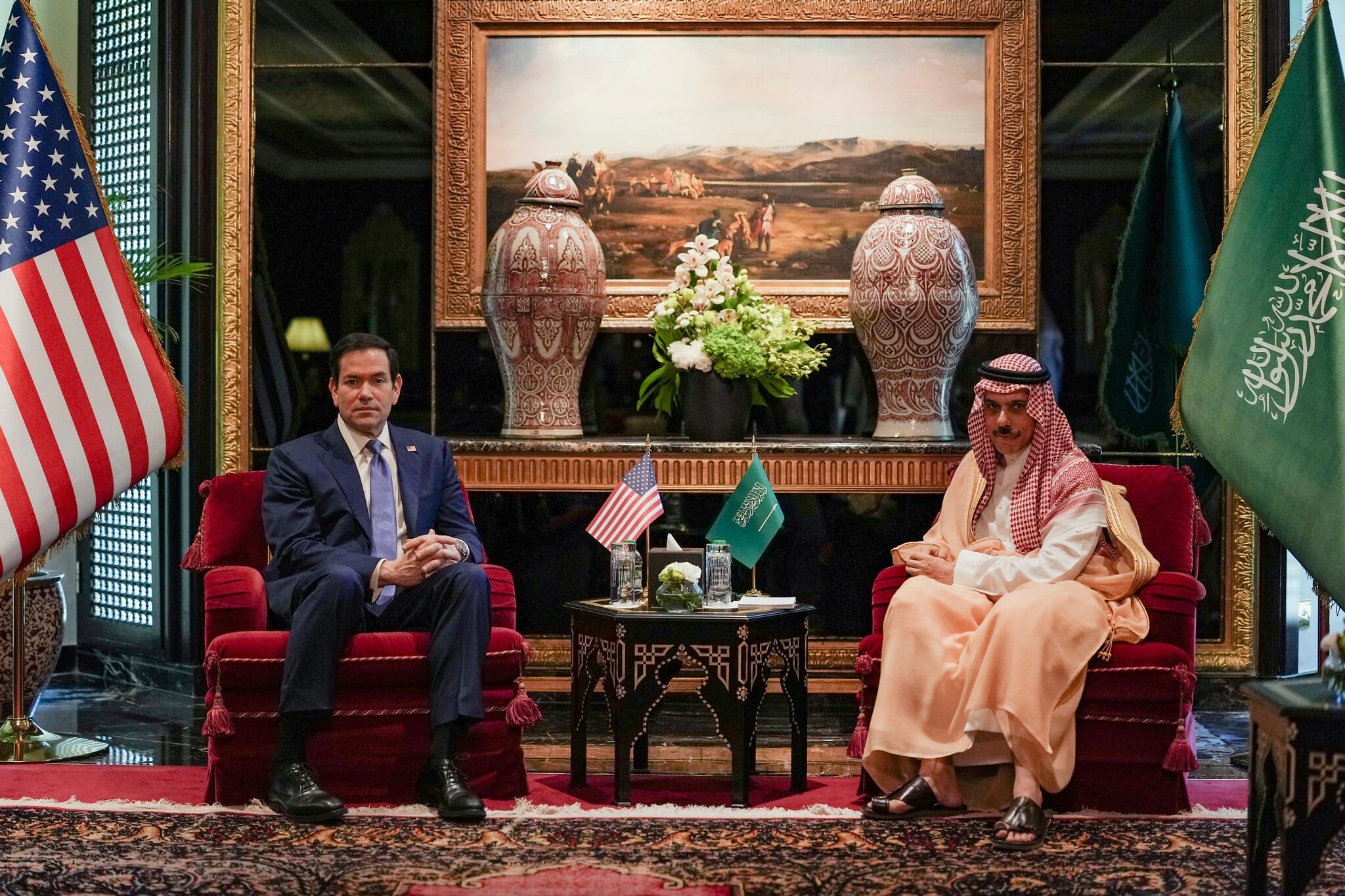
US Secretary of State Marco Rubio, left, meets Saudi Foreign Minister Faisal bin Farhan Al Saud in Manama, Bahrain, June 25, 2026. (Eric Lee/Pool Photo via AP)
Amid deep Israeli dissatisfaction with the inclusion of Lebanon in the US-Iran deal and the clause that unilaterally says US allies are part of the memorandum of understanding, US Secretary of State Marco Rubio says Washington will ensure that none of the decisions made as part of the final agreement “will counter the interests of our allies and partners.”
“We are open for peace that is enduring and real and doesn’t undermine the security and prosperity of the US or its allies,” he tells a Gulf Cooperation Council meeting in Bahrain.
Rubio also warns that Iranian tolls on ships passing the Strait of Hormuz would spread to other waterways, risking “total chaos.”
“International waterways do not belong to any nation [or] state. This is a foundational principle in the world today, without which the world would be in total chaos,” he says.
“If in fact we accepted that you can charge money to use an international waterway because it happens to be near your territorial space, well then this will spread throughout the world like a contagion.”
Rubio says the US wants a deal with Iran, but not at any price.
He rejects Iranian attempts to collect what it describes as service fees and not tolls, saying that “at the end of the day, it’s all semantics.”
IDF says Islamic Jihad commander who posed threat was killed in Tuesday strike in Gaza
A Palestinian Islamic Jihad commander was killed in an Israeli strike in the southern Gaza Strip this week, the military announces.
The IDF says the strike on Tuesday in Khan Younis killed Adam Muhammad Ibrahim Abu Hadid, a commander in Islamic Jihad’s “weapons production array.”
The unit is responsible for the manufacturing and supply of all weapons to the terror group’s military wing.
The military says Abu Hadid “was involved in various processes within the production array, and oversaw infrastructure that was used to manufacture additional weapons intended to attack IDF troops and Israeli civilians.”
Abu Hadid “posed an immediate threat to the troops and was eliminated in a precise strike,” the IDF adds.
‼️جيش الدفاع يقضي على قائد في منظومة الإنتاج التابعة لمنظمة الجهاد الإسلامي الإرهابية في قطاع غزة
????هاجم جيش الدفاع في وقت سابق من هذا الأسبوع (الثلاثاء) في منطقة خانيونس، وقضى على المخرب آدم محمد إبراهيم أبو حدايد، وهو قائد في منظومة الإنتاج التابعة لمنظمة الجهاد الإسلامي… pic.twitter.com/tXBEy0A6m0
— Lieutenant Colonel Ella Waweya | إيلا واوية (@CaptainElla1) June 25, 2026
Police arrest two people suspected of pulling guns on Haredi protesters
Police announce that they have arrested two individuals on suspicion of threatening Haredi demonstrators with their guns during mass protests yesterday against ultra-Orthodox conscription.
One of the suspects was filmed yesterday pointing his handgun at a group of demonstrators who were blocking the road to Jerusalem, while driving on Route 1.
Police say officers from the Harel station seized a gun from the suspect’s possession and jailed him after his interrogation. He will be brought to court for a remand hearing today.
תיעוד שמפיצים בארגון המחאה: נהג נראה שולף אקדח כלפי מפגינים חרדים בכביש 1 pic.twitter.com/KhMSE2PvVd
— שילה פריד???????? (@shilofreid) June 24, 2026
The second suspect, who was filmed later that night on the same highway, does not possess a gun license. Police are still questioning him regarding the suspicion that he threatened demonstrators with a firearm.
Yesterday, thousands of ultra-Orthodox demonstrators took to highways across Israel to protest the detention of draft-evading yeshiva students, sparking clashes with motorists and causing widespread traffic throughout the country.
Protest convoys set out from over a dozen locations across the country toward Neve Tzedek (Beit Lid) military prison in Kfar Yona. Police turned away anyone who showed up and most participants, among them Haredi lawmakers, turned around and went home after around four hours on the road.
Israel has withdrawn from part of southern Lebanon security zone, US official claims
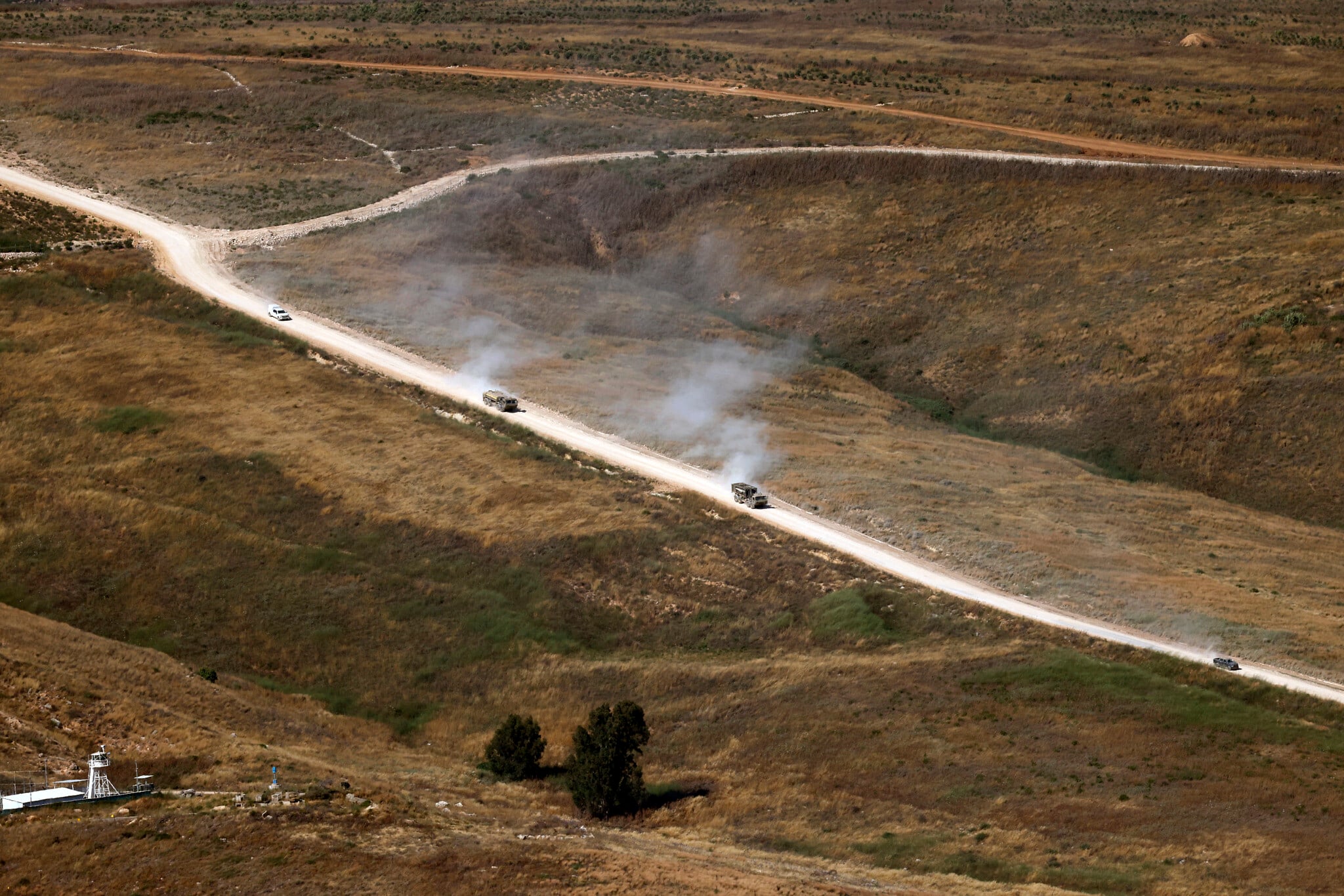
This picture taken from a position in the Upper Galilee in northern Israel shows Israeli military vehicles driving along a road in southern Lebanon on June 22, 2026. (Jalaa MAREY / AFP) /
Israel has withdrawn from some of the southern Lebanese territory it has seized in its war with Hezbollah, a US State Department official says, adding that Lebanon’s armed forces should now step in.
There is no immediate comment from Israel. A senior Lebanese security official says they are unaware of any withdrawal of Israeli troops from its so-called security zone in southern Lebanon.
The State Department official does not say how much territory Israel withdrew from or where exactly the pullback occurred. Israel and Lebanon have been holding US-brokered talks in Washington aimed in part at halting fighting between Israel and the Iran-backed Hezbollah terror group.
“Israel has already taken a concrete step by pulling back from a part of its buffer zone. This is a significant demonstration of good faith toward Lebanon’s legitimate government,” the official says.
“The [Lebanese Armed Forces] should now move in and verifiably clear out terrorist weapons and infrastructure. This model will be repeated across South Lebanon, enabling the safe return of displaced families, reconstruction of the south, and the restoration of full Lebanese sovereignty,” the official adds.
Israeli security officials deny IDF has withdrawn from parts of Lebanon
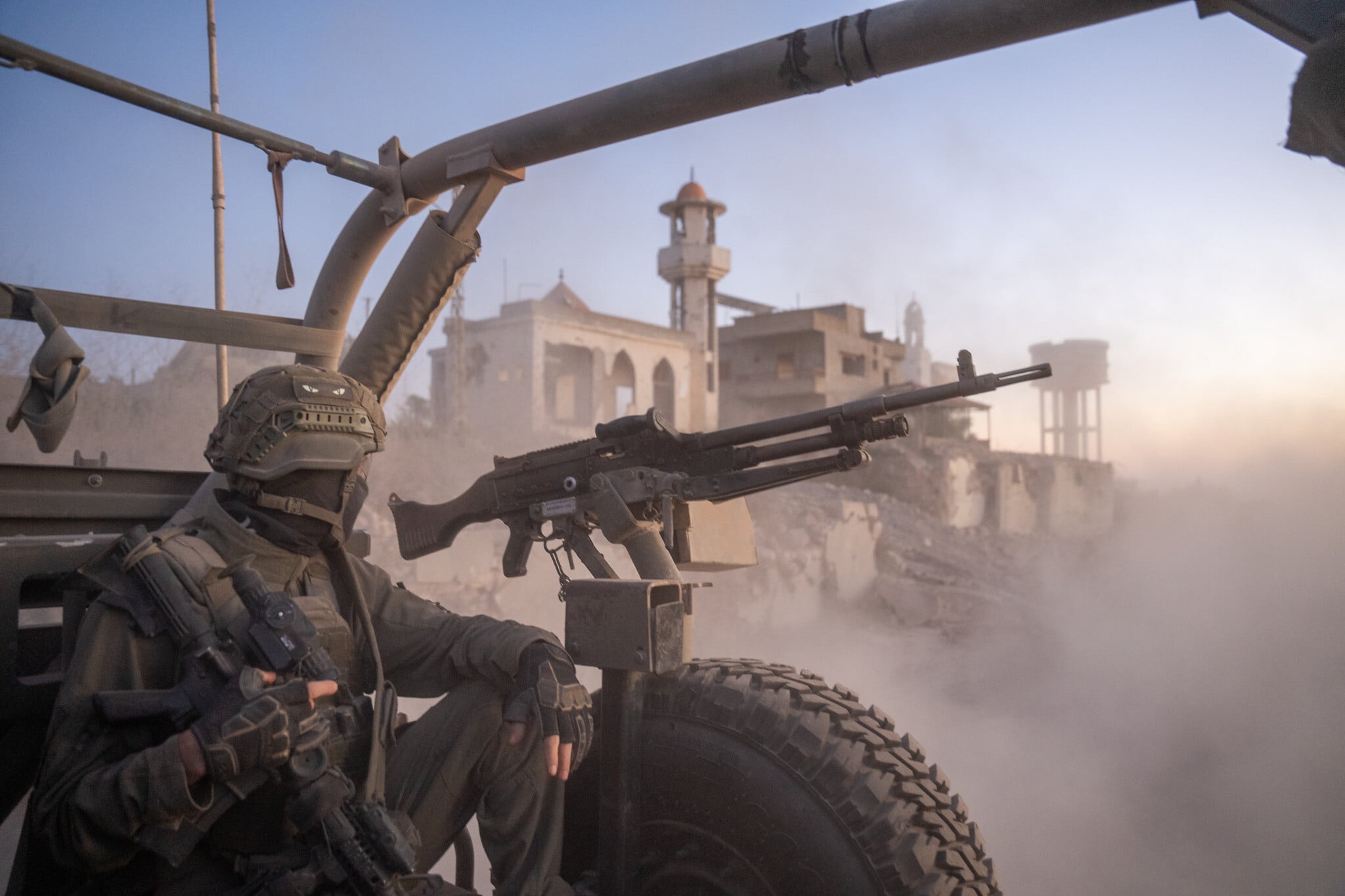
An Israeli soldier is seen in a Humvee during a drive in southern Lebanon, on June 18, 2026. (Emanuel Fabian/Times of Israel)
Israeli security and military officials deny a Reuters report that the IDF has withdrawn from parts of Lebanese territory.
The Israeli military has yet to be instructed by political leaders to withdraw, according to the officials.
The IDF’s potential withdrawal from areas of southern Lebanon has been discussed during direct negotiations between Israel and Lebanon, but no agreement has been reached yet.
Defying High Court, Levin to convene Judicial Selection Committee but refuses to appoint district judges
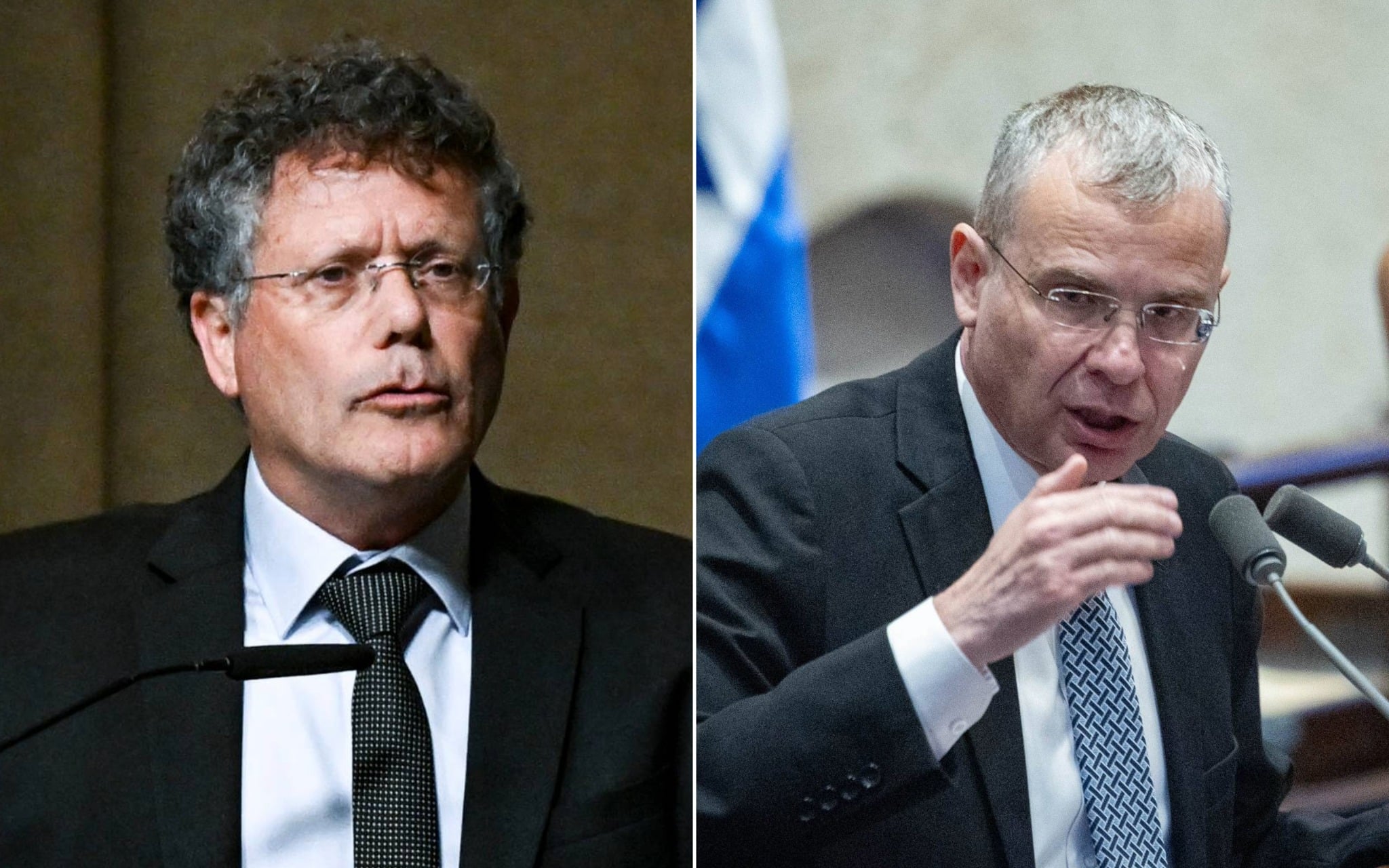
L: Supreme Court President Isaac Amit attends a conference of the Israeli Association of Public Law (IAPL) in Haifa, December 4, 2025. (Flash90); R: Justice Minister Yariv Levin at the Knesset in Jerusalem, October 29, 2025. (Chaim Goldberg/Flash90)
Justice Minister Yariv Levin is set to defy an order from the High Court of Justice by convening the Judicial Selection Committee but refusing to appoint district court judges as the court ordered.
Levin recently issued a notice to members of the committee informing them that he will convene the panel on Sunday to deliberate on the appointment of judges to magistrates’ courts, traffic courts and family courts in the northern district, and possibly magistrates’ courts in the southern district.
But on May 31, the High Court ordered Levin to “take the necessary steps” to appoint district court judges, specifically to the Haifa and Beersheba district courts where there is an acute lack of judges, and ordered him to publish candidates’ names by June 8, which Levin has failed to do.
The Movement for Quality Government in Israel, whose petition to the High Court prompted the original court order, filed a motion for a contempt of court order against Levin earlier this month due to his refusal to advance the judicial selection process for district court judges.
Levin has refused to convene the Judicial Selection Committee for a year and a half, seemingly because he does not have a majority on the panel to ensure his preferred candidates get selected.
As a result, there are 51 vacancies on the country’s various magistrates’ and district courts, a number that will rise to 67 by the end of the year. Once the Knesset is dissolved for elections next month, making judicial appointments will become even more difficult, meaning that the courts’ case burden will increase even further.
And after the next elections, the government’s judicial appointments legislation will come into effect, which gives politicians from both the coalition and opposition veto power over lower court appointments. The High Court is, however, reviewing that legislation, and appears poised to strike it down.
El Al suspends Tel Aviv-Moscow flights after Ukraine strikes in Russia
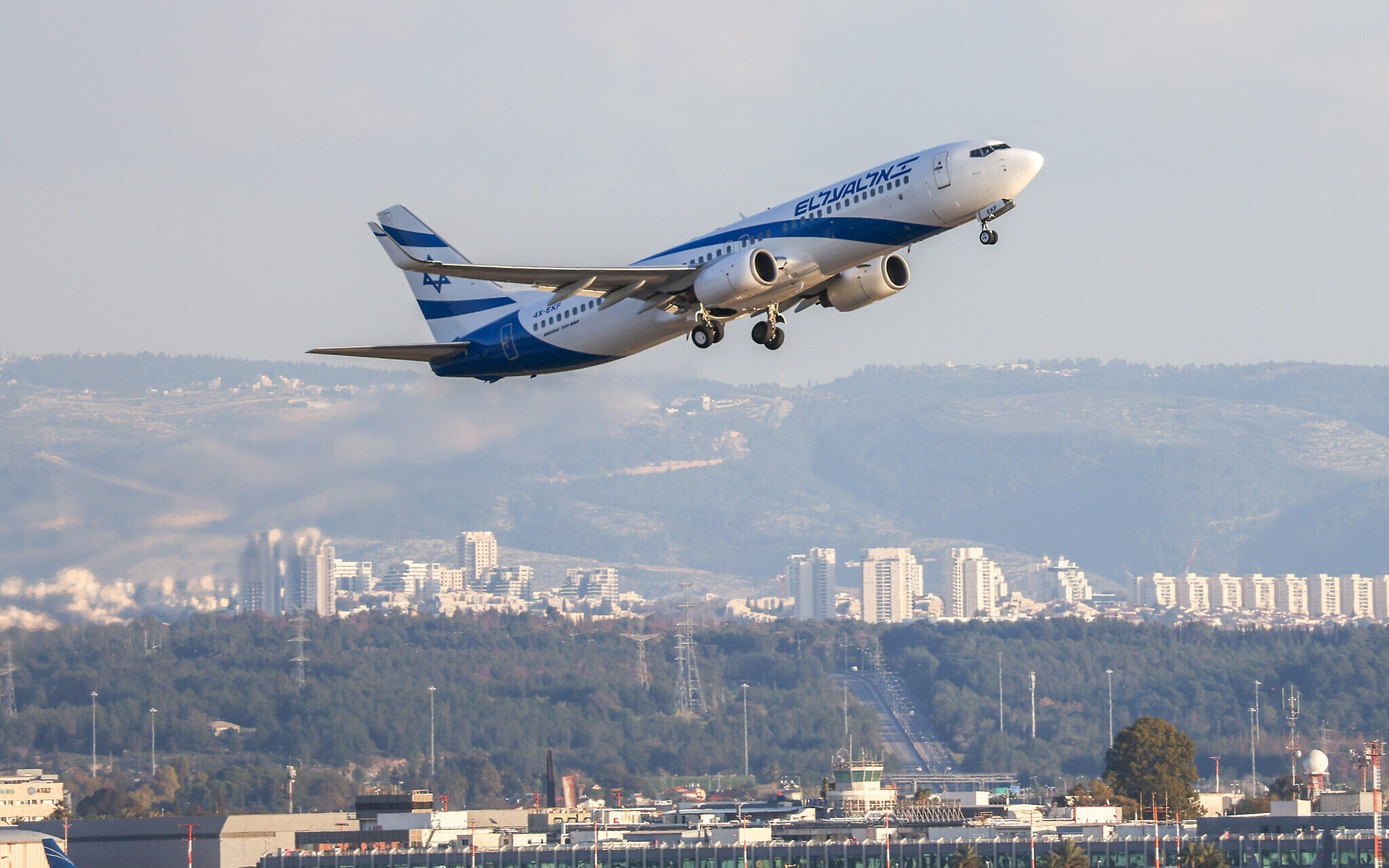
An El Al plane takes off at Ben Gurion International Airport, outside of Tel Aviv, March 5, 2026. (Yossi Aloni/Flash90)
El Al Airlines will suspend its Tel Aviv-Moscow flights for the coming days due to developments between Russia and Ukraine and recent aviation incidents in the region, a spokesperson says.
The airline will reassess the situation next week and decide whether to resume operations, with passengers to be informed and offered alternatives in accordance with the law.
Ukraine’s military hit an oil depot in Russia’s Krasnodar region and two oil refineries in the Ufa region, 1,500 km (932 miles) from the Ukrainian border, President Volodymyr Zelensky said today.
Porush slams Smotrich, national-religious community over stance on Haredi draft
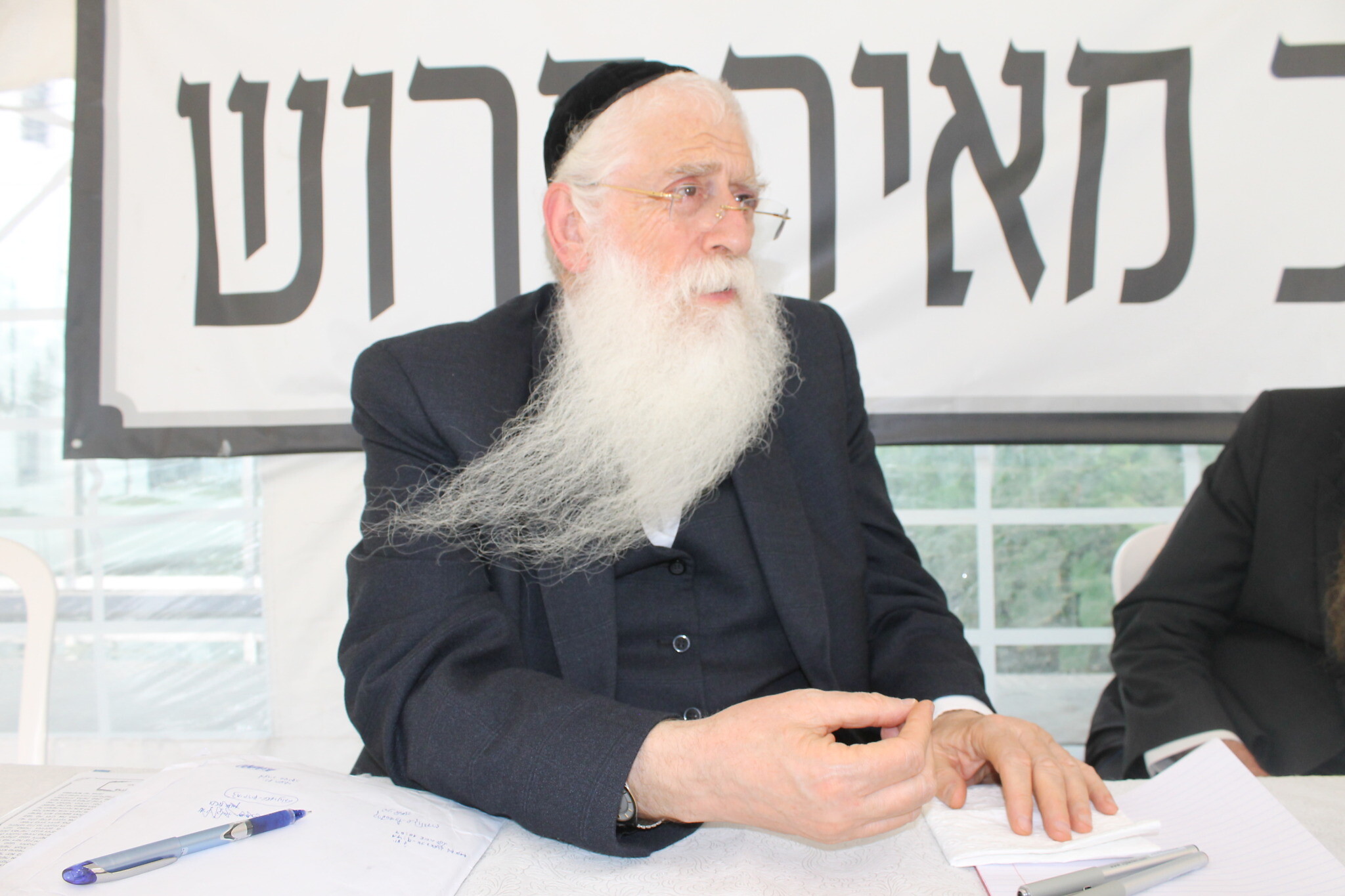
MK Meir Porush sits in a protest tent outside the Justice Ministry in Jerusalem, August 12, 2025. (Sam Sokol/Times of Israel)
United Torah Judaism MK Meir Porush slams Finance Minister Bezalel Smotrich’s Religious Zionism party, and the national-religious community as a whole, over their opposition to legislation exempting Haredi yeshiva students from military conscription.
Speaking to the ultra-Orthodox Kikar Hashabbat news site, Porush notes that many religious Zionist men go to Hesder yeshivas and serve less than the full 32-month service, and that many women in the community don’t serve in the army at all.
He argues that once left-wing opponents of the current government “finish with us, they will move on to them. The shame of Religious Zionism is that this is a party that barely scrapes the electoral threshold, yet it tries to dictate opinions to [Prime Minister Benjamin Netanyahu] and United Torah Judaism.”
Porush recalls the stance of a prominent Haredi anti-Zionist rabbi from the early days of the state who forbade his followers from collaborating with the national-religious movement because it “is the worst thing.”
“These people will tell you ‘we are with you’ and in the end, they hurt you,” he says. “What is bothering them? Are we harming anyone from the settlements? It hurts them that our mothers will get daycare subsidies? At every step, they hurt us — a party that barely scrapes the electoral threshold,” he argues.
Porush is an outspoken opponent of efforts to conscript Haredim. He recently appeared to call on police to refuse orders to arrest yeshiva students who disobey draft orders, and a 2025 Times of Israel investigation found that a telephone hotline linked to Porush, then a member of Netanyahu’s cabinet, was counseling callers to “just ignore” summonses to the IDF’s recruitment bureau.
State attorney slams bill subordinating internal police probes to politicians, warns of ‘delegitimization’ of law enforcement
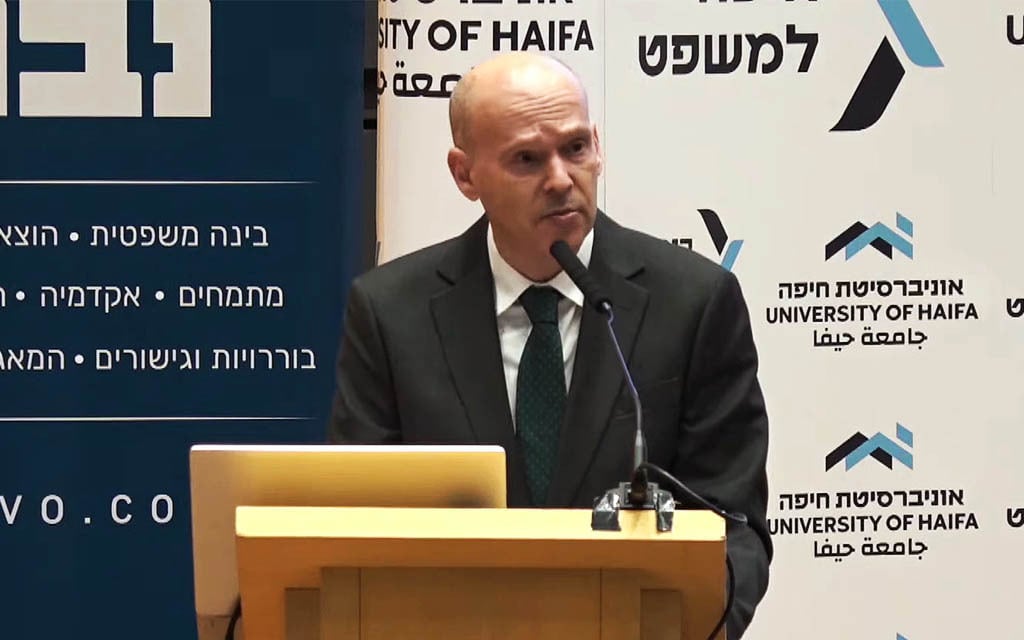
State Attorney Amit Aisman speaks at a legal conference at Haifa University on June 25, 2026. (Screenshot/YouTube)
State Attorney Amit Aisman says there have been “repeated” attempts to exert influence over decision-makers in law enforcement agencies and undermine public trust, warning that such attempts threaten to erode the foundations of the state.
Speaking at a legal conference at the University of Haifa, the top prosecutor says that amid many challenges facing law enforcement, among them widespread government corruption and rampant organized crime, the law enforcement system is under intense political pressure.
He mentions a law recently passed by the ruling coalition that gives the justice minister direct control over the Department of Internal Police Investigations. “There is fear that the law is meant to create mechanisms that could be used as a means to pressure investigators fulfilling their duties. Deterred investigators will not probe corruption offenses,” he warns.
The law effectively subordinates the agency, which probes criminal suspicions against police officers, to an elected official as opposed to professional prosecutors in the State Attorney’s Office, raising fears that it could politicize criminal cases against police.
“The law enforcement system, with the State Attorney’s Office at its head, is in a double bind. On one hand, there is government corruption, sensitive investigations against those who hold power, and a technological revolution; on the other hand, [there is] social polarization,” he says. “The rule of law is not tested when consensus exists, but rather in conflict and disagreement.”
Though “criticism of the law enforcement system is legitimate and even desirable, Aisman says the behavior of certain politicians amounts to “delegitimization.”
“The struggle against government corruption is not political; it is meant to ensure a simple principle: There is no one who is above the law,” he adds.
IDF postpones demolition of Hezbollah tunnel and other sites in south Lebanon amid ceasefire
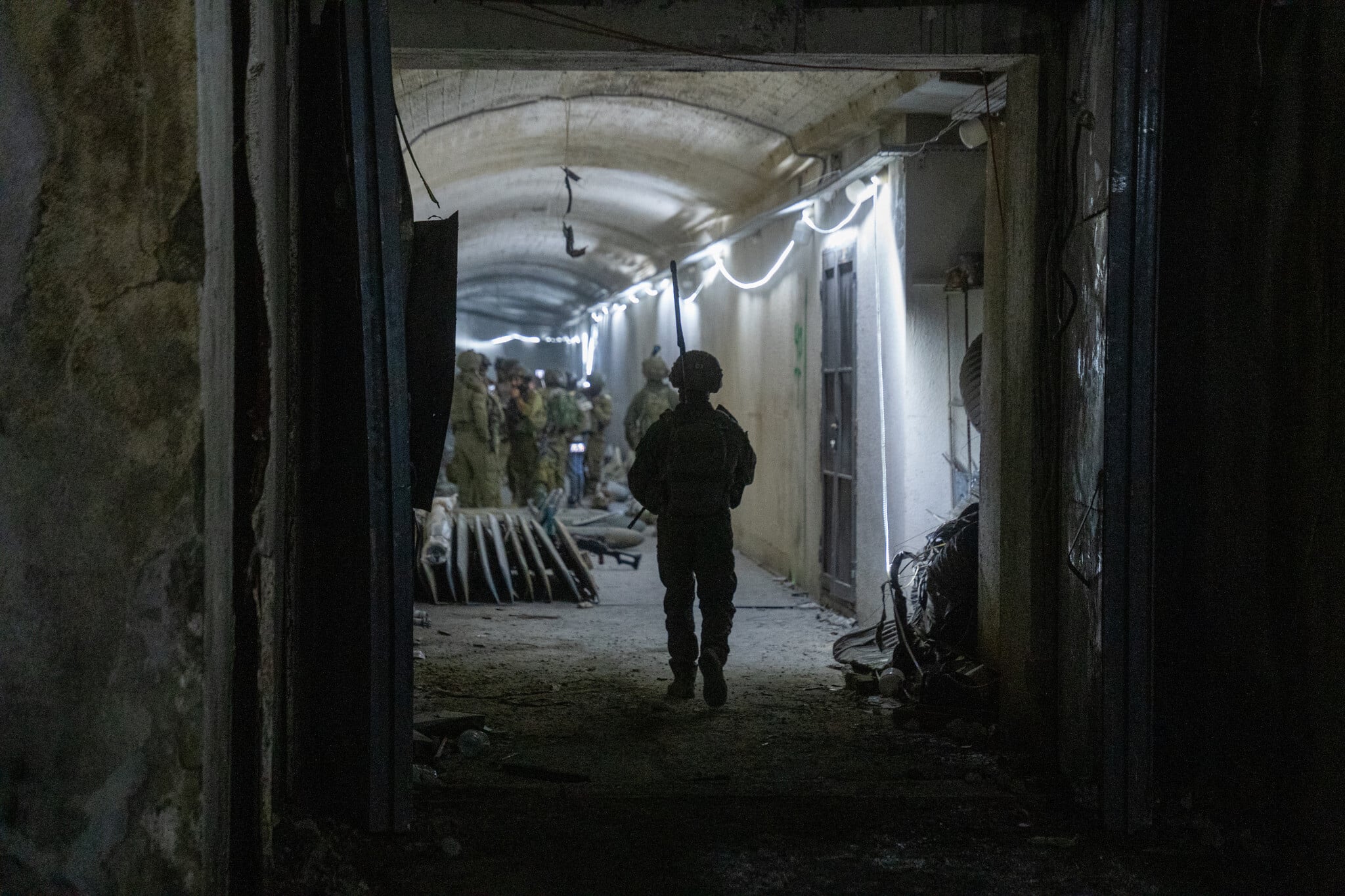
An Israeli soldier is seen in an underground Hezbollah drone facility in Majdal Zoun, southern Lebanon, on June 18, 2026. (Emanuel Fabian/Times of Israel)
The IDF has postponed the demolition of several Hezbollah terror infrastructures in southern Lebanon amid the current ceasefire with the terror group, The Times of Israel has learned.
A tunnel in the southern Lebanon village of Majdal Zoun, which reporters visited last week, has not yet been demolished.
Similarly, other Hezbollah infrastructures near the Beaufort Castle, which were captured by the IDF in early June, have not yet been demolished.
Also, amid the ceasefire, the IDF halted efforts to capture a “strategic” underground Hezbollah facility beneath the Ali Taher ridge near Nabatieh.
According to the military, the Ali Taher tunnels are the “nerve center” of Hezbollah’s Badr regional division. The IDF said last week that at least 30 Hezbollah operatives remained holed up underground in the area, and fighting had taken place above and below ground.
However, on Saturday, when the IDF was instructed by Israeli leaders to halt its fire in Lebanon, the military froze its activity in the Ali Taher area and has not attempted to enter the fortified tunnels.
In the past two days, the IDF has carried out strikes on several Hezbollah operatives identified above ground in the Ali Taher area, saying they posed a threat to troops.
The instruction to halt fire in Lebanon came under heavy US pressure, as Washington holds talks with Iran on a final deal to end the war, after reaching an initial memorandum of understanding that required the US “and its allies” to halt all military activity on all fronts, explicitly including Lebanon. That deal was reached against Israel’s wishes, and Jerusalem has vowed to remain in a security zone it has captured in southern Lebanon even as US-mediated talks with Beirut are reportedly discussing a limited pullout.
Police find suspected terror tunnel running from West Bank toward Jerusalem, 2 arrested
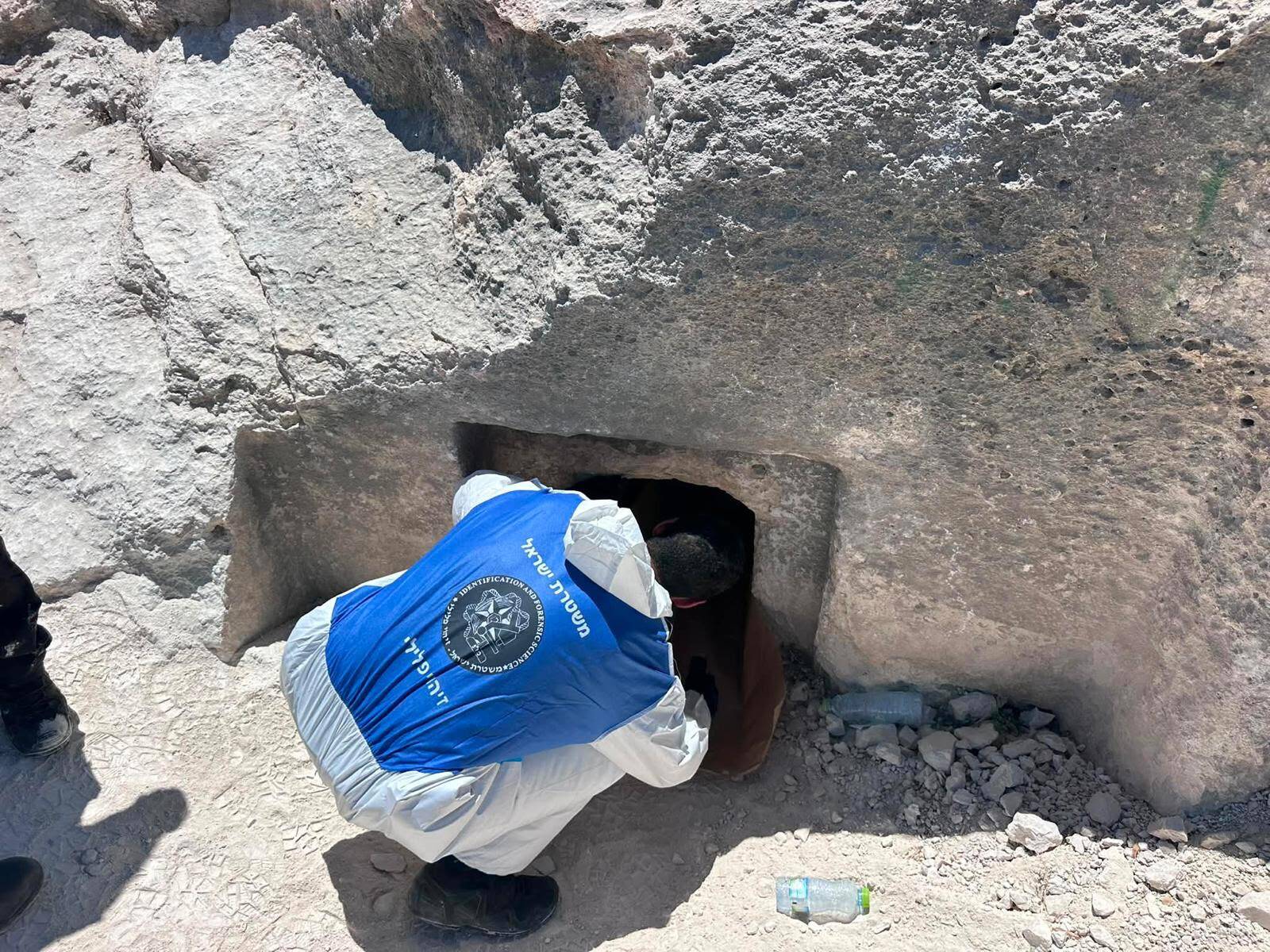
An Israel Police officer at the entrance to a suspected terror tunnel running from the area of A'zaim checkpoint in the West Bank toward Israel, in an image released on June 24, 2026. (Israel Police)
A Palestinian and an East Jerusalem resident were arrested yesterday on terror suspicions after the Israel Police discovered a tunnel near the A’zaim checkpoint in the West Bank, east of Jerusalem.
Officers were called by Civil Administration officials and found the underground passage, built from the West Bank toward Israel at a depth of 25 meters, police say in a statement issued yesterday.
Cops found digging equipment, water bottles, gloves, face masks and more equipment, the statement says, adding that forensic examination yielded DNA samples that led to the arrests of the two individuals.
One suspect is a Palestinian from al-Azariya and the second is an East Jerusalem resident. Both are in their 30s.
They have been taken for questioning on suspicion of digging the tunnel recently, with the goal of using it to commit terror attacks or to allow illegal workers to enter Israel, police say.
Underground tunnels have long been a strategic tool used by terror groups in Gaza and Lebanon, but few have been discovered to date in the West Bank.
KKL-JNF earmarks $100,000 to help Venezuelan Jews after devastating earthquakes
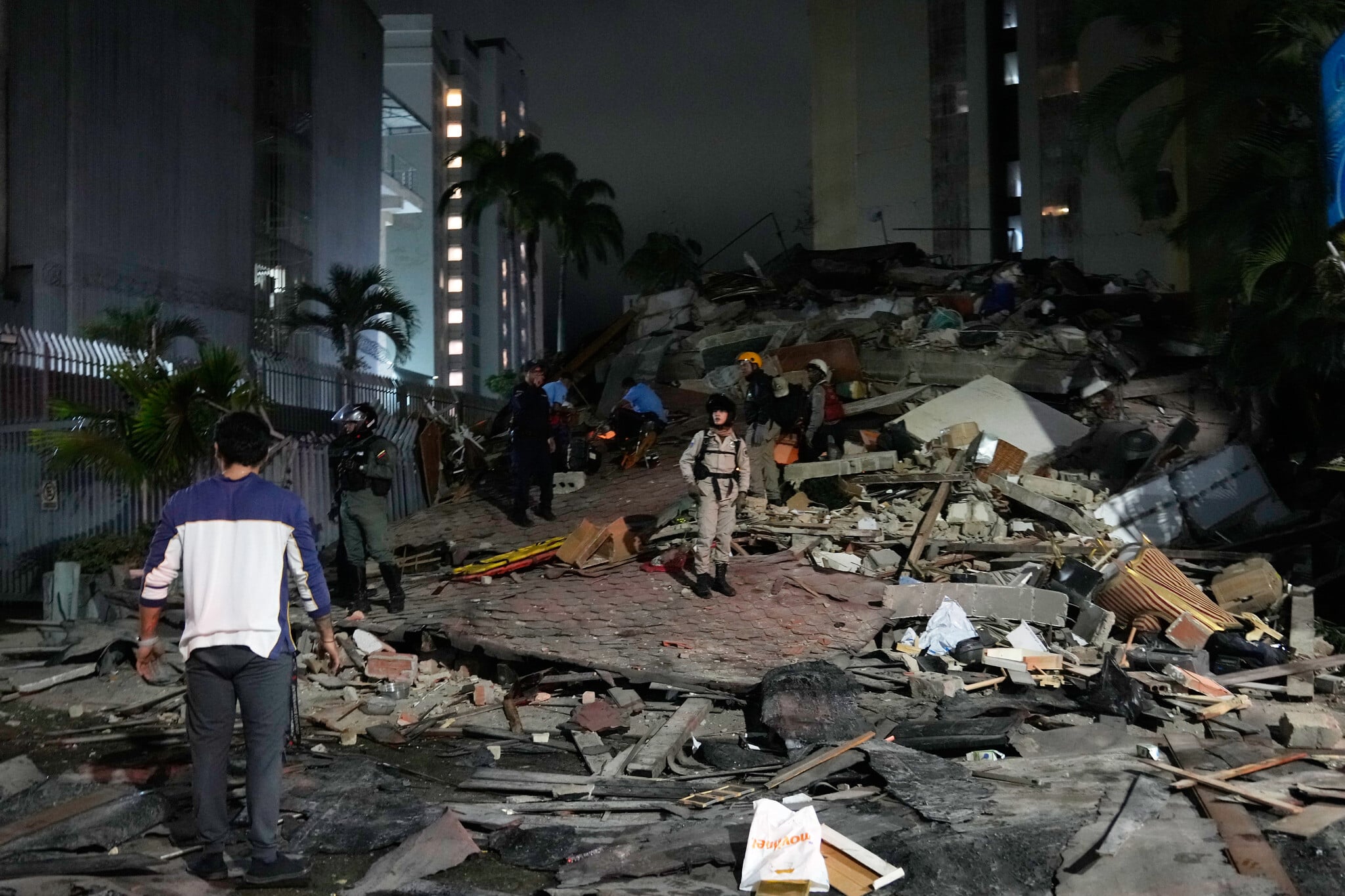
People walk amid debris after an earthquake in Caracas, Venezuela, June 24, 2026. (AP Photo/Ariana Cubillos)
The KKL-JNF Jewish National Fund announces an initial NIS 300,000 ($100,000) to help the Jewish community in Venezuela following the twin major earthquakes there, in which thousands are feared dead.
Half of this sum will be spent on immediate emergency needs, such as food, mattresses, hygiene, medical equipment and clothing. The other half is earmarked for therapy, as well as respite and educational activities.
IRGC chief: Israel must withdraw entirely from Lebanon or be ‘forced to flee in defeat’
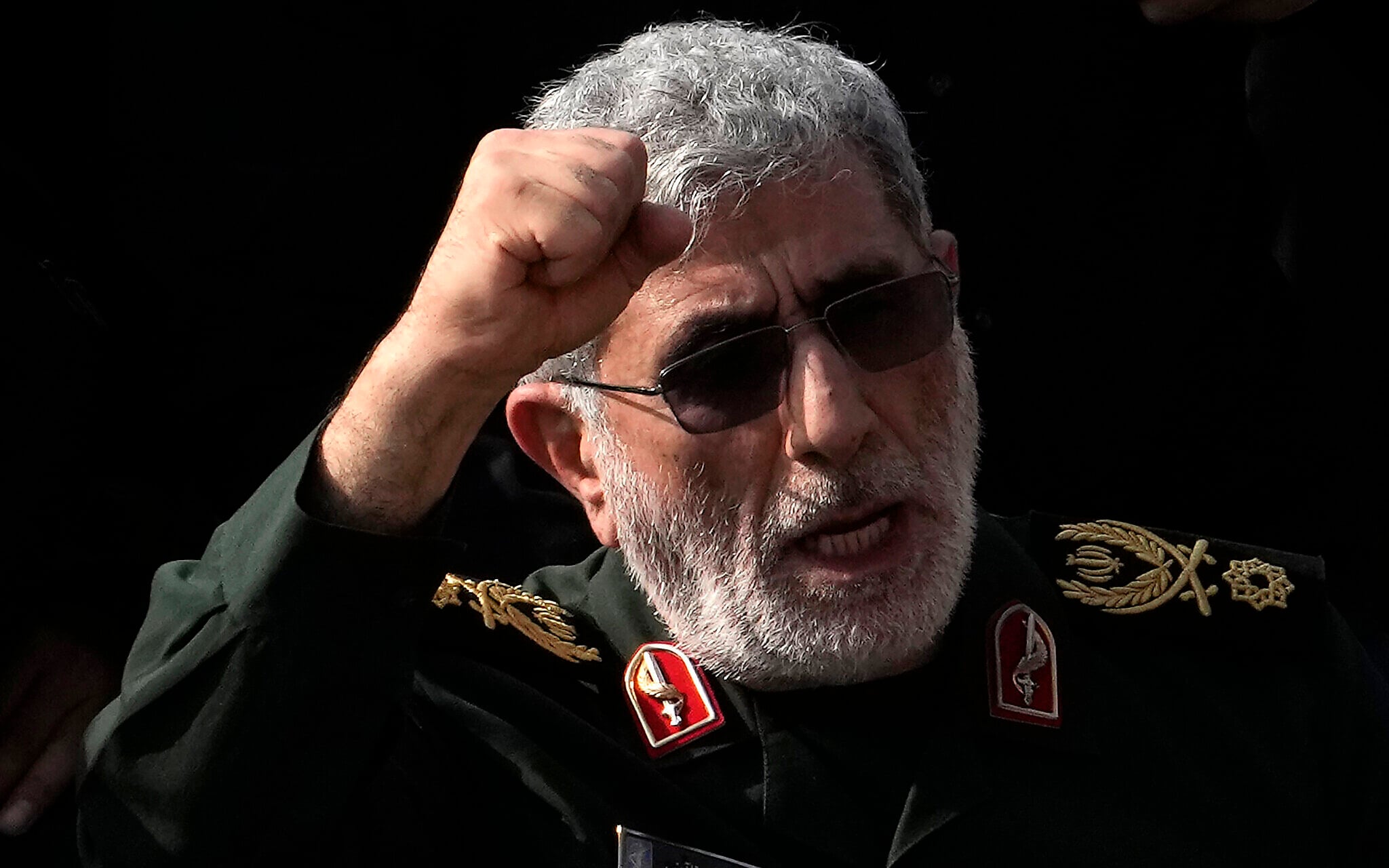
Commander of the Islamic Revolutionary Guard's Quds Force, Gen. Esmail Qaani, chants a slogan "Death to Israel" during the funeral ceremony of the late IRGC Gen. Abbas Nilforushan, who was killed in an Israeli airstrike in Beirut in late September, in Tehran, Iran, October 15, 2024. (AP Photo/Vahid Salemi)
Israel must withdraw on its own from Lebanon’s entire territory or be “forced to flee in defeat,” the commander of the Iranian Revolutionary Guards’ Quds Force Esmaeil Qaani says, according to state media.
Last week, the United States and Iran signed an interim deal ending hostilities on all fronts, including Lebanon, and pledged to ensure Lebanon’s sovereignty and territorial integrity, with Tehran claiming this means Israeli troops must leave southern Lebanon.
Israel has forcefully resisted the idea that it must withdraw, and has vowed to stay in a security zone in Lebanon until Hezbollah is disarmed.
Lebanese media reports Israeli strike on motorcycle near security zone; no comment yet from IDF
Lebanese media outlets report an Israeli airstrike in southern Lebanon a short while ago.
According to the reports, a drone strike hit a motorcycle between the towns of Zawtar al-Sharqiya and Mayfadoun, near Israel’s security zone.
There are no immediate details on casualties, and the IDF has not yet commented.
Oman says ‘no transit fees’ in any future arrangement on Strait of Hormuz
Oman’s top diplomat says no transit fees will be imposed in the Strait of Hormuz, after Muscat and Tehran, which border the key waterway, earlier said they were discussing service “costs.”
Badr Albusaidi says “future arrangements regarding the strait do not entail the imposition of any transit fees,” during a meeting of Gulf foreign ministers in the Bahraini capital Manama with US Secretary Marco Rubio — whose administration has repeatedly opposed any fees or tolls.
Rubio claims Israel-Lebanon talks close to yielding ‘commitment of intent’
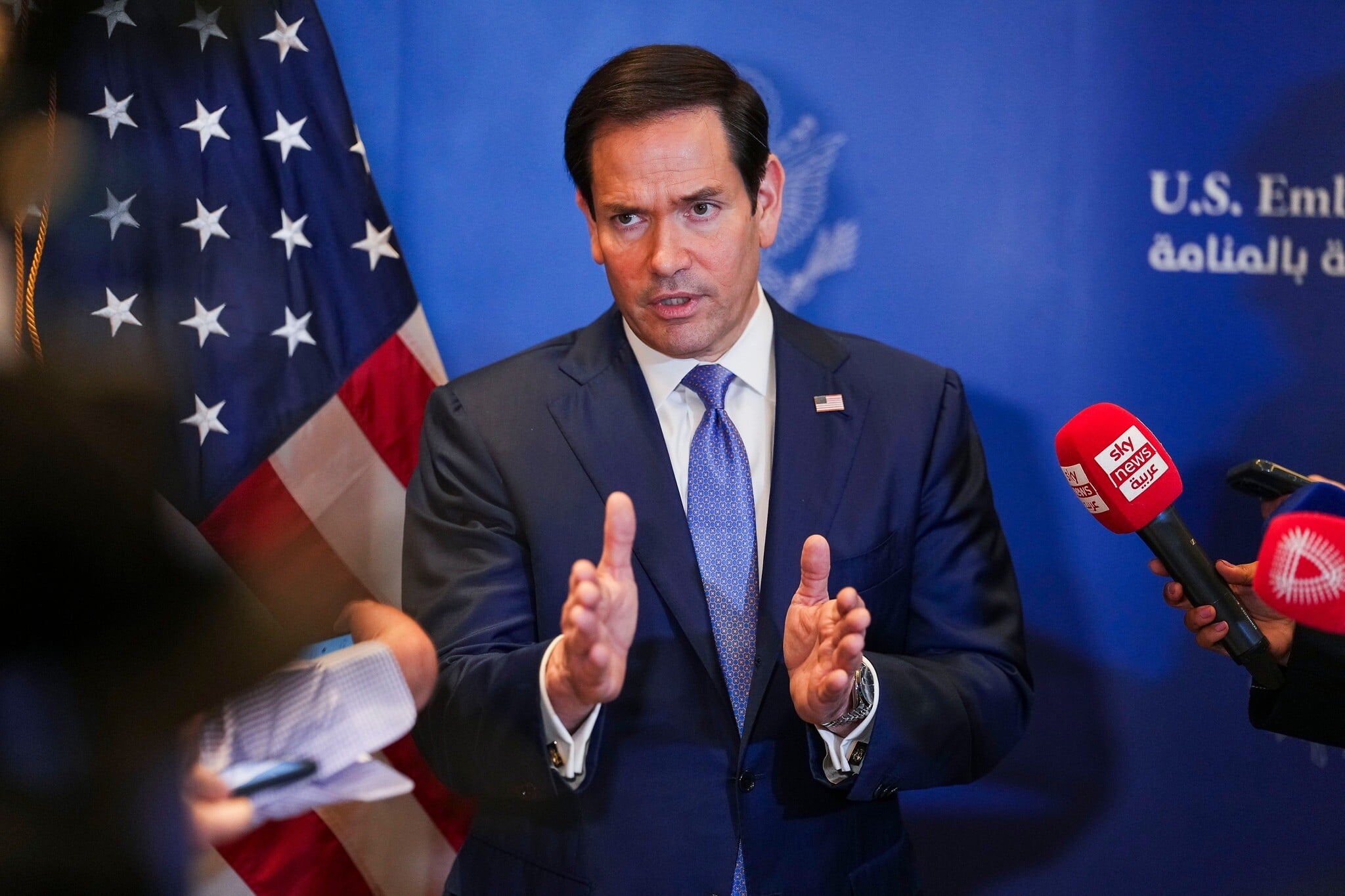
US Secretary of State Marco Rubio speaks with journalists before departing for Bahrain International Airport after his visit to the Middle East, in Manama, Bahrain, June 25, 2026. (Eric Lee/Pool Photo via AP)
Israel and Lebanon are making good progress in their talks in the United States and are close to making a “commitment of intent,” US Secretary of State Marco Rubio claims, despite officials saying the current round of negotiations has been the least productive to date.
“I think we are very close in our hopes of getting a commitment of intent between the two countries,” he tells reporters during a visit to Bahrain.
Some 1,000 Bedouins protest surge in home demolitions under Ben Gvir
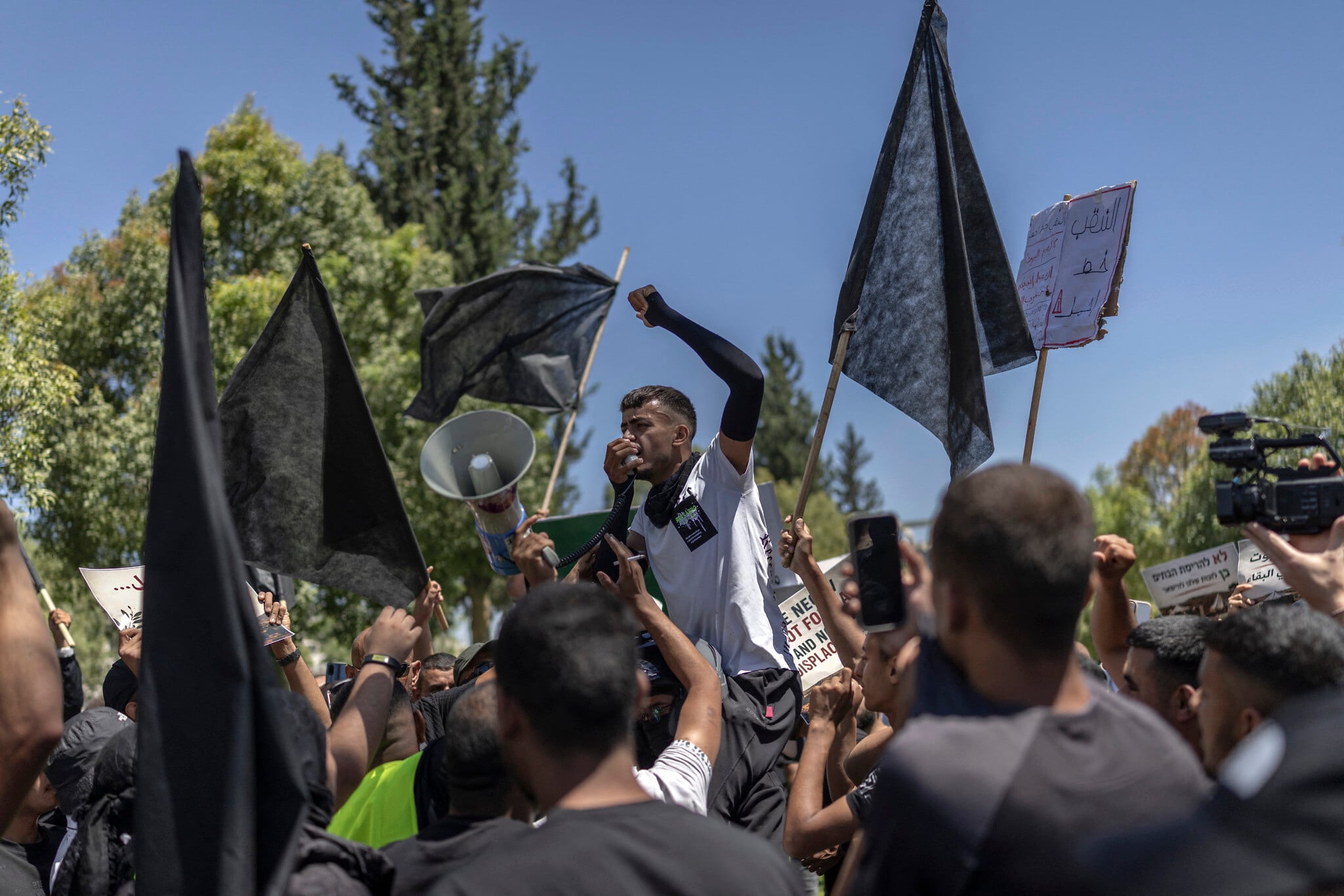
A member of the Bedouin community leads a protest against the increasing house demolishing policy by the government, in Beersheba, June 25, 2026. (Ilia YEFIMOVICH / AFP)
Around a thousand Bedouin Israelis protested in Beersheba this morning against the sharp uptick in home demolitions under National Security Minister Itamar Ben Gvir, after two large-scale demolitions were carried out in unrecognized villages this month.
The protest organized by the High Follow-Up Committee, an organization representing Israel’s Arab citizens, saw hundreds of Bedouin residents gather on the city’s main street to protest what organizers dub the government’s “policy of demolition and displacement” against the minority.
It was held after authorities razed a section of Tel Arad, an unrecognized village east of Beersheba, inhabited by 40 families, as part of a government plan to build five new townships in the area. Earlier this month in the unrecognized village of Qasr a-Sir, authorities demolished another 20 homes, according to Arabic reports.
Talal al-Qrenawi, the mayor of Rahat, spoke before the crowds of protesters and urged them to vote in the coming elections.
“Ben Gvir threatened that another 20,000 homes will be destroyed next year. Our response is clear: The power is in the hands of the public and the voters,” he said. “In the coming period, an important decision stands before us, whether or not we will succeed in bringing this government’s path to an end.”
High Follow-Up Committee head Jamal Zahalka, who traveled south to attend the protest, said that Arab leaders “are not seeking conflict” with Israeli land authorities, and instead hope to negotiate with the government toward a plan for the residents of unrecognized villages.
“We are suggesting a solution based on serious and good faith negotiation between the representatives of Arab society in the Negev and the state,” he said. “Instead of choosing this path, the state is picking demolitions, expropriations and unilateral steps time and time again.”
There are around 100,000 Bedouin citizens living in unrecognized villages throughout the Negev. Such communities have no municipal status and do not belong to any nearby township, meaning residents lack basic infrastructure. Without a formal building plan, homes built in unrecognized communities are constructed illegally and thus are liable for demolition.
متظاهرون يغلقون الشارع الرئيسي في بئر السبع احتجاجا على هدم المنازل والاقتلاع والتهجير في النقب
للتفاصيل: https://t.co/ZO4pevwdrb pic.twitter.com/C3clmCRzNC— موقع عرب 48 (@arab48website) June 25, 2026
While the government has sought to relocate residents of these communities en masse to planned Bedouin towns, Arab leadership has argued that such moves are not realistic given the population’s quick growth, and instead believes the government should recognize and invest in the communities as they currently stand.
Lebanese officials say Israeli strike in south Lebanon killed two
Following the earlier reports of an Israeli strike in south Lebanon, medical and security sources now say a drone strike on a car killed two people.
The IDF has yet to comment.
Iran’s Ghalibaf rejects US claim that unfrozen assets will be spent on US goods
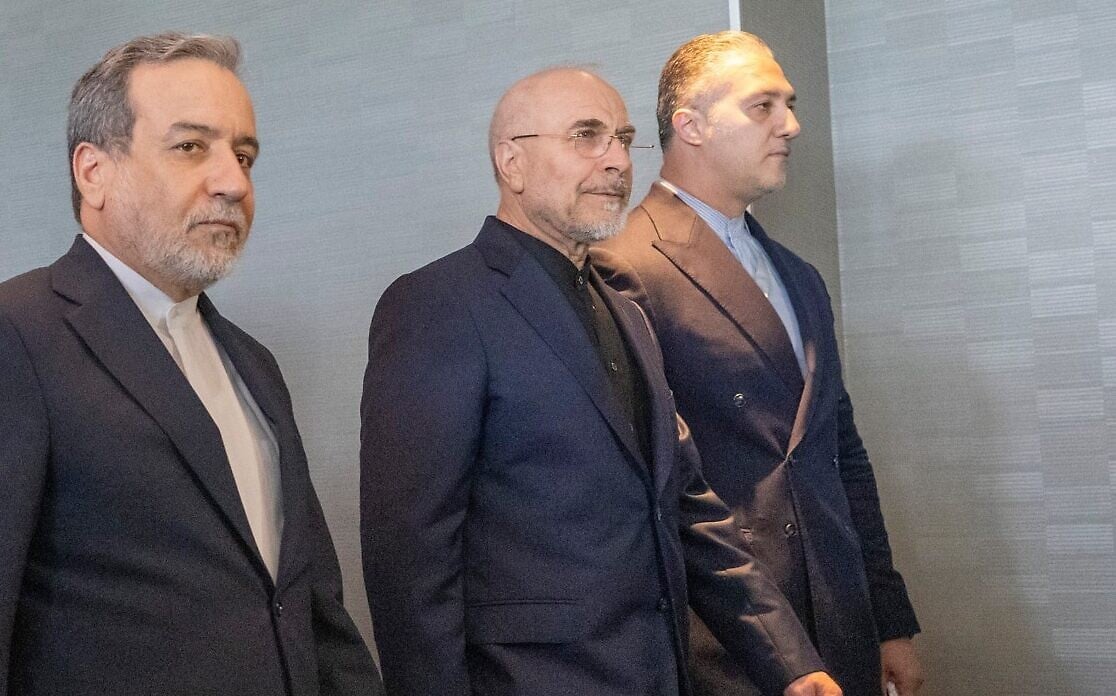
Iranian Foreign Minister Abbas Araghchi, left, and Speaker of the Islamic Parliament of Iran, Mohammed Bagher Ghalibaf, 2nd from left, with the Delegation of Iran at the Lake Lucerne Summit at the Buergenstock resort in Obbuergen, near Lucerne, Switzerland, June 21, 2026. (Urs Flueeler, Pool Photo via AP)
Iran’s parliament speaker and top negotiator, Mohammad Bagher Ghalibaf, denies claims by US officials that unfrozen Iranian funds will be directed to American purchases to benefit the Iranian public.
“America falsely claims our unfrozen assets will buy their agriculture. Interesting. The only crop we’re harvesting is what you planted: decades of mistrust,” Ghalibaf says in a post on X, in the most recent assertion by Tehran that it will manage its own assets. “It’s organic, abundant, and homegrown. But apparently the US only exports GMO soybeans, broken promises and trash talks.”
America falsely claims our unfrozen assets will buy their agriculture. Interesting. The only crop we're harvesting is what you planted: decades of mistrust. It's organic, abundant, and homegrown. But apparently the US only exports GMO soybeans, broken promises and trash talks.
— محمدباقر قالیباف | MB Ghalibaf (@mb_ghalibaf) June 25, 2026
US Vice President JD Vance said following Sunday’s US-Iran talks in Switzerland that US President Donald Trump’s top aide Jared Kushner has worked with Qatar on a proposal under which Washington and Doha would both have approval over any unfrozen Iranian assets, to ensure that rather than fund terrorism, the funds would be directed toward purchasing things like “American soy, American corn, and American wheat for the benefit of the Iranian people.”
Trump and US Treasury Secretary Scott Bessent have made the same claim, saying that a large percentage of Iran’s unfrozen assets will be used to buy US foods and medicine, with Bessent stating that the US Department of Treasury will have an operation in Doha to oversee the funds.
Oil prices back to prewar levels as Hormuz traffic rebounds
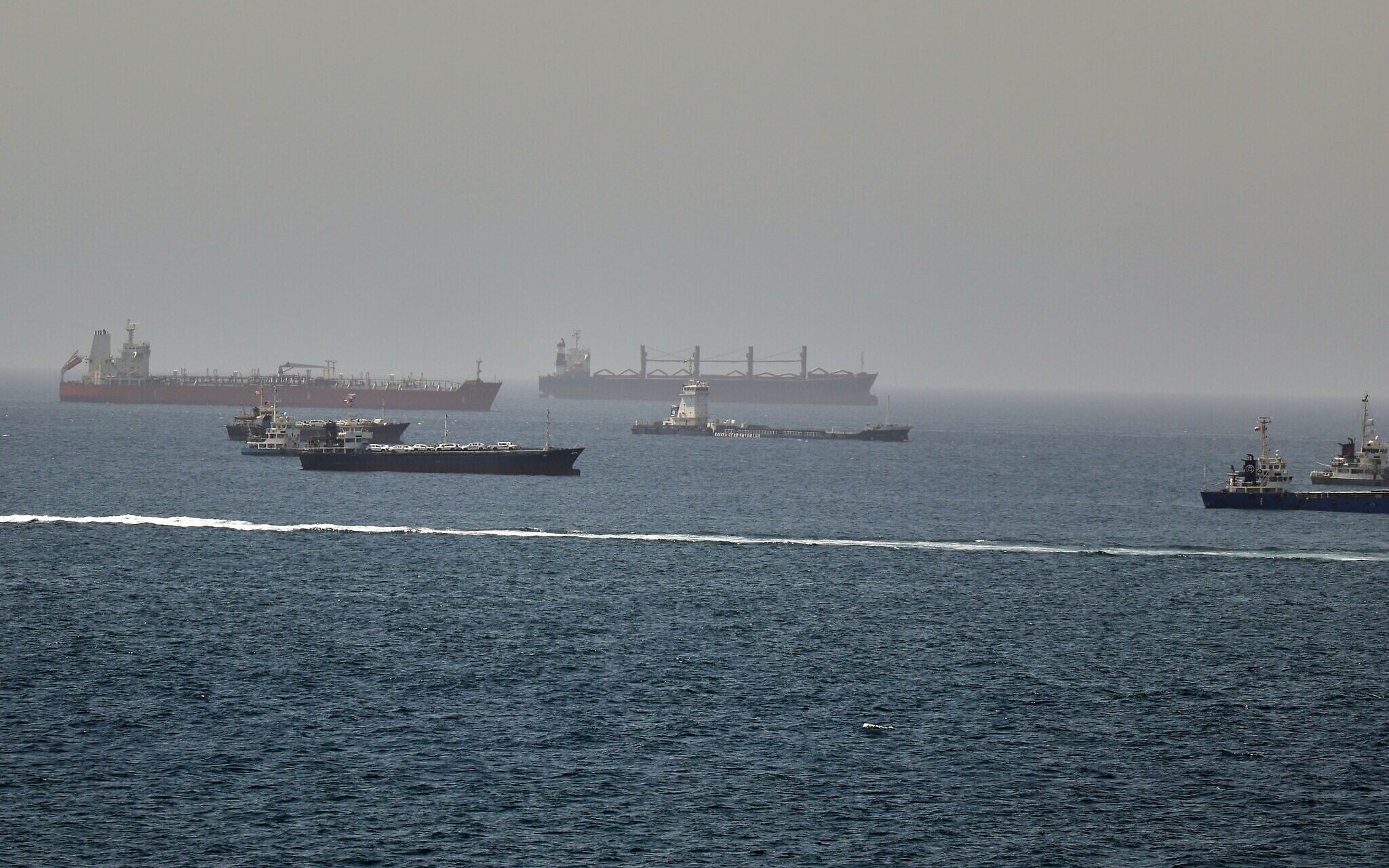
Tankers and cargo vessels are seen in the Gulf of Oman, along shipping routes linking the Strait of Hormuz and the Arabian Sea, June 16, 2026. (AP Photo)
Oil prices have fallen to prewar levels as the United States say flows through the Strait of Hormuz are nearing normal, and its top diplomat wraps up a Gulf tour aimed at winning support for a preliminary Iran deal.
US Energy Secretary Chris Wright says shipments through the strait are approaching levels seen before the US and Israel launched strikes on Iran on February 28, with at least 20 million barrels exiting the strait in the previous 24 hours.
During the conflict, Iran took effective control of the vital chokepoint, disrupting oil flows and rattling global energy markets and the wider economy.
Despite the recovery in traffic, Iran has signaled it will continue to assert control. Its Revolutionary Guards today warned vessels to stick to routes through the strait designated by Tehran, rejecting newly announced shipping routes not coordinated with Iran as unacceptable and dangerous.
The warning came after Oman announced temporary shipping lanes through the strait in coordination with the United Nations’ shipping agency.
Data from the UN’s International Maritime Organization shows that 57 ships carrying about 1,100 seafarers have transited the strait since June 23 under the evacuation plan.
Former settlement chief charged with threatening Palestinians with assault rifle
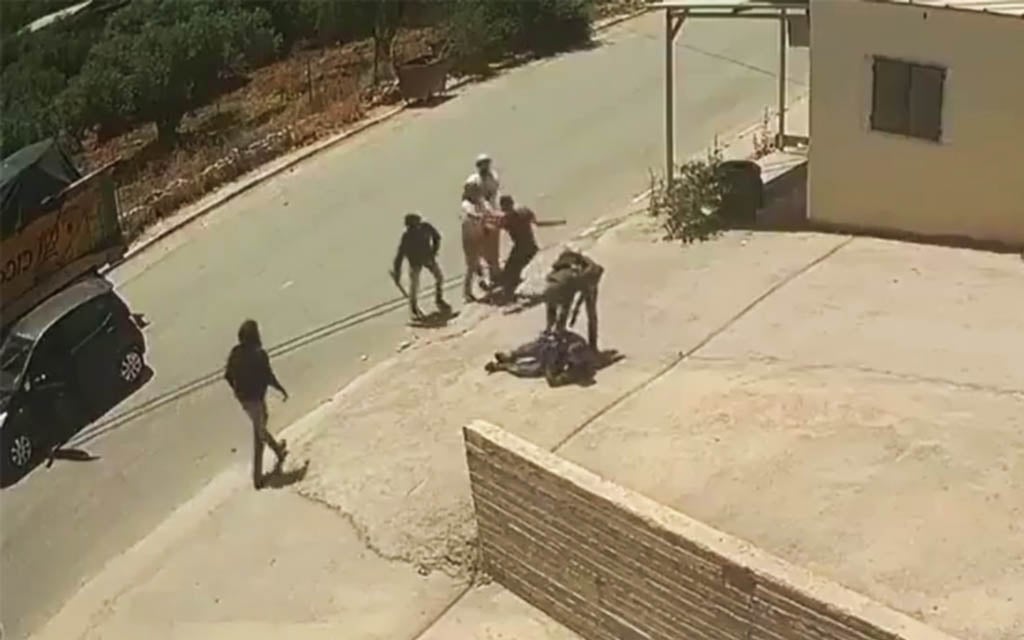
An IDF soldier, alongside settlers, beats two Palestinians in the West Bank town of Huwara, June 6, 2026. (X)
Prosecutors indict the former head of Yitzhar’s local council after he allegedly threatened Palestinians driving in Huwara with an army-issued assault rifle during a settler attack on the West Bank town earlier this month.
Uriah Cohen, a resident of Yitzhar who runs a farm just south of Huwara, allegedly drove with an accomplice into the heart of the town, both armed with assault rifles, then blocked the path of a Palestinian car, causing a minor crash.
At this point, the pair of Israelis disembarked and ordered the occupants to exit the vehicle. Uriah shot in the air “with the goal of frightening the passengers,” the State Attorney’s Office says.
The Palestinian driver stepped on the gas. According to the indictment, Cohen’s masked accomplice then shot at the car itself as it fled.
The incident occurred during a June 6 raid on the village by a group of settler extremists and at least one soldier that left nine residents injured, according to Palestinian reports.
Prosecutors note that other assailants — including the masked man who accompanied Cohen and another man in army fatigues — stopped another car in the village, forced the two men inside to exit and proceeded to beat them relentlessly. The two Palestinian men were severely injured as a result of the attack.
The masked man’s identity is not known to authorities.
Cohen owns Tzofnat Farm, an illegally built outpost that the government resolved in late May to recognize as a legitimate settlement, according to i24 News.
Cohen claimed to investigators that he had entered Huwara that day to search for his flock of sheep that went missing, prosecutors say.
Though he was released to house arrest earlier this week, the State Attorney’s Office requests that the court order him back into police custody and keep him detained until the end of proceedings.
Another Israeli nonprofit to send emergency team to earthquake-stricken Venezuela
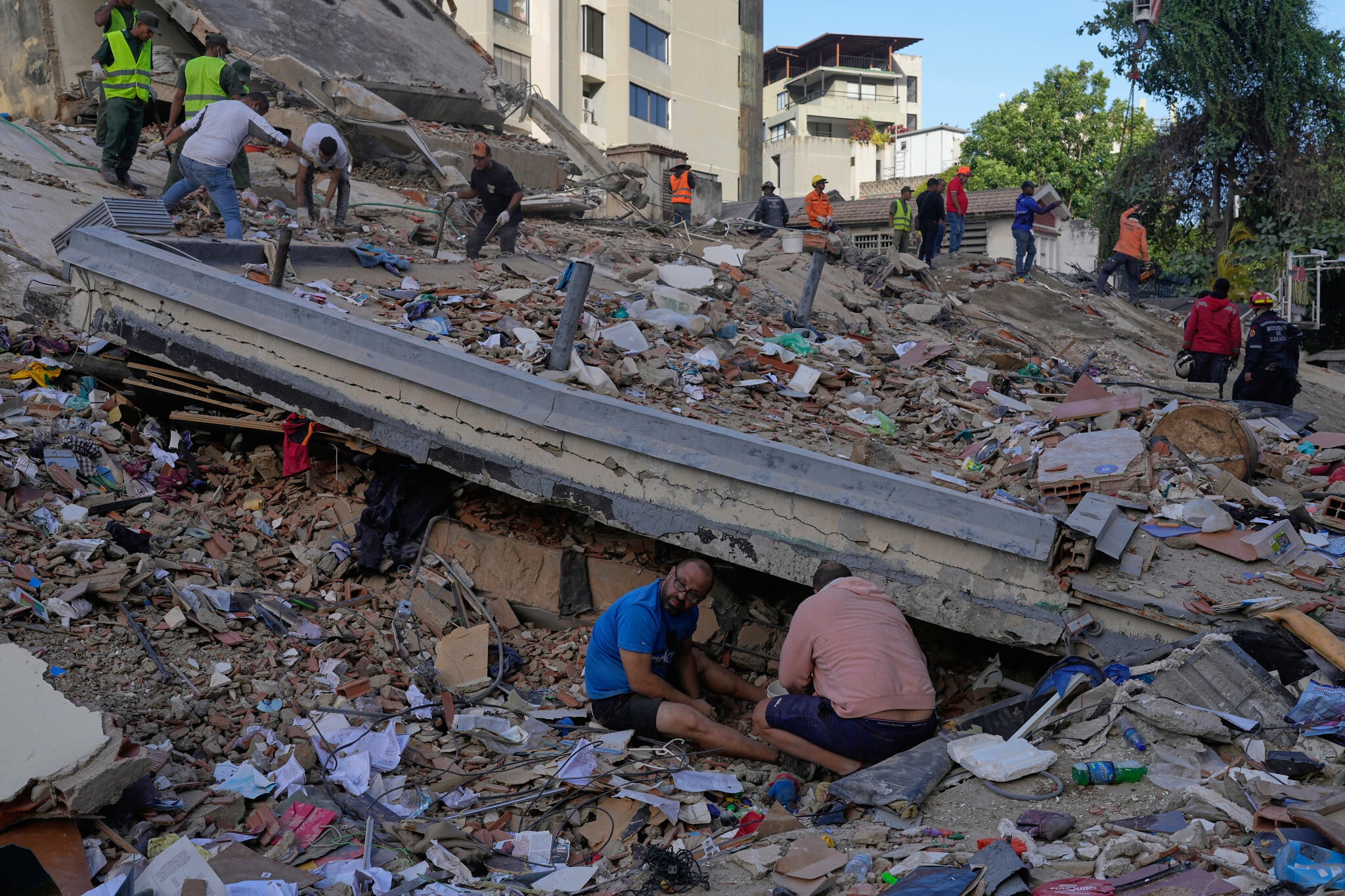
Residents and rescue workers search through the rubble of a building that collapsed in earthquakes that struck the previous day in Caracas, Venezuela, June 25, 2026. (AP/Ariana Cubillos)
NATAN Worldwide Disaster Relief, an Israeli organization, says it is sending an emergency team to Venezuela, where dozens have been killed and hundreds injured by powerful earthquakes, according to initial reports.
Six to eight professional volunteers, including medical and social workers, will deploy to the South American country and open mobile clinics “wherever needed,” the organization tells The Times of Israel.
Israel’s ZAKA emergency response organization said earlier that it is preparing teams to possibly be sent to help local authorities rescue people from the rubble, while fellow rescue organization IsraAid also said it was “urgently responding” to the unfolding disaster.
The Foreign Ministry said it is making “immediate preparations” for the possible deployment of an aid delegation.
Court rules key Netanyahu aide can return to work despite indictment in leaked documents affair
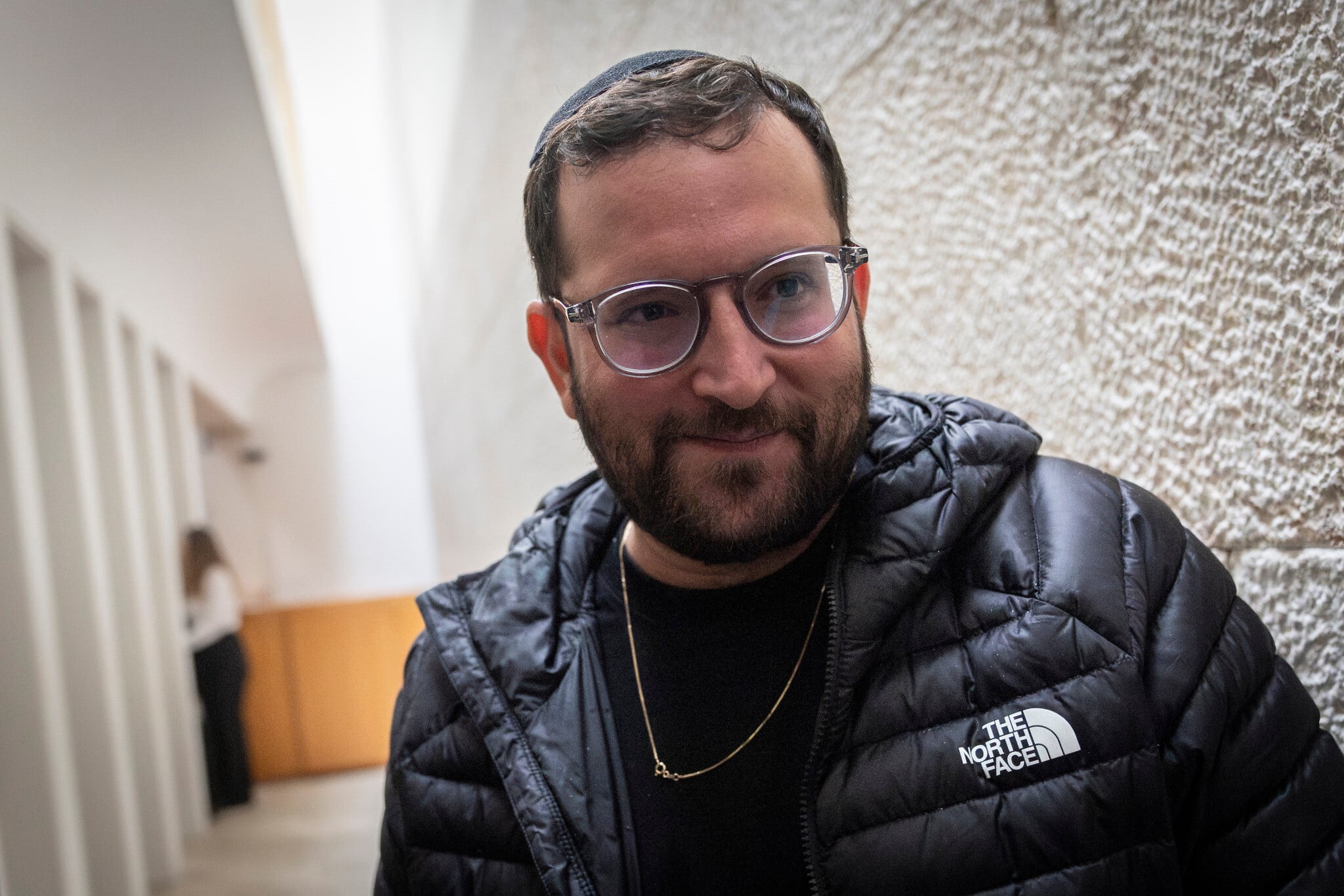
Jonatan Urich is seen following a hearing on journalist Omri Assenheim’s refusal to provide police with materials from a program he broadcast about Eli Feldstein, after the District Court ruled that journalistic privilege does not apply, at the Supreme Court in Jerusalem, March 30, 2026. (Yonatan Sindel/Flash90)
The Tel Aviv District Court rejects a request by the State Attorney’s Office to bar Jonatan Urich, a close aide to Prime Minister Benjamin Netanyahu, from contact with the prime minister following his indictment in the Bild leaked document affair earlier this month.
Judge Ala Masarwa notes that Urich had contact with Netanyahu during the most sensitive periods of the investigation into the affair, and says it is therefore highly problematic to demand at the current stage that Urich be banned from the Prime Minister’s Office and from contact with the prime minister.
“As time goes by, the danger [of obstruction of justice] decreases, especially when nearly two years have passed since the events,” writes Masarwa.
The ruling means that Urich can now return to work with Netanyahu.
Urich was indicted on June 11 on a charge of transmitting classified information with the intent to harm state security, over his involvement in leaking classified documents to the press. The charge relates to Urich’s role in the leak of a classified document from IDF military intelligence to the Bild newspaper in September 2024, apparently as part of an effort to buttress Netanyahu’s claim that it was Hamas, not the prime minister, that was holding up a deal for the release of hostages held in Gaza.
Lebanon says Israeli strike near Nabatieh killed three
Lebanon’s health ministry says an Israeli strike earlier today near Nabatieh killed three people.
In a statement carried by Lebanon’s National News Agency, the ministry says that the strike on a car in Mayfadoun “resulted in 3 martyrs and one wounded person.”
Earlier reports put the death toll at two.
The IDF has not yet commented on the strike.
Israeli aid organizations prepping to provide aid in Venezuela
More details emerge on the activities of Israeli humanitarian aid organizations that are sending teams to Panama and crossing the border into Venezuela, until the earthquake-struck airport in Caracas reopens.
Natan: Worldwide Disaster Relief is sending an initial delegation that includes medical personnel and psycho-social support experts to conduct a situational assessment prior to a broader response.
IsraAID is sending a team of disaster response experts, also to assess needs and provide psychological first aid, water, sanitation, and hygiene. It will partner with local organizations with which it has worked in recent years.
SmartAID is operating through partners in Venezuela. It is also assessing needs, and preparing to send equipment.
The Joint Distribution Committee is working with Venezuela’s Jewish community to provide food, water, medicine, and shelter. It is preparing to dispatch its emergency team to the country as soon as the Caracas airport opens, to expand aid to the Jewish community and the wider population.
According to Lihi Lavian Yaffe, Director of Humanitarian Aid at SID Israel, the umbrella organization for Israeli international aid and development organizations, “In emergency situations, the ability to respond quickly is a result of years of preparation, partnerships, and presence in the field. Even when complex barriers exist – such as the lack of diplomatic relations between Israel and Venezuela – Israeli aid organizations know how to rely on the professional networks of connections they have built over years, on local teams, and on professionals operating in the region, to begin the response already in the first hours after the disaster. The earthquake in Venezuela illustrates how much long-term partnerships and continuous presence in the field are a critical component in the ability to reach affected populations quickly and provide them with life-saving aid.”
Knesset to hold marathon discussions next week to fast-track Basic Law on Torah study
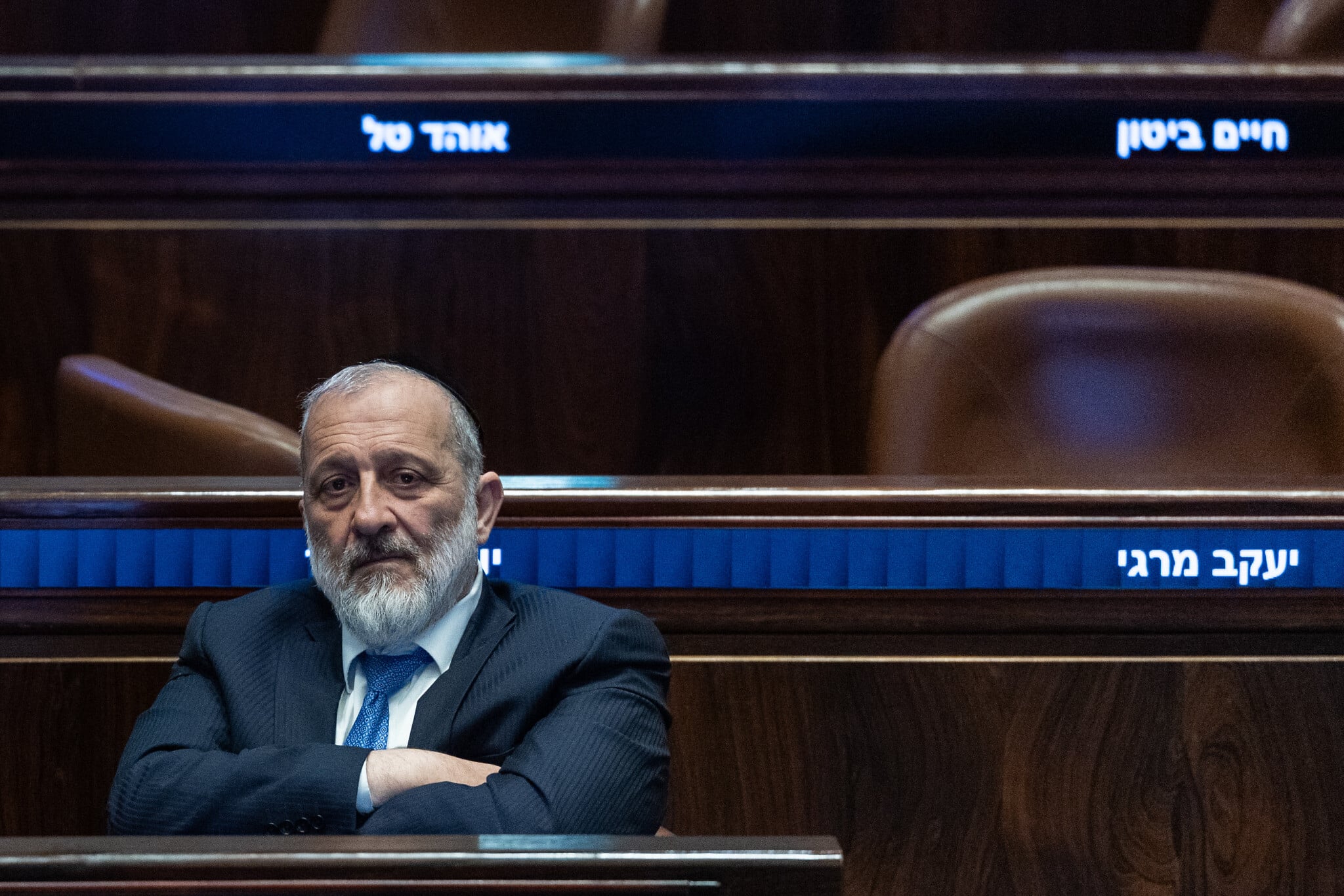
Shas party chairman Aryeh Deri attends a Knesset plenum vote for the next state comptroller, in Jerusalem, June 3, 2026. (Yonatan Sindel/Flash90)
The Knesset House Committee will hold three marathon sessions next week to advance the coalition’s controversial proposed Basic Law to declare Torah study a foundational value of the State of Israel. The bill is being promoted by the ultra-Orthodox parties to shield draft evaders from sanctions and prosecution.
The revised bill drops language from an earlier draft that equated full-time Torah study with military service by describing it as a “significant service” to the state, after widespread criticism, including by some coalition lawmakers, that it effectively placed draft evaders on the same footing as soldiers and reservists.
However, the bill’s underlying purpose remains unchanged. The revised draft states that recognizing Torah study as a foundational value is intended to create “a just balance with respect to other foundational values.” Its explanatory notes, also unchanged, make clear that the legislation’s goal is to address the legal obstacles created by High Court rulings striking down draft exemptions for yeshiva students.
In a letter sent to House Committee members, Knesset legal adviser Sagit Afik urges lawmakers to adhere to an “especially high” standard of legislative procedure as they “accelerate” the bill through multiple marathon sessions next week.
She reiterates her opposition to transferring the bill from the Constitution, Law and Justice Committee to the House Committee, a step taken last week, arguing that bypassing the committee responsible for constitutional legislation creates “defects and harm to the legislative process” that cannot be remedied.
The legislation is being advanced amid reports of a deal between Prime Minister Benjamin Netanyahu and the ultra-Orthodox parties to promote some of their legislative agenda in exchange for supporting coalition priorities, though both Shas and United Torah Judaism have denied such an agreement.
The coalition has pulled all legislation from its Knesset agenda for two weeks due to a boycott by the Haredi parties, initially prompted by the coalition’s refusal to advance the so-called Daycare Law, to restore daycare subsidies for the children of draft evaders. The boycott has since grown to encompass other Haredi conscription-related demands.
Time is running short to pass the legislation before the Knesset is expected to enter its pre-election parliamentary recess on July 16.
Katz: Troops staying in security zones in Lebanon, Syria, and Gaza

Defense Minister Israel Katz speaks at a cadets' graduation ceremony at the Bahad 1 officers' school in southern Israel, June 25, 2026. (Screenshot/Israel Defense Forces)
Speaking at an IDF cadets graduation ceremony, Defense Minister Israel Katz again says Israeli forces will remain inside security zones in Lebanon, Syria, and the Gaza Strip, “without any time limit.”
He says this is “to protect our residents and communities against jihadist elements.”
“We will not compromise on Israel’s supreme security interest: protecting our soldiers and safeguarding our citizens, and we will not withdraw from the security zones,” Katz says at the officers’ school in southern Israel, known as Bahad 1.
He also warns Tehran that if “Iran attacks Israel because of our actions in Lebanon, or for any other reason, we will strike it with full force.”
IDF chief: Military needs ‘every male and female combat soldier’
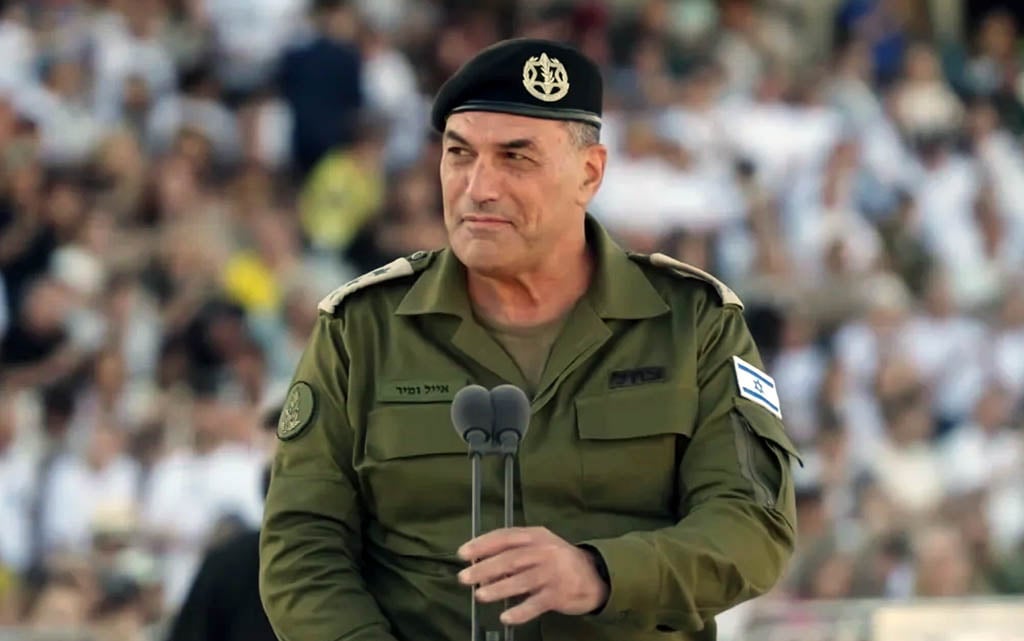
IDF Chief of Staff Lt. Gen. Eyal Zamir speaks at a cadets' graduation ceremony at the Bahad 1 officers' school in southern Israel, June 25, 2026. (Screenshot/Israel Defense Forces)
IDF Chief of Staff Lt. Gen. Eyal Zamir says the military needs “every male and female combat soldier and every male and female commander” following threats by rabbis to stop sending their students to serve in tank units because of a pilot program integrating women into the Armored Corps.
“The challenge facing the IDF is to find a balance between accommodating diverse populations and preserving a shared and unified framework that enables it to carry out its missions effectively,” Zamir says at an IDF cadets graduation ceremony.
“We will strengthen cohesion through what unites rather than what divides us. This too is part of the IDF’s ability to achieve victory,” he adds.
Vessel hit by ‘unknown projectile’ in Hormuz Strait — maritime agency
A cargo ship was damaged after it was hit by an unknown projectile off the Omani coast in the Strait of Hormuz on Thursday, a British maritime agency says, reporting no casualties.
“A cargo vessel has been hit on the starboard side by an unknown projectile, causing damage to the bridge. Master has reported no casualties and no environmental impact,” says the UK Maritime Trade Operations (UKMTO), adding the incident occurred 7.5 nautical miles (14 kilometers) southeast of Dahit in Oman.
Iran, Oman to discuss future Strait of Hormuz arrangements, Iran’s FM says
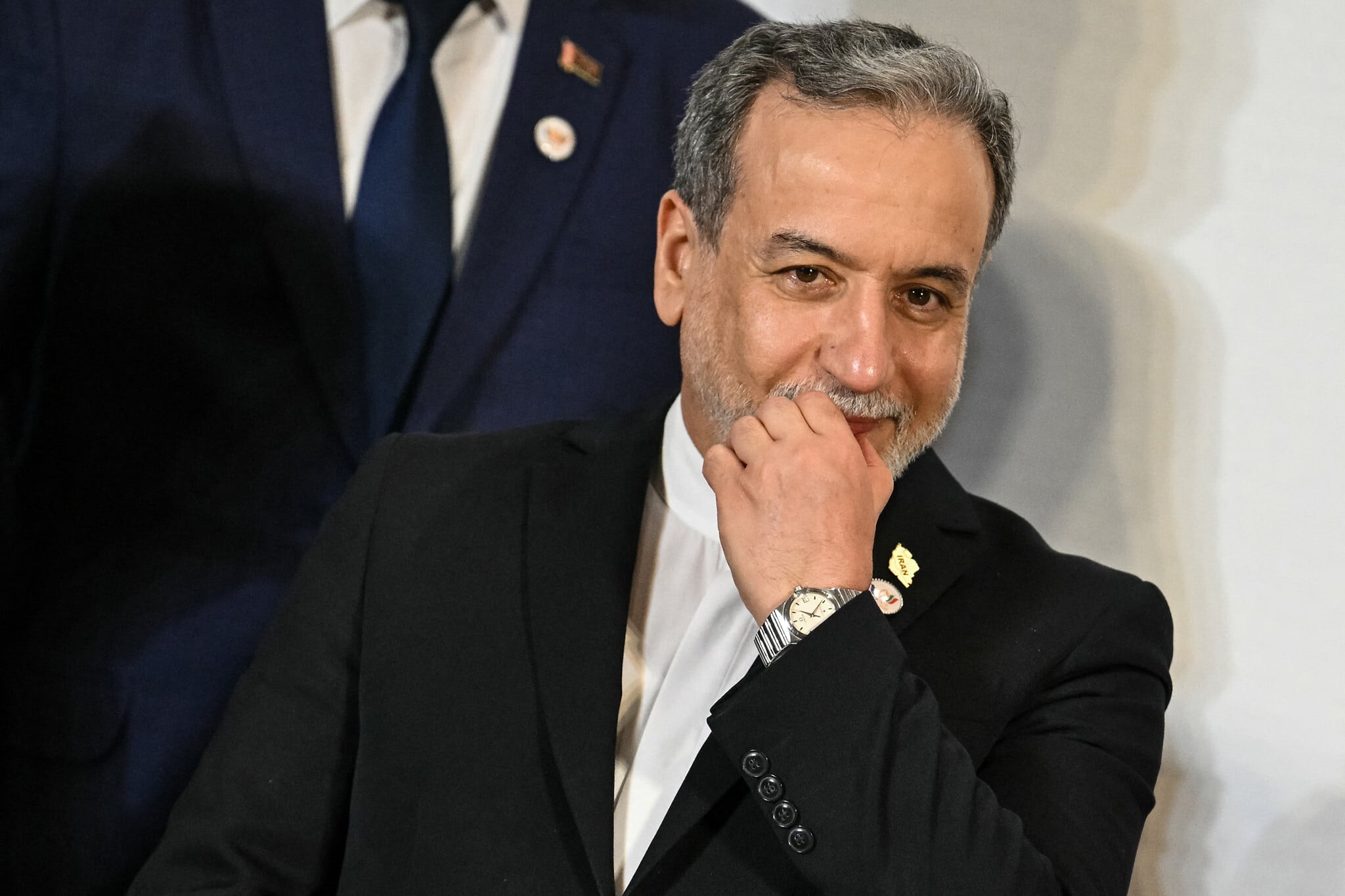
Iran's Foreign Minister Abbas Araghchi gestures as he arrives for a group photograph during the BRICS foreign ministers meeting at the Bharat Mandapam in New Delhi on May 14, 2026. (Arun SANKAR / AFP)
Iranian Foreign Minister Abbas Araghchi says that Iran and Oman will hold talks “to define future administration and maritime services in the Strait of Hormuz” following a recent joint statement in Muscat.
In a post on X, Araghchi says he had a productive call with Omani Foreign Minister Badr Albusaidi and that the two countries are determined to pursue the discussions with their neighbors.
Oman told US Secretary of State Marco Rubio and Gulf Arab ministers at a meeting today that future arrangements for the Strait of Hormuz would not involve transit tolls.
IMF says energy, commodity prices fall after Iran deal but will take time to normalize
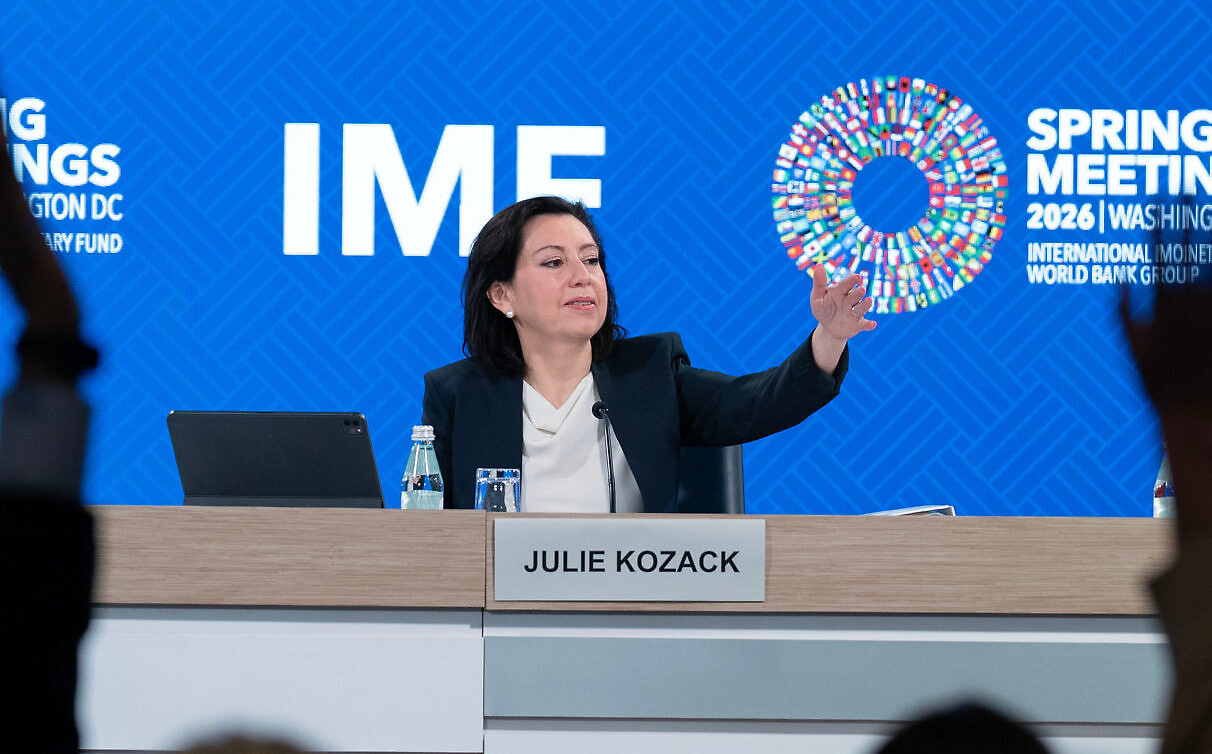
International Monetary Fund communications director Julie Kozack at a news conference, during the World Bank/IMF Spring Meetings at the IMF headquarters in Washington, Wednesday, April 15, 2026. (AP Photo/Jose Luis Magana)
The International Monetary Fund says it has seen energy and commodity prices fall since the US-Iran agreement to halt hostilities and reopen the Strait of Hormuz, but it will take time for prices and Gulf trade flows to normalize.
IMF spokesperson Julie Kozack says that in the next update of its World Economic Outlook on July 8, the Fund will decide whether to continue with the three growth scenarios that it presented in April that depended on Iran war outcomes.
As the Strait of Hormuz remained closed in May, keeping benchmark oil prices above $100 per barrel, Kozack had said that the global economy was moving from the more benign “reference forecast,” which had assumed a quick end to the conflict, to an “adverse scenario” with 2.5% global growth for 2025.
Two motorbike riders killed in collision with car near Golani Junction
Two motorbike riders have been killed in a crash near the Golani Junction in northern Israel.
The two victims are in their mid-twenties. They were riding on a motorcycle that collided with a car. The cause of the collision is not immediately known.
Police have launched an investigation.
The crash led to a temporary closure of Route 65 in both directions.
שני רוכבים נוספים נהרגו היום, סביב 18:15, בכביש 65 בסמוך למחלף גולני.
מהפרטים הראשונים עולה שצמד הרוכבים, כבני 25, נסעו על אופנוע בכביש 65, איבדו שליטה והתרסקו אל צד הדרך. נסיבות התאונה המלאות יתקבלו בהמשך.
כתוצאה מהפגיעה הקשה שני הרוכבים נהרגו במקום. >> pic.twitter.com/qxKbTm7pHb
— FullgaZ Magazine (@FullgazM) June 25, 2026
Netanyahu touts war gains at IDF officers’ ceremony, draws cheers and jeers from crowd
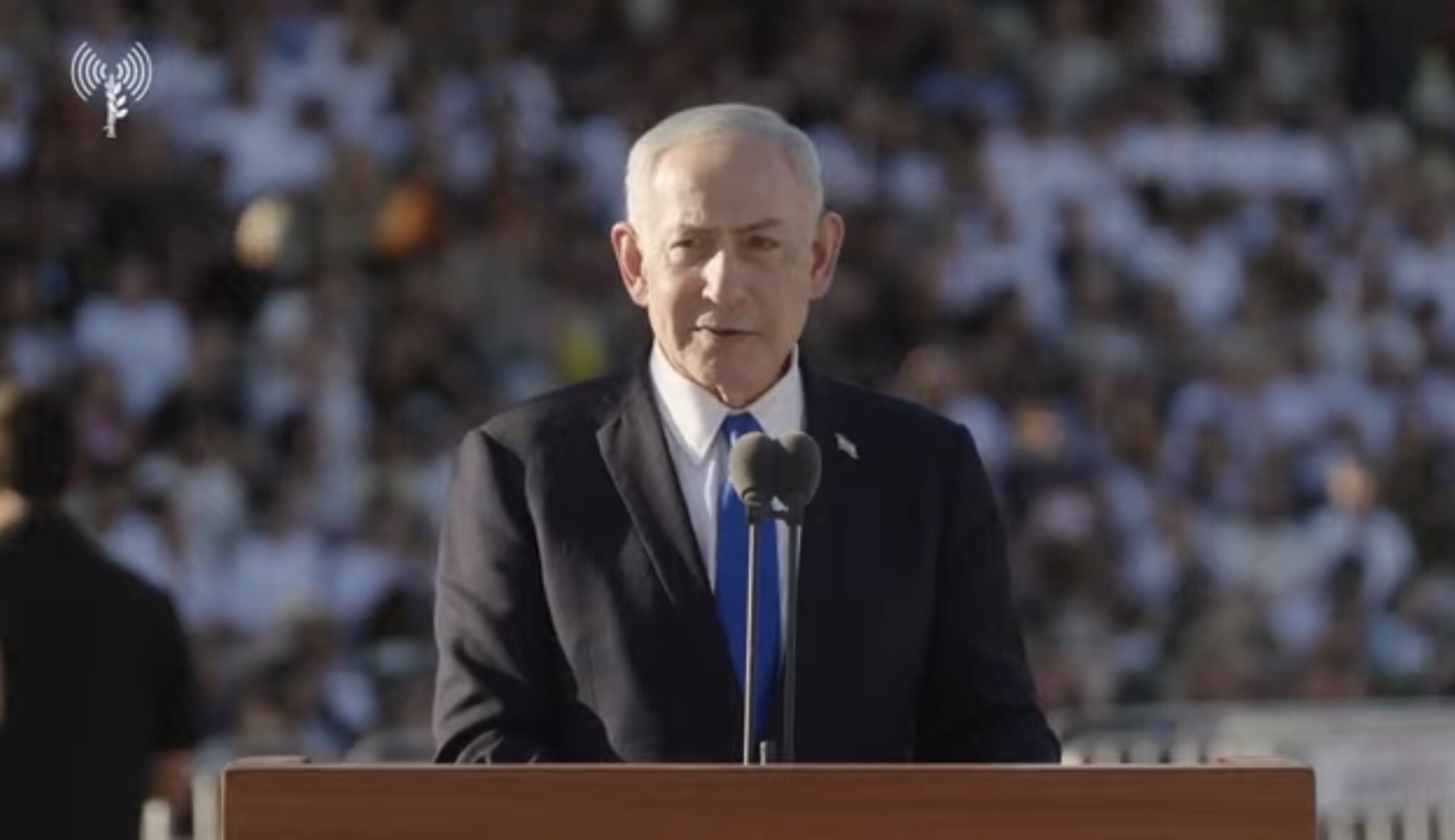
Prime Minister Benjamin Netanyahu speaks at a cadets' graduation ceremony at the Bahad 1 officers' school in southern Israel, June 25, 2026. (Screenshot/Israel Defense Forces)
Speaking at an IDF cadets’ graduation ceremony, Prime Minister Benjamin Netanyahu hails Israel’s military achievements in its wars in Gaza, Lebanon and Iran, and draws mixed reactions from the crowd.
In a 20-minute speech, Netanyahu reiterates his determination to maintain Israel’s military presence in southern Lebanon and prevent Iran from obtaining a nuclear weapon, amid concerns in Jerusalem about US-Iran talks harming Israeli interests on both fronts.
About five minutes into his remarks, one member of the audience shouts in Hebrew, “Go home!” prompting scattered applause, before another attendee yells “Go Bibi!” seconds later, using Netanyahu’s nickname, and drawing louder cheers in support of the premier, who largely ignores both incidents.
“We dominate southern Lebanon… and we will remain in the security zone in southern Lebanon for as long as necessary,” Netanyahu says. “We are not going to withdraw from it… The defense minister and I have given the IDF clear instructions: You have complete freedom of action to thwart any threat to our soldiers or to the residents of the north,” he says.
A US State Department official claimed earlier today that Israel has withdrawn from some of the southern Lebanese territory it seized in its war with Hezbollah, following the latest round of Israel-Lebanon talks in Washington aimed at halting fighting, and as Tehran continues to insist Lebanon be included in its ceasefire with the US.
“With an agreement or without an agreement, as long as I am prime minister of Israel, Iran will not have nuclear weapons,” Netanyahu adds.
Pushing back against critics of his wartime leadership, Netanyahu argues that Israel had fundamentally transformed the strategic landscape of the Middle East, saying that “only the blind would say there have been no achievements,” listing military gains against Hamas in Gaza, Hezbollah in Lebanon, and the Iranian regime.
After the Hamas-led October 7, 2023, massacre that led to Israel’s wars on all three of those fronts, Netanyahu says, “those who pursued us are now being pursued.”
“Are there still things to do regarding Iran? Yes,” he says, adding: “There [also] is still more to do against Hamas, against Hezbollah, and against the threat of [Hezbollah] drones.”
Two teens injured, one critically, in Jaffa shooting
Two teenage boys have been injured in a shooting in Jaffa, one of whom is in critical condition.
Medics are attempting to resuscitate the badly injured victim, who is around 15 years old. He is currently unconscious and without a pulse.
The other boy, aged 17, was moderately injured by the gunfire.
Medics are rushing both to the hospital.
Police say they have launched an investigation into the shooting.
Gulf FMs say Iran proxies, missiles must be addressed for ‘lasting’ peace
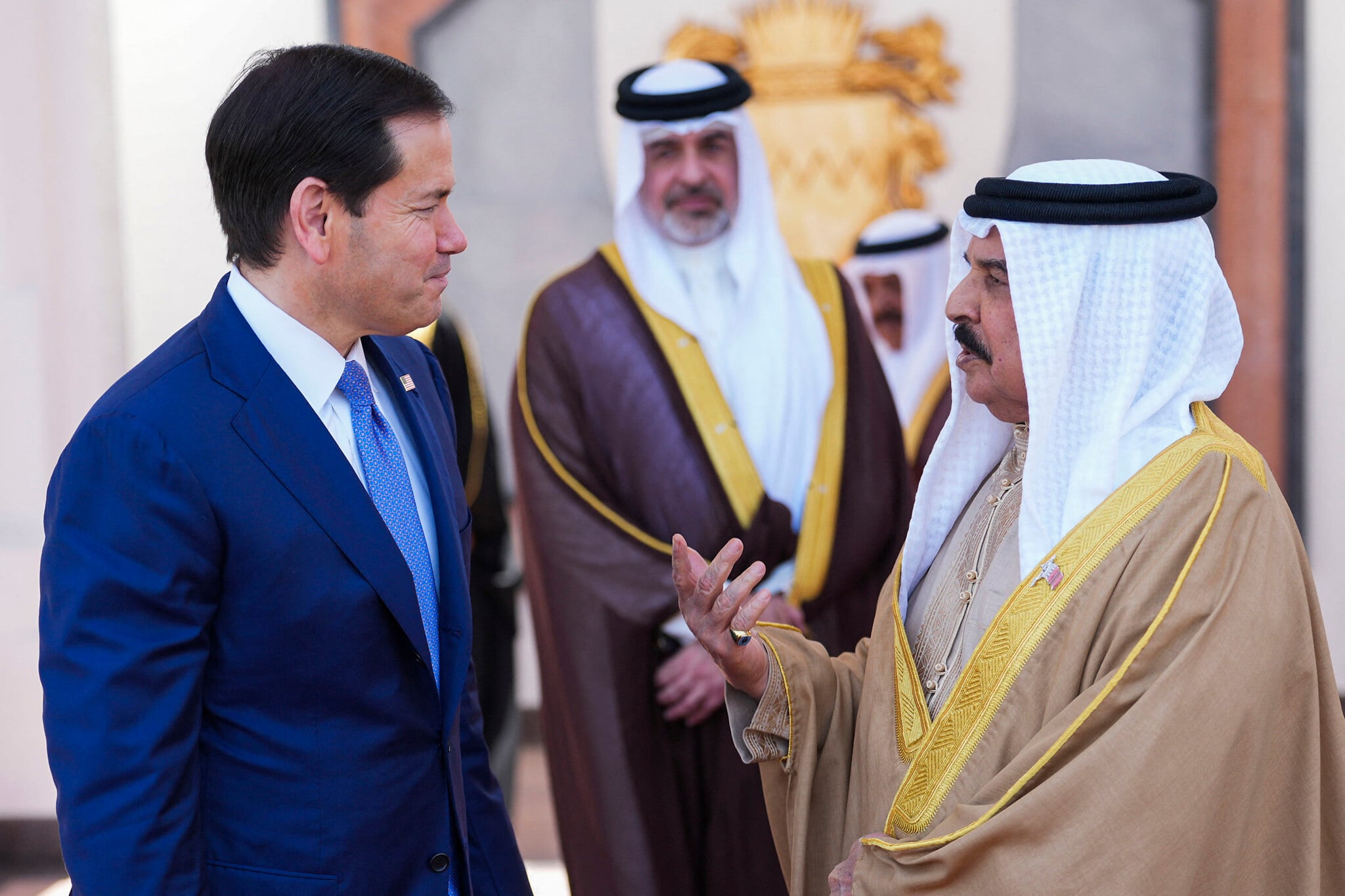
US Secretary of State Marco Rubio (L) listens to Bahrain's King Hamad bin Isa al-Khalifa following his visit to the Middle East to discuss the interim deal between the US and Iran with Arab Gulf allies, and to attend a meeting by the Gulf Cooperation Council Member States (GCC), at Al-Sakhir Palace, near Zallaq on June 25, 2026 (Eric Lee / POOL / AFP)
The Gulf’s top diplomats say that dealing with Iran’s proxies and missiles is key to lasting peace, and that any trade and investment with Tehran will be reversible and contingent on it respecting its deal with the US.
“The ministers further emphasized that lasting regional peace and security requires addressing the full spectrum of Iran’s threats, including its ballistic missiles, drones, and support of proxies in the region,” they say in a joint statement of Gulf Cooperation Council countries and the US following a summit in Bahrain chaired by US Secretary of State Marco Rubio.
“Any trade and investment with Iran is conditional and reversible, contingent on Iran’s compliance with the MOU and the final agreement, cessation of its destabilizing behavior, and creation of the conditions necessary for economic engagement,” the statement adds.
The Gulf ministers express their support for the memorandum of understanding inked between the US and Iran last week, while stressing the need for the parties to reach a final agreement that stabilizes the region.
The Gulf ministers also emphasize “the importance of reopening the Strait of Hormuz, noting that free, unconditional and unrestricted navigation, including the right of transit passage as guaranteed under international law, remains essential to regional and global security,” the statement says, rejecting any tolls or attempts to assert control over the strait, while welcoming Oman’s opening of an additional corridor in the channel to secure the safe passage of stuck vessels.
The statement goes on to stress GCC support for the territorial integrity and sovereignty of both Syria and Lebanon, an apparent reference to the buffer zones that the IDF has established in both of those countries, claiming they are needed to ensure the security of Israel’s northern residents.
The ministers welcome the ongoing talks between Israel and Lebanon and agree on the importance of disarming non-state actors such as Hezbollah.
The statement also expresses support for the the US 20-point plan for stabilizing Gaza, which is being overseen by the Board of Peace — a new Trump-chaired international body that Gulf countries have pledged billions to support.
The ministers reiterate their support for disarming Hamas and handing over control of Gaza to the Board of Peace overseen committee of Palestinian technocrats.
The ministers also tout US President Donald Trump’s statement last year rejecting Israeli annexation of the West Bank, while “underscoring that progress on Gaza redevelopment and Palestinian Authority reforms will create the conditions for a credible pathway to Palestinian self-determination and statehood.”
“The ministers further reaffirmed that no one will be forced to leave Gaza, and those who wish to leave will be free to return,” the statement says, rejecting ongoing Israeli efforts encouraging Palestinians to leave the Strip.
The statement concludes with a GCC condemnation of attacks against their countries by Iranian proxies in Iraq, while stressing the importance of Baghdad taking measures to rid itself of Iranian influence.
President’s helicopter makes emergency landing after hitting birds; none hurt
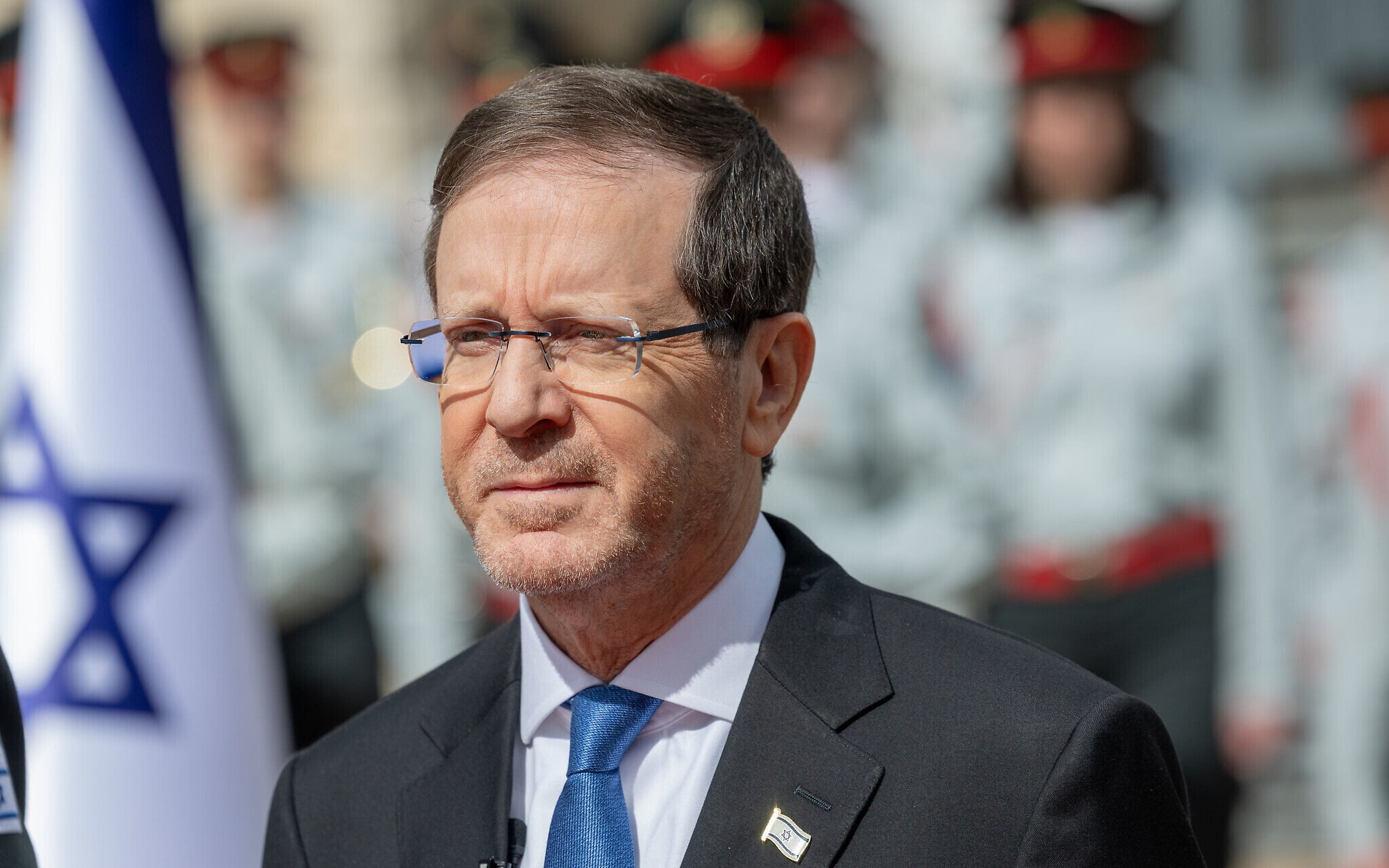
President Isaac Herzog attends an event for outstanding soldiers as part of Israel’s 78th Independence Day celebrations in Jerusalem on April 20, 2026. (Chaim Goldberg/Flash90)
An Israeli Air Force helicopter carrying President Isaac Herzog made an emergency landing after hitting a flock of birds today, the military says.
The chopper was transporting Herzog from a memorial ceremony at Mount Herzl in Jerusalem to a “shiva” in northern Israel.
During the flight, the helicopter was struck by birds and made a landing at Palmachim Airbase. The IDF says no damage or injuries were caused in the incident.
Herzog and the crew moved to another helicopter and continued their flight as planned, according to the IDF.
The military says the helicopter “was transferred to Israeli Air Force technical personnel for maintenance in order to return it to operational service as soon as possible.”
The incident is under further investigation, the IDF adds.
Zman Yisrael poll sees Eisenkot surpass Likud with 23 seats, able to form coalition
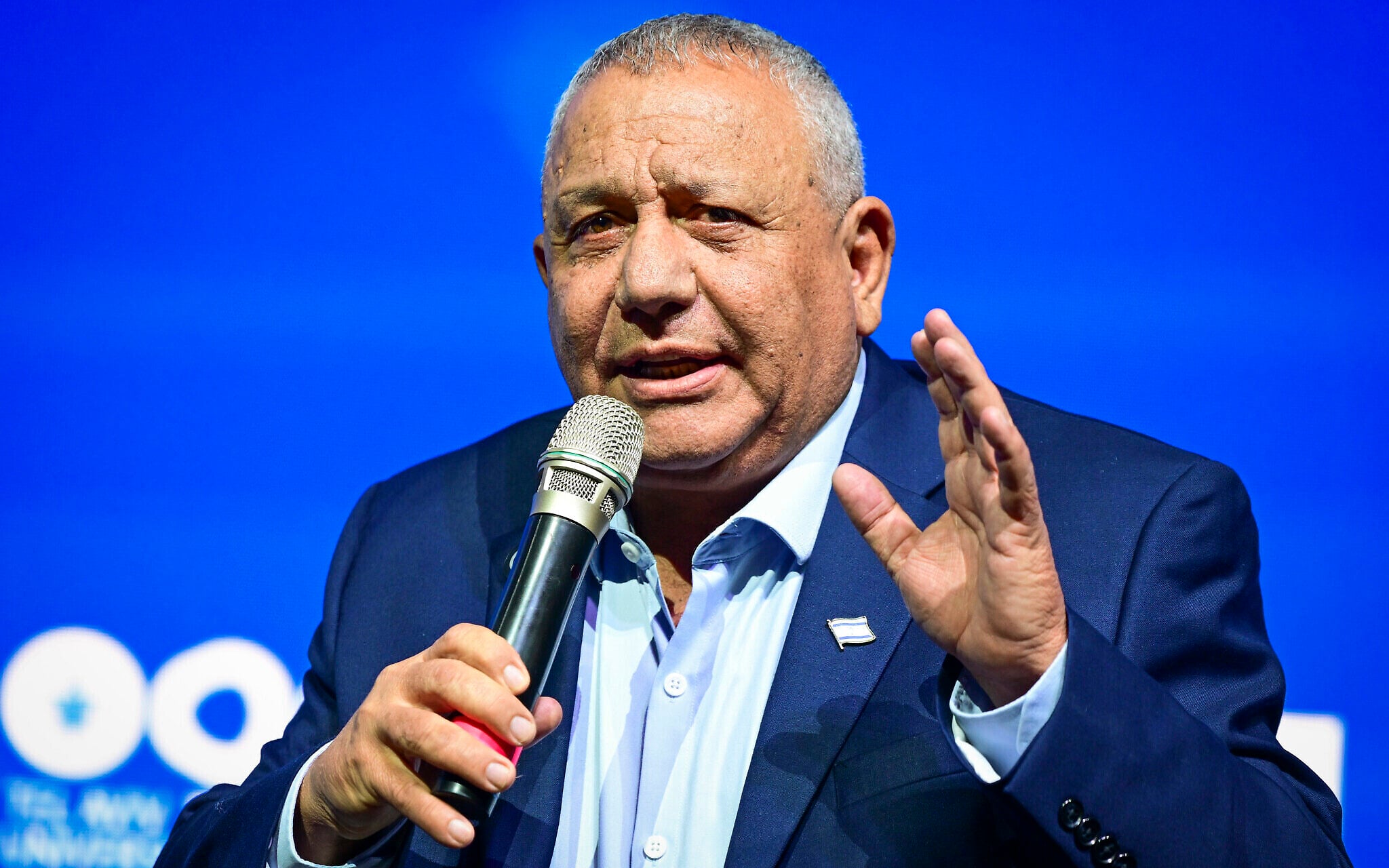
Former IDF chief Gadi Eisenkot, head of the Yashar party, speaks during a conference at Tel Aviv University, May 12, 2026. (Avshalom Sassoni/ Flash90)
A new poll by Zman Yisrael, The Times of Israel’s Hebrew-language sister site, has Gadi Eisenkot’s Yashar party surpassing the ruling Likud party for the first time and becoming the largest party in the Knesset.
The survey sees Yashar winning 23 seats if elections were held today, with Likud at 21. Naftali Bennett and Yair Lapid’s Together are at 17, Yisrael Beiteinu 11, Shas 10, Otzma Yehudit 8, United Torah Judaism 7, The Democrats 7, Hadash-Ta’al 4, Religious Zionism 4, Ra’am 4 and Blue and White 4. The Reservists party and Balad both failed to cross the electoral threshold.
The poll gives Zionist opposition parties 62 of 120 seats, enough to form a coalition. The 62 figure includes Benny Gantz’s Blue and White party, which has been working on a merger with Yoaz Hendel’s Reservists and political newcomer Dedy Simhi. None of the key figures in this potential alliance has ruled out sitting in a coalition with Prime Minister Benjamin Netanyahu.
The poll was conducted by political consultant Yossi Tatika of Tatika Research & Media in collaboration with the Adgenda panel managed by Roy Schindler. It was conducted on June 24 and 25, and included 500 Jewish and Arab respondents. The maximum margin of sampling error is 4.4%.
Report: Ohana asked to pressure Knesset legal adviser to back Basic Law on Torah study
Knesset Speaker Amir Ohana has been asked to pressure Knesset legal adviser Sagit Afik to support the process to pass a Basic Law to declare Torah study a foundational value of the State of Israel, effectively granting ultra-Orthodox yeshiva students immunity from arrest for draft evasion.
According to the report, Ohana met yesterday with Cabinet Secretary Yossi Fuchs, who is spearheading the initiative, with the meeting aimed at encouraging Ohana to put pressure on Afik to reverse her opposition to the hurried and irregular manner in which the proposal is being advanced.
The Knesset House Committee is set to hold three marathon sessions next week to advance the controversial law before parliament goes into pre-election recess.
In a letter sent to House Committee members earlier today, Afik reiterated her opposition to transferring the bill from the Constitution, Law and Justice Committee to the House Committee, a step taken last week, arguing that bypassing the committee responsible for constitutional legislation creates “defects and harm to the legislative process” that cannot be remedied.
Vance: Deconfliction mechanism will see Iran’s Revolutionary Guards sit with US Army’s CENTCOM
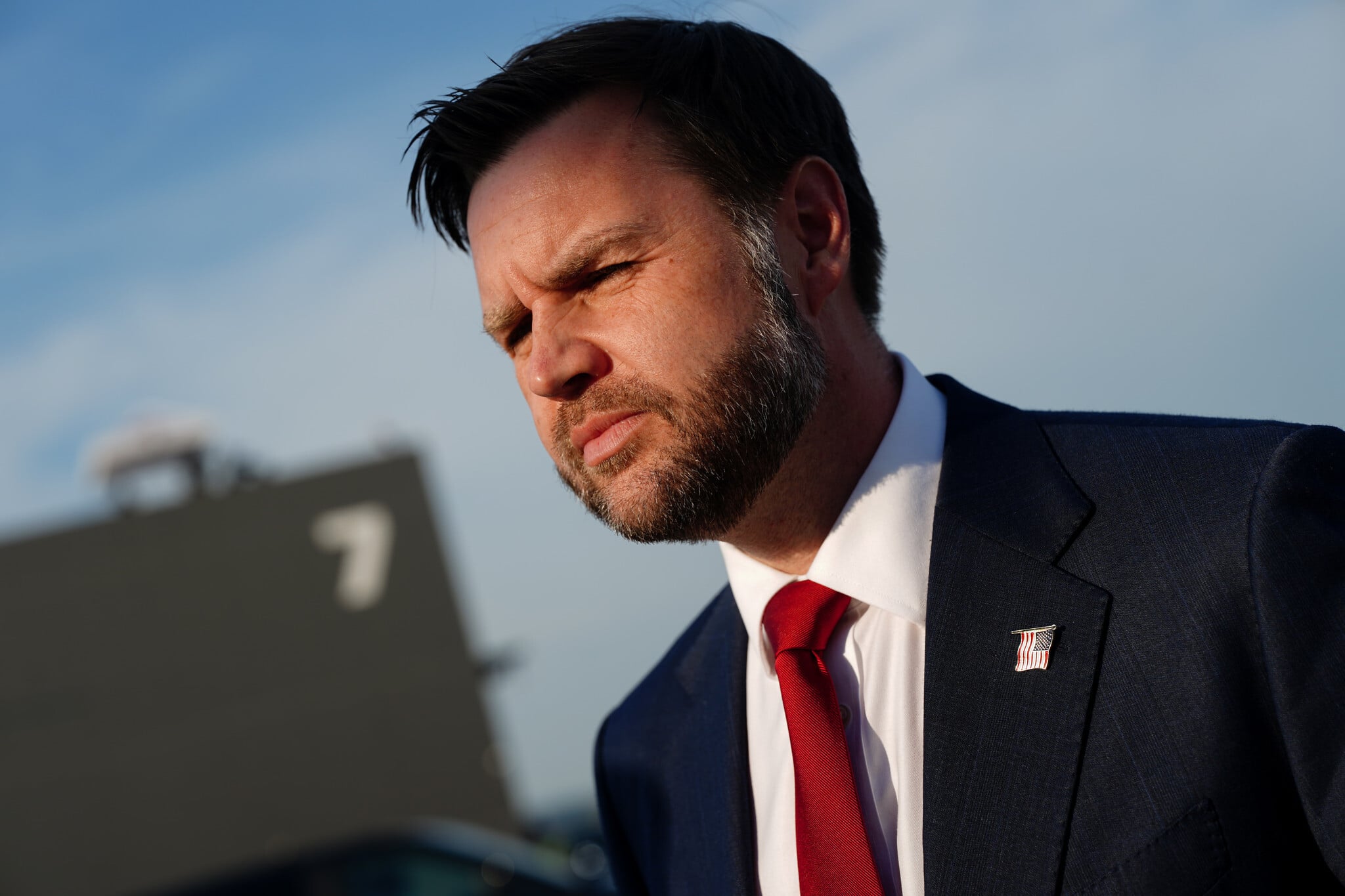
US Vice President JD Vance before boarding Air Force Two at Emmen Military Air Base, Emmen, Switzerland, Monday, June 22, 2026, after the U.S. and Iran held high-level talks at the Lake Lucerne Summit. (Nathan Howard/Pool Photo via AP)
US Vice President JD Vance says the deconfliction channel that Washington and Tehran agreed to set up during talks in Switzerland this past weekend includes representatives from the Islamic Revolutionary Guard Corps and the US Army’s Central Command, who will both sit in Qatar.
“One of the things we wanted to come out with [was a] channel on the Iranian side [for reducing conflict], which we did,” Vance says in an interview with the UnHerd British news site, which took place while the vice president flew back from those talks in Switzerland on Monday, but which was only published today.
“They were like, ‘OK, fine, we’ll send somebody from the IRGC to go hang out in Doha with somebody from CENTCOM,’ and that’s how we’re going to settle a lot of these disputes.”
While US officials have recently revealed contact has been established with the IRGC during negotiations with Iran since the outbreak of the war, the fact that Vance is now saying that the engagement is taking place at the military level is particularly noteworthy, given that the US has designated the IRGC as a Foreign Terrorist Organization.
Before departing Switzerland on Monday, Vance gave a press conference where he touted what he said were two new mechanisms that the US and Iran had agreed to establish during their weekend negotiations — one to ensure that the Strait of Hormuz remains open and another to maintain a regional ceasefire, particularly in Lebanon.
It is unclear which mechanism Vance is describing in the UnHerd interview, or whether the IRGC-CENTCOM coordination hub that has purportedly been set up in Doha is tasked with dealing with both of those issues.
The deconfliction mechanism for Lebanon infuriated Israel, which has argued that Iran should have no say on what happens in the country. But either because of Iran’s significant leverage in the Strait of Hormuz or because Washington believes that Iran is needed to rein in Hezbollah, the US agreed to Tehran’s demands that the memorandum of understanding inked last week include a ceasefire in Lebanon, and then agreed to allow Iran to be part of the deconfliction mechanism established to ensure that ceasefire.
Vance, in the interview, insists that the final deal that the US seeks with Iran through the MOU will be “radically different” than the 2015 nuclear agreement signed by former US president Barack Obama because the inspection regime will be more intense and Iran’s stockpile of enriched uranium will be “eliminated” — something Iran has said it will not accept.
The vice president also argues that his deal will transform the Middle East by leading to more cooperation between Iran and the rest of the region.
Arab states are more appreciative of the MOU “because of the conversations they’re having with the Iranians,” Vance claims.
“The Emiratis — by far the most hawkish, by far the most pro-Israel country in the GCC — they’re having conversations with the Iranians that have never happened before, including with the IRGC, about various types of economic incentives — ‘Here’s what we’d need to see to make your country investable’ — and the Iranians come back and say, ‘Okay, yeah, we’re willing to do all those things,'” Vance says.
Analysts overwhelmingly argue that those new conversations between Iran and its Gulf neighbors are due to the latter’s conclusion, following the recent war, that they cannot rely on the US alone to ensure their security and their feeling that improving ties with their adversary is the only way to do so.
Venezuela quakes death toll rises to 188, top lawmaker says
The death toll from two powerful earthquakes in Venezuela has risen to at least 188, with more than 1,520 others injured, top lawmaker Jorge Rodriguez says.
Twin quakes, which the US Geological Survey measured at magnitudes 7.2 and 7.5, hit northern Venezuela within a minute of each other on Wednesday night, sending buildings collapsing and trapping many in the rubble.
Report: Gaza coordination hub set to undergo overhaul; Georgia, Vietnam in talks to send troops to ISF
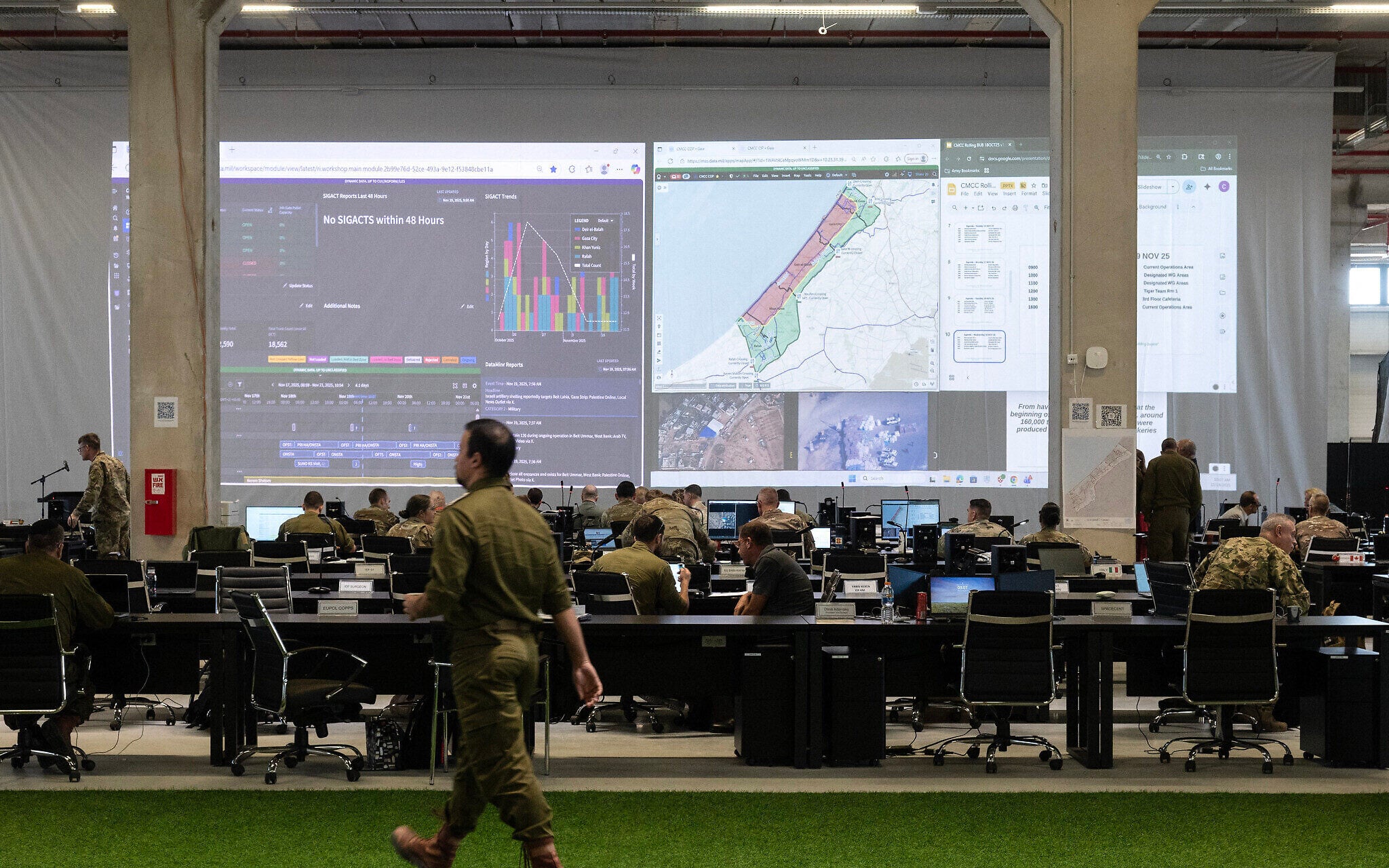
Personnel work at the US-led Civil-Military Coordination Center (CMCC), in the southern town of Kiryat Gat, on November 19, 2025. (Ahikam Seri / AFP)
The Civil-Military Coordination Center in Kiryat Gat is set to undergo an overhaul aimed at making it more operational and strengthening its coordination with US President Donald Trump’s Board of Peace, Channel 12 reports.
The CMCC was established in southern Israel last October under Trump’s plan to end the war in Gaza. It was tasked with monitoring the Israel-Hamas ceasefire, facilitating the entry of aid, and developing postwar policies for the Palestinian territory.
According to three diplomats familiar with the plans, the center will be renamed the International Gaza Aid Center, while the proposed International Stabilization Force — intended to secure the Strip during a transitional postwar period, following Israel’s withdrawal and the disarmament of the Hamas terror group — is expected to play a much larger role in its work.
The report says the number of countries and representatives involved in high-level discussions on Gaza’s future will also be reduced to streamline decision-making. The changes, which were advanced during a meeting this week after more than two months of planning, are expected to be implemented in the near future.
Channel 12 also reports that advanced talks are underway with Georgia and Vietnam over contributing troops to the ISF. If finalized, they would join Greece, Morocco, Indonesia, Kosovo, Kazakhstan and Albania, which have already agreed to send forces.
The Board of Peace did not deny the report, according to Channel 12, telling the news outlet that it is continuing to advance plans for governance, security and reconstruction in Gaza “to streamline efforts and increase transparency.” It says the ISF and the Civil-Military Coordination Center are preparing “different models for closer coordination and integration” as the mission expands, adding that no reduction in personnel is currently planned and that discussions with additional countries about contributing troops are ongoing.
Georgia and Vietnam do not comment on the report, Channel 12 adds.
IDF says 6 Hezbollah operatives who posed threat to troops killed in strikes
The IDF says it struck and killed at least six Hezbollah operatives who posed a threat to troops operating in southern Lebanon today.
According to the military, in one incident in Zawtar al-Sharqiyah, troops of the Golani Brigade spotted five Hezbollah operatives near them. In another incident, in the Ali Taher ridge area, troops of the Commando Brigade spotted an armed Hezbollah gunman.
In both incidents, the Israeli Air Force carried out strikes and the ground forces opened fire on the operatives, killing them.
The military says it continues to operate at the Ali Taher ridge, beneath which Hezbollah has a massive underground complex, where some 30 operatives are holed up.
The IDF says it will “not allow Hezbollah terrorists to exit the underground tunnel network or operate in the area of the ridge.”
לאחר שזוהו במרחב הביטחוני: צה"ל חיסל מחבלי חיזבאללה שהיוו איום על כוחותינו הפועלים במרחב ההגנה הקדמי
מוקדם יותר היום (ה'), כוחות צוות הקרב החטיבתי גולני בפיקוד אוגדה 36 הפועלים בזוטר א-שרקייה, זיהו חמישה מחבלים מארגון הטרור חיזבאללה שהיוו איום על כוחותינו הפועלים בתוך המרחב… pic.twitter.com/uNRdIgou5P
— צבא ההגנה לישראל (@idfonline) June 25, 2026
Poll shows most Israelis oppose Netanyahu’s reported deal with Haredi parties
A majority of Israelis oppose Prime Minister Benjamin Netanyahu’s reported deal with ultra-Orthodox parties Shas and United Torah Judaism to swiftly advance some of their legislative agenda in exchange for supporting coalition priorities, according to a Channel 12 poll.
The two Haredi parties have denied the existence of a deal, despite widespread reports on its details.
The survey finds that 62% oppose the agreement, while just 23% support it. Even among coalition voters, 22% say they oppose the deal.
The poll also examines a scenario in which Benny Gantz’s Blue and White party, Yoaz Hendel’s Reservists party and political newcomer Dedy Simhi run on a joint list. The alliance would win five Knesset seats and, assuming it joined the opposition, lift the bloc to 60 seats, compared with 50 for Netanyahu’s bloc, while the Arab parties, Hadash-Ta’al and Ra’am, would hold 10 seats.
The network did not provide data on the number of people polled or the margin of error.
FM to propose cabinet resolution to officially recognize Ottoman genocide of Armenians
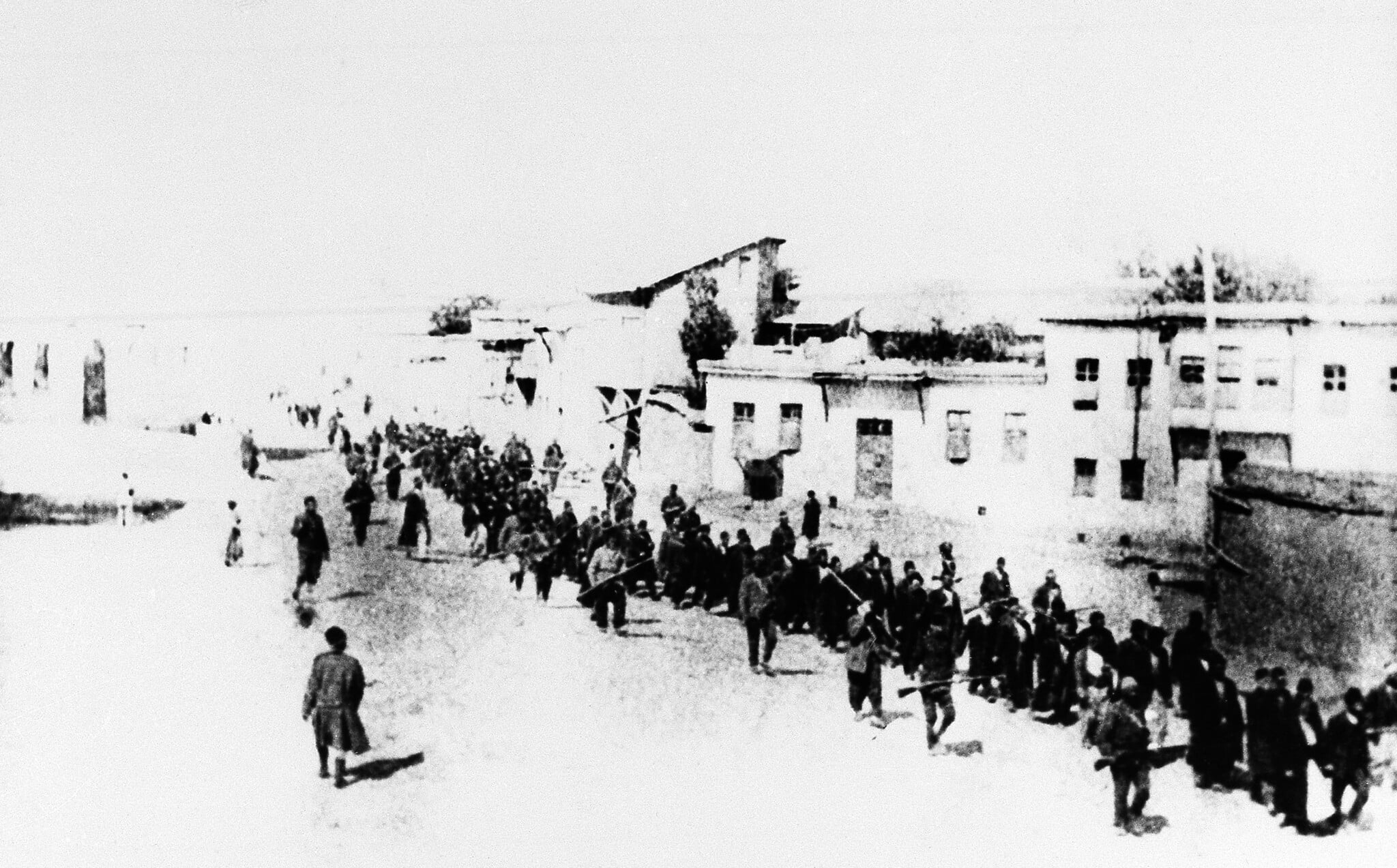
A scene in Turkey in 1915 when Armenians were marched long distances and said to have been massacred. (AP Photo)
Foreign Minister Gideon Sa’ar plans to propose on Sunday a cabinet resolution to officially recognize the genocide against the Armenian people during the final years of the Ottoman Empire, his office says, in a move that will no doubt provoke diplomatic rival Turkey.
Armenians have long sought international recognition of the killings in the early 20th century, which reportedly left some 1.5 million of their people dead, as a genocide. Turkey — the Ottoman Empire’s successor state — strongly rejects the allegation that the massacres, imprisonment and forced deportation of Armenians amounted to genocide.
Israel long avoided recognizing the killings as genocide due to the diplomatic sensitivity of the matter, but the sharp deterioration of relations with Turkey under President Recep Tayyip Erdogan, who has repeatedly accused Israel of genocide in Gaza, has led it to take certain steps toward recognition in recent years. Last August, Prime Minister Benjamin Netanyahu said for the first time that he recognized the genocide.
“Despite extensive and unequivocal historical documentation, the Armenian Genocide remains the subject of an organized campaign of denial and minimization, including the manipulative rewriting of history books, primarily by Turkey,” the explanatory text for the proposal says.
“In light of this moral and historical obligation, it is proposed that the Government of Israel recognize the genocide committed against the Armenian people during the final years of the Ottoman Empire. In addition, given ongoing attempts to blur, minimize, or deny the atrocities of the Armenian Genocide, the proposal calls for condemning all efforts to distort the historical truth of these events.”
Iran fired on cargo ship in Hormuz, US officials tell Reuters
Iran fired on a cargo ship that reported earlier being hit by a projectile as it attempted to pass through the Strait of Hormuz, two US officials tell Reuters, speaking on condition of anonymity.
The ship reported being struck on its starboard side by a projectile 7.5 nautical miles southeast of Oman’s port of Dahit, the British navy agency UKMTO said.
Iran has not specifically commented on the incident. Iran’s Revolutionary Guards said earlier that safe passage through the strait would only be possible through routes designated by Iran, adding that it would take action against vessels that failed to comply.
US Supreme Court lets Trump end deportation protections for Haitians and Syrians
The US Supreme Court clears the way for President Donald Trump’s administration to strip hundreds of thousands of Haitian and Syrian immigrants of a humanitarian status that protects them from deportation, giving another boost to his hardline approach toward immigration.
The court, in a 6-3 ruling powered by its conservative justices, overturns decisions by federal judges in New York and Washington, DC, that had halted the administration’s actions terminating Temporary Protected Status, or TPS, for more than 350,000 people from Haiti and 6,100 from Syria.
The court also backs Trump in a second immigration-related decision involving policy toward asylum seekers.
The State Department currently warns against traveling to either Haiti or Syria, citing widespread violence, crime, terrorism and kidnapping.
TPS is a designation that lets migrants from countries stricken by war, natural disaster or other catastrophes live and work in the United States while it is unsafe for them to return to their home countries. The United States first provided TPS to Haitians after a major earthquake in 2010 and to Syrians after their country descended into civil war in 2012.
Conservative Justice Samuel Alito, who authored the ruling, writes that courts cannot review the administration’s decisions concerning TPS, a decision that could doom legal challenges going forward on revocation of this status for any country.
The law governing TPS “plainly bars” such judicial review, Alito writes.
Alito also writes that the Haitian TPS holders who sued the administration are unlikely to succeed in their argument that the administration’s actions were racially biased, violating the US Constitution’s Fifth Amendment promise of equal protection under the law.


read more: