

 From the Liveblog of
Monday, March 14, 2022
From the Liveblog of
Monday, March 14, 2022
China battles multiple virus outbreaks, driven by ‘stealth Omicron’ variant
 Add ToI as a Preferred Source on Google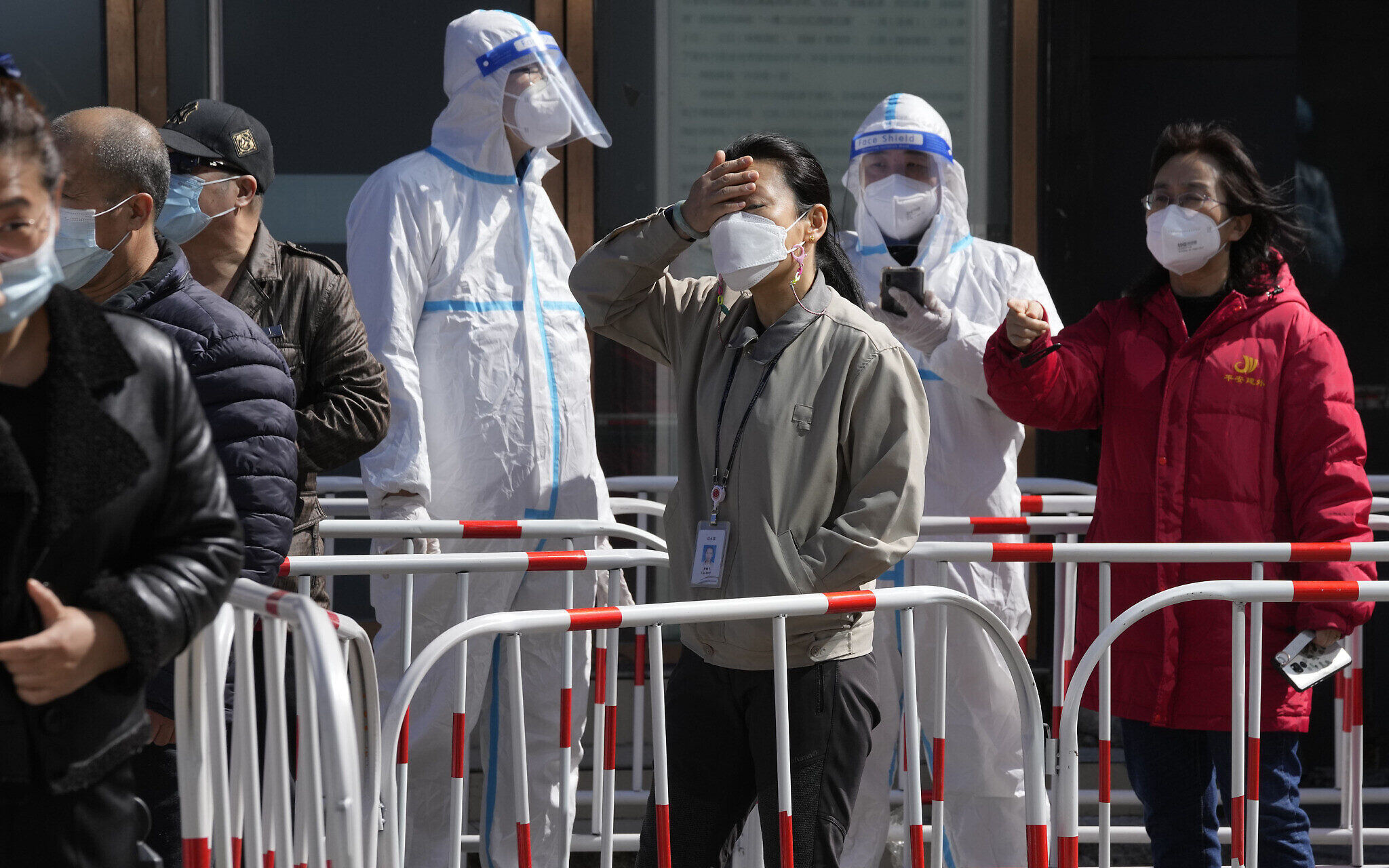
TAIPEI, Taiwan (AP) — Chinese authorities report 1,337 locally transmitted cases of COVID-19 across dozens of mainland cities as the fast-spreading variant commonly known as “stealth Omicron” fuels China’s biggest outbreak in two years.
The vast majority of the new cases are in far northeastern Jilin province with 895. Shenzhen reports 75 new cases as residents began the first of three rounds of mass testing. Officials on Sunday locked down the city, which has 17.5 million people and is a major tech and finance hub that neighbors Hong Kong.
The surge on the Chinese mainland is infecting people in cities ranging from Shenzhen to Qingdao on the coast to Xingtai in the north and the numbers have crept steadily higher since early March. While the numbers are small relative to numbers reported in Europe or in the US, or even the city of Hong Kong, which reported 32,000 cases Sunday, they are the highest since the first big outbreak of COVID-19 in the central city of Wuhan in early 2020.
China has seen very few infections since its strict Wuhan lockdown as the government held fast to its zero-tolerance strategy, which is focused on stopping transmission of the coronavirus as fast as possible, by relying on strict lockdowns and mandatory quarantines for anyone who has come into contact with a positive case.
The government has indicated it will continue to stick to its strict strategy of stopping transmission for the time being.










The Times of Israel Community.