

 From the Liveblog of
Monday, June 30, 2025
From the Liveblog of
Monday, June 30, 2025
Sa’ar vows Golan Heights not up for discussion in any talks with Syria
 Add ToI as a Preferred Source on Google
Lazar Berman is The Times of Israel's diplomatic reporter
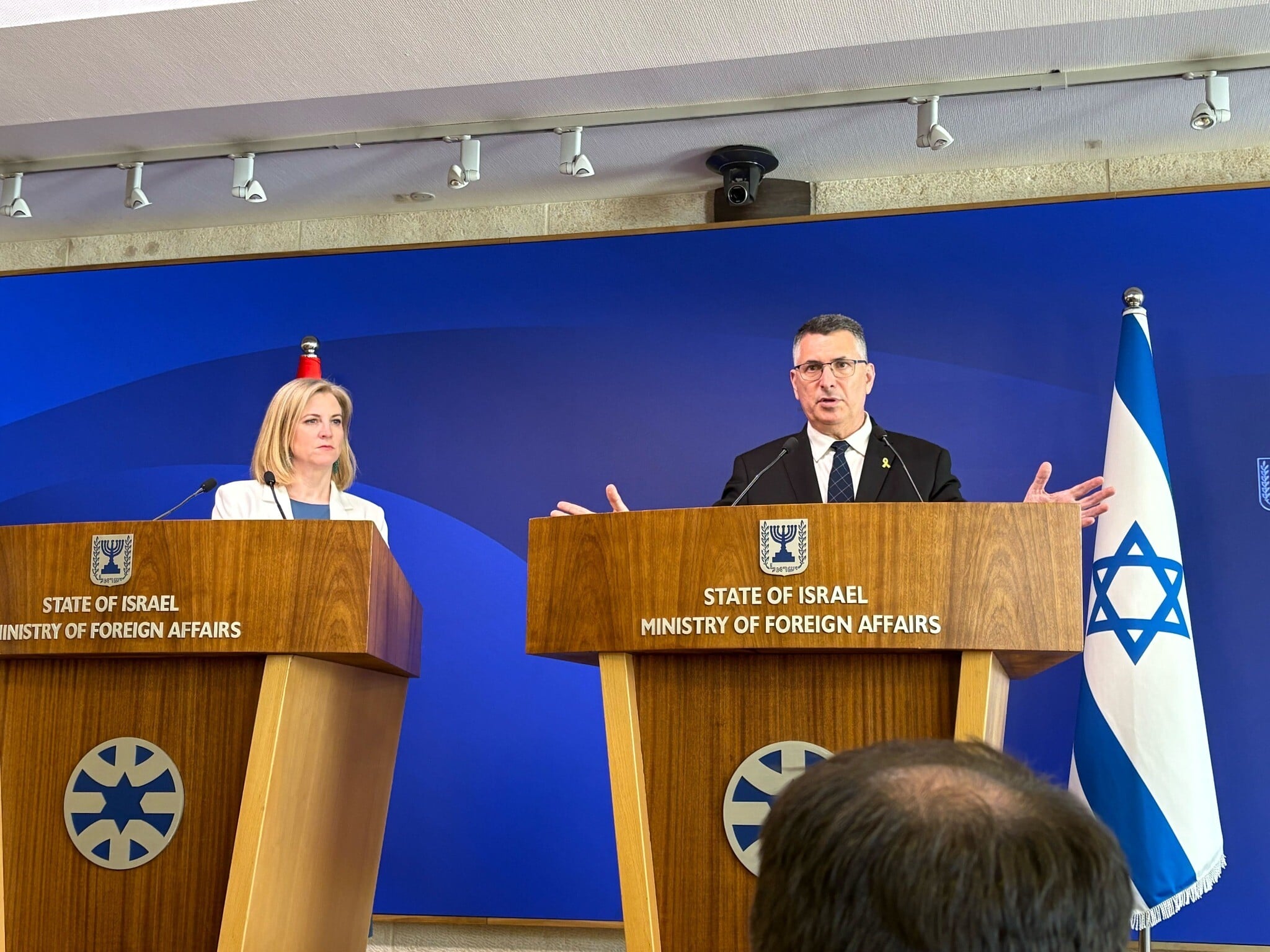
In any potential peace agreement with Syria, “the Golan Heights will remain part of the State of Israel,” says Foreign Minister Gideon Sa’ar, speaking alongside his Austrian counterpart Beate Meinl-Reisinger.
Sa’ar underscores the fact that Israel annexed the Golan Heights more than four decades ago.
He does not speculate on how imminent peace might be, or whether Syria is a more likely candidate for a peace deal than Saudi Arabia, but says that Israel “will welcome Syria to the peace and normalization circle in the Middle East.”
Sa’ar says that Israel “is interested in expanding the Abraham Accords circle of peace and normalization,” naming Lebanon and Syria.
The foreign minister says that Israel is “serious in its will to reach a hostage deal and ceasefire in Gaza.” He calls on Europe to back US special envoy Steve Witkoff’s proposal for a ceasefire, in order to “shatter Hamas illusions.”
However, there are “significant gaps between the two sides’ conditions,” says Sa’ar.
Sa’ar stresses that Israel is “committed to achieving our objectives” in Gaza, adding that Israel is “committed to continuing to facilitate the humanitarian effort.”
The foreign minister emphasizes that “Hamas takes over the aid” which “causes the war to continue endlessly.” He lauds the US- and Israeli-backed Gaza Humanitarian Foundation for helping Gaza’s civilians directly.
A Palestinian state “would threaten the security of the state of Israel,” he says in response to a question from The Times of Israel about whether he would support a two-state solution if Saudi normalization was conditioned on such a move.
He also argues that Israel’s success against Iran’s ballistic missiles, drones, and nuclear program also protected Europe’s security.









The Times of Israel Community.