

Netanyahu set to lead a strikingly hardline Likud
Op-ed: The run-up to Wednesday’s Likud primaries has seen a wave of sensational headlines. They’ve missed the real story

 Add ToI as a Preferred Source on Google
David Horovitz is the founding editor of The Times of Israel. He is the author of "Still Life with Bombers" (2004) and "A Little Too Close to God" (2000), and co-author of "Shalom Friend: The Life and Legacy of Yitzhak Rabin" (1996). He previously edited The Jerusalem Post (2004-2011) and The Jerusalem Report (1998-2004).
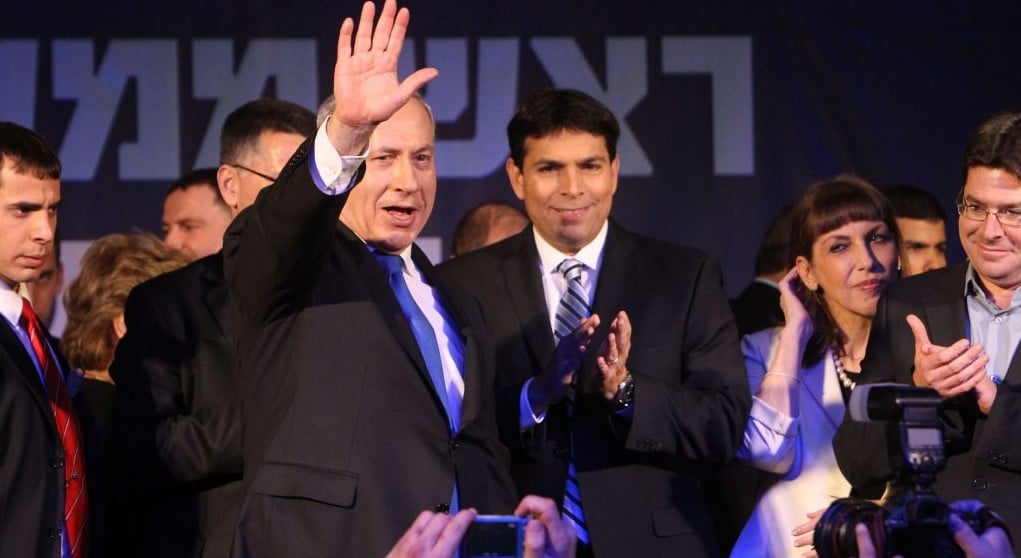
The curious tale of the Likud comptroller who last week banned Benjamin Netanyahu from competing to retain his leadership of the party must have had non-expert Israel-watchers worldwide scratching their heads.
Could it really be the case, as numerous headlines had it, that the prime minister was being booted out of his Likud chairman’s job by an officious functionary, one Shai Galili, of whom nobody had previously heard? Would Wednesday’s Likud leadership contest be canceled, since there was now only one candidate left in the race? Was lightweight former deputy defense minister Danny Danon to be elected by default as chairman of the party that has governed Israel for the overwhelming majority of the past four decades?
Caveat-free headlines such as “Likud comptroller disqualifies Netanyahu from party primaries” (Ynet), “Netanyahu Disqualified from Likud Leadership Race” (Israel National News), and “Likud comptroller disqualifies Netanyahu from leadership race over use of party funds” (Haaretz) — which were played up high and large, and were picked up in turn by numerous other media outlets worldwide — appeared to leave little room for doubt: Netanyahu was finished. (The Times of Israel’s headline was the slightly more nuanced “Likud comptroller seeks to bar PM from running for party leadership.”)
Well, actually, no. No, Shai Galili has not halted Netanyahu’s political career. The prime minister is not done for. To no surprise at all among those who follow Israeli politics closely — and that emphatically includes all those headline-writers, who should have done better — Netanyahu has not been banned from competing for, and presumably retaining, the Likud party leadership on Wednesday. Predictably, a compromise was engineered under which various Netanyahu advisers, whose services should not have been used to promote his campaign, have been placed on temporary leave. The party bureaucrats have been appeased. The prime minister sails smoothly on.
But real drama, with truly far-reaching implications, awaits at the Likud primaries, nonetheless. In contrast to those prominent, silly headlines, what has been barely reported is the likely result of the other contest that will be taking place among the party’s 90,000-plus members: their choice of the Likud’s Knesset slate. These are the lucky few men and women who, Netanyahu hopes and opinion polls suggest, will fill central posts in the next coalition, which he is hoping to form after winning the general elections he chose to bring forward to March 17, 2015.
The number of Likud MKs even theoretically supportive of a two-state solution could be counted on the fingers of one hand, with enough left over to flash a victory sign
Likud has the largest membership of any Israeli political party, and its members’ Knesset choices are only due to be announced on Thursday morning. But it is a safe bet even before the vote that the politicians on the Likud slate of 2015 — the first two dozen of whom have a reasonable expectation of sitting in the next Knesset — will be strikingly hawkish on the issue of peacemaking with the Palestinians, and that the list will feature fewer politicians with a track record for firmly upholding democratic principles than it did just two years ago.
The 2013 Likud slate saw the exclusion from the Knesset of such veteran relative moderates as Dan Meridor and Michael Eitan, and such determined champions of democratic principle as Benny Begin, son of the party’s first prime minister Menachem. Moshe Feiglin, head of Likud’s hardline “Jewish Leadership” wing, finally managed to defy Netanyahu’s relentless efforts to sideline him and won a seat for the first time. Youngish hardliners including Danon, Tzipi Hotovely, Ofir Akunis, Ze’ev Elkin and Yariv Levin, selected high on the slate, had to be awarded relatively weighty posts, including jobs as deputy ministers and heads of prestigious Knesset committees.
The number of Likud MKs even theoretically supportive of a two-state solution could be counted on the fingers of one hand, with enough left over to flash a victory sign.
This time around, Reuven Rivlin, a longtime principled democratic voice of Likud, will be absent too — championing those values, nowadays, from the President’s Residence, despite Netanyahu’s best efforts to prevent him attaining that position. Gone too will be Gideon Sa’ar and Limor Livnat, two experienced Likud ministers who, for their different reasons, have decided they’ve had enough of political life. There is next to no doubt, this time, that Feiglin, and others supported by his wing of Likud, will gain prominent positions on the slate. So too will populists like Danon, Hotovely and Miri Regev (who is adamant that Israel must not surrender Jerusalem’s Arab neighborhoods, even if she doesn’t actually know where they are), all of whom are champions of Jewish prayer rights on the Temple Mount.

It’s far too early to predict with confidence precisely how Likud will fare in the elections — whether, for instance, it will benefit from a collapse in support for Avigdor Liberman’s scandal-plagued Yisrael Beytenu and the spectacular implosion of Shas, and/or lose ground to Naftali Bennett’s more dynamic, annex-the-West-Bank Jewish Home and former Likud minister Moshe Kahlon’s unproven Kulanu.
But Likud was often cited as the party most capable of delivering an Israeli majority in favor of making peace — because the center-left will always back a deal, but Likud is crucial to the composition of a consensus extending into the center-right. And it is highly likely that, as of Thursday morning, Likud will have selected a Knesset slate almost unanimously disinclined to do so (with Gilad Erdan and Tzachi Hanegbi among the very few possible exceptions).
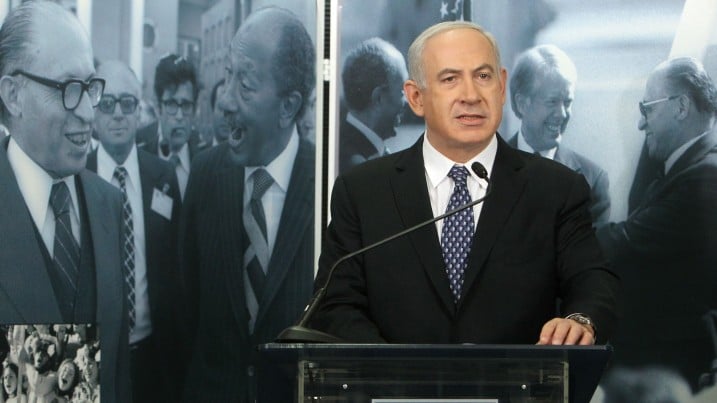
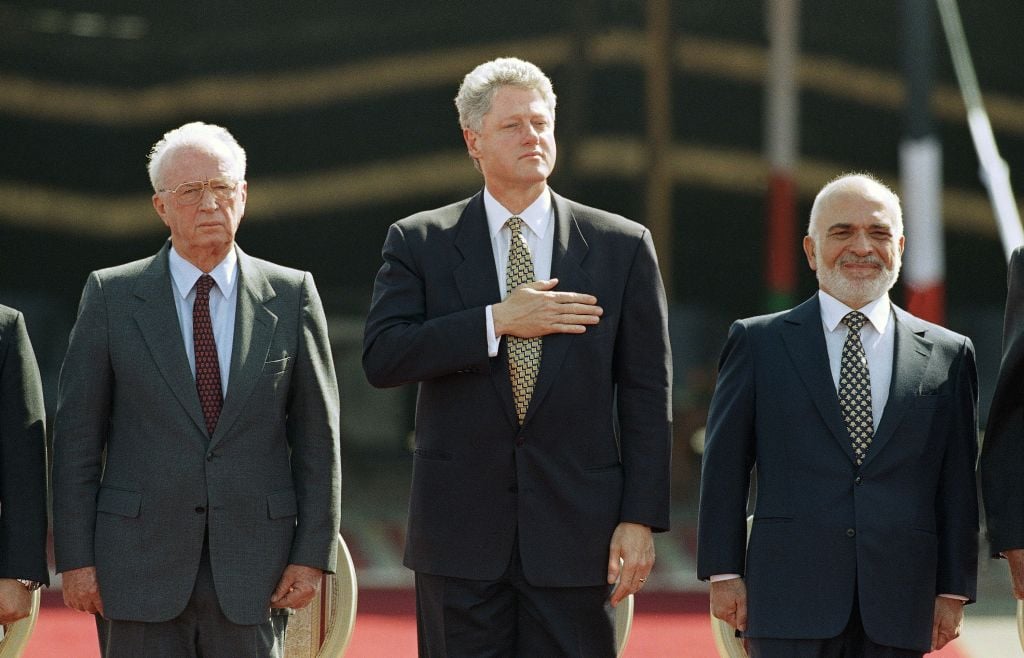
It was Likud’s Menachem Begin who signed Israel’s peace treaty with Egypt in 1979. And the vast majority of Likud MKs voted in favor of the Yitzhak Rabin-signed treaty with Jordan 15 years later — even though formalizing ties with the Hashemite regime destroyed the plank of Likud policy that wanted to see Jordan become the Palestinian state. The next crop of Likud MKs would be unlikely to vote in similar fashion. As the Palestinians underlined with their failed unilateral bid to impose an Israeli withdrawal via the UN Security Council on Tuesday night, conditions are anything but encouraging for those who seek an accommodation with them. The Likud Knesset faction, 2015 vintage, won’t be looking.
Despite those startling articles from last week, Netanyahu will lead Likud into next year’s elections. There’ll be no bureaucrats’ coup. The genuinely headline-worthy significance of the Likud primaries on Wednesday is the likely solidifying of a Knesset party overwhelmingly opposed even to his vague, conditional support for the two-state solution on whose basis the historic state of Israel was reborn.
And to Likud’s right in the Knesset will be Bennett’s (probably strengthened) Jewish Home, with its absolute opposition to the notion of Palestinian statehood.
In a week marked by another batch of population statistics showing near-parity of Jews and non-Jews between the Jordan River and the Mediterranean Sea — figures presented by the Palestinians, but not significantly disputed by Israel — that should be cause for profound concern, for the prime minister and for all who seek to ensure the maintenance of an Israel at once Jewish and democratic. Netanyahu, who speaks often of his desire to ensure Israel not become a binational state, looks set to be “backed” in the next parliament by a roster of Likud MKs who flatly reject separation from that growing number of Palestinians.





The Times of Israel Community.