

Netanyahu’s new Iran revelation: Another bombshell or an election stunt?
Questions abound as PM exposes site where he says experiments to develop nuclear weapons were conducted: Why now? Was Trump told? Which experiments? And what else does Israel know?

 Add ToI as a Preferred Source on Google
Raphael Ahren is a former diplomatic correspondent at The Times of Israel.
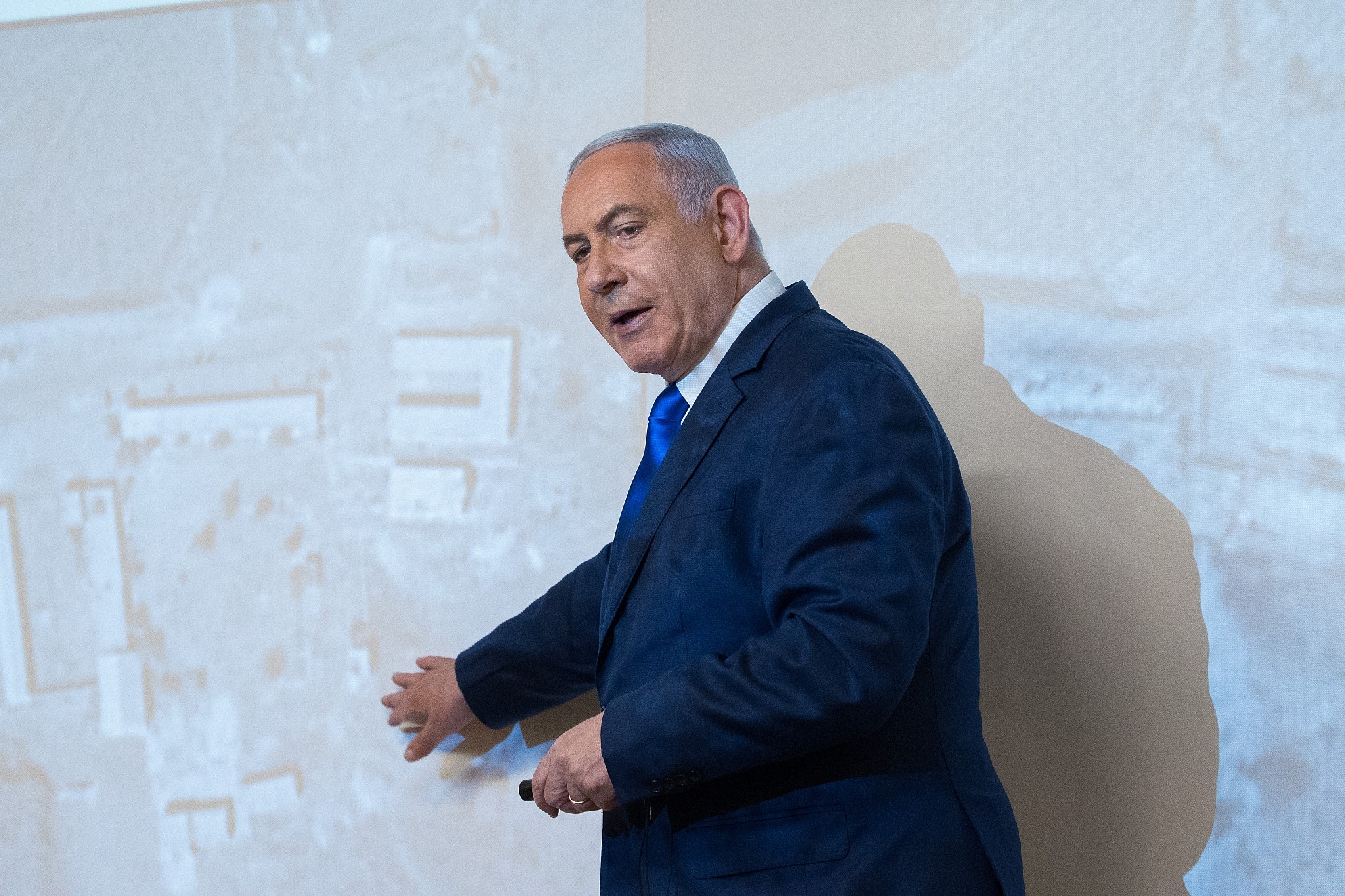
They say third time’s a charm, but when Prime Minister Benjamin Netanyahu on Monday revealed a third secret nuclear site in Iran, he also caused a lot of confusion.
On the surface, his brief presentation sounded like another bombshell, another of his explosive revelations about the Islamic Republic’s clandestine nuclear program: Israel, he declared, has discovered a hitherto unknown facility in which Iran “conducted experiments to develop nuclear weapons.”
His first revelation, on April 30, 2018, at the Defense Ministry headquarters in Tel Aviv, exposed a secret nuclear archive in southern Tehran’s Shorabad District. “Here’s what the files included: incriminating documents, incriminating charts, incriminating presentations, incriminating blueprints, incriminating photos, incriminating videos and more,” he said at the time.
A few months later, during his annual address to the United Nations General Assembly in New York, the prime minister revealed the existence of a secret atomic warehouse “for storing massive amounts of equipment and materiel from Iran’s secret nuclear weapons program” in the capital’s nearby Turquzabad district.
On Monday, addressing reporters at the Foreign Ministry in Jerusalem, he made public a hitherto undisclosed facility in Abadeh, south of Isfahan. As opposed to the previous exposed sites — which merely stored information and material, respectively, related to Iran’s nuclear program — at the Abadeh site, actual, physical progress was made on Iran’s path to the bomb. Or at least that was one possible way to understand his vague statement about experiments there “to develop nuclear weapons.”
But what kind of experiments? Netanyahu did not specify. Did the site, which the Iranians destroyed once they discovered that Israel detected it, host actual nuclear tests? Unlikely, but again not specified. Did scientists simulate nuclear chain reactions on computers? Did they handle enriched uranium or plutonium? We simply do not know.
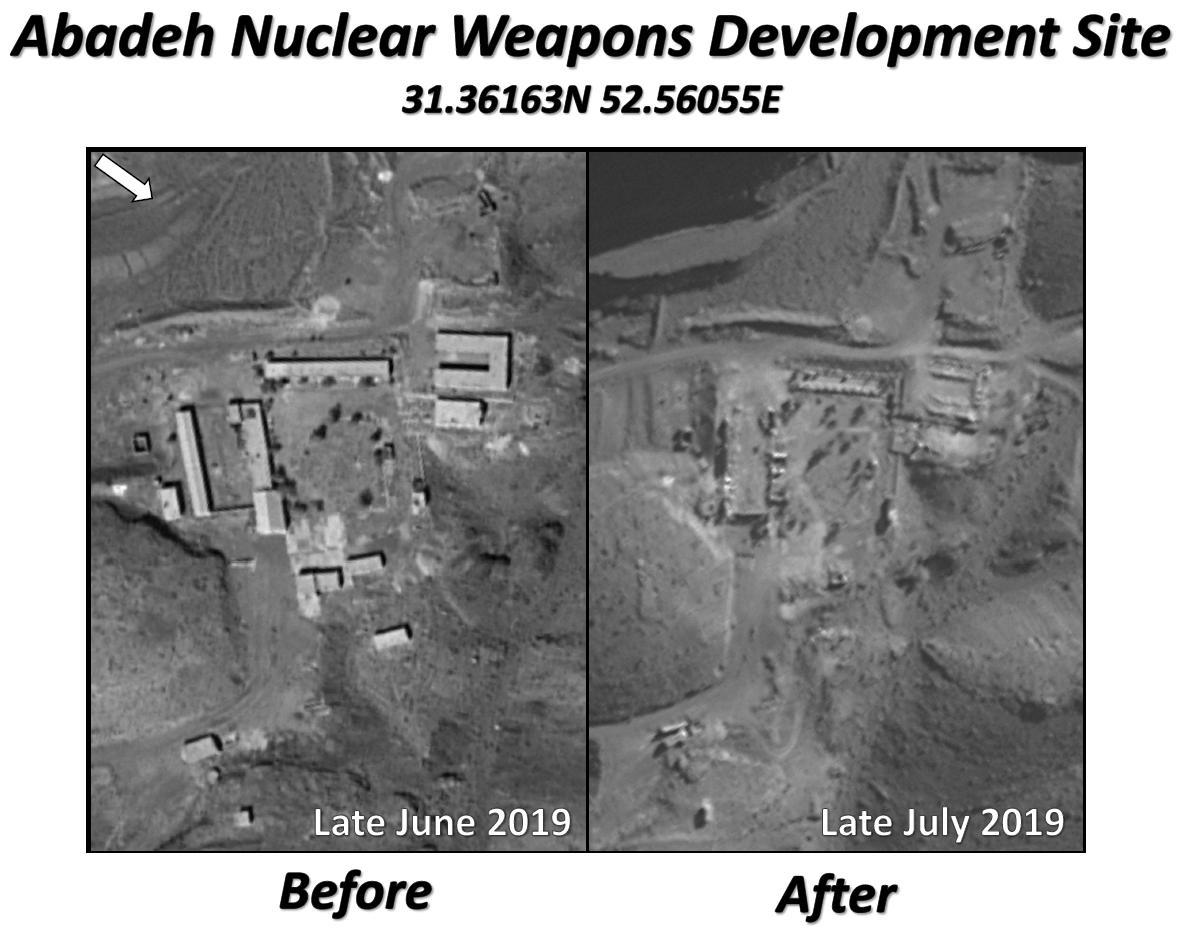
Left vague, too, was the question of when exactly the secret nuclear weapons development facility was in use. Was it shut down before the 2015 nuclear deal? Netanyahu, interestingly, did not explicitly say that its existence constituted a violation of Iran’s commitments under the Non-Proliferation Treaty or the nuclear deal it signed with world powers four years ago.
The prime minister’s political rivals, unsurprisingly, immediately showed themselves unimpressed with Netanyahu’s statement, accusing him of divulging sensitive intelligence for political purposes.
The timing of his revelation — one week before the elections, even though Israel has known about the site for some time — indeed suggests that the prime minister hoped the exposé would a) bolster his image as Mr. Security, who continues to outsmart the Iranian foe, and b) help him regain control of the national narrative, especially on a day when he suffered a painful political defeat — as the Avigdor Liberman-led opposition torpedoed his legislative effort to deploy cameras in voting stations on election day.
Netanyahu’s statement was broadcast live on his various social media accounts, with the logo of his Likud party appearing in the screen’s upper right corner, which led his political opponents to assert that the announcement was nothing more than an election stunt.
At the same time, anonymous officials close to the prime minister were said to have insisted that the defense establishment had recommended that Netanyahu reveal the information about the Abadeh site on the very day the International Atomic Energy Agency opened its Board of Governors meetings in Vienna.
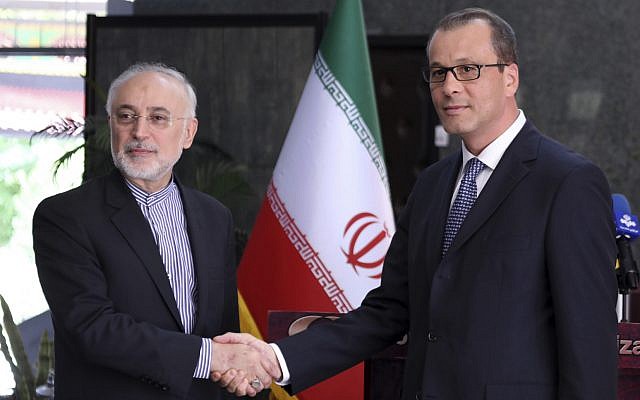
It is hard to verify such claims about anonymous defense officials, but it is true that the IAEA’s acting director-general, Cornel Feruta, on Tuesday chided Iran for failing to answer open questions regarding its nuclear program. The IAEA, noted Netanyahu, has just confirmed finding uranium traces at that Turquzabad warehouse. Also on Tuesday — one day after Feruta returned from Tehran for talks — the nuclear watchdog confirmed that the Islamic Republic had installed advanced centrifuges in violation of the nuclear deal.
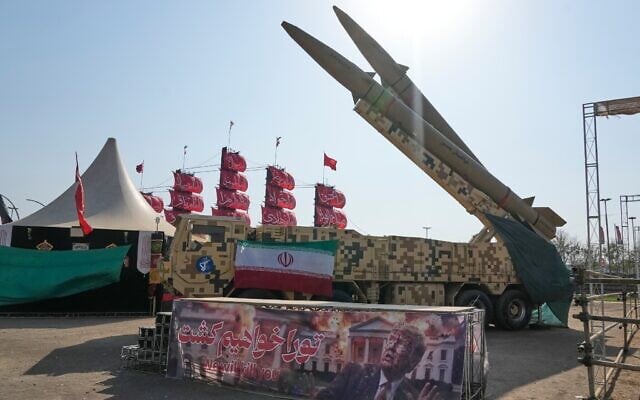
The timing of Netanyahu’s presentation may also have to do with the apparently imminent rapprochement between Iran and the United States, as President Donald Trump appears inclined to meet with his Iranian counterpart, Hassan Rouhani.
Meanwhile, more questions abound: Was Trump aware of the Abadeh site, or did he and his aides only learn about it with the rest of us on Monday? The Prime Minister’s Office refuses to say. And what else does Israel know about Iran’s nuclear program that the prime minister has yet to reveal?
After all, Netanyahu said that Jerusalem had discovered “additional secret sites” — in the plural — in Iran, and that today he was exposing “one of the most important ones among them.” When does he intend to reveal the others?



The Times of Israel Community.