

Omicron may be unstoppable, but Israel’s moves to slow the spread may save lives
More gradual spread means more time to get kids immunized and to source special supplies if necessary, like vaccines adapted for Omicron and antibody cocktails for treatment

 Add ToI as a Preferred Source on Google
Nathan Jeffay is The Times of Israel's health and science correspondent

Israel will not be able to keep Omicron at bay, but delaying its spread could save lives, experts believe.
“If it’s as infectious as suspected it will become widespread, but if we can buy two weeks before it spreads in Israel, we can prepare; we can prepare much better,” Dr. Oren Kobiler, a Tel Aviv University microbiologist, told The Times of Israel.
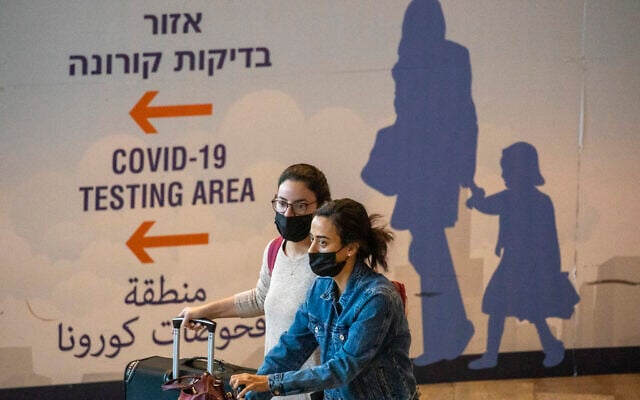
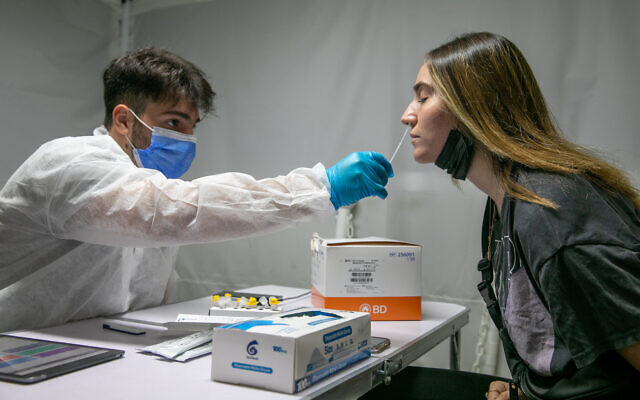
Israel’s high-level coronavirus cabinet on Saturday night called for renewed vigilance in virus prevention, and approved fresh restrictions to prevent the spread of the COVID-19 Omicron variant, which was first identified in South Africa last week and has since been found in Israel. Ministers have voted to ban non-citizens from entering the country for two weeks.
When experts like Kobiler talk about preparations, they do not mean readiness in hospital wards, which are always on standby for an influx, but rather readiness to deal with what may turn out to be the specific challenges of Omicron.
“In prior variants, we had two to three mutations in a very important area of the virus known as the RBD receptor binding domain,” Kobiler explained. “With this variant, we have 16, which suggests that it’s a very different virus — so we know that it’s changing a lot, but we don’t know exactly what this means.”
The World Health Organization has stressed the large number of mutations when categorizing the strain. It stated: “This variant has a large number of mutations, some of which are concerning. Preliminary evidence suggests an increased risk of reinfection with this variant, as compared to other variants of concern.”
The significant differences raise worries about vaccine effectiveness. “It’s probably the case that some of the neutralizing antibodies we rely on will not work with this variant,” said Kobiler, noting that this could reduce the benefits of antibodies generated after recovery and after vaccination.
Moderna has admitted that the Omicron variant represents a “significant potential risk” to its COVID-19 vaccine, and other companies are weighing the potential impact on their vaccines.
The company said: “The recently described Omicron variant includes mutations seen in the Delta variant that are believed to increase transmissibility and mutations seen in the Beta and Delta variants that are believed to promote immune escape. The combination of mutations represents a significant potential risk to accelerate the waning of natural and vaccine-induced immunity.”
The logic of health authorities trying to keep Omicron at bay is that every day can help a country’s ability to face it.
Yael Paran, deputy head of epidemiology at Tel Aviv’s Ichilov Hospital, told The Times of Israel that she thinks the government has gone too far with its new border controls, but agrees with the general push to delay Omicron’s transmission,
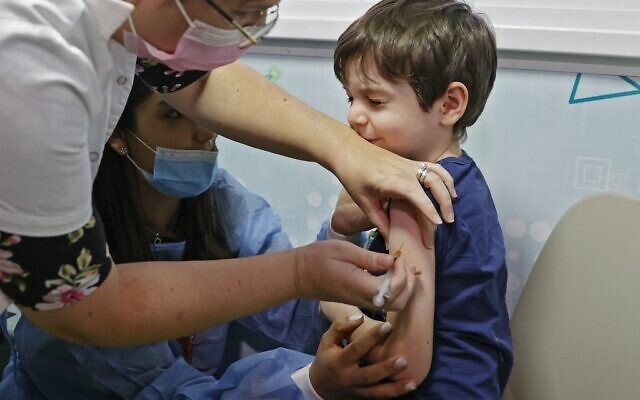
“In very general terms, time could provide a chance to get more children vaccinated with current vaccine,” she said. “And if we see that existing vaccines aren’t giving good effectiveness and the situation is extreme, it could give us a chance to source vaccines that are specially adapted for the variant.”
Kobiler said that if the variant shows strong antibody-dodging abilities, one of the best hopes may be antibodies that do work, in the form of antibody cocktails produced by drug companies. Once more is understood about what antibodies do and do not impact the new variant, it will allow scientists to identify which antibody cocktails may help, tweak production runs accordingly, and give time for doctors to source them.
Kobiler thinks time will also be helpful, as it means there will be less time before Omicron’s onset and the expected approval of new COVID pills that have been developed by Pfizer and by Merck & Co. If the new variant leads to a surge in cases, some of which become serious, this could be an important development, he said.
He believes that while Israelis should be concerned, they should not panic. “I’m not pessimistic,” Kobiler said. “I think we should watch and learn.”
He stressed that he thinks interventions will be helpful and that even if some antibodies fail, others could well remain effective: “Some of the antibodies we rely on may not work, but the body generates a lot of antibodies and t-cells, and there is a high chance that some of these will still work.”










The Times of Israel Community.