

Once a witness to unchecked hate, now she travels the globe to fight it
A Jew who fled Iran, the ADL’s Sharon Nazarian has become a bridge-builder, raising alarms against injustices and the dangers of illiberal government power around the world
 Add ToI as a Preferred Source on Google
Deputy Editor Amanda Borschel-Dan is the host of The Times of Israel's Daily Briefing, What Matters Now and The Reel Schmooze podcasts, and heads up The Times of Israel's features.
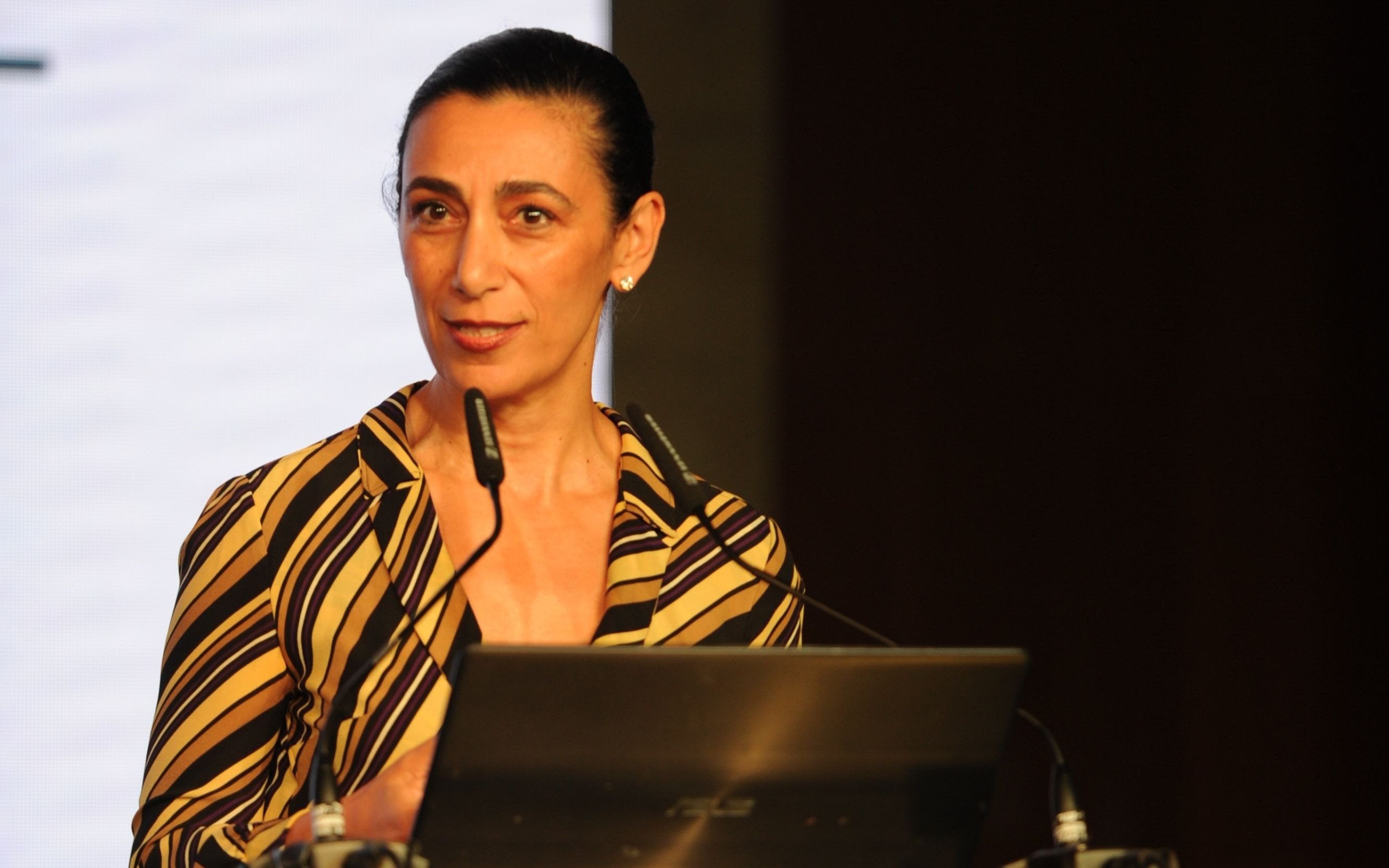
At a recent bi-lateral meeting, Hungary’s Minister of Foreign Affairs and Trade Péter Szijjártó enlightened Dr. Sharon Nazarian about the existential threat facing Budapest.
At a Jerusalem interview this week, Nazarian recounted to The Times of Israel that Szijjártó explained — in a “completely normal tone” — that Hungary is under invasion by “migrants.” These interlopers, he said, are being intentionally brought in by “globalists and others whose only goal is to dilute the Judaeo-Christian character of Hungary — and the rest of Europe.”
Foremost among these “globalists” is Hungarian-American Jewish billionaire George Soros.
The foreign minister, she said, explained away a spate of thinly veiled anti-Semitic attacks — whether verbal, age-old tropes emblazoned on billboards, or prohibitive legislation dubbed “Stop Soros” — which single out the Budapest-born Holocaust survivor and his Open Society Foundations’ activism.

The targeting of Soros committed by Hungarian Prime Minister Victor Orbán and members of his ruling Fidesz party, Szijjártó said at the ADL meeting, had “nothing to do with Jewishness,” but rather a way to stave off Europe’s dilution of its national and Judaeo-Christian identities, Nazarian was told.
The attacks, therefore, were valid, he reasoned to Nazarian, the international representative of the Anti-Defamation League, a 105-year-old New York-based Jewish civil rights organization with 24 offices throughout the US, and one in Jerusalem.
“It took three minutes to digest what he was saying,” said Nazarian this week, still sounding slightly shocked.
“A Jewish billionaire… is being used as a political tool to project their own racist agenda,” said Nazarian. “It was very challenging to even respond.”
As the Anti-Defamation League’s Senior Vice President for International Affairs, Nazarian followed up the likable 40-something foreign minister’s statements by presenting the Jewish community’s concerns over rising xenophobia, increasing inside what has lately become one of Israel’s best political allies.
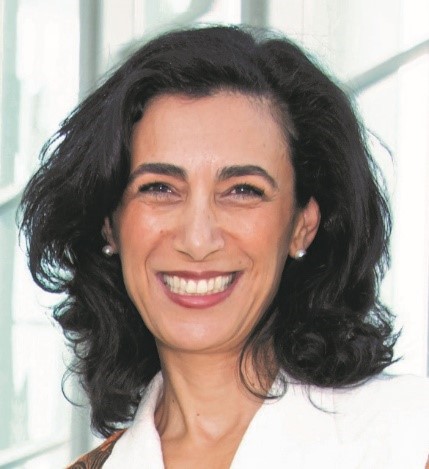
The former University of California Los Angeles Political Science professor recounted that she warned Szijjártó about the use of his racist strategy, saying, “Mr. Foreign Minister, part of your narrative feeds into a xenophobic view of your society which feeds into segments of your community that are xenophobic and view migrants as bad guys. This is a political manipulation that will not serve your country well.”
The foreign minister would do well to harken to Nazarian: A member of the nonpartisan think tank the Council on Foreign Relations, she has participated in policy-shaping fact-finding missions to Afghanistan, Cuba, North Korea, and South Sudan. Likewise, since 2000, she has served as president of the Y&S Nazarian Family Foundation, which focuses on education and public policy.
In a follow-up meeting with Israeli Foreign Ministry officials and members of Knesset, Nazarian said in light of Israel’s warm relations with Hungary, she raised the country’s cynical use of the migrant issue and its trickle-down effects on its Jews.
Israel “has every right to make diplomatic overtures,” she said this week. However, coming from the unenviable position of being a listener, responder, and conduit of information in meetings with local governments, Jewish communities, and the State of Israel, she said the country needs to “consider the ripple effect on the Jewish communities” when it counts its votes at the United Nations.
She considers it her job to sound alarm bells. The ADL, she said, was founded in 1913 to fight against anti-Semitism, and secure Jewish life — and justice for all.
“It goes beyond the Jewish community: The stronger the broader society is, the more it can fight hate broadly, and the better for Jews,” she said.
From Tehran, with love
Nazarian understands all too well what happens to a country’s Jews when xenophobia and anti-Semitism raise their ugly heads. Born in Tehran in 1968, she said until age 10 she lived in a relatively happy “Jewish bubble.”
“My whole life — school — was Jewish. We were not allowed to play in the streets. Our interaction [with non-Jewish Iranians] was very limited,” she told The Times of Israel.
But she remembers her parents giving cues about their lack of trust of the broader Iranian society. “There was messaging to the children: How to behave, what are we careful of,” she said.
Tipped off by the CIA in 1978, the Israeli ambassador to Iran told prominent members of the local Jewish community, including the Nazarian clan, about the looming violent coup.
Thinking the unrest a temporary blip, much of the community left all their possessions behind and entire families fled Iran shortly ahead of the 1979 revolution.
Only 10 years old at the time of the family’s sudden departure for Israel, where her father had volunteered in the military in 1948 and where they owned property, Nazarian said leaving Iran came as a surprise to her.
She said that her father, the businessman philanthropist Younes Nazarian, remembered similar CIA tip-offs in the 1950s, in which the Jews would leave the country for a time, only to return to their normal, very prosperous lives soon after.
The feeling upon leaving Iran, she said, was “not one of permanency. We were sure it would blow over and we would come back. It had already happened before,” she said.
Only when her father and much of the extended Nazarian family decided to move to the United States some half a year later and make a new life, did young Nazarian understand that there was no return.
Although she was enrolled in a secular school, she said her new life in Los Angeles continued in many ways along the same lines. So many Iranian Jews had arrived at the same time, including her extended family, that “Shabbat dinners were the same.”
“It felt like a transplantation,” she said. She quickly sprung new roots, however, and as she learned English, she also internalized progressive Judaism at her American Hebrew school.

“I was one of the first Iranian girls to be bat mitzvah,” she said, laughing, “already a trailblazer.”
The Nazarian family attends a Conservative, primarily Ashkenazi synagogue. At first, she said, the mixed-gender seating, organ and music were “very startling to us.”
“The cultural differences persist until today in our synagogue, [and] it’s been 40 years,” she said. Although there was a proliferation of Iranian synagogues available, the family decided to stay in the “mixed synagogue.”
“I’m very much a product of it now,” she said. “I’m a bridge builder because of it, and it’s part of my mission in life, to bridge between the Persian and broader Jewish community.”
An ever-widening gap
At a “bridge-building” session at the Anti-Defamation League’s Israel Social Cohesion conference this week, these skills were put into practice when two of the liberal Orthodox leaders — there to propose solutions for the growing gap between Jews in the Diaspora and Israel — each said matter-of-factly that they would “never participate” in prayer services held by Reform Jews.
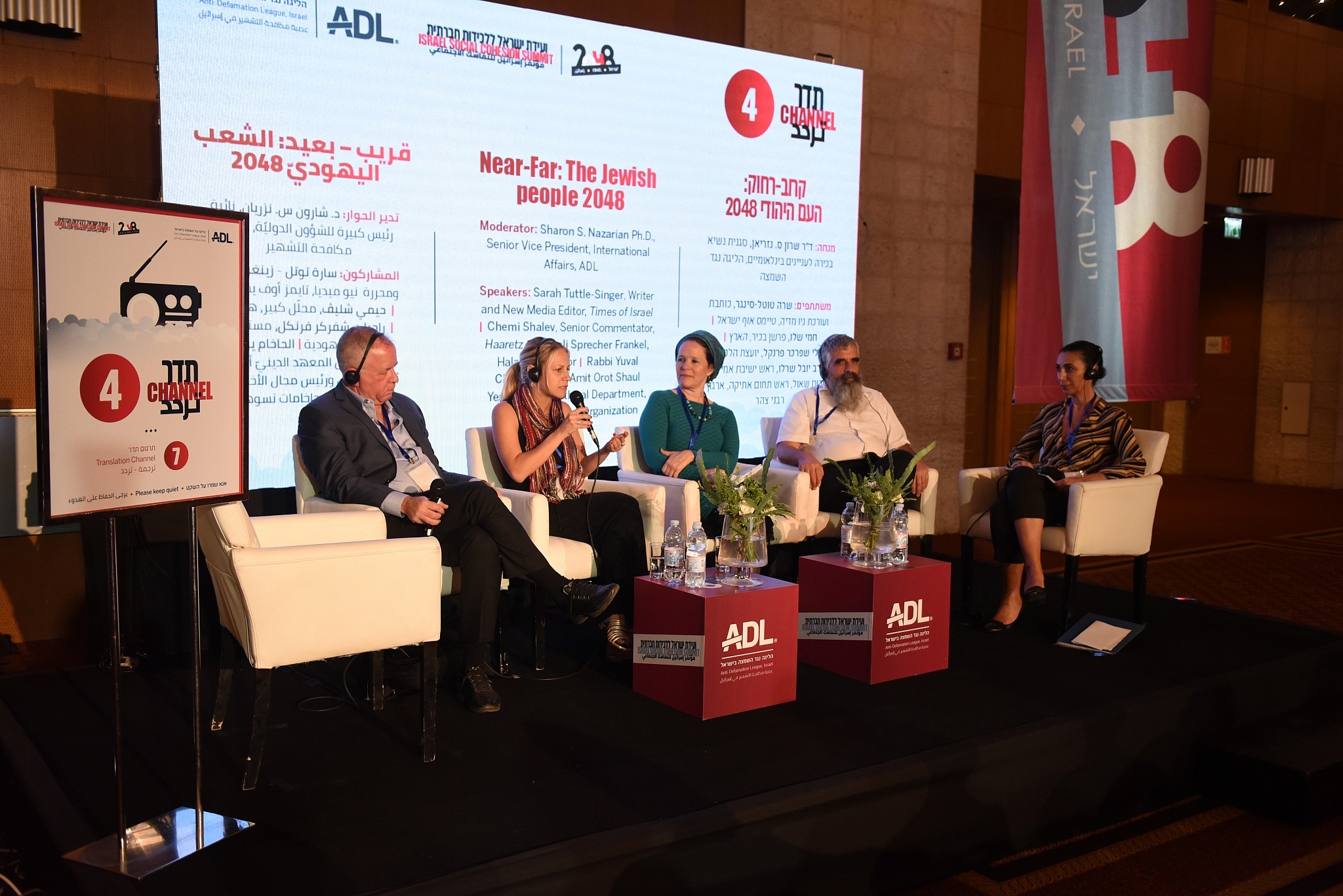
“I will definitely not go to a Reform service,” said Rabbi Yuval Cherlow, a head of yeshiva, genetic ethicist, and co-founder of Tzohar, an organization of religious Zionist Orthodox rabbis in Israel who aim to make Judaism more palatable to the broader citizenry.
Also in the session, he added, “Orthodoxy is much more devoted to their belief, their practice than the Reform or Conservative Jews. The Orthodox Jew comes [to the synagogue] three times a day, not a year. It’s a question of passion and devotion,” said Cherlow.
As moderator of the panel, Nazarian diverted from such contentious statements and said, “Let’s talk about the nitty-gritty of Israeli policy for the ripple effects.” The conversation turned to the relatively safer hot-button topic of the frozen compromise that would have seen an egalitarian prayer pavilion built at the Western Wall.
Later, in a break room just off the bustling lobby of Jerusalem’s International Convention Center, Nazarian acknowledged she was surprised when these two well-intentioned pillars of tolerance education said they would not attend Reform services.
Playing off the name of Cherlow’s organization, Tzohar (Hebrew for “porthole” or “window”), Nazarian said, “A window should be two-sided.”
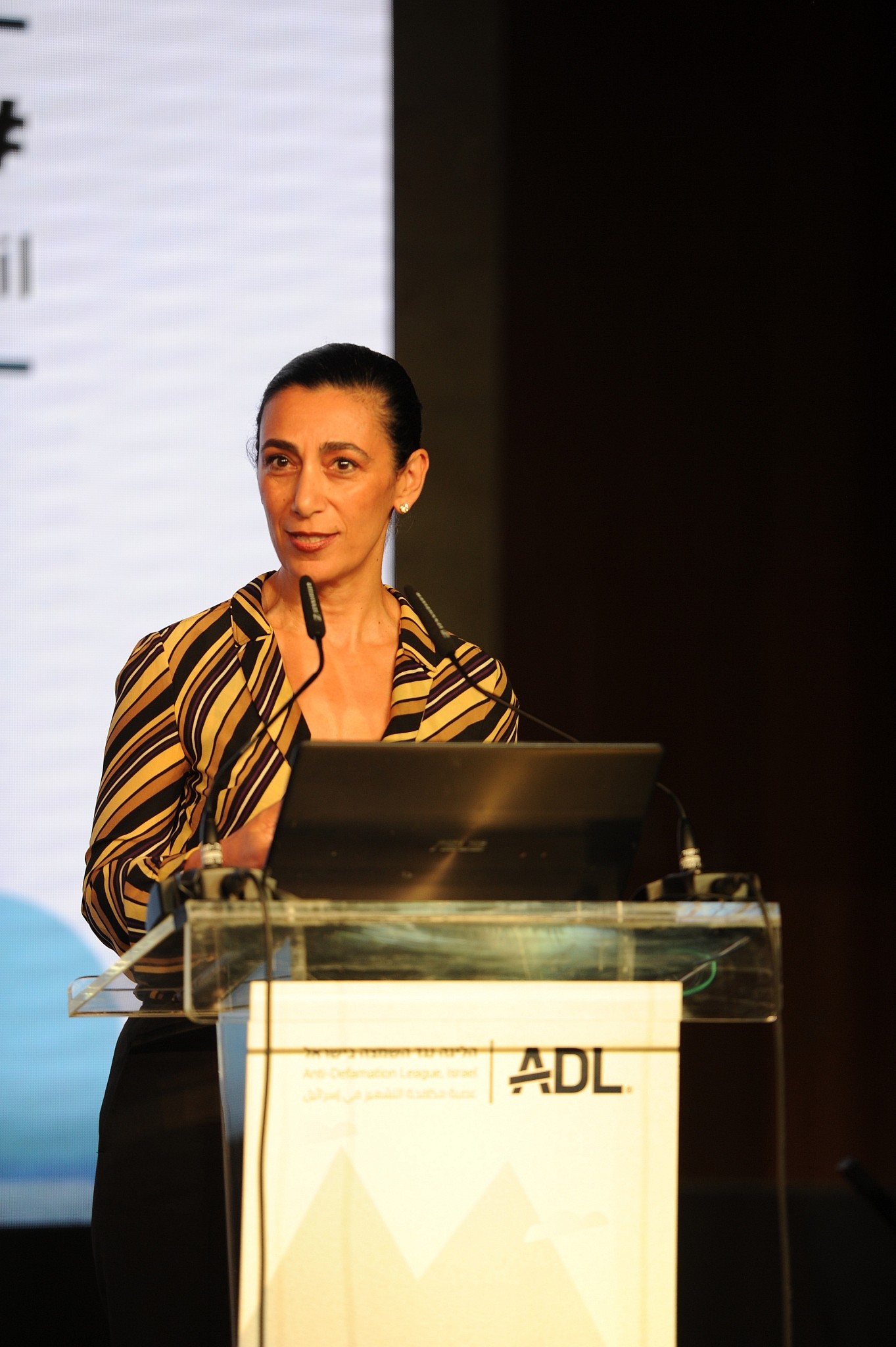
Fighting against the evident disconnect between Israeli Jews and those in the Diaspora is an uphill battle. “This is a very much a battle for the soul of Israel,” she added.
Even as she travels the world, taking note of increasingly illiberal governments cozying up to the Jewish State, she worries about the relationship between global Jewry.
The ADL, she said, is not giving up and is doing “whatever we can do to raise the alarm bells” so the relationship won’t be taken for granted.
“The Israeli government needs to step up,” she said. But at the same time, “We are asking the people — beyond the politicians — to take steps so the links are not broken.”








The Times of Israel Community.