

Palestinian official slams PM for nixing negotiations
Jibril Rajoub claims Hamas-Fatah reconciliation is an internal matter; says Netanyahu is leading a ‘racist, fascist coalition’

 Add ToI as a Preferred Source on Google
Avi Issacharoff, The Times of Israel's Middle East analyst, fills the same role for Walla, the leading portal in Israel. He is also a guest commentator on many different radio shows and current affairs programs on television. Until 2012, he was a reporter and commentator on Arab affairs for the Haaretz newspaper. He also lectures on modern Palestinian history at Tel Aviv University, and is currently writing a script for an action-drama series for the Israeli satellite Television "YES." Born in Jerusalem, he graduated cum laude from Ben Gurion University with a B.A. in Middle Eastern studies and then earned his M.A. from Tel Aviv University on the same subject, also cum laude. A fluent Arabic speaker, Avi was the Middle East Affairs correspondent for Israeli Public Radio covering the Israeli-Palestinian conflict, the war in Iraq and the Arab countries between the years 2003-2006. Avi directed and edited short documentary films on Israeli television programs dealing with the Middle East. In 2002 he won the "best reporter" award for the "Israel Radio” for his coverage of the second intifada. In 2004, together with Amos Harel, he wrote "The Seventh War - How we won and why we lost the war with the Palestinians." A year later the book won an award from the Institute for Strategic Studies for containing the best research on security affairs in Israel. In 2008, Issacharoff and Harel published their second book, entitled "34 Days - The Story of the Second Lebanon War," which won the same prize.
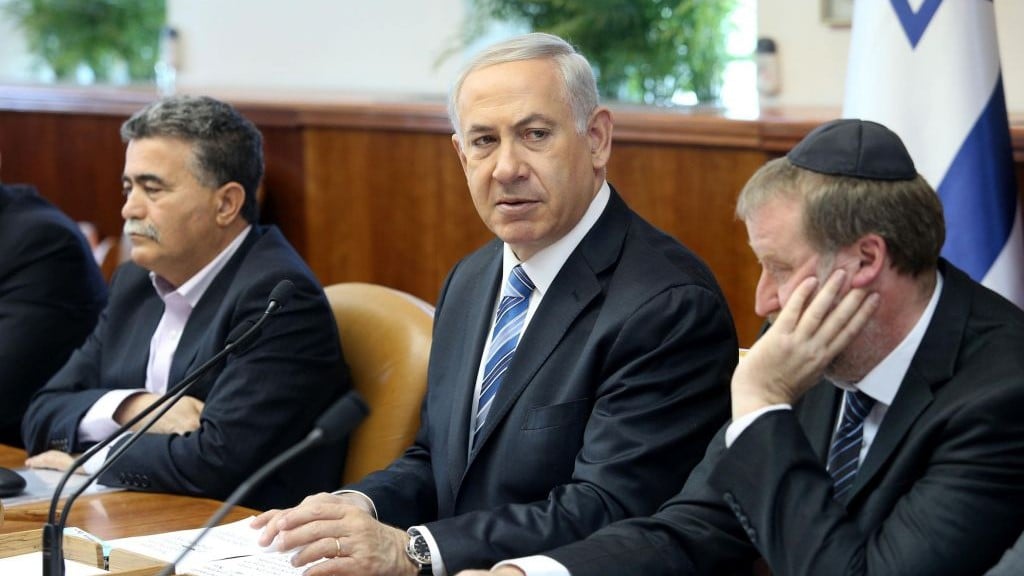
A senior Palestinian official attacked Prime Minister Benjamin Netanyahu on Wednesday for canceling a meeting between Israeli and Palestinian negotiators after Fatah and Hamas signed a seemingly game-changing reconciliation agreement earlier in the day.
Deputy Director-General of the Fatah Central Committee Jibril Rajoub told The Times of Israel that the decision between the two bitter Palestinian rivals to form a unity government was an internal national matter, adding that “no party that believes in the solution of two states for two peoples has the right to deny it.”
The Prime Minister’s Office said it had canceled Wednesday’s planned talks between Justice Minister Tzipi Livni, chief Palestinian negotiator Saeb Erekat and American mediator Martin Indyk, but offered no formal reason as to why. Unnamed sources in Jerusalem told Channel 2 News that the Fatah-Hamas deal appeared to spell the end of the peace process, which was already in deep crisis with no agreement on extending talks beyond the current April 29 deadline.
According to Rajoub, the basis for compromise with Israel is the principle of establishing a Palestinian state on pre-1967 lines, as agreed to on May 4, 2011, in a reconciliation ceremony between Hamas and Fatah in Cairo. That reconciliation attempt failed, as did others.
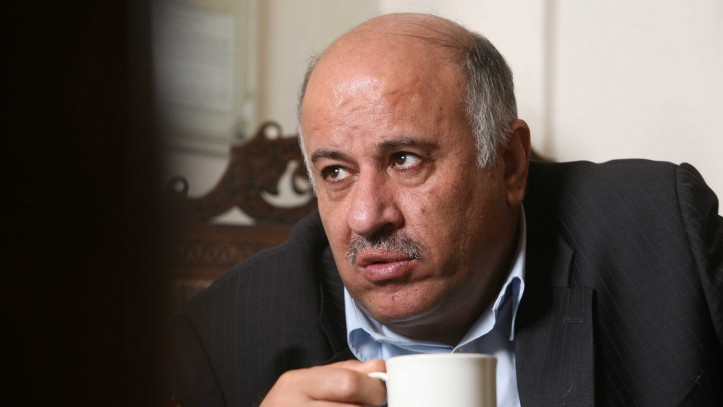
Rajoub proceeded Wednesday to heap blame on Netanyahu, claiming that the prime minister “is heading a racist, fascist coalition that is acting against international framework.” He warned that “Netanyahu will be responsible for the terror policies that he is applying against the Palestinian people by way of the settlements.”
Rajoub stressed that the PLO under Abbas was committed to the two-state solution and was striving to end the conflict.
“We want the Israeli people to understand that the real danger to the existence of the State of Israel is the settlement project,” he explained.
Erekat denied earlier in the day to AFP that a meeting with the Israelis had been planned for Wednesday. “Netanyahu stopped the negotiations a long time ago,” Erekat said. “He chose the settlements instead of peace. He is demolishing the peace process.”
Erekat said that the Palestinians would meet bilaterally with Indyk in Ramallah on Thursday.
In Jerusalem, Netanyahu charged that the unity deal showed that Abbas had picked terror over peace efforts.
“Tonight, as talks were still ongoing about the extension of peace negotiations, Abbas chose Hamas and not peace. Whoever chooses Hamas doesn’t want peace,” the prime minister said.
Abbas, however, denied that reconciliation with Hamas precluded peace efforts.
“There is no incompatibility between reconciliation and the talks, especially since we are committed to a just peace on the basis of a two-state solution in accordance with the resolutions of international law,” Abbas said in a statement issued by his office.
“This move, supported by the Arab world and internationally, will strengthen the ability of the Palestinian negotiators to realize the two-state solution,” the statement read.
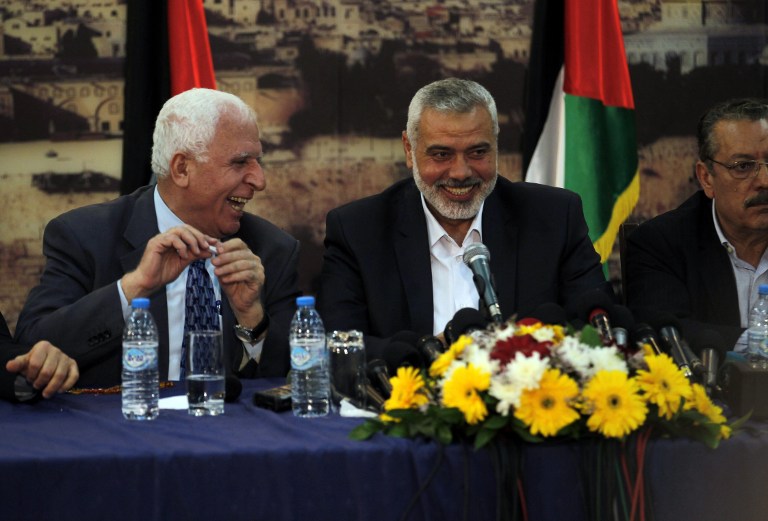
The Fatah-Hamas unity deal came after seven years of bitter fighting between the Gaza-based terrorist organization and the Palestine Liberation Organization, dominated by Abbas’s Fatah party.
Announcing the deal in Gaza on Wednesday, Hamas Prime Minister Ismail Haniyeh said the agreement called for the formation of a unity government within five weeks and new elections within six months after that.
Haniyeh also called for a reassessment of peace talks with Israel, which he said did not serve Palestinian interests.
Elhanan Miller, Raphael Ahren and AFP contributed to this report.





The Times of Israel Community.