

PM: Israelis would’ve died ‘in nuclear smoke’ if I’d heeded opposition demands to end war
Netanyahu, Lapid spar in fiery opening to Knesset’s winter session; PM says opposition wanted Israel ‘to surrender,’ Lapid snaps back: ‘Who was prime minister on October 7?’
 Add ToI as a Preferred Source on Google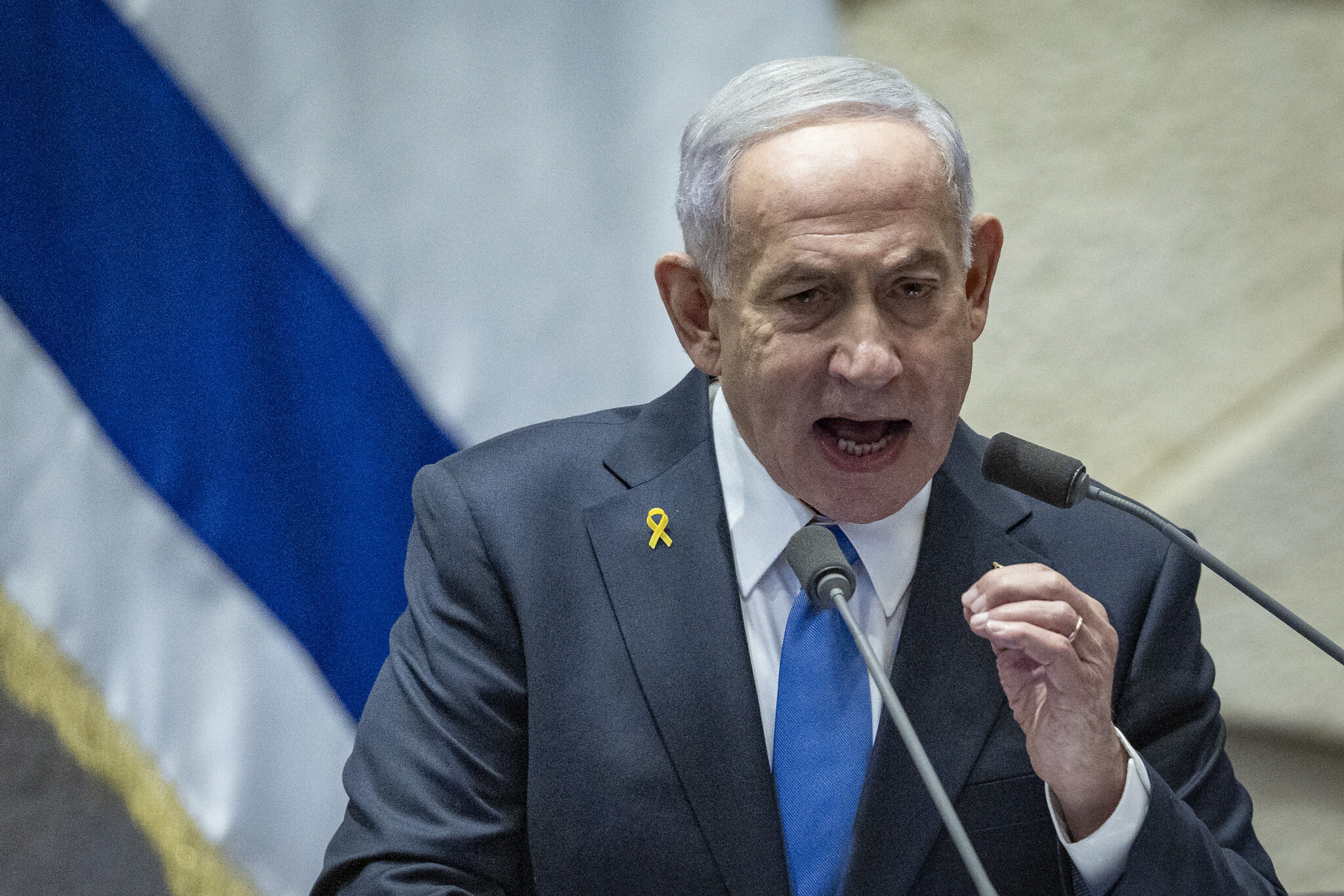
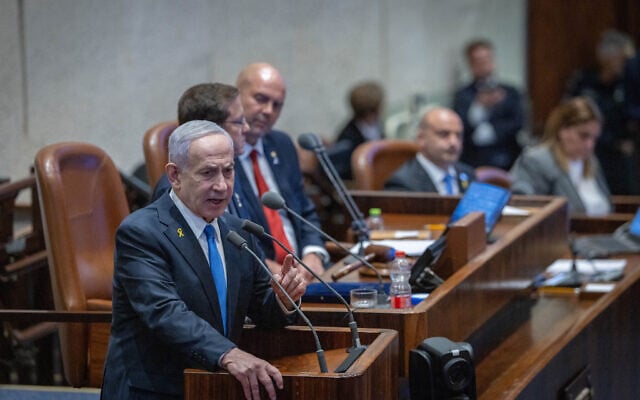
The opening of the Knesset’s winter session turned raucous on Monday as Prime Minister Benjamin Netanyahu and Opposition Leader Yair Lapid sparred in dueling speeches that included a claim from the premier that Israelis would have “gone up in nuclear smoke” if he had listened to the opposition’s calls to end the war last year.
Netanyahu claimed that Hamas only agreed to the current deal, to release all hostages with the IDF still deployed in Gaza, because he had ordered the IDF into the last Hamas stronghold of Gaza City, and insisted no comparably favorable framework for Israel had previously been acceptable to the terror group.
Lapaid, for his part, denounced Netanyahu for depicting himself as having led Israel to victory over Hamas and Iran when it was Netanyahu who was prime minister on October 7, 2023, when Hamas invaded and slaughtered 1,200 people in southern Israel. Lapid also said Iran had been allowed to build up its power during the years of Netanyahu’s premiership.
Opening his speech, Netanyahu vowed to “bring the slain hostages home, until the very last one.”
He read the names of the 16 slain hostages still held in Gaza, starting with Hadar Goldin, an IDF officer killed in 2014. During the reading of names, he accidentally called slain hostage soldier Staff Sgt. Itay Chen “Eitan Chen,” prompting corrections from the opposition and a general commotion in the plenum.
“No one needs to remind us of the importance of the sacred mission of bringing back the slain hostages,” the premier said. “We are working non-stop, including in the meeting I held just before I arrived here,” a likely reference to his meeting with top White House advisers Steve Witkoff and Jared Kushner.
He rejected the assertion that the deal Israel accepted earlier this month was available a year ago.
“At no stage – not six months ago, not a year ago, not a year and a half ago – at no stage was Hamas ready to accept the proposal that we attained now. The return of all our hostages at once, IDF control over the majority of Gaza’s territory, IDF presence in the majority of Gaza’s territory, and an explicit commitment with broad international agreement, including Arab countries, and almost all the Muslim world, to demilitarize the Strip and disarm Hamas,” Netanyahu said.
“We are determined to achieve… all the goals of the war,” he promised, adding the goal of “eliminating Hamas as a diplomatic and military actor.”
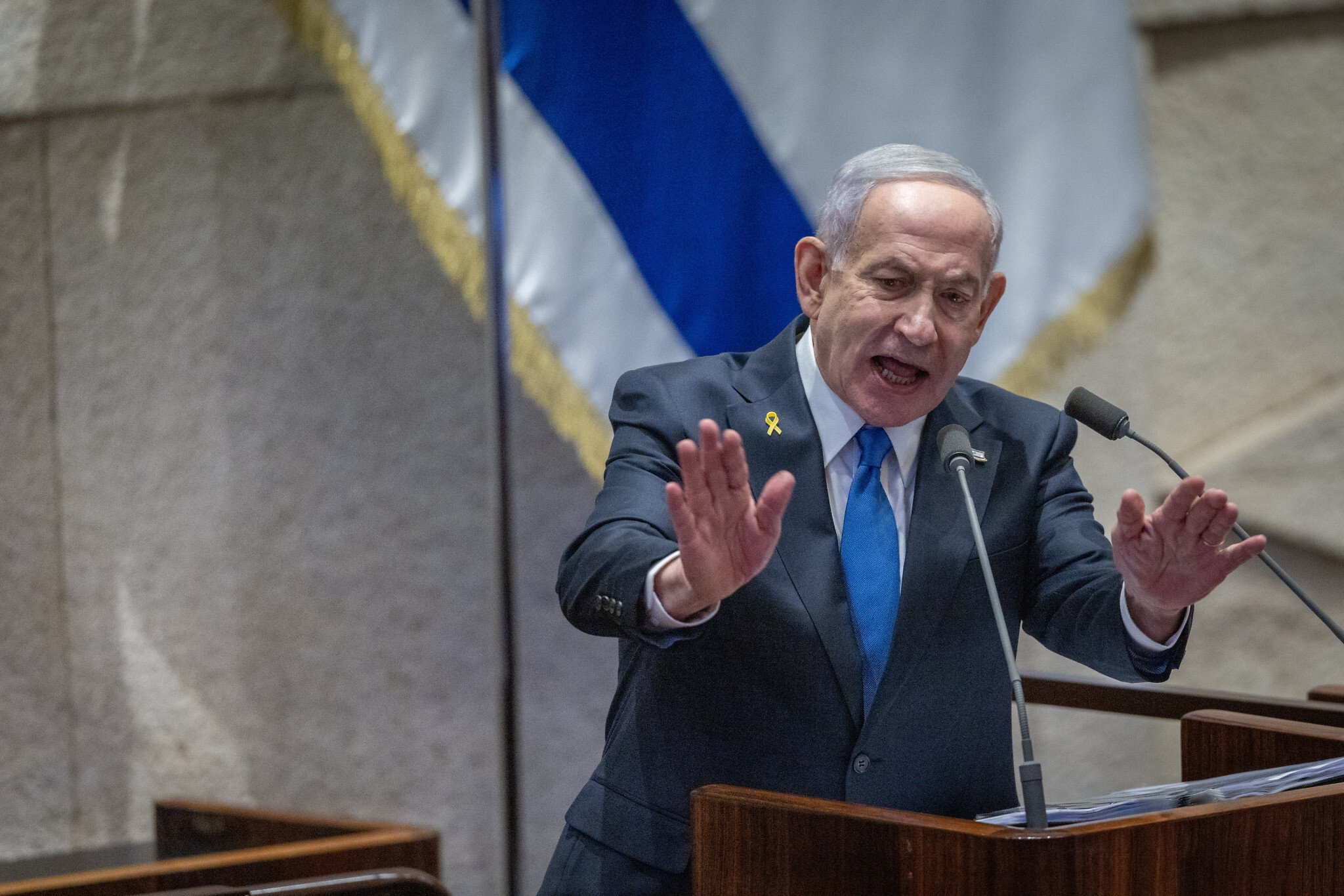
Hamas “felt the sword on its neck,” and was forced to accept the current hostage-ceasefire deal, Netanyahu argued, because he sent the IDF into Gaza City, its last major stronghold.
As IDF troops pushed into Gaza City, “Hamas understood it was facing annihilation.”
“If I had listened to many of those in this hall, and outside it,” Netanyahu continued, “you who called for me to stop the war, to surrender, to throw up my hands… If I had given in to these demands, the war would have ended with a crushing victory for Hamas and the entire Iranian axis.”
“You know it, and we all know it,” he said, as more opposition lawmakers were ejected from the Knesset floor for interrupting Netanyahu’s speech.
Israelis from all sectors of society “would have gone up to heaven in nuclear smoke” if he had stopped the war, claimed Netanyahu.
The premier said he would not accept “that the war ended with the terms of surrender that Hamas pushed for, unfortunately with the help of people in Israel as well,” pointing in the direction of the opposition, “and with the help of world governments, with the help of international press, with the help of the entire world.”
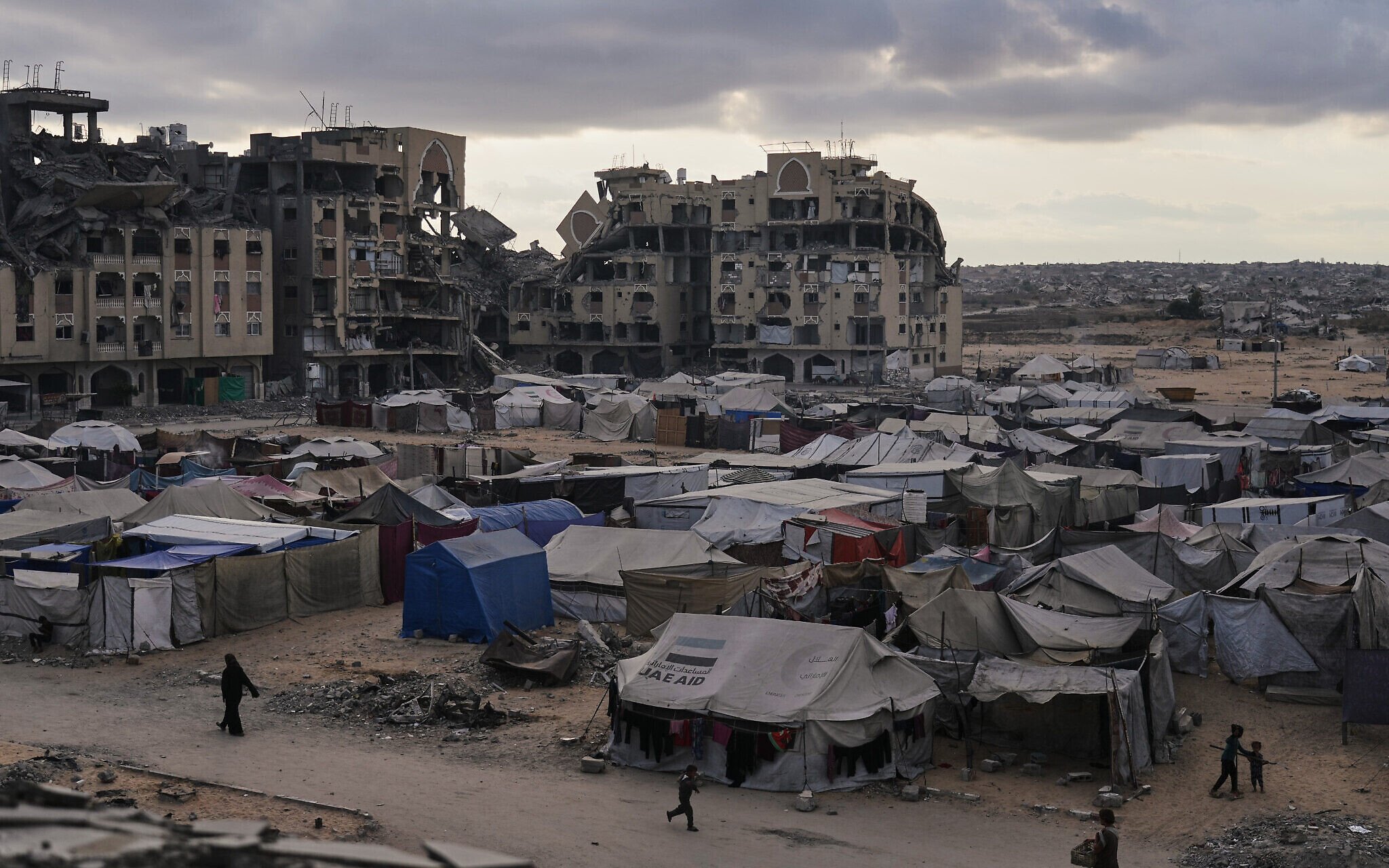
“We strengthened Israel’s deterrence, we straightened our posture, we brought back our hostages – all the living; some of the slain are still there. We will bring them back, too,” he vowed. “We cemented our status as a superpower,” he boasted, “but the campaign is not over.”
Netanyahu also mentioned the deadly Hamas attack on IDF troops in Rafah on Sunday, which he called a blatant violation of the ceasefire, and emphasized that Israel struck back at Hamas with 153 tons of explosives at dozens of targets, including senior commanders.
“The ceasefire is not a permit for Hamas to threaten us,” he said. “There is and will be a very heavy price for aggression against us.”
At the end of the second stage of the ceasefire, he promised, “Hamas’s military and governing [capabilities] will be eliminated.”
The premier stressed that Israel also has a hand extended to those who want to live in peace, “and today, there are quite a few,” he added, cryptically, “even a lot.”
“Peace is made with the strong, not the weak,” said Netanyahu, “and, today, everyone knows that Israel is a very strong country. A country that is stronger than ever.”
‘Time to lower the flames’
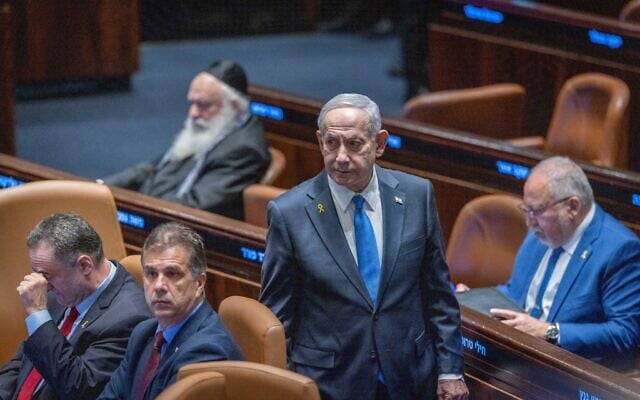
Turning to Israel’s internal divisions, Netanyahu told the Knesset plenum that in order to make peace with more neighbors and defeat its enemies, the country must preserve its unity.
“I call on everyone, on both members of the opposition and the coalition, and through you to the public… we know what a terrible catastrophe baseless hatred caused in our history,” he said.
“This is the time to lower the flames,” he said, moments after accusing the opposition of having pushed to end the war in Gaza on Hamas’s terms.
“In a democracy, we can come to decisions of majority and minority. It is also possible to reach a compromise. It is also possible, and necessary, to debate disagreements,” he said. “But to do this with a focus on the matter at hand, certainly not with violence, certainly not with threats of murder of elected officials, certainly not with threats of murder against the prime minister and his family, and also the families of ministers.”
Netanyahu said the government will soon pass the 2026 budget, and “we will continue strengthening Israel’s economy.”
He also claimed that Israel’s economic performance during the war is stunning the world: “Inflation is going down, the shekel is strong, unemployment is at a nadir, and the stock exchange is at an all-time high.”
Netanyahu also vowed to grow the country’s domestic arms industry, as Israel is facing weapons embargoes that he said slowed Israel’s progress in the war.
“We will have to invest more in our national security,” he said.
He boasted that ties with the US have never been as close as they are now, including personal ties between him and US President Donald Trump, and said that he will speak to US Vice President JD Vance on Tuesday about two things — “the security challenges facing us and the diplomatic opportunities facing us.”
He concluded with a promise that Israel “will win,” as coalition MKs gave him a standing ovation.
‘Who was prime minister on October 7?’
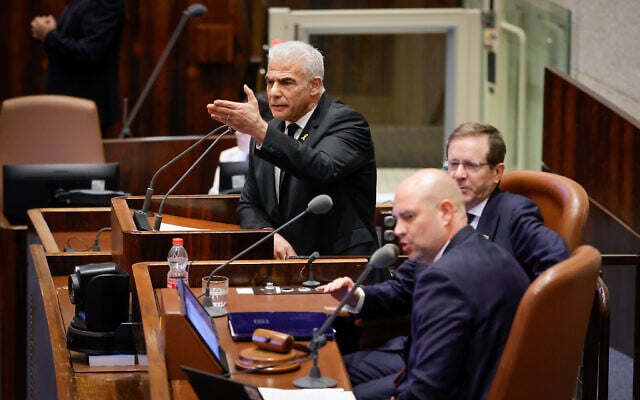
Speaking after Netanyahu, Opposition Leader Lapid criticized the premier, demanding: “Who was prime minister on October 7? The opposition?”
“We bombed Iran. Who was the prime minister when Iran amassed its power?” he asked rhetorically.
“Hezbollah has 150,000 missiles. Who was the prime minister when Hezbollah amassed 150,000 missiles? We won the war. Who was the prime minister on October 7?” he continued.
“You talked about Iran but didn’t act. You can’t sell me stories,” Lapid declared. “I was in the Prime Minister’s Office; we opened the drawers to look for the plans, and there was nothing.”
Lapid briefly served as prime minister from July to September 2022.
Netanyahu strikes back
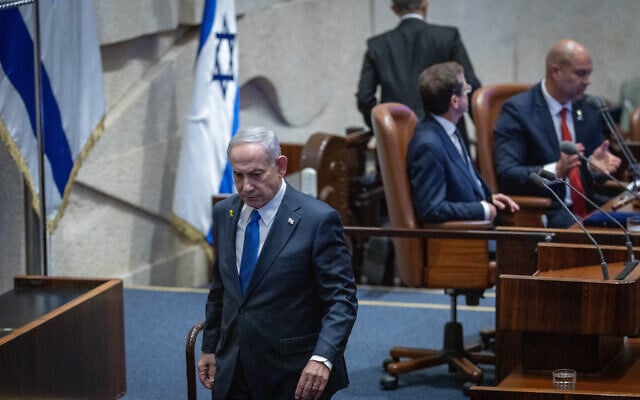
After Lapid’s scathing speech, Netanyahu returned to the podium and said that the opposition leader had called for Israel to leave Gaza in November 2024.
“You dare speak about the Iranian threat?” he continued. “For years, 40 years, including when I was in the government and prime minister, I warned and fought against this threat. And I tried to enlist everyone, the coalition and the opposition.”
“And I was met with ridicule,” he said. “I was always met with documented opposition and public opposition.”
“The threats have not ended. They are licking their wounds,” he warned. “We must limit the internal fights,” Netanyahu said, in a return to the theme of unity.
During his own speech to the Knesset last week, Trump told Netanyahu that Lapid is “a nice man… a very nice guy. Now you can be a little bit nicer, Bibi, because you’re not at war anymore, Bibi,” in an appeal interpreted by some analysts as the US president’s hope that Netanyahu would toss out his extremist coalition partners in favor of a unity coalition.
Arab party leader calls for opposition unity against Netanyahu
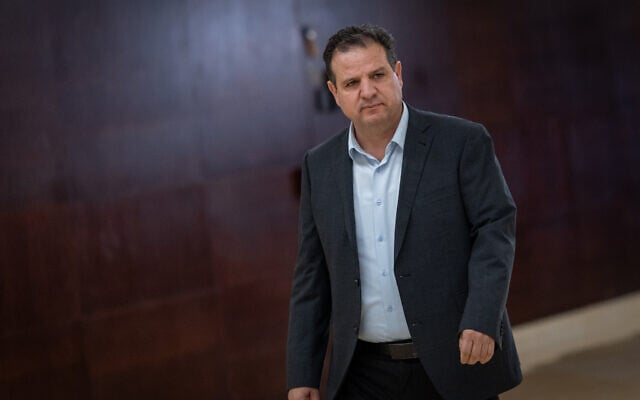
Ahead of the speeches, Hadash-Ta’al chairman Ayman Odeh called on fellow opposition factions to join together to topple Netanyahu’s government “as soon as possible.”
Addressing reporters ahead of his party’s weekly faction meeting, Odeh said that the government has three aims during the current parliamentary session: “harming the West Bank… promoting the judicial coup… and preventing the Arab population from running in the next elections.”
“I call on the opposition factions to act together, in unity, against these three things, not just against one thing, but in principle against this government in all directions, and to do everything to overthrow this government as soon as possible,” he said.
“The Hadash-Ta’al faction will work to increase the voter turnout among the Arab population and democratic Jews in order to prevent the government from continuing for another term,” he vowed.





The Times of Israel Community.