

Police agree to Tel Aviv protest calling for ceasefire following High Court hearing
A petition by the Association for Civil Rights in Israel argued that the rights of freedom of expression and protest must be upheld during the current war
 Add ToI as a Preferred Source on Google
Jeremy Sharon is The Times of Israel’s legal affairs and settlements reporter
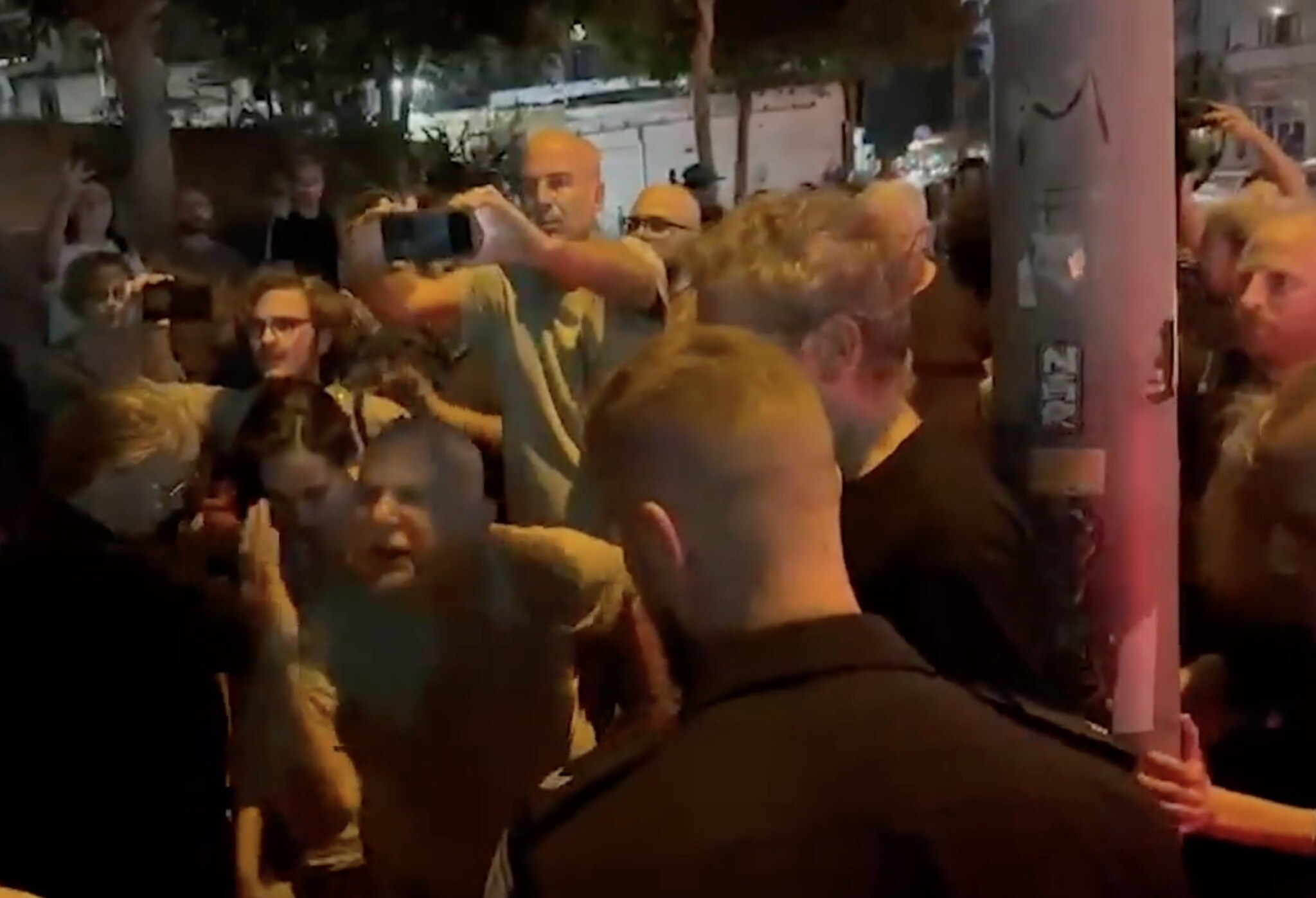
The Tel Aviv Police Department on Thursday agreed to allow a demonstration calling for a ceasefire in the Gaza Strip to take place in Tel Aviv, after the Association for Civil Rights in Israel (ACRI) petitioned the High Court of Justice requesting it order the police to issue a permit for the rally.
The protest, set for Saturday night, is the first such event calling for a ceasefire to receive a permit from the police since the outbreak of the war on October 7, when Hamas terrorists streamed over the border and when Hamas-led terrorists also killed 1,200 people, mostly civilians, and abducting some 240 others.
Israel has responded with a massive air and ground campaign whose stated goal is the eradication of Hamas’s rule on Gaza and the return of all the hostages.
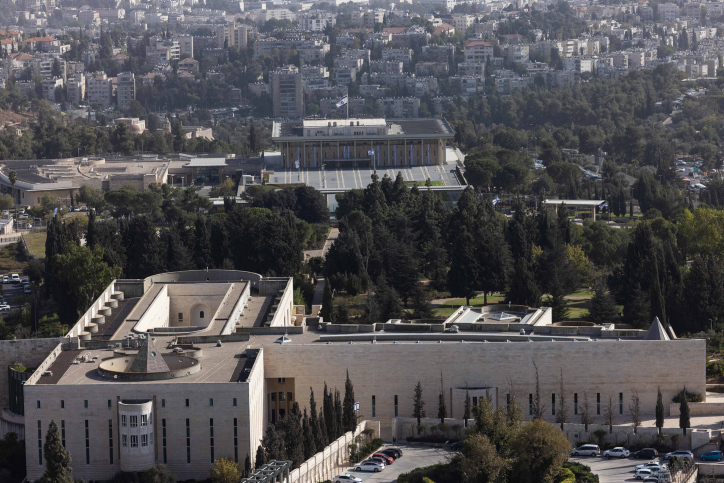
Earlier this week, the High Court upheld a decision by police to deny a permit for ceasefire demonstrations planned to take place in the Arab towns of Umm al-Fahm and Sakhnin in northern Israel.
On November 11, the Hadash party, a hard-left, predominantly Arab political party, requested a permit from the Tel Aviv police to hold a demonstration calling for a ceasefire on Kaplan Street, Habima Square, the Cinematheque Plaza or any other public space in Tel Aviv on Saturday night.
Hadash said it expected no more than 1,000 people to participate in the protest, and said no flags would be used at the demonstration in order not to cause offense, presumably in reference to Palestinian flags.
Tel Aviv police initially refused to authorize the event, however, on the grounds that it could lead to civil disturbances and may harm the feelings of those displaced from southern Israel and currently residing in Tel Aviv, and said the force lacked the manpower to secure the rally.
In response, ACRI filed a petition to the High Court on behalf of Tel Aviv-Jaffa Municipal Council member Amir Bardan requesting the court order the police to allow the demonstration to go ahead.
ACRI argued that the rights to freedom of expression and freedom of protest must be upheld even in a time of emergency and war, and that concerns about disturbances to public order and causing offense cannot be a reason to block freedom of protest.
The organization also argued that the refusal to grant a license for the protest was part of a “systematic and consistent” pattern of behavior by police during the current war not to permit demonstrations that deviate from the broad consensus of public opinion.
It also noted in its petition that the police refusal to grant permits for the demonstrations in Umm al-Fahm and Sakhnin, as well as heavy-handed behavior by the police breaking up even small protests and arresting protestors demonstrating in solidarity with senior Arab politicians arrested last week.
ACRI also pointed out that the police had allowed a provocative demonstration to take place at Habima Square calling for the occupation of the Gaza Strip, the expulsion of its residents and the establishment of settlements in the territory.
During Thursday’s court hearing, the police agreed to allow the demonstration to go ahead, but at a different location than originally planned and with a limit on the number of participants.
The protest will take place in Charles Clore Park, which is by the seafront and away from the city center, with a limit of 700 protestors who will call for a ceasefire and a “hostage exchange” agreement.
The Tel Aviv police’s agreement to grant the demonstration a permit was given the status of a court decision at the end of Thursday’s hearing.
“The protection of freedom of expression and the freedom of protest derived from it has a special significance in times of crisis and combat,” ACRI said following the High Court decision. “Calls for a ceasefire and prisoner exchange are legitimate, and are covered under freedom of expression.”






The Times of Israel Community.