

Police set to decide on allowing Jewish visitors to Temple Mount
Tensions high as Waqf vows to protest after authorities say they will consider allowing non-Muslims into holy compound for Jewish fast day, which coincides with Islamic holiday
 Add ToI as a Preferred Source on Google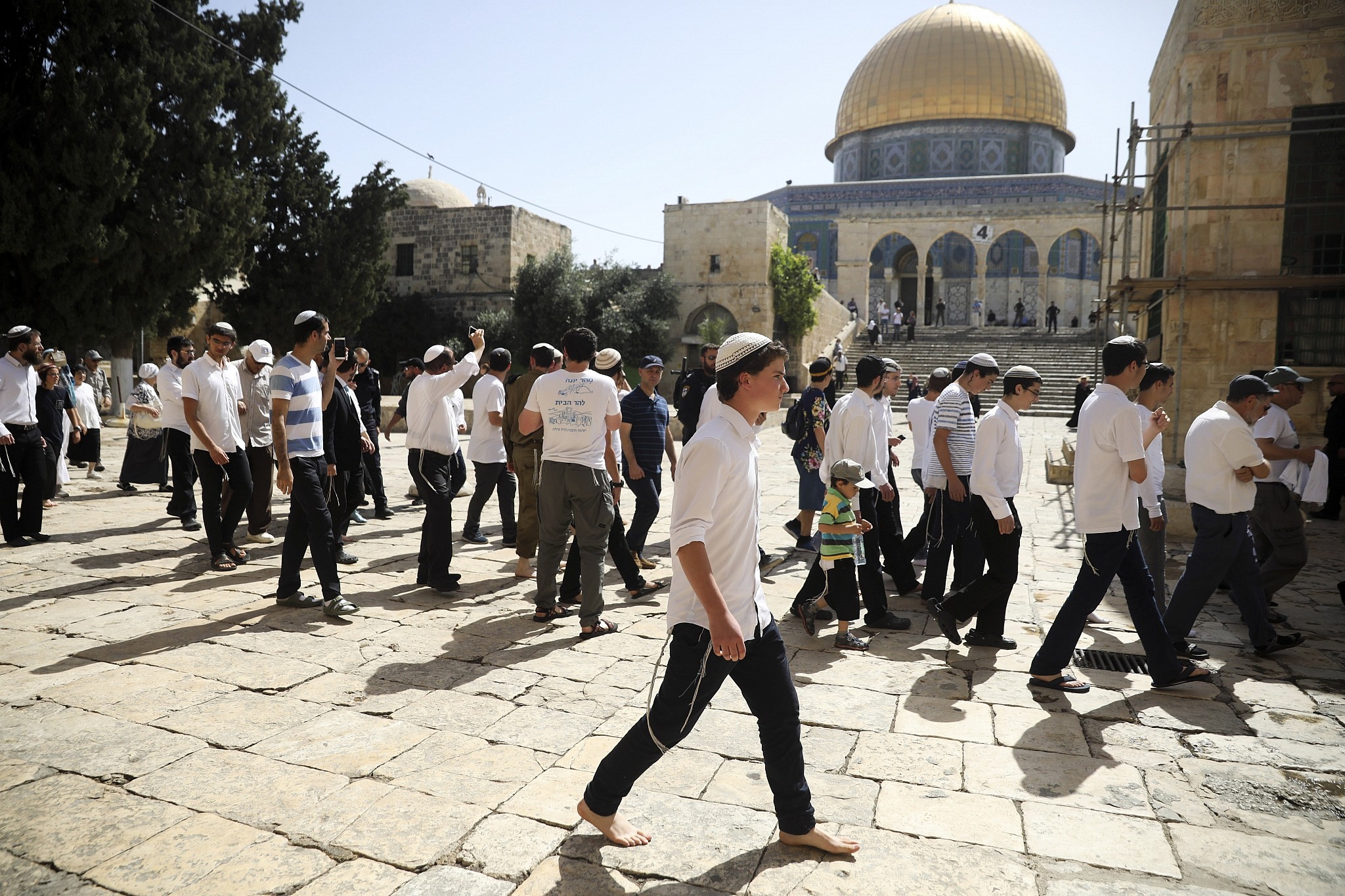
Police were expected to decide on allowing Jewish pilgrims to visit the Temple Mount early Sunday, as religious tensions spiked over the confluence of Jewish and Muslim holy days centered around the flashpoint holy site.
Sunday marks both the start of Eid al-Adha, an Islamic holiday commemorating the end of the annual hajj pilgrimage to Mecca, and the Jewish fast day of Tisha B’Av, when Jews mourn the destruction of the temples that once stood on the esplanade and other disasters in Jewish history.
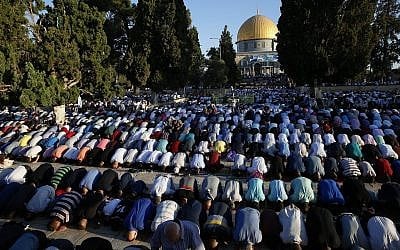
On Friday, the Muslim Waqf trust, which oversees the site, urged Muslim worshipers to crowd the Al-Aqsa Mosque on the Temple Mount and keep Jews from entering, after police said they would consider allowing non-Muslim visitors.
Israeli authorities traditionally close the Temple Mount to non-Muslims during Islamic holidays, to keep religious tensions from boiling over, but exceptions have been made when Jewish holidays coincide.
Police were expected to decide by 6:30 a.m. whether to allow Jewish visitors on the Temple Mount, Israel Radio reported.
Arnon Segal, an activist pushing for increased Jewish presence on the Temple Mount, called on Twitter for Jews to mass at the entrance no matter the police decision, “to show that the place is important to us. That we won’t give up on it.”
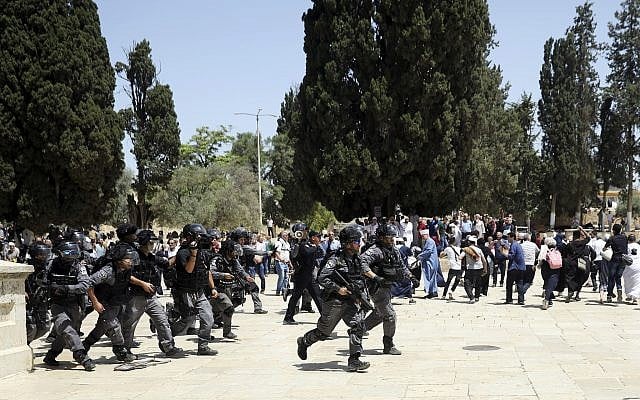
In June, police allowed Jewish visitors onto the site on Jerusalem Day, which fell this year during the final days of Ramadan, sparking clashes between Muslims and police.
Last year, a record number of Jews were reported to have visited the Temple Mount for Tisha B’Av, leading to rebukes from the Palestinian Authority and Jordan, which manages the compound through the Waqf.
On Saturday night, small-scale scuffles broke out between police and East Jerusalem Palestinians at the Damascus Gate of the Old City of Jerusalem, as an annual right-wing march around the Old City walls passed.
אם היה חסר שמן במדורה לקראת מחר בבוקר בהר הבית, הלילה בשער שכם עימותים בעקבות צעדת דגלים של ארגון "נשים למען עתיד ישראל". מצד אחד צעירים ערבים מקללים, מנגד קריאות הצועדים "ארץ ישראל היא רק שלנו, תגידו תודה שאתם כאן" pic.twitter.com/Waoj7T2PTj
— יובל שגב | Yuval Segev (@Segev_Yuval) August 10, 2019
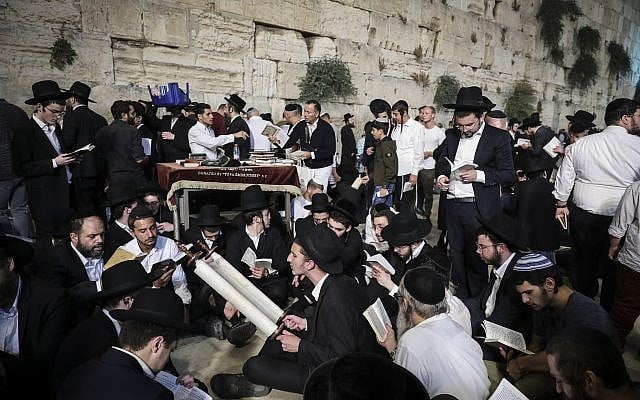
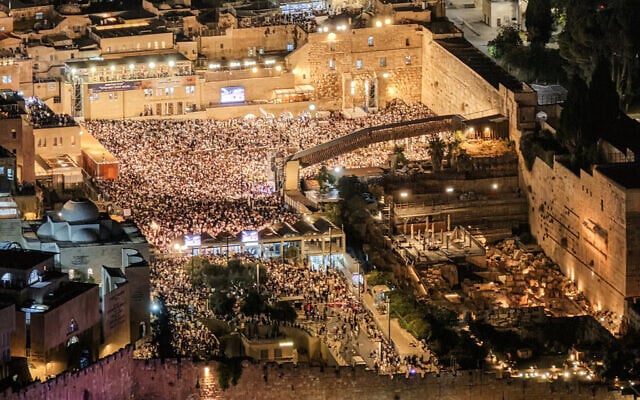
During the night, thousands of Jewish worshipers visited the Western Wall, the closest spot to the Temple Mount where Jews can pray, to read Lamentations and other traditional Tisha B’av liturgy.
Under an arrangement in place since Israel’s victory in the 1967 Six Day war, non-Muslims are allowed to visit the Temple Mount but not to pray there. Jews in religious garb are allowed to enter in small groups during limited hours, but are taken through a predetermined route, are closely watched and are prohibited from praying or displaying any religious or national symbols.
In a statement Friday, Grand Mufti of Jerusalem Mohammed Hussein, former grand mufti of Jerusalem Ekrima Sabri and senior Waqf official Abdel Azeem Sahlab said all mosques in Jerusalem but al-Aqsa would be closed Sunday so as many worshipers as possible would come to the compound.
They said the move was in response to police announcing they would consider allowing Jews to ascend the holy site.
“The people of Jerusalem and its surroundings will stand together in the face of the ambitions of the settlers,” they said in a statement, referring to visits by non-Muslims.
Bassem Abu Labda, a Waqf official, said in a phone call that Israel would be “wise” to bar Jews from the Temple Mount on Sunday.
Likud Knesset Member Yehudah Glick, another Temple Mount activist, called the Waqf’s move a “cheap provocation.”






The Times of Israel Community.