

Rivlin to speed up coalition consultations due to twin political, health crises
President to meet with all political parties on Sunday, with representatives having a reduced time to present their recommendations for PM; no press to be present
 Add ToI as a Preferred Source on Google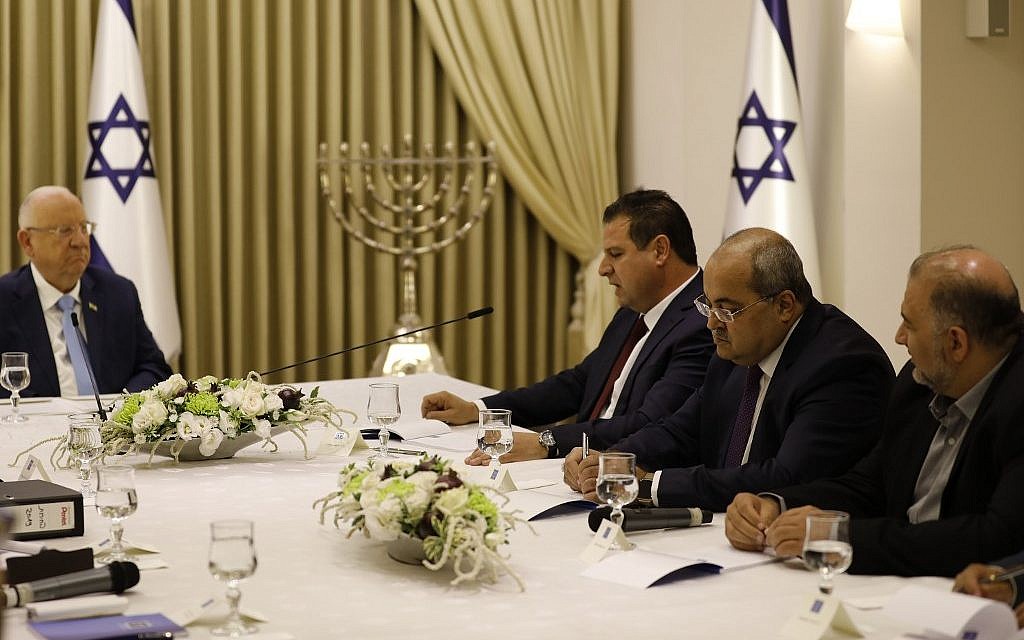
President Reuven Rivilin will expedite talks with political parties for their recommendations as to who should be charged with forming a government, his office said Monday.
The talks are set to begin at the beginning of next week.
Unlike previous rounds, during which the consultations took two full days of meetings, this time the talks will be kept short and confined to just one day, his office said.
President’s Residence chief of staff Harel Tubi said the speedy talks were necessitated by the urgency of forming a government after two deadlocked rounds, and as a precaution against spreading the deadly coronavirus.
The country is facing “a double crisis — political and health” and that “these circumstances require the consultations to be held swiftly and with limits on the number of participants and administration,” Tubi said in a statement.
It will be the third time within 12 months that Rivlin has gone through the process of hearing from political parties their recommendations for who should be tasked with trying to form a majority coalition. Three elections, including that last one on March 2, have failed to break a political deadlock leaving the country under an interim government of limited powers.
Tubi informed all of the parties that won Knesset seats during last week’s election that consultations will begin on Sunday, March 15, “ahead of assigning the role of forming a government to one of the Members of Knesset.”
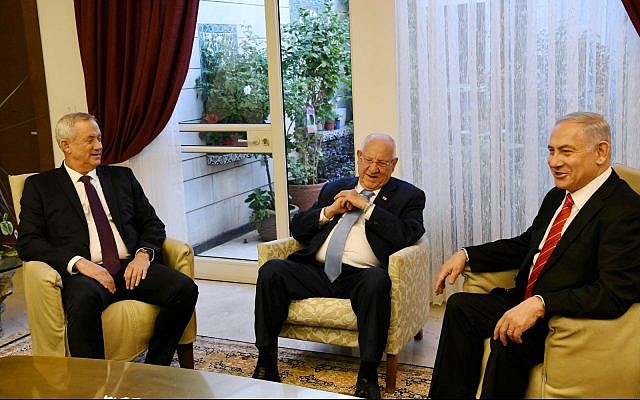
He said each party would have a reduced time for their audience with the president, and that presenting the party’s position may only be granted to one representative.
In accordance with Health Ministry recommendations against mass gatherings, there will be no press center at the president’s residence, and no press — Israeli or international — will be granted access to the premises to cover the consultations, Tubi noted, and explained that statements by the party representatives will broadcast live to media.
“In order to strengthen public confidence and to promote the value of transparency in Israeli democracy, the consultations of party representatives with the president will again be broadcast live for Israelis,” Tubi wrote.
Though neither Prime Minister Benjamin Netanyahu’s Likud nor rivals Blue and White led by Benny Gantz mustered a majority of Knesset seats in last Monday’s election, and neither has a clear path to a majority coalition, the prime minister has the backing of 58 MKs and his Likud is the largest party.
But if the Yisrael Beytenu party and the entire Joint List alliance of mainly Arab parties, together with the Labor-Gesher-Meretz alliance, were to recommend to Rivlin that Gantz form the new coalition, the Blue and White leader would have 62 backers.
Though there are deep divides between the Joint List and Blue and White, and even greater divisions with the hawkish Yisrael Beytenu, the parties all share a common goal of wanting to oust Netanayahu.
After previous elections in April and September, Rivlin took two days to hold the consultations and press were permitted to cover the representatives as they came and went from their audiences with the president.
Following the September election, Rivlin pushed Netanyahu and Gantz to agree on a power-sharing agreement, but to no avail.









The Times of Israel Community.