

Sami Rohr prize-winners tell of books that insisted on being written
‘I couldn’t shake my interest,’ says writer Lisa Leff of ‘The Archive Thief,’ which snagged her the top $100,000 award
 Add ToI as a Preferred Source on Google
Jessica Steinberg, The Times of Israel's culture and lifestyles editor, covers the Sabra scene from south to north and back to the center
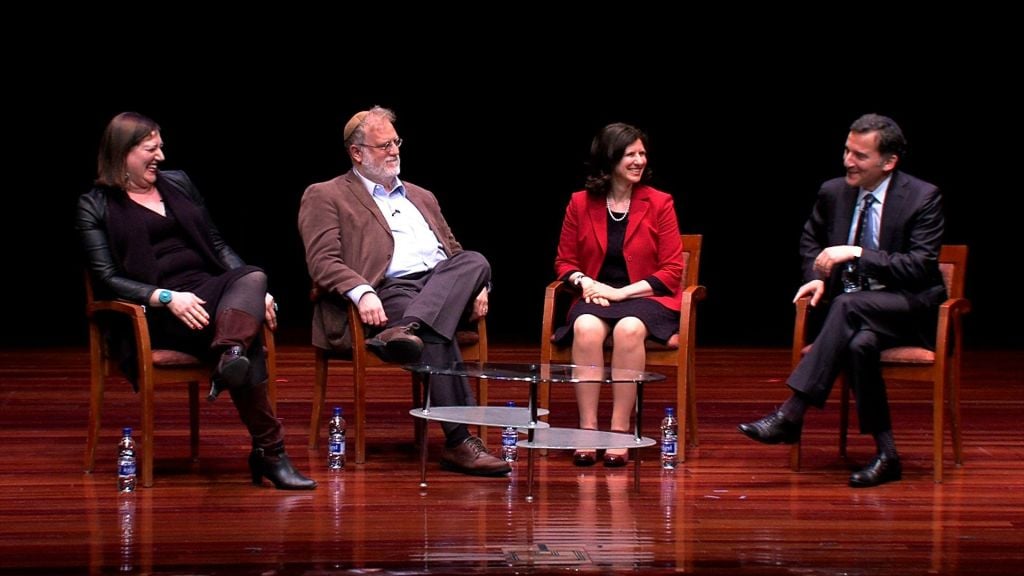
Ask the 2016 Sami Rohr Prize winners and finalists how they ended up writing their books and each has the same answer: They couldn’t keep away from their subject.
Sami Rohr would have been pleased about that kind of literary dedication.
The Colombian-born philanthropist, said his son, George Rohr, who established the literary prize with his sisters in honor of their father’s 80th birthday in 2006, was a voracious reader, “especially when it came to the Jewish word writ large,” he said.
Sami Rohr read everything, from daily Torah text study and Yiddish literature to Jewish history, American Jewish fiction, biographies and nonfiction.
Rohr died in 2012, but the Sami Rohr Prize has continued, and as befits his memory, the choices made by the prize committee run the gamut of books of historical research, Jewish texts and contemporary fiction.

The annual award is intended to promote great writing of Jewish interest, particularly for young, emerging writers, with fiction and nonfiction books considered for the main $100,000 prize on alternate years.
The prize “has given oxygen to emerging writers with important things to say,” said George Rohr, and has created a thriving community for Jewish literature through the Sami Rohr Literary Institute, which operates as a kind of think tank for past and present Rohr winners.
This year’s winners come from a potpourri of backgrounds and interests, heavily weighted toward the academic, but with books of substance that reach easily into the popular realm and offer readers the opportunity to think about subjects that aren’t on the general radar.
The big winner this year is historian Lisa Leff, an associate professor at Washington, DC’s American University who won the Sami Rohr $100,000 prize for her book, “The Archive Thief: The Man Who Salvaged French Jewish History in the Wake of the Holocaust, ” about an historian who wrote under the name of Zosa Szajkowski and was pillaging the very archives where he did his research and subsequently selling off his takings.
Leff said she became interested in Szajkowski’s thefts when she went to Paris to do research in the archives of the Jewish community for her PhD thesis in the mid-1990s.
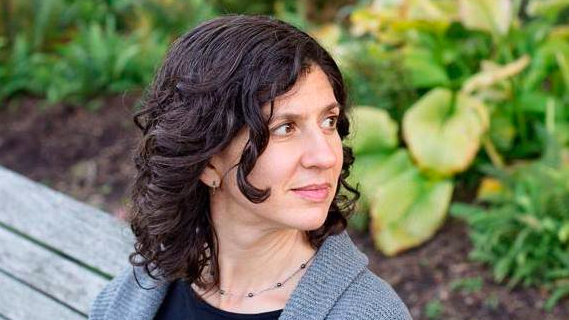
“It was impossible not to notice that many of the documents that were supposed to be in the archives were gone,” said Leff, a fluent French speaker. “When I ordered certain documents I had seen listed in the inventories, the archivist would come back and say, ‘I’m sorry, Madame, it’s missing.’”
The archivist eventually told Leff the whole story, which intrigued her since she knew of Szajkowski’s status as the founding father of her field of French Jewish history.
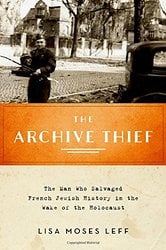
“I couldn’t shake my interest,” said Leff, whose prize will help support her research for her next book, a history of the Panama affair, an anti-Semitic scandal in 1890s France.
The scope of what Szajkowski did, and the increasing riskiness of his behavior over time, suggested to Leff that there was something pathological about his actions. That required a tremendous amount of research into what Szajkowski had been through in his life.
Having spent all those years on “The Archive Thief,” Leff said she feels honored to become part of the Sami Rohr community of Jewish writers, and to have her book “reach a public beyond the halls of academia.”
Yehudah Mirsky, the winner of the $25,000 Sami Rohr Choice Award for his book, “Rav Kook: Mystic in a Time of Revolution,” said he’s been obsessed with Rabbi Abraham Isaac Kook, Israel’s first chief rabbi, for “almost 40 years now.”
Mirsky, an associate professor of Near Eastern and Judaic Studies at Brandeis University — and a Yale Law School-trained lawyer — first wrote a 500-page doctoral thesis about Rav Kook, which eventually became the 20 pages of Chapter 1 in his book.
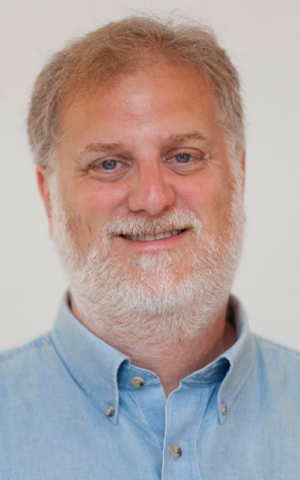
But the formative rabbi of the nascent Israeli state was not a known entity in the US, said Mirsky, which was surprising to people like his Israeli wife, who asked, “‘So who do they talk about then?’ For an Israeli, it’s so obvious,” said Mirsky. “But in the US, everything is [Abraham Joshua] Heschel and [Rabbi Joseph] Soloveitchik.”
Mirsky, however, was “very immersed in the guy for years,” he said. “I taught about him, thought about him.”
Once he began writing the book, his challenge was to write something that would be of interest both to people who are scholars and to those whose knowledge of Judaism comes from reading book reviews, said Mirsky.
“That was hard, especially considering the reverence I have for the man,” he said.
Now the book is a bestseller, and even his publishers “can’t get over the fact that the book is about the rabbi with the big beard,” said Mirsky. “It’s nice, it’s gratifying.”
The Rohr prize, he said, offers the “sense of seeing oneself as a writer.”
In comparison, Aviya Kushner took merely ten years to write her book, “The Grammar of God: A Journey into the Words and Worlds of the Bible.”
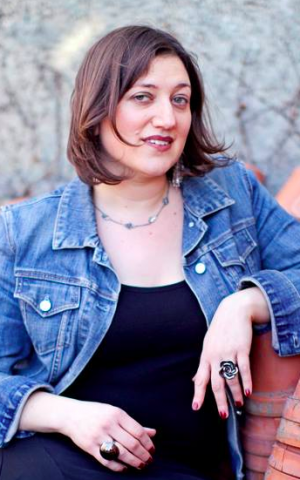
Kushner had no idea, of course, that she was embarking on a ten-year journey when she began writing letters and then essays that become the crux of her graduate thesis at the University of Iowa. At the time, she was simply writing about what surprised her as she encountered the English translation of the Old Testament for the first time.
She had only encountered the Bible in Hebrew until then, but became obsessed and read more “and more” translations, taking a lot of time to figure out the structure of her book.
“I never planned to write a nonfiction book on the Tanach, and I certainly did not expect to spend a decade reading translations of the Bible,” said Kushner. “I had a lot of resistance to this project, and I left it and returned to it several times. I wrote about that struggle in the book itself, and now, I realize that all those internal wars I had with the project were part of the process.”
The other common denominator among the winning writers is their ability to shed new light on familiar topics.
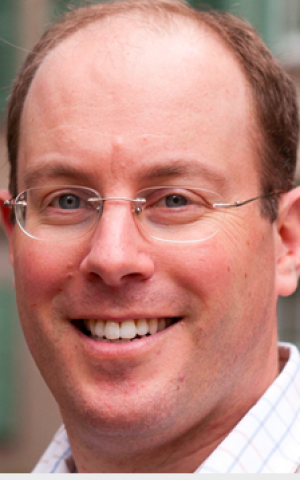
South African academic Adam Mendelsohn explored Jewish economic success through the rag trade in “The Rag Race: How Jews Sewed Their Way to Success in America and the British Empire.”
Jews have been unusually economically successful, but the explanations as to why they made their mark are cultural, wrote Mendelsohn in an email.
“My book offers an alternative explanation: other factors, that have nothing to do with Jews and Judaism, were as important (if not more so) than the cultural baggage carried by Jewish immigrants,” he said.
What he appreciates about the Sami Rohr prize is its demonstration of how books, “an old technology,” can act as the glue that binds Jews together across distance despite their differences, creating and sustaining a sense of peoplehood.
The fifth Rohr winner was finalist and veteran journalist Dan Ephron, who wrote “Killing a King: The Assassination of Yitzhak Rabin and the Remaking of Israel,” tracing the parallel stories of Israeli Prime Minister Yitzhak Rabin and his assassin, Yigal Amir, for the two years leading up to Rabin’s murder in 1995.
The Sami Rohr Prizes will be awarded in a ceremony in Jerusalem on Tuesday, July 5.









The Times of Israel Community.