

Shafiq praises revolution after first round success in Egyptian presidential elections
I would have no problem with a Muslim Brotherhood-led government, says former Mubarak PM
 Add ToI as a Preferred Source on Google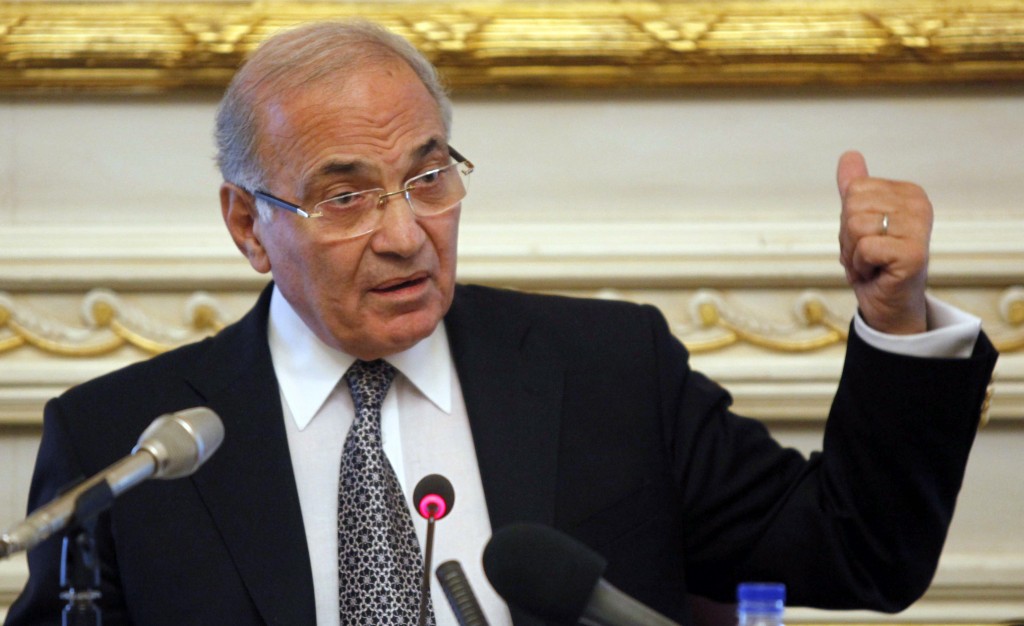
CAIRO — Egyptian presidential candidate Ahmed Shafiq paid tribute Saturday to the uprising that toppled Hosni Mubarak and vowed not to try and “recreate” the old regime.
Shafiq, the last prime minister to serve under Mubarak, will face Mohammed Morsi of the Muslim Brotherhood in a runoff on June 16-17.
The two were the top vote-getters after a two-day election on Wednesday and Thursday which none of the 13 candidates could win outright.
Addressing a news conference several hours after unofficial results were announced, Shafiq appeared to be trying to cast off his image as an anti-revolution candidate who spoke disparagingly about the youth groups that engineered the anti-Mubarak uprising.
A former air force commander, Shafiq was booted out of office by a wave of street protests shortly after Mubarak stepped down on Feb. 11, 2011.
The 15 months since Mubarak’s ouster has seen a surge in crime, a faltering economy and seemingly endless street protests, work stoppages and sit-ins. The generals who took over from Mubarak, say critics, have mismanaged the transitional period. Furthermore, they are blamed for the death of more than a hundred protesters, torturing detainees and trying before military tribunals at least 12,000 civilians.
“I pledge to every Egyptian that there will be turning back and no recreation of the old regime,” said Shafiq, 70. “Egypt has changed and there will be no turning back the clock. We have had a glorious revolution. I pay tribute to this glorious revolution and pledge to be faithful to its call for justice and freedom.”
More than a year after protesters demanding democracy toppled Mubarak, the face-off between the Morsi and Shafiq looked like a throwback to his era — a rivalry between a military-rooted strongman promising a firm hand to ensure stability and Islamists vowing to implement religious law.
The head-to-head match between them is the most polarized outcome possible from the first round, and will likely lead to a heated campaign. Each has die-hard supporters but is also loathed by significant sectors of the population.
Speaking on Friday, Shafiq said he would have “no problem” if the Muslim Brotherhood were in charge of the government.
He made the comments in an interview with London-based television station Al-Hayat: “I see no problem in the coming prime minister of Egypt being from the Freedom and Justice Party,” he said.
Meanwhile, Abdel-Moneim Abolfotoh, an Islamist candidate who was ousted in the first round of the elections, said he would throw his support behind the Brotherhood’s candidate in order to “eradicate” the former Mubarak regime from power.
Abolfotoh said he would hold talks with all the national movements to “unite their efforts against the regime… to complete the goals of the revolution,” Ma’ariv reported Saturday.
Millions of Egyptians came out to vote last Wednesday and Thursday in what was hailed as the first free election in the Arab world.
The first round race turned out close. By Friday evening, the state news agency reported tallies from polling stations around the country which gave Morsi 25.3 percent and Shafiq 24.9 percent, with less than 100,000 votes separating the two.
To some Egyptians, Shafiq represents the stability of the old regime in the face of uncertainty with the Brotherhood, which promises to run the country in accordance with Islamic law. To many others, however, he represents a symbolic end to the hard-fought revolution that toppled Mubarak.



The Times of Israel Community.