

Streisand’s difficult rise to fame catapulted by face-off with anti-Semitism
In his book ‘Barbra Streisand: Redefining Beauty, femininity, and Power,’ author Neil Gabler examines the singer’s ‘otherness’ as a proud Jewish woman
 Add ToI as a Preferred Source on Google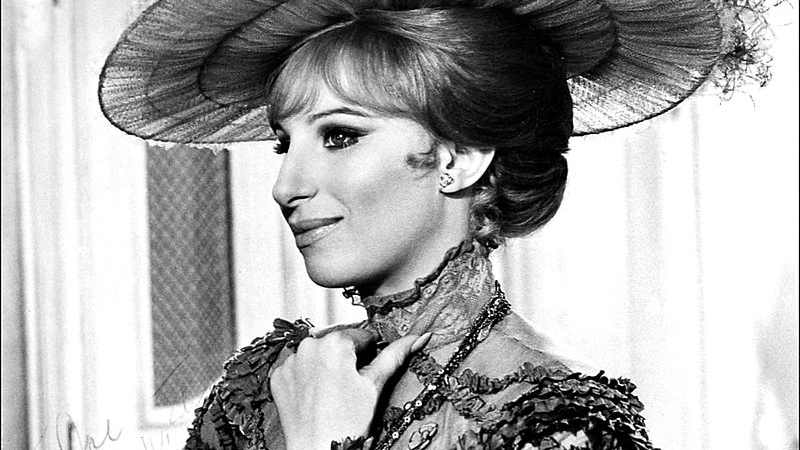
That Barbra Streisand is a woman of many “firsts” is indisputable. Streisand is one of the best-selling music artists of all time and the only recording artist to have a number-one album in each of the last six decades. With “Yentl” in 1983, she became the first woman to write, produce, direct and star in a major studio film. She is among only 12 entertainers who have been honored with an Emmy, Grammy, Oscar and Tony Award.
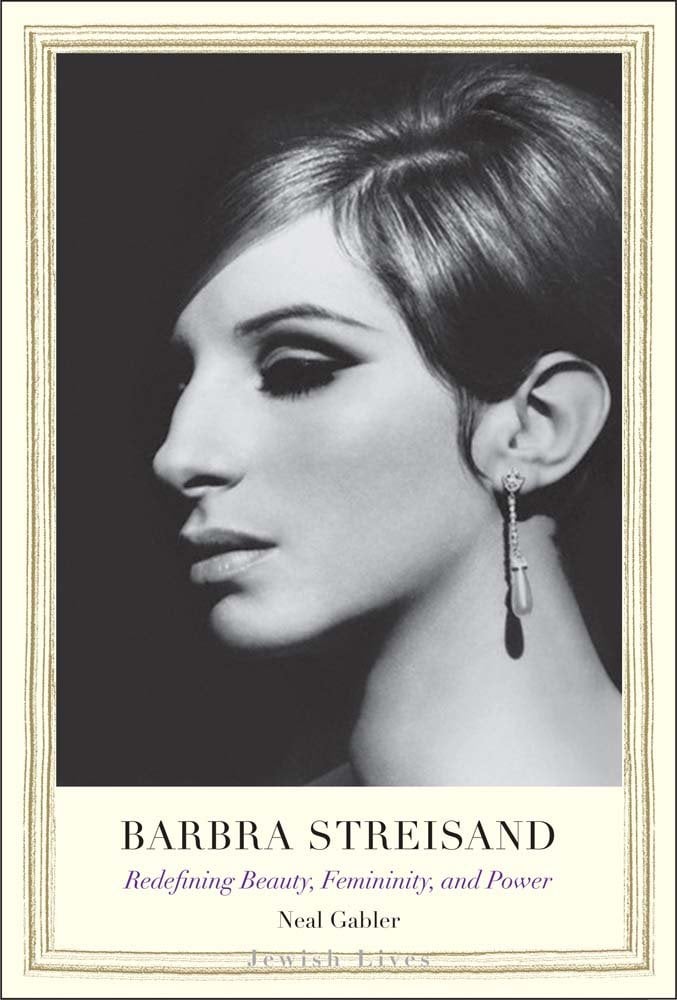
Despite Streisand’s monumental achievements in the entertainment business, Neal Gabler, who has penned prizewinning biographies of Walt Disney, Walter Winchell, and Jews in Hollywood, chooses to examine her life through the prism of her outsider status as a Jewish woman and a defier of convention in “Barbra Streisand: Redefining Beauty, Femininity and Power,” the latest edition to Yale University Press’s “Jewish Lives” Series.
Gabler, an American journalist, historian and film critic, chronicles the quirky, overtly Jewish Brooklyn-born singer’s rise to stardom. More importantly, however, he examines the colossal impact Streisand has had not only on her fans, but on 20th century American culture. He effectively demonstrates her influence on the feminist movement and how she challenged the formerly preconceived notions of beauty and femininity, as alluded to in the book’s subtitle.
The Times of Israel recently caught up with Gabler by phone from his home in the Hamptons on Long Island, New York, to discuss his book and to discover why, as he says, “Streisand is so much more than Streisand.”
Tell us a little about growing up in Chicago and how your hometown has infused your writing?
I grew up on the northwest non-Jewish side. It was just east of Foster and Cicero. It’s called Mayfair, and it abutted Albany Park, which was a Jewish area. There were two Jewish families in our entire neighborhood. I would go to off Hebrew school and I’d feel very much like how Muslims must feel today. I was heading off into the great unknown. We were the outcasts, but what are you going to do.
Although this was never my intention, it does permeate my work because everything I’ve written about — all the subjects of my biographies — are individuals who’ve been outsiders and who are trying to make some sort of peace with or destruction towards the middle, whether it’s Walter Winchell, Hollywood Jews, Walt Disney or Barbra Streisand. They all have an uneasy relationship to the middle, which is odd for Walt Disney since he was one of the people who defined and created the middle, but he nevertheless grew up in a sort of marginalized way. That sense of marginalization, again not by intention, is something that pervades my work and resonates with me.
It comes through in your book that you’re a fan of Barbra Streisand. Is that what propelled you to devote a book to her?
That’s interesting because when I came to write this book on Barbra Streisand it wasn’t because I was a fan. I wasn’t gaga for her. I can’t say that when I began this book I was one of those people who would rush out to buy her concert tickets the second they went on sale. I’ve never seen Streisand in concert. Until I began preparing this book I never bought a Streisand album. She’s not my kind of singer. I’m more of a Frank Sinatra kind of guy. I did, however, see all of her movies prior to the book and I’m probably one of the few people who like Streisand better as an actress than as a singer.
‘Her outsiderness was extremely appealing to me’
I wrote this book out of the impulse partly because of the fact that her outsiderness was extremely appealing to me. Also, her career fascinated me, especially the Jewish aspect of her career because this is, after all, a series called “Jewish Lives.” I wanted to write about a Jewish life and not just about a person who happened to be Jewish, but about someone whose life was in many ways defined by her Jewishness. I came to this less because of my adoration of her than my interest in how she constructed a life, which is sort of a work of art.
Streisand, as you write, was “the first star who succeeded because of her Jewishness and not in spite of it.” How, in fact, did Streisand not only use her Jewishness to her advantage, but also make it acceptable within mainstream America in your opinion?
It was a function of the woman and her moment. Had Streisand come along 10 years earlier she would never have been so successful and possibly 10 years later she wouldn’t have been as successful, but she came at a moment in America of cultural multiplicity and cultural awareness. Streisand kind of amplified that and represented it.
She mastered the art of being a Jew and by that I mean that she took her Jewishness and turned it into a metaphor, which is the metaphor of otherness. Streisand understood — and I think this is quite a deep and instructive cultural perception — that this [the 1960s] was a time in American history in which people recognized their own outsiderness. That whole 1950s notion that America was sort of monolithically white, middle-class, small town and this is how we define ourselves, well, that was eroding.

To what extent was Streisand a victim of anti-Semitism throughout her lifetime?
Oh, I think she was very much a victim of anti-Semitism. In fact, one could say that anti-Semitism propelled her whole career. It wasn’t only gentile anti-Semitism, but also Jewish anti-Semitism. She comes to show business with the idea that she’s going to make it hell or high water and there are people — including many Jews — who were prominent in New York show business, who were telling her she just wasn’t going to make it. They told her she didn’t have the looks or the quality. I talk about Goddard Lieberson (President of Columbia Records from 1956 to 1971, and again from 1973 to 1975) who didn’t think she was a good enough singer.
I think for Jews it was a kind of self-criticism that gosh, she’s so Jewish. Do we really want somebody so Jewish out there?
‘One could say that Streisand suffered for her fans’
There were also non-Jews for whom that mechanism didn’t operate and who simply felt that nobody wants to pay to see a woman like this. So, Barbra Streisand was working against that but in an odd way it became almost the basis not only for her drive, but also for her popularity.
One could say that Streisand suffered for her fans, all of whom understood exactly what that meant. When women say — and I quote some of them in the book — about her being “a revolutionary figure” or that they felt their “life changed when Streisand came on the scene,” to me this is exactly what they are addressing. They’re addressing the way in which Streisand was able to triumph for them where they could never have triumphed and someone like Streisand had never triumphed previously.
In 1978, I recall being a child and watching Streisand on TV introducing Israeli prime minister Golda Meir at Israel’s 30th anniversary celebration in the US and singing “HaTivka.” In 2013, she celebrated former president Shimon Peres on his 90th birthday in Israel and sang “Avinu Malkaynu.” Could you elaborate upon Streisand’s relationship to Israel?
Oh, I think she’s fiercely pro-Israel. She has never backed off from her Jewishness. She not only plays Jews in virtually each of her movies, but she plays “Jewy Jews” — look at “Yentl.” Would anyone in Hollywood make a movie like “Yentl” except for Barbra Streisand? Absolutely not! I don’t go into this in the book at any length because it seemed to me self-evident from just her public posture.
That said, she’s not one to retreat, and again I think this is part of the basis of her appeal. There’s no retreat in Streisand. There’s no trimming of sails. There’s no neutrality. Barbra Streisand is who she is.
Your areas of expertise are American politics and culture. According to you, what have been Streisand’s foremost contributions to the latter?
It’s hard to say that she changed American politics. I don’t believe she did that. What she did is that she gave voice and raised money for things. She was not alone in this. There were many figures in Hollywood who did the same. However, because she was a giant star she could raise more money. I don’t know if she really blazed a trail in American politics generally.
However, I do believe that she helped blaze a trail in American feminism because when the latter began in the late 1960s it really was much more of an intellectual movement and the women — mostly Jewish — who pioneered that movement were all more or less intellectuals. So, she served as a bridge between those intellectuals and the larger group of women who would ultimately become part of the feminist movement.
‘It was much harder for the general population of women to identify with a Betty Friedan than it was for them to identify with Barbra Streisand’
It was much harder for the general population of women to identify with a Betty Friedan or Germaine Greer — not Jewish — than it was for them to identify with Barbra Streisand. So, one might say that Streisand normalized feminism. Here she really did have a significant cultural influence in a way she didn’t have with liberal politics generally.
Yes, she espoused liberal politics. Yes, she raised money, she did not change American politics, but she did change the feminist movement.
Streisand is known as a perfectionist —
[Gabler interjects] Oh God is she a perfectionist. Let me just tell you one simple story that actually relates to this book. My publicist got a phone call from Barbra Streisand’s longtime manager Marty Erlichman who told her that he wanted to talk to me. My first response was what does he want to talk to me about. If it’s criticism, I don’t want to hear it. I’m too old for that.
Eventually, I said OK and he called me saying, “We’re pleased about the things you have been saying about Streisand, but I want to tell you this, which everyone knows” — now, frankly not everyone knows this — “that the correct pronunciation of her name is Strei-SAND as the sand in the sea at the beach. Make sure that every time that you mention her name you pronounce it this way.” Talk about perfectionism. They’re out there monitoring how I pronounced her name.
A lot of criticism has been hurled at Streisand as both an actress and a director. In your opinion, have those criticisms been harsh, cruel and biased? In other words, would similar remarks be made in relation to a “perfectionist” male director or actor?
We want our directors to be perfectionists. Tens of millions of dollars are at stake. Who wouldn’t want your director to be a perfectionist? Great directors are perfectionists. That’s what they do. Barbra Streisand is a very good director. I think it’s a completely unfair criticism.
To me the proof is always in the pudding — the movies. I think her movies are well made, seriously intended and in several cases quite extraordinary. Do you read criticisms of Martin Scorsese because he drives his cast hard? In his latest movie, Liam Neeson was saying that they all had to lose weight to essentially look as if they’d been starved and he did so because it was Scorsese.
A lot of this has to do with the way we think of women, whom we don’t allow to be demanding. That’s part of it. Another part of it has to do with Streisand herself because there is an antipathy toward her because she has this kind of diva quality about her.
Yet, the diva quality is never in the service of Streisand herself. It’s in the service of her work and I don’t appreciate people who ridicule, debase or think they are superior to other people. I don’t think Streisand does that. She works to be great and she wants you to rise to the level that she sets for herself all the time. It’s not as if she says to someone, “I expect you to do this but I’m not going to do it.” She doesn’t do that. On that basis I would say she has been unfairly criticized both because she’s a woman and simply because she’s Barbra Streisand.
Actor Jason Alexander spoke about the difficulty of working with Streisand on “Yentl” and so too did Nick Nolte when filming “The Prince of Tides.” I’d like you speak a little about her relationship with her leading men.
‘It’s a Jewish conquest of mainstream American culture and Streisand does it and it makes for a very dramatic tale’
First, [many] of her leading men have been gentiles. She loves that kind of tension between “the gentile” and “the Jew.” Also, it fulfills all of the themes of Streisand’s life, which you see manifested in her films and in her music. This is that conflation of art and life that the Jewish woman can conquer the idealized gentile man. It’s a Jewish conquest of mainstream American culture and Streisand does it and it makes for a very dramatic tale.
The best of her films in my estimation is “The Way We Were” and there you see the most explicit example of the quintessential Jewish girl and the quintessential gentile man and what Streisand, Sidney Pollack and Arthur Laurents do in that film is that they take both metaphors and show an interplay between them in a way in which I think is tremendously effective, intelligent and moving. It’s a subtext of almost all of her movies and all of her relationships with her leading men. It’s not incidental that Streisand has often had off-screen relationships with her leading men (she dated, for example, Ryan O’Neal and Omar Sharif).
Would you say Streisand took the stereotypical Jewish boy’s fantasy of conquering the non-Jewish blond bombshell and reversed it?
Exactly. However, the reversal is not jest as is the imposition of the Jewish Guy and the Shiksa Goddess. One of the great lines of “The Way We Were” is the one between Bradford Dillman and Robert Redford when the former tells Redford that he and his wife are getting divorced and then he says, “But it’s not like losing Katie. That would be something.” We feel that so strongly that losing Barbra Streisand would really be something. It’s not just about aesthetics, but it’s about something that informs the aesthetic in her case that losing her, as indeed happens in the movie, would be a deprivation — a lifelong deprivation.
The subtitle of your book is “Redefining Beauty, Femininity and Power.” How has Streisand shaped those three concepts for women overall and what should all women — Jewish and non-Jewish alike — thank her for most?
I think they ought to thank her for all three. What Streisand did — and her primary cultural contribution, which is larger than a political contribution and even in her quasi neo-political contribution to feminism — is that she really redefined how we think of women.
She redefined beauty because the conventions of beauty before Streisand were very different than the conventions of beauty after Streisand. That is, I think, a very resonant subject. I’m not just speaking physically, but I’m also speaking in terms of what we think of beauty when we talk about it. I quote in the book the famous line by Pauline Kael that Streisand showed us that “talent is beauty.” She did that. She showed us how to look beyond the surface and frankly, how to become a desirable object in the process.
‘There never was a Barbra Streisand before there was a Barbra Streisand’
Guys who loved Barbra Streisand were physically attracted to her, but they were also spiritually attracted to her. My God that’s a tremendous kind of leap that Streisand helped to achieve.
Femininity too. This clearly has a Jewish component. We think of femininity pre-Streisand as a woman being soft, submissive and in need of male protection. Barbra Streisand didn’t need anyone’s protection. No one pushed her around. I quote a passage in the book from a kid in Texas who talked about these girls he used to go out with all of who worshiped Streisand. They weren’t Jews. They were Texas Christians.
Although Streisand has often been described — particularly by antagonists — as being like a man or having mannish qualities, she took those criticisms and she converted them into praise in which she taught women, obviously not single-handedly, that you could be tough and still be an object of desire. In other words, you can still be tough and be feminine. You don’t have to allow yourself to be pushed around and that links up with the third of that trilogy, which is power.
Streisand showed us, women particularly, how to exercise power in a female context. She changed Hollywood in that way. There never was a Barbra Streisand before there was a Barbra Streisand. Before her, women didn’t flex their muscles in Hollywood. If they did so then they weren’t feminine or beautiful. However, Barbara Streisand showed us that women could be beautiful, feminine and powerful.
While you were researching your book on Streisand, what discovery about her surprised you the most?
There are a lot of things that surprised me about her. The first was her insecurity because she seems so absolutely invincible and yet has this odd dichotomy between her invincibility and her insecurity, which is not something I would have reputed to Streisand.
Second, she had to overcome many impediments. For example, the resistance to her by the Jewish powers that be was something that surprised me. They were very antagonistic to her.
Writing her story I realized how young she was when she rose to stardom. She came to prominence and became a diva when she was 20 years old. There was a dismissive 1960 New Yorker review by critic Roger Whitaker titled, “At the Bon Soir: Barbra Streisand, Singer — File and Forget.” Well, we filed, but we didn’t forget. She became an entertainment-changing star.
What foremost message do you hope those who read “Barbra Streisand: Redefining Beauty, Femininity and Power” come away with?
What I wanted to do was to write an interpretation of Streisand’s life and to prompt people not only to think about Streisand, but also to think about her in new and different ways. This biographical essay is my take on her. What I found most interesting was this notion of redefining beauty, femininity and power. I thought she did that. I thought it made her a significant cultural figure — one of the more significant figures in the history of American entertainment. I hope that the book kind of justifies and vindicates that interpretation.
Have the reviews you’ve received thus far to your book “vindicated your interpretation?”
I don’t read reviews. We’re all sensitive and I tell my students the following: “No good review makes you feel as good as a bad review makes you feel bad. So, unless you’re a masochist why would you want to subject yourself?” Barbra Streisand remembered every negative word ever said about her and could never remember anything that anyone said positively about her.










The Times of Israel Community.