

Before ‘The Dictator’ and ‘Borat,’ friends recall, Sacha Baron Cohen was a very nerdy, very funny, Israel-oriented guy
As the actor/comedian makes his way to Israel for his latest flick, those who knew him way back when share some potent memories
- See more Times of Israel on Google - add us as a Preferred Source
Jessica Steinberg, The Times of Israel's culture and lifestyles editor, covers the Sabra scene from south to north and back to the center
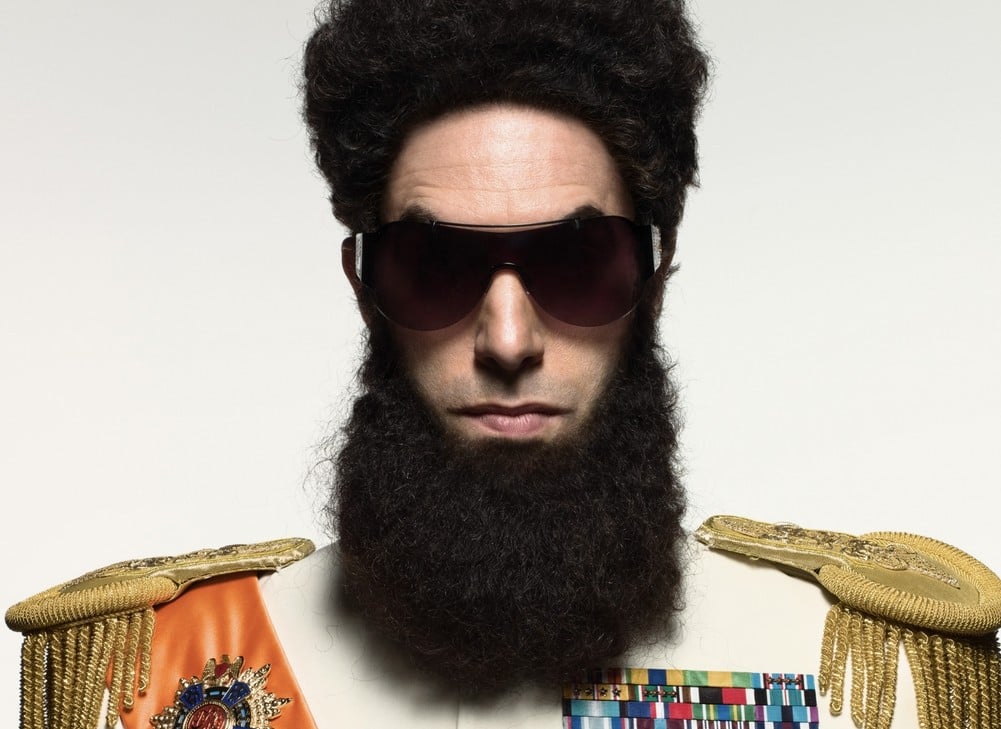
He’s recently been caught storming New York’s Waldorf-Astoria (now owned by an Israeli) and referred to jahnun on “Saturday Night Live”, all in character as the bearded, Hebrew-speaking Middle Eastern tyrant General Aladeen, leader of the fictional country of Wadiya, who is taking the world by storm in “The Dictator,” and will soon be in Israel, presumably to visit his grandmother.
He is Sacha Baron Cohen, the Jewish, English and half-Israeli comedian who has created a career out of imagined characters who deftly comment on the political, cultural and social issues of the moment.
He began his career as the fictional Ali G on “Da Ali G Show,” playing a boorish, uneducated type, and often baffled his celebrity and politician interviewees who didn’t realize he was in character.
Now he’s a celebrity, married to a fellow — converted — celebrity, actress Isla Fisher, with whom he has two daughters, including one whose name is Elula. For those who knew him when, as a fellow Habonim Dror youth group member or Cambridge student, his current antics are hilarious, sometimes crude, but his success is not altogether surprising.
“I remember being on the bus during our Habonim Mahane Lomdim trip, and he did this standup bit about lost property at the front of the bus,” said one woman now living in Ra’anana, who attended a three-week seminar with Baron Cohen in Israel when they were graduating high school. “He was really very nerdy, he didn’t hang out with the girls, but we were literally crying from laughter because he was so funny. I remember thinking how talented he was, and very, very smart, a genius, really.”

The son of an Israeli mother and Welsh father, “a quirky, smart family,” she added, Cohen grew up in West London and was active throughout high school in Habonim Dror, a Zionist youth group. “He was very Zionist, very involved in Habo,” said the fellow Israel seminar participant, who has known him since they were babies in the same mother-and-baby group. “He wasn’t Mr. Cool Guy.”
He clearly had his moments, though. One fellow youth group member recalls a prank call he made on her that “flopped,” while another remembers her friend had “a wee fling” with him on their year course in Israel, following high school.
It was at the University of Cambridge, however, where Baron Cohen read history, that he began his stage career, first as Tevye in “Fiddler on the Roof,” a production of the university’s amateur dramatic club.
“I knew who Sacha was from London, his brother Eran was my age, and they were all in Habo,” said Debbie, who now lives in Israel and played Yente the matchmaker to Baron Cohen’s Tevye. “It was a fun production, because there were very good social vibes, and he did this thing that I noticed later on as I watched his career unfold. He was always in character. When he signed my program, he signed it Tevye, which was annoying, because I could have [later] sold it on eBay.”
She also commented that when she recently watched “Hugo,” the Martin Scorsese movie about an orphaned boy in 1930s Paris, she realized that Baron Cohen’s voice for his character, a difficult train station inspector, was a “voice that he used to do all the time, a nebech-y Northwest London voice. I think I was the only one laughing out loud in the theater.”
Debbie moved to Israel in 1993, before Baron Cohen’s Ali G success, and so it was another friend, who had “suffered through post-rehearsal hang out sessions with the “Fiddler on the Roof” cast,” who realized that the Ali G character was indeed played by Baron Cohen, of former Tevye fame.
“I’ve wanted to contact him, and say ‘Well done, you, and wish him all the best,” added Debbie.
Of course, not everyone who knew Baron Cohen as a former Habonim, Israel-oriented Jewish nerd realized that he had attained such celebrity status, or that his Israeli roots — and time spent in Israel — has enabled him to use Hebrew as his language of choice, whether playing a sexist Kazakh journalist or Middle Eastern despot.
One of his teachers from the Habonim Israel year course, a former Londoner who has lived in Jerusalem for many years, remembers him as a good kid, an “average middle class Jewish kid with a juvenile sense of humor,” he said. “A good, fine, not overly serious kid.”
Years later, said teacher was visiting his hometown with two of his children and walking along with his 20-year-old niece, who lived in London. He heard someone calling his name from across the street, and seeing his former student Baron Cohen, crossed over to say hello.
“My niece was fainting from excitement, because she only knew him as Ali G,” he said. “I’d never heard of Ali G, and he was already in his second season, but all I knew was Sacha, and we were just catching up. My kids immediately realized that this was someone extraordinary from my niece’s reaction, but I had no idea, even when I asked him what he was up to now, and he just said, ‘Oh, some television work.’”
Israel is one of the destinations on Baron Cohen’s current publicity tour for “The Dictator,” which will be released here in the next month. No one’s expecting any calls from their former Habonim friend, but as happened when “Borat” played here, his insider Hebrew jokes will meet their ultimate audience.








The Times of Israel Community.