

The shorter, more intensive conflicts of the future
As Hezbollah and Hamas change tactics, lengthy confrontations such as the Second Lebanon War and Operation Cast Lead may be a thing of the past

 Add ToI as a Preferred Source on Google
Avi Issacharoff, The Times of Israel's Middle East analyst, fills the same role for Walla, the leading portal in Israel. He is also a guest commentator on many different radio shows and current affairs programs on television. Until 2012, he was a reporter and commentator on Arab affairs for the Haaretz newspaper. He also lectures on modern Palestinian history at Tel Aviv University, and is currently writing a script for an action-drama series for the Israeli satellite Television "YES." Born in Jerusalem, he graduated cum laude from Ben Gurion University with a B.A. in Middle Eastern studies and then earned his M.A. from Tel Aviv University on the same subject, also cum laude. A fluent Arabic speaker, Avi was the Middle East Affairs correspondent for Israeli Public Radio covering the Israeli-Palestinian conflict, the war in Iraq and the Arab countries between the years 2003-2006. Avi directed and edited short documentary films on Israeli television programs dealing with the Middle East. In 2002 he won the "best reporter" award for the "Israel Radio” for his coverage of the second intifada. In 2004, together with Amos Harel, he wrote "The Seventh War - How we won and why we lost the war with the Palestinians." A year later the book won an award from the Institute for Strategic Studies for containing the best research on security affairs in Israel. In 2008, Issacharoff and Harel published their second book, entitled "34 Days - The Story of the Second Lebanon War," which won the same prize.
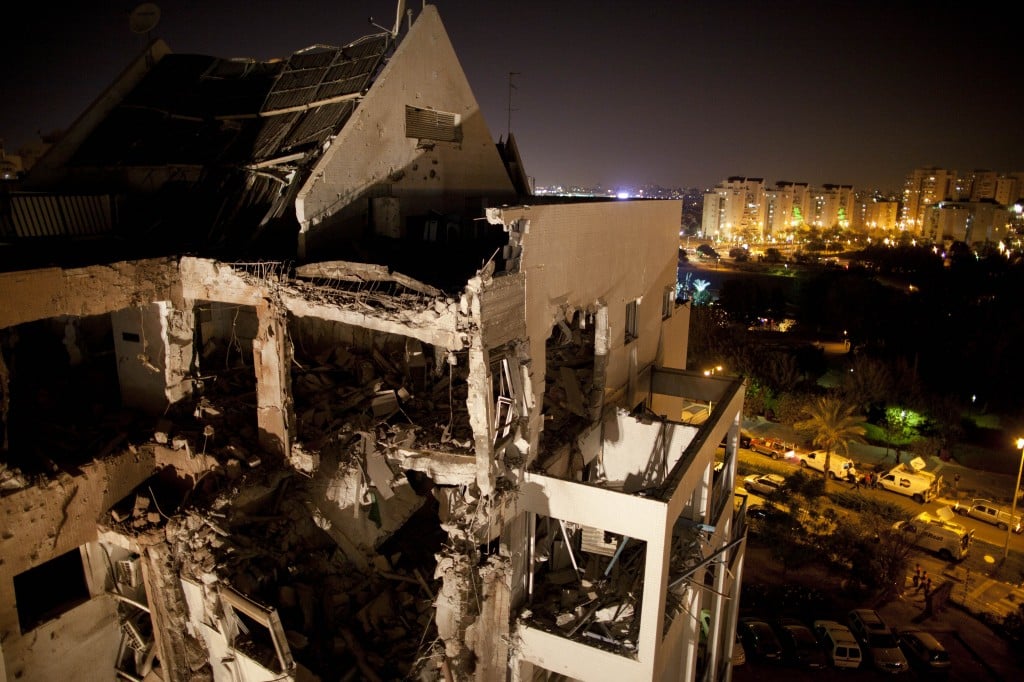
The next battles between Israel and any of the terrorist organizations on its borders will likely be very different from the Second Lebanon War in 2006 against Hezbollah, and the 2008-9 and 2012 operations against Hamas in Gaza.
For years, Hezbollah, followed by Hamas, employed a military strategy that involved firing missiles at Israel for as long as possible in order to wear it down. The Second Lebanon War lasted 34 days; Operation Cast Lead five years ago went on for three weeks. And the rockets were still falling when the cease-fires took hold.
But the statements now being made by Hezbollah and Hamas leaders, the discovery of the sophisticated Hamas tunnel under the border into Israel last month, and the immense stores of missiles in the possession of both organizations, combine to indicate that both Hezbollah and Hamas are taking a new approach toward future confrontations with Israel. Their new strategy, indeed, is similar to the Israeli policy — which favors a powerful initial strike that shocks the enemy, causing it to seek a cease-fire as quickly as possible.
To start with the good news, neither organization seems to have any intention of confronting Israel right now. Squeezed by both Israel and Egypt, Hamas is preoccupied with actually governing Gaza, while Hezbollah is up to its neck in the Syrian civil war and preserving its power in Lebanon.
The very fact that Hamas and Hezbollah are governing entities has made them somewhat more hesitant to enter drawn-out war with Israel, which would not only damage their own military capabilities (due to Israel’s military and intelligence superiority), but also weaken their hold on Gaza and Lebanon, respectively, and endanger their political survival after the battles subside.
This partly explains the hypothesis that come the day, it will be in Hezbollah’s and Hamas’ best interests to end any military confrontations as rapidly as possible — while causing maximum damage to Israeli targets.
Indications of this mindset can be found in an interview given by Ibrahim al-Amin, a leading Hezbollah spokesperson, who told the Al-Akhbar newspaper in July 2012 about Hezbollah planning. “We can expect to see that just as Israel launches an initial powerful strike, the opposition will launch a no less powerful initial attack… And we can imagine dozens, if not hundreds of military, political, civilian and strategic targets in Israel coming under a precise, crippling missile attack lasting only several minutes”. Grandiose rhetoric notwithstanding, Al-Amin’s description sounds nothing like the modus operandi of steadily shooting missiles and rockets at Israel in order to slowly wear down its defenses — the tactic that Hezbollah Secretary General Hassan Nasrallah delineated after the Second Lebanon War.
Something else to consider is Nasrallah’s announcement this year that his organization has obtained particularly precise missiles that can cause tens of thousands of casualties when aimed at carefully selected targets in Israel. Hezbollah has indeed increased its efforts not only to boost the number of missiles and rockets in its possession, but also to acquire higher-quality weapons with longer ranges, larger warheads and enhanced precision and destruction capabilities. Intermittently, according to foreign reports, Israel has targeted missile convoys en route to Hezbollah, but the Shiite terror group’s endless rearmament continues nonetheless.
Hezbollah now holds an estimated 100,000 short-range rockets, 5,000-6,000 medium-range rockets and several hundred long-range rockets. Last year’s Operation Pillar of Defense saw Hamas fire rockets that hit Rishon Lezion and targeted Tel Aviv and Jerusalem, and it has worked relentlessly to replenish its stockpiles and improve its capacity since then.
All this means that, in any future confrontation, if Hezbollah or Hamas manage to make use of their arsenals, Israel could come under heavy, concentrated rocket fire, and central Israel will find itself emphatically on the frontline. Israel’s Iron Dome and other defense systems will be tested with unprecedented intensity.






The Times of Israel Community.