

The tech age offers easy free love — but we’re hardwired for guilt, says author
With titillating psychoanalytic case studies, ‘The Incurable Romantic’ by Dr. Frank Tallis sparks new interest in humankind’s bittersweet relationship with matters of the heart
 Add ToI as a Preferred Source on Google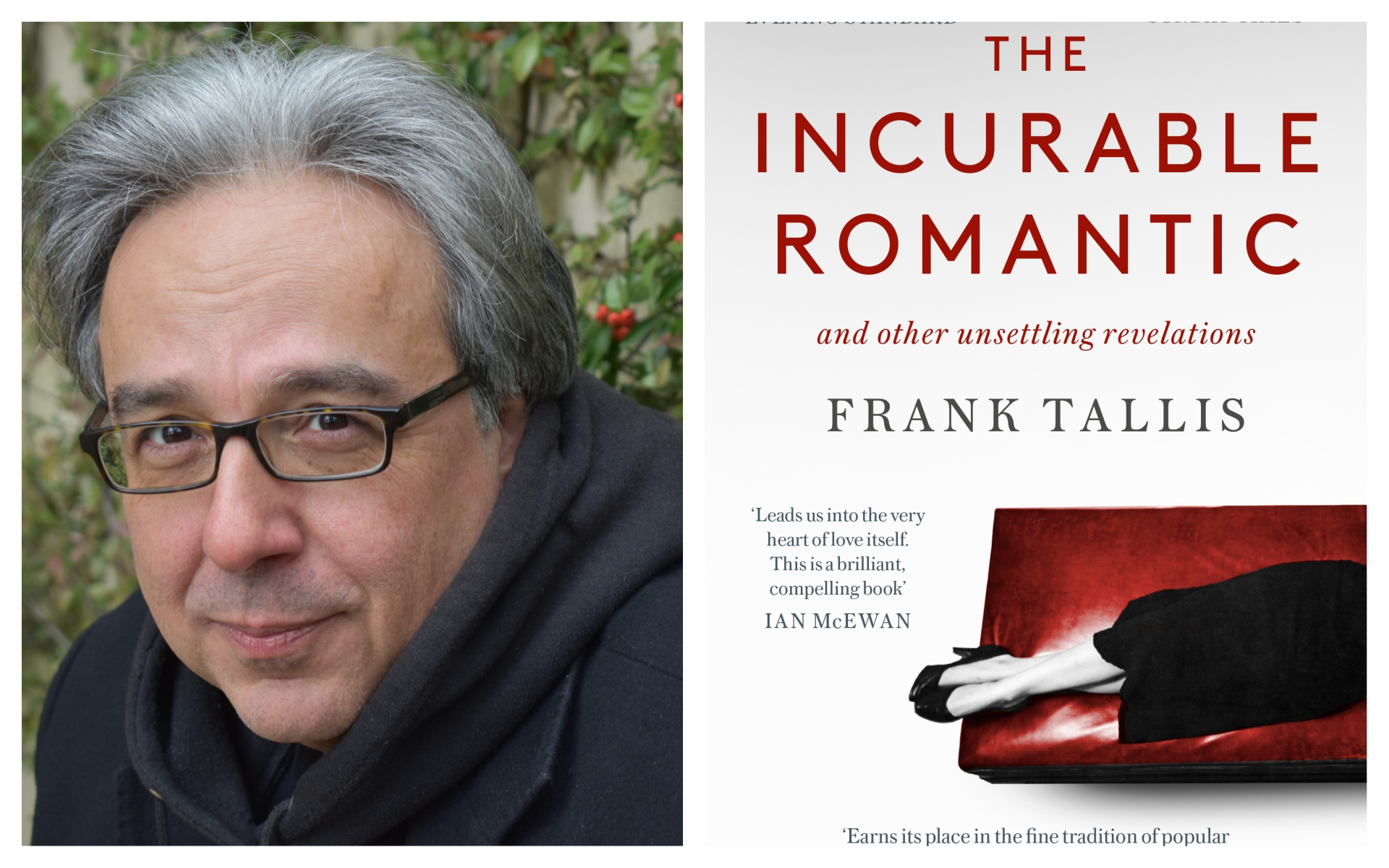
LONDON — In the age of high speed broadband it appears that sex and romance are more readily available than ever. Online pornography, dating apps, “hookup culture,” and a new trend towards polyamory seem to offer plenty of alternatives for individuals to pursue a wide variety of sexual desires.
But do they really?
Even the limitless possibilities of the internet era seem to offer little hope for delivering any real promise of uninhibited free love without moral constraints, says Dr. Frank Tallis.
Speaking to The Times of Israel from his north London home, the writer and clinical psychologist claims the taboos that have existed around sex throughout human history have many delicate and complex layers — and they don’t seem to be rapidly changing any time soon.
“We are uncomfortable with sex because we have two natures,” says the 51-year-old Londoner. “We have our animal nature and our more sophisticated intellectual human nature.”
“It’s difficult to reconcile these two aspects of human nature because they seem to occupy almost different worlds,” he says. “So we are always a little uneasy about sex because there is always this conflict in human nature between the primitive and the more sophisticated.”
People are understandably uncomfortable with the idea of love and elation turning to heartache and loss, so we tend to treat breakups with a kind of amusement. Tallis believes this lighthearted triviality is a textbook Freudian defense mechanism in action.
“Freud said we laugh at things that are serious as a psychological defense,” he says. “And so we put up a defense against love just to reduce our desires and discomforts associated with it — for we know that deep down when love goes wrong the consequences can be catastrophic.”
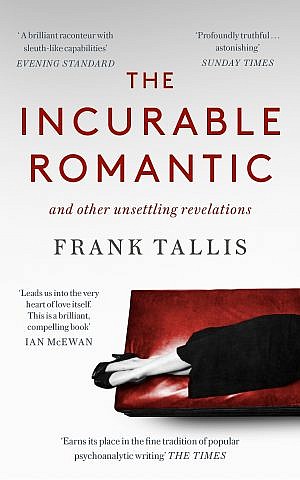
In his latest book, “The Incurable Romantic,” Tallis illustrates why lovesickness is no laughing matter — unrequited love is a frequent cause of suicide, and 10 percent of all murders globally are connected to sexual jealousy.
The general consensus within mainstream psychiatry and psychology, meanwhile, is that obsessive feelings arising from complex sexual liaisons and intimate relationships gone awry are often the primary cause of mental illness.
Tallis explores all of these themes in detail through the lenses of neuroscience, evolutionary psychology, and psychoanalysis, using a myriad of fascinating case studies from his own psychotherapy practice in London as examples — concealing the names and circumstances of each case to respect individual privacy.
First published last year, the book has recently been the subject of renewed interest with the release of the softcover edition. Among other stops on his latest media blitz, Tallis appeared on a panel about love at Jewish Book Week in London.

A libertarian approach to love
Tallis’s book is held together by two central arguments: that problems arising from love should be taken very seriously, and, so-called normal and abnormal love don’t have definitive demarcation lines.
As romantic love is almost always linked with physical desire, Tallis says it’s imperative that a libertarian approach should be taken when it comes to what goes on in the privacy of people’s bedrooms.
“With the exception of sex that results in dangerous self-harm, and pedophilia, there is no such thing as abnormal sex,” says Tallis. “We shouldn’t incorporate a moral sexual framework — it leads to guilt and all kinds of psychological complications.”
With the exception of sex that results in dangerous self-harm, and pedophilia, there is no such thing as abnormal sex
Readers of “The Incurable Romantic” meet a wealthy businessman who goes into heavy debt because of his addiction to high class escorts, and an elderly woman who admits that her lifelong marriage to her late husband was based almost entirely on great sex with no emotional bond.
They also encounter the paranoid ramblings of an obsessively jealous woman who eventually has to terminate her relationship with her boyfriend, whom she wrongly suspects is having multiple affairs, as well as a woman happily married for 20 years who has fallen hopelessly in love with her dentist — he eventually has to move continents because she begins to incessantly stalk him.

Tallis admits he had some moral reservations about publishing the lurid and intimate details of his therapy patients in a book for public consumption. But almost all psychotherapists have been faced with a similar ethical dilemma since the birth of psychoanalysis in Vienna in 1895, when Josef Breuer and Sigmund Freud inserted the case study of Anna O. in “Studies on Hysteria.”
“When people come to psychotherapy, all they are really doing is telling their own stories,” says Tallis. “Those in the greatest distress have the most chaotic narratives because they cannot tell their story in a way that makes sense, and so their sense of identity is diminished.”
As a psychotherapist you are acting like an editor, taking the various elements of someone’s life and putting it into a more coherent narrative
“As a psychotherapist you are acting like an editor, taking the various elements of someone’s life and putting it into a more coherent narrative,” he says. “When people have a strong sense of self that corresponds with a strong self-narrative, they feel less vulnerable.”
Almost all theoreticians on human psychology from Freud onward agree that love is an essential component for allowing human happiness to flourish. But when the bond of love breaks, or if it’s not even reciprocated in the first place, a long litany of neurotic mental ailments and negative behaviors tend to surface from the wounds of romance: infatuation, jealously, heartache, trauma, inappropriate attachment, and addiction.
“Love may not be narcissistic, but there is always some level of ego involved in partner selection,” Tallis says.
Tallis’s other books for readers interested in popular psychoanalytic writing include “Changing Minds,” a history of psychotherapy; “Love Sick,” an exploration of the relationship between romantic love and mental illness; and “Hidden Minds,” a history of the unconscious.
An honorary Jew
Born and raised in north London, Tallis comes from an Italian and Catholic background. But culturally and intellectually, he is very much rooted in the Central European Jewish tradition — specifically, in the historical milieu where much of his psychological murder-mystery fiction is set, in the Fin-de-siècle cosmopolitan Viennese Habsburg world.
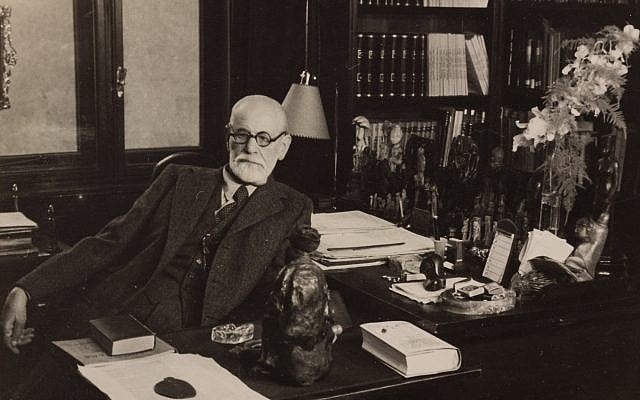
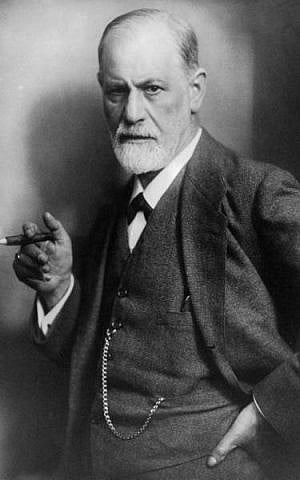
It was there that the flourishing of writing, thinking, and artistic creation played a significant role in the emergence of modern Western culture. And, of course, it is almost impossible to reference that time and place without mentioning the father of psychoanalysis, Sigmund Freud.
Freud’s standing in intellectual, medical, and academic circles tends to change as frequently as trends do in the fashion industry, Tallis says, while insisting that it’s essential to take a broad view to appreciate what the father of psychoanalysis got right.
“There are many questionable aspects of Freudian theory, but he put sexuality center stage of the human condition, [something] he was hugely criticized for doing at the time,” says Tallis.
The conversation soon turns to Freud’s Jewish background and the impact it had on the evolution of psychoanalysis. In 2014, another British practicing psychotherapist, author, and Freud biographer, Adam Phillips, told The Times of Israel that it is “misleading to ascribe psychoanalysis with too much Jewishness attached to it.”
But Tallis believes that in spite of Freud’s staunch secularism and self-confessed atheism, his links to Jewish mysticism are too “conspicuous” to ignore. Freud purposely eschewed public attention to these links, says Tallis, because he wanted psychoanalysis to have a broad global appeal rather than being viewed as a narrow pseudoscience aimed exclusively at Jews.
This certainly gives the title of Freud’s magnum opus, “The Interpretation of Dreams,” another layer of metaphorical and cultural meaning, Tallis says.
“In Kabbalah the interpretation of text and the power of words are both very significant,” says Tallis. “You see a lot of that in Freud’s writing — the interpretation of dreams, or the interpretation of minds, and that there are deeper meanings and concealed meanings that you have to penetrate a superficial level to get to a deeper level.”
“This adds [weight] to the argument that Freud possessed books of Kabbalah and that there is a strong link between psychoanalysis and a Kabbalistic approach to the mind,” he adds.
Tallis is also keen to stress that psychoanalysis is as much about narrative, mythology, art and story, as it is about science, conversation and compassion.
Indeed, Freud was just as likely to turn to Dante, Shakespeare, Goethe, or Sophocles for intellectual guidance on the paradoxical contours of the human mind as he was to look to clinically proven scientific empirical evidence — a subject Tallis returns to many times in his latest book.
We can see this, he says, in the similarities that exist between the underworld in Western literature and the Freudian notion of the unconscious: both are a metaphorical reservoir where feelings, thoughts, urges, and memories that lay outside of our conscious awareness secretly reside.
“The idea that the underworld is the unconscious relates to the symbolism one finds in art,” says Tallis. “Freud didn’t invent the unconscious; you can find references to the unconscious going right back to the Bible. So these ideas of the underworld having these shadow recesses representing something in us that is deep, dark, and strange, have been around long before Freud.”
The little death
The underworld is a metaphorical milieu that explores what is perhaps the greatest cause of anxiety for any human being throughout his or her short lifespan — the fear of death. Citing the work of a number of existential psychotherapists, Tallis notes that sex and love can provide temporary relief not just from the idea of death itself, but also from the painful effects of human solitude.
In the ecstatic delirium of orgasm we “become boundless and eternal, beyond death’s reach,” says Tallis. He goes on to say that sex and death are closely interrelated in a number of ways, noting that in some instances individuals seek an orgasm not just as a route to instant pleasure, but as coping mechanism to overcome the fear of death.

“People who take part in compulsive sexual behavior are often doing that because they are trying to fend off death and use it to combat their own sense of mortality,” Tallis explains, as the conversation winds down.
“When we orgasm it’s probably the closest we get to an altered state of consciousness without taking drugs, Tallis concludes. “The loss of identity at the point of orgasm is a kind of personal loss of self and a small death of the ego.”










The Times of Israel Community.