

Top health official: Signs of infection slowdown, but caution still needed
Chezy Levy says too soon to tell if lower test rate and lower number of new cases is a trend; IDF task force says transmission rate still quite high, indicating undetected cases
 Add ToI as a Preferred Source on Google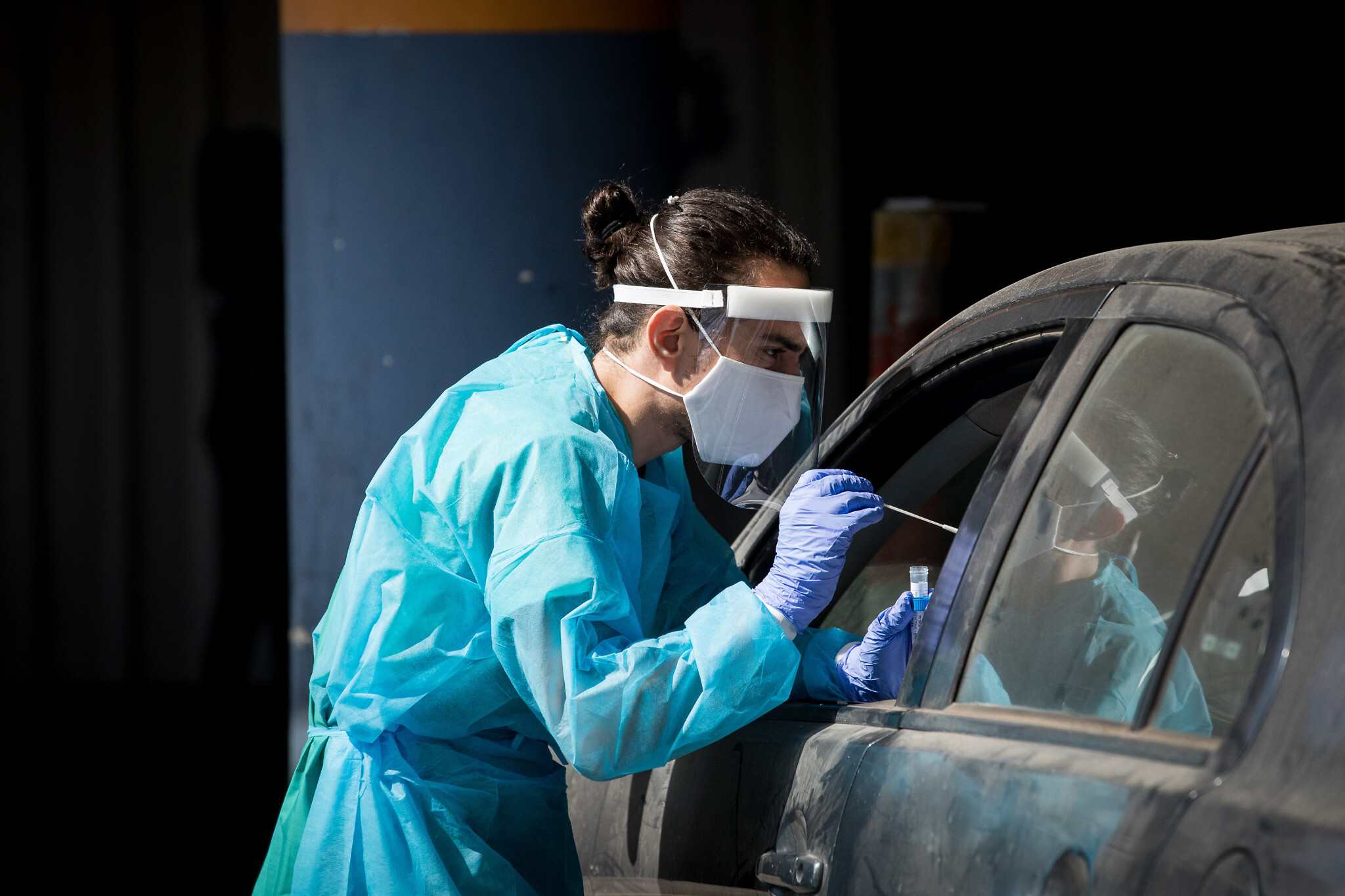
The director-general of the Health Ministry on Sunday morning sounded a cautious note of optimism as infection rates appeared to show signs of a slowdown in both the number of new daily cases and the positive rate of tests.
“We need to be careful, but there is a trend of a slowdown in morbidity, which is reflected in both the number of those who test positive and the percentage of those who test positive,” Chezy Levy told the Kan public broadcaster.
“We’ll have to wait a few days to see if this is a trend. We have high numbers, but in recent days we have not seen the 7,000 we have previously seen and this is cause for optimism,” Levy said. “This is due to compliance with the lockdown rules. If we continue to travel on the roads unchecked and to congregate, we will not be able to prevent the increase in morbidity.”
Levy also addressed the issue of the protests against Prime Minister Benjamin Netanyahu, pushing back against claims the limits on gatherings were politically motivated. “Anyone who claims that I oppose the demonstrations is being political,” he said. “I meant all the gatherings, in all sectors. Although there is less infection in the open, it also depends on people’s conduct.”

His comments came after the Health Ministry said Sunday morning that there was an 11 percent positive rate in testing levels a day earlier, in what appeared to be a continuation of a slowdown.
There were 2,557 new cases of coronavirus diagnosed on Saturday, the ministry said. Numbers of new cases are typically lower after weekends and Jewish festivals, when testing levels are down.
The Health Ministry said 24,781 tests were performed on Saturday. In recent weeks testing levels have been between 50,000 and 60,000 on average weekdays, with positive rates reaching around 15% on some days last week.
Dampening the optimism, a report by the IDF’s Coronavirus National Information and Knowledge Center said that the positive test rate was still relatively high and indicated “a much wider scope of morbidity than actually detected,” noting a longer period of time would be required to confirm a downward trend.
Computational biologist Eran Segal of the Weizmann Institute said that there were signs that the infection rate was beginning to crest in some sectors of society, but that the ultra-Orthodox community, where there are widespread reports of noncompliance, was not showing signs of a slowdown in transmission.
There is “cautious optimism,” Segal told Channel 12 news. “But the ultra-Orthodox — still at the peak of the spread.”

“There is a decrease in morbidity in Arab society — the basic reproduction number is below 1, and we are also seeing a decrease in the number of verified and hospitalized cases,” he told Army Radio.
“Our recent models show that among the general [non-ultra-Orthodox Jewish] sector there is also a curb in morbidity. The basic reproduction number is around 1 and in a declining trend,” Segal said.
According to the scientist, the positive test rate in the general population was 10%, and within the Arab community it was 13%. However the ultra-Orthodox community still had a proportionately high rate of 28% and Segal struck a general note of caution.
“The level of morbidity is high, so braking [with a lockdown] is a necessary first step, but from here we need to see a transition from braking to a downward trend to low levels that can be controlled with an array of epidemiological investigations,” he said.

Another 49 COVID-19 deaths were added to Israel’s count over the weekend, the Health Ministry reported Saturday evening, bringing the national toll to 1,682. That number stayed steady on Sunday morning.
It was not clear whether all 49 deaths occurred over the weekend or if some had been retroactively added to the count.
The Health Ministry said Sunday there were 840 people in serious condition, with 223 on ventilators. Another 312 were in moderate condition and the rest had mild or no symptoms.
The total number of coronavirus infections since the pandemic began stood at 264,857, of which 70,172 were active cases.
Israel currently has the world’s worst daily coronavirus infection rate per capita, according to several organizations tracking the virus, including John Hopkins University. Worldometer shows Israel is now the fifth in the world for cases per capita, behind only Qatar, Bahrain, Aruba and French Guiana.
Prime Minister Benjamin Netanyahu warned Thursday that if the national lockdown to curb the ongoing coronavirus outbreak does not reduce infection rates, restrictions will be further tightened.
“On Monday we’ll make a decision on the continuation of the lockdown — tightening or release,” Netanyahu said in a Facebook Live video post during which he answered questions from the public.
After a massive spike in coronavirus cases, Israel on September 18 entered its second national lockdown, which has seen most shops and businesses shuttered along with the education system and most Israelis confined within a one-kilometer (0.6-mile) radius of their homes except for essentials like food and medicines. It began as a somewhat loose three-week closure and was later significantly tightened.
Last Wednesday — which saw the highest number of confirmed cases in a single day so far, with 9,013 people diagnosed as infected with the virus — ministers voted to extend the lockdown to October 14.










The Times of Israel Community.