

Trump’s ‘xenophobic’ green card halt ‘vilifies’ immigrants, says leading lawyer
International Refugee Assistance Project head Becca Heller says moratorium on issuing work permits ignores sacrifices made by non-citizens on ‘front line’ against COVID-19
 Add ToI as a Preferred Source on Google
Reporter at The Times of Israel
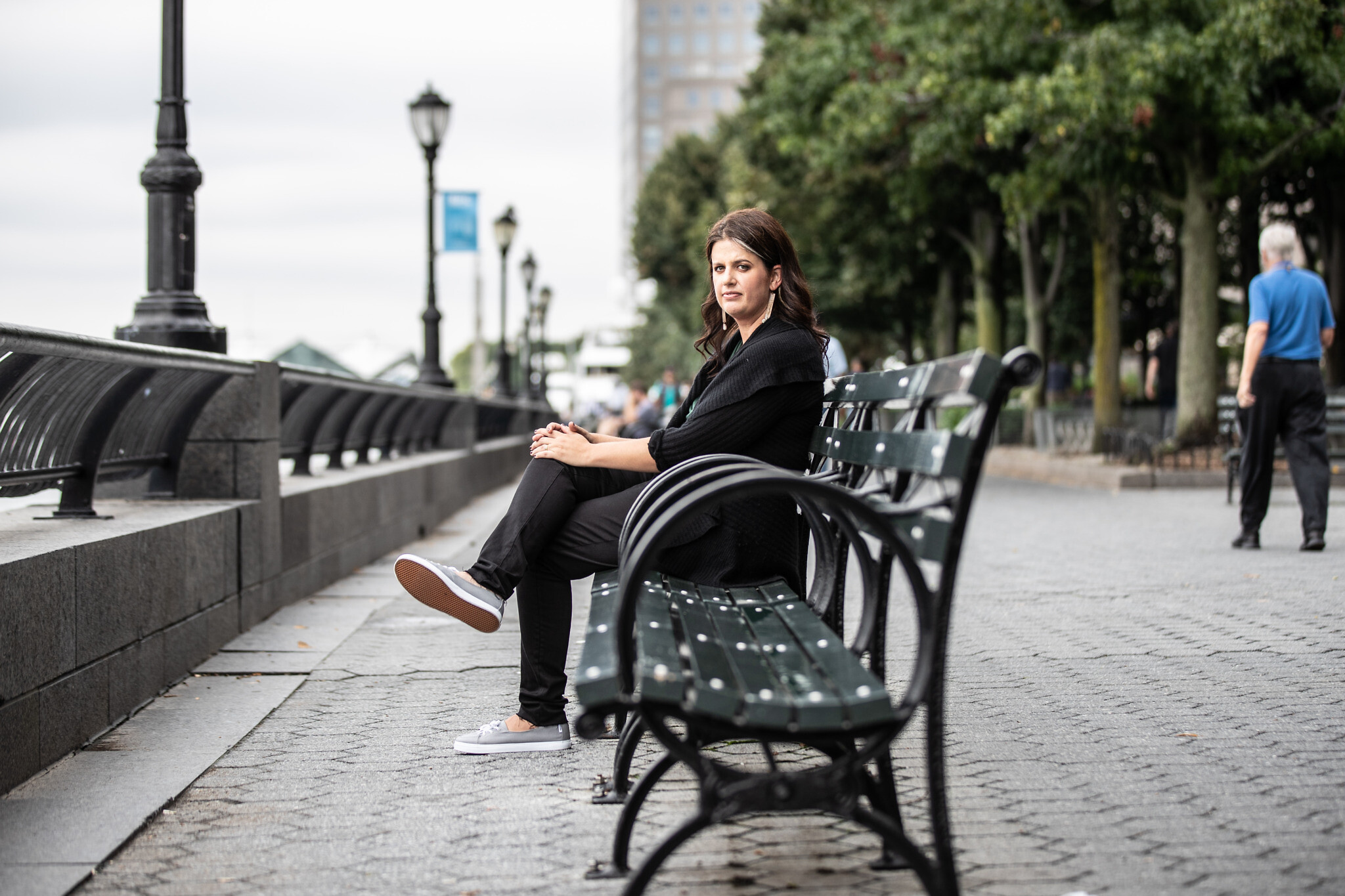
NEW YORK — Sometimes when Becca Heller looks at her four-year-old daughter she thinks about chance.
“Citizenship and birth are such accidents. The fact that you’re born in a certain time and place can be a death sentence. And that’s not really a world I want to live in,” said Heller, co-founder and executive director of the International Refugee Assistance Project (IRAP).
That thinking goes to the heart of why Heller founded IRAP in 2008. She wanted to provide pro bono legal representation to refugees and displaced people escaping war, political upheaval, and persecution. And while the organization has always operated with resolve, the coronavirus pandemic has added a new sense of urgency to their work as the Trump administration has used the crisis to clamp down on immigration.
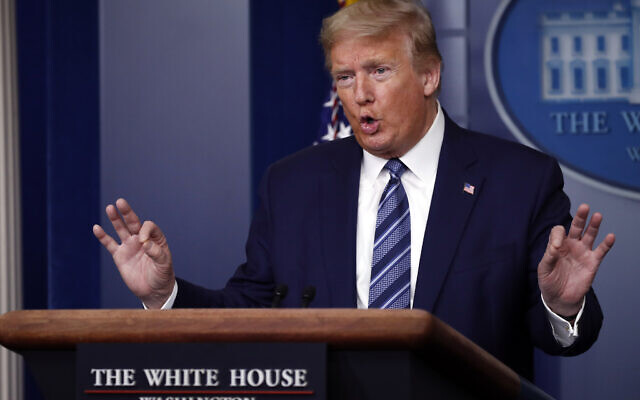
On April 21, US President Donald Trump announced a 60-day halt on all new green cards to limit competition for jobs lost because of the coronavirus. The order, which doesn’t apply to immigrants already living in the country who want to become legal permanent residents, also stopped short of Trump’s original intent to halt all immigration, including guest worker programs.
“Instead of addressing the real problems families face due to the pandemic, the Trump administration is harming more families with his xenophobic order,” Heller said. “Many immigrants are essential workers working on the front lines of the COVID-19 response. This executive order not only ignores their contributions but actively vilifies them.”

The order came just weeks after IRAP, together with more than 100 advocacy organizations, implored the Department of State and the Department of Homeland Security to extend validity periods for visas and other entry permits to ensure immigrants and refugees won’t lose their permission to enter the US because of coronavirus.
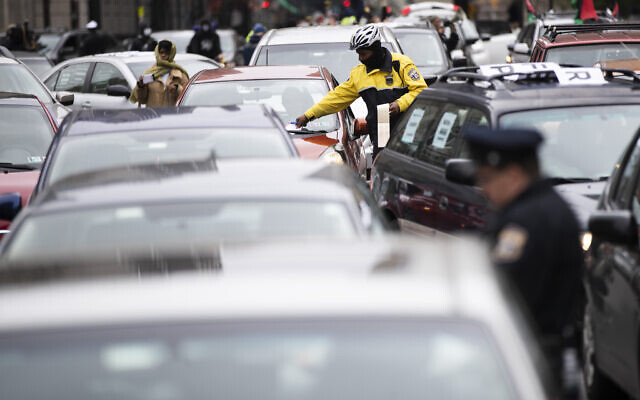
IRAP’s work to safeguard immigrant and refugee rights first gained widespread attention in October 2017 when Trump signed an order barring travelers from seven Muslim-majority countries from entering the United States. At the time the nonprofit deployed scores of lawyers to airports across the country to counsel people who were detained and threatened with deportation.
A 2018 MacArthur Foundation “Genius” Fellow and a 2015 recipient of The Charles Bronfman Prize, Heller was first drawn to the legal challenges facing refugees in 2008. She was living in Israel during her Kirby Simon Fellowship from Yale Law School and traveled to Amman, Jordan. At the time she wanted to learn more about the lives of Iraqi refugees.
Twelve years later Heller reflected on that trip.
“To be honest, I actually think what I did was not that great. There was a poverty tourism element to it. I don’t think it’s that cool to learn about a situation by throwing yourself into it and making people talk to you if you don’t have anything to offer,” she said.
“I think it’s one thing if you’re a human rights reporter and you’re going to put out a report for advocacy, or you’re a journalist and you’re writing a story. It played out okay in the long run, but looking back part of me grimaces a little bit with the ‘white savior complex’ element of it,” said Heller.
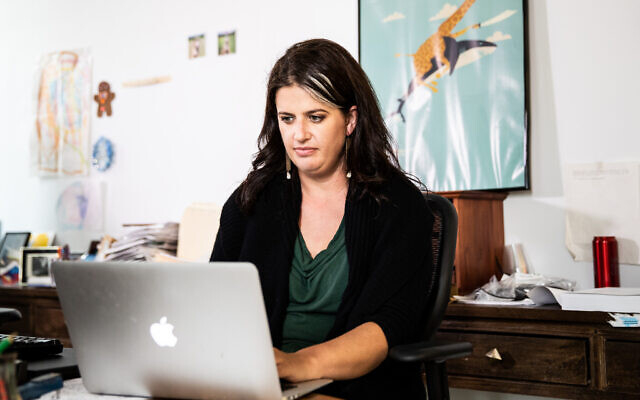
Some might argue it turned out quite well.
With a $6.5 million budget, IRAP collaborates with 1,200 students from 29 law schools in the US and Canada, and attorneys from more than 120 international law firms and multinational corporations.
“What we’re trying to do is to ensure that people who can no longer live in one place can legally, safely and in a way that respects their human rights get to another place. Full stop. It’s pretty simple,” Heller said, twisting a purple pipe cleaner around her fingers.
The following conversation was edited for brevity and clarity.
Does your family history include a refugee story?
We’re Jewish, and when you have 5,000 years of Diaspora usually you can find someone who was forced to flee. We don’t know a lot of our family history because so much of it disappeared during World War II.
The people in my family who got out were the ones who got out at the turn of the last century. The ones who didn’t get out were killed. They didn’t have the opportunity to become refugees, which of course was a huge problem with the Jewish population across Europe in WWII.

What part of your Jewish identity do you bring to your work?
As a kid growing up I was obsessed with this. When I was 11 I read this book, “The Devil’s Arithmetic.” It’s a book for children about concentration camps and it really messed with my head. It’s about this girl at a Passover seder who has an out-of-body experience and switches identities with someone in a concentration camp.
At an early age I became so obsessed with this sense of, but for cosmic good or bad luck, I would or would not be sitting at the dinner table. I had this sort of strange obsession about whether I would have survived a camp. Then that idea moved on to, “Wow, isn’t it lucky that I was born in Berkeley, California, in 1981 and not in Warsaw, Poland, in the late 1920s?” And now all of these elements of birth and citizenship are playing out again today.
President Trump recently expanded the travel ban to six new countries: Eritrea, Kyrgyzstan, Myanmar, Nigeria, Sudan and Tanzania. Will IRAP take legal action?
It’s different than litigating the first ban because the Supreme Court said that ban is okay. So this makes it tougher to pursue new litigation. With the Supreme Court as it is I’m not optimistic about the likelihood of success.
But I do think it’s really important not to let it go unchallenged because regardless of what the Supreme Court says, the ban is illegal; it targets people because of their race or national origin. It’s important to keep going to court and saying that. It’s equally important to couple a legal challenge with some kind of media or advocacy campaign so you can mobilize people.
How will the Supreme Court’s decision allowing the Trump administration’s public charge rule impact your work?
The public charge rule does not apply to refugees, but where it will intersect with our work is on family reunifications. It means your family can’t come into the United States unless you fill out a bunch of complicated financial documents that largely don’t make sense, about finances that you may or may not have. It goes squarely against the first lines on Statute of Liberty: “Give me your tired, your poor, your huddled masses.”
Give me your tired, your poor, your huddled masses
The public charge rule was largely the work of Trump adviser Stephen Miller; can you talk about his role in these policies?
It’s hard to pick one bureaucrat and say it’s this bureaucrat’s fault.
I certainly think a lot of the ideas are his, but the system is also allowing those ideas to become policy. It ranges from complacent legislators who could actually pass legislation repealing the Muslim Ban for example, or pass a piece of legislation called the Grace Act, which says the US has to let in a minimum of 90,000 refugees every year. These things have bipartisan support, but they’re just not getting anywhere because you have partisan deadlock in the legislature.
So you have a legislature that’s not a meaningful check and a Supreme Court that is willing to wave everything through, no matter what it says. So that’s where guys like Stephen Miller get really dangerous.

Even if Trump isn’t re-elected come November, the judiciary isn’t going to change right away.
The Supreme Court is a really, really big problem for immigrants and refugees right now. They’re basically willing to rubber stamp some really blatantly unconstitutional and discriminatory policies. I think we’re going to see a real impact on the social fabric of our country, our economic well being, and our national security as a result of this crack down on immigration.
But I also think you have — short of the Supreme Court — judges who really are scared about the crumbling rule of law. Some of the judges who have made the most important rulings in refugee and immigrant cases are George Bush appointees. They’re conservative, but they still think we should have the rule of law in this country and that there shouldn’t be totally unchecked executive power.
How do you change the opinion of those who hold that refugees are coming here to either do harm or take advantage of the country?
The thing about almost all refugee families is that they’re incredibly tenacious, creative bad asses. Having the fortitude and mental acumen to get yourself out of that situation self-selects for a really impressive group of people who have a ton to contribute to society, if only society would let them come in and contribute.
The thing about almost all refugee families is that they’re incredibly tenacious, creative bad asses
I also think every single study has repeatedly disproven the economic and national security arguments. Numerous studies have shown that immigrants and refugees are critical to economy. A lot of sectors are suffering because of the draconian policies of this administration. People can’t fill certain jobs, whether in tech, or farming or nursing.
What’s the next for IRAP?
Climate refugees.
It’s a fact that people who are poor and live in places with bad infrastructure are going to be the ones hit first and hardest by climate change. It’s going to mean your home is underwater, or there’s a disease you can’t get away from, or there’s a drought, or there’s a war over limited national resources.
The climate is going to displace a larger number of people than anything else. We’re going to partner with the National Resources Defense Council on an initial scoping and mapping project and try to figure out what’s already happening and where there are possible opportunities for new programming.
What’s something that makes you feel optimistic?
I’ve been really heartened by the Jewish community response to things like kids getting put in cages and people getting put in camps. I’ve been really heartened to see Jews of all political stripes responding.
Immigrants and refugees are not a Republican or a Democrat issue. It’s really about what you think democracy is about. Do you take the promise of the Constitution seriously? Are we committed to the American experiment?
To see Jewish Americans standing up makes me really grateful.









The Times of Israel Community.