

While Hebron gets the press, Jenin and Tulkarem are the sleeping giants Israel should be worried about
Maj. Hanan Shwartz of the Menashe Brigade discusses Palestinian security cooperation, olive harvests and the round-the-clock effort to keep two West Bank cities calm
 Add ToI as a Preferred Source on Google
Judah Ari Gross is The Times of Israel's religions and Diaspora affairs correspondent.
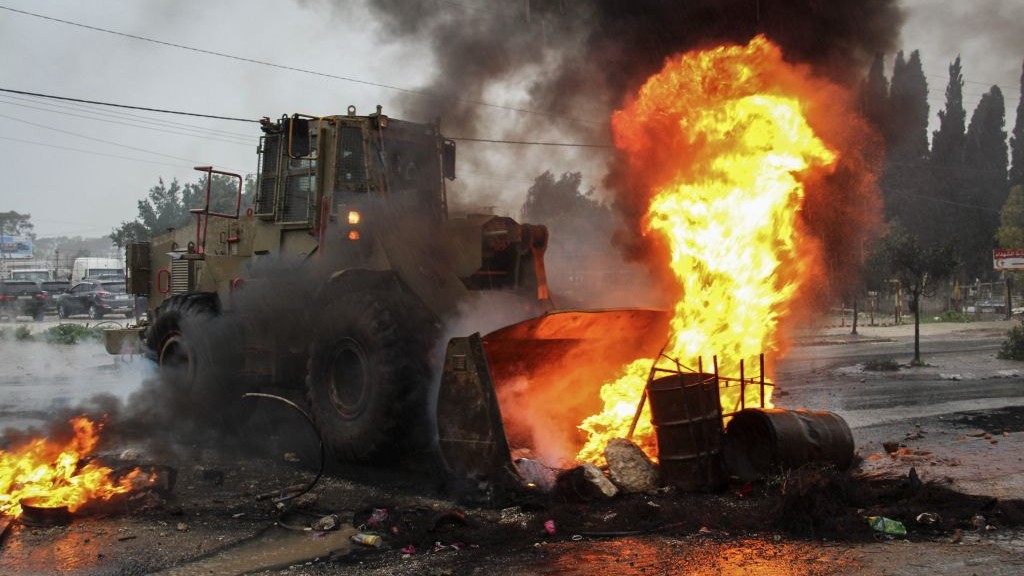
Though Palestinian violence and terrorism in Jerusalem and Hebron dominate headlines, it’s Jenin and Tulkarem that keep Maj. Hanan Shwartz up at night.
The chief operations officer for the IDF’s Menashe Brigade, Shwartz warns that those two northern West Bank cities — hotbeds of terror activity during the Second Intifada — could again become fountainheads of violence against Israeli civilians and security forces.
“I’m always worried,” he said.
Most of the violence in the past year has either been carried out in cities and towns in the southern and central West Bank, or by residents of those areas.
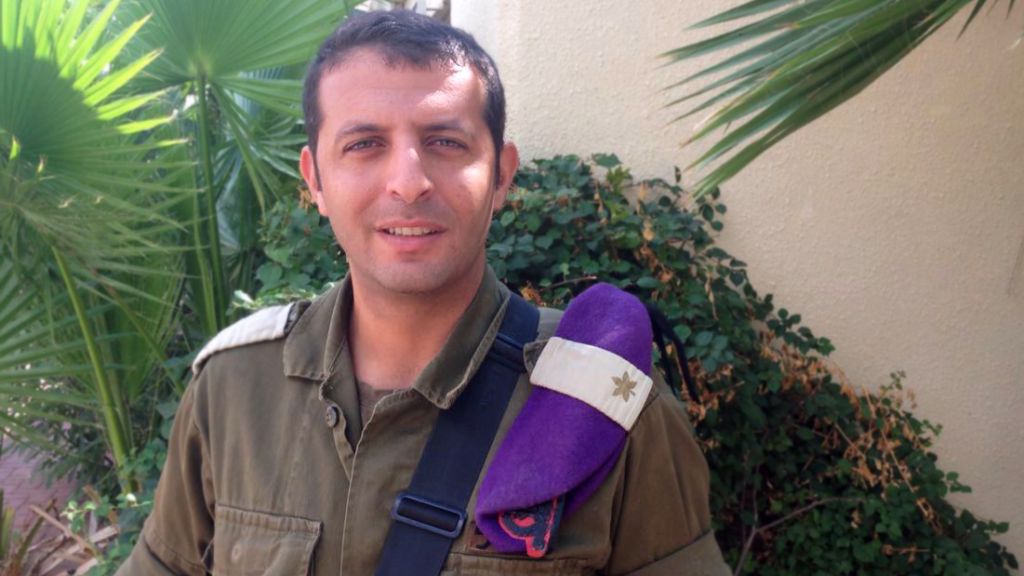
“But the potential damage from Jenin outweighs them all,” Shwartz told The Times of Israel last week, on a hilltop overlooking the region.
All it would take is “that thing that breaks the jar” and lets that violence out, he said.
In the few days since Shwartz issued this warning, Jenin has somewhat proven his point. Early Monday morning, IDF troops uncovered a trove of illegal weapons — mostly pistols and jury-rigged guns cobbled together out of serially produced components — and arrested six people in the West Bank city, one of them an alleged member of the Hamas terrorist group.
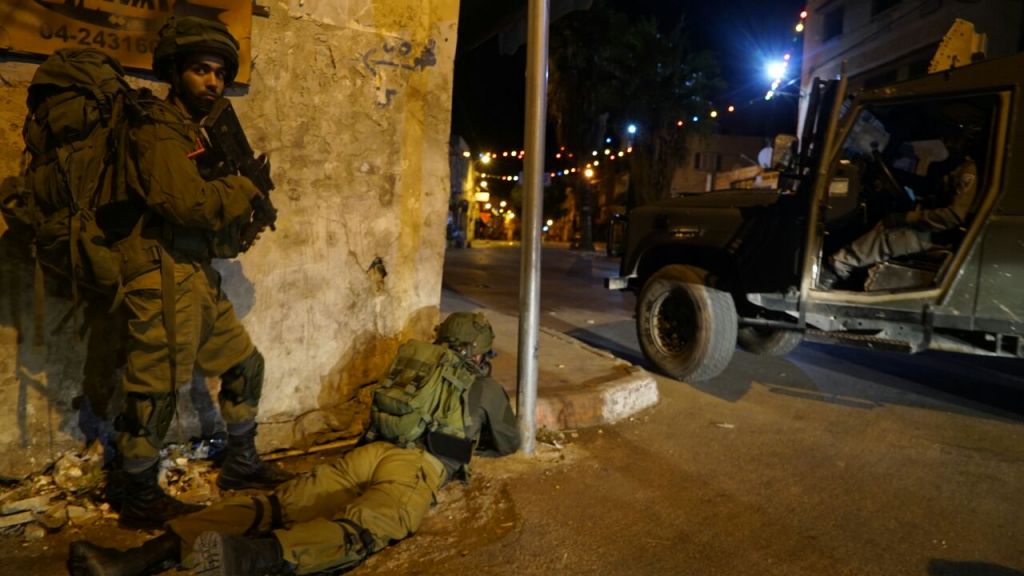
“We’ve been investing more in resources in the issue of illegal weapons,” he said. “But it’s Sisyphean work.”
Shwartz “grew up” in the Givati Brigade’s reconnaissance unit. For the past year, the 31-year-old husband and father has served in the Menashe Regional Brigade, his first staff position after nearly 14 years in the field.
The brigade is responsible for the security in the northwest portion of the West Bank, a section of land with 72.7 miles (117 kilometers) of fence dividing it from the cities of Netanya and Hadera to the west and Megiddo, Afula and Mount Gilboa to the north.
While the Menashe Brigade has thus far kept Jenin and Tulkarem out of the mix, Shwartz said that speaks only to past successes, not future ones.
“If everything is okay now, it means I worked well yesterday. If I want to have a good day tomorrow, I have to work hard today,” he said.
Security cooperation
Despite the threat, Jenin and Tulkarem have faded somewhat into the background of Israeli consciousness.
There have been some notable exceptions. The attack that killed 19-year-old Border Police officer Hadar Cohen in February was carried out by residents of Qabatiya, outside Jenin. And more recently, two female soldiers who accidentally entered Tulkarem earlier this month found their vehicle under attack by local residents. They were rescued by Palestinian police officers, who kept them safe until they could be escorted out of the city.
The incident ended in under two hours and without injury. It also shed light on the tight cooperation between the IDF and Palestinian security mechanisms, Shwartz said.
“They brought us everything — the soldiers, the car. The Palestinian police are doing good work,” Shwartz said.
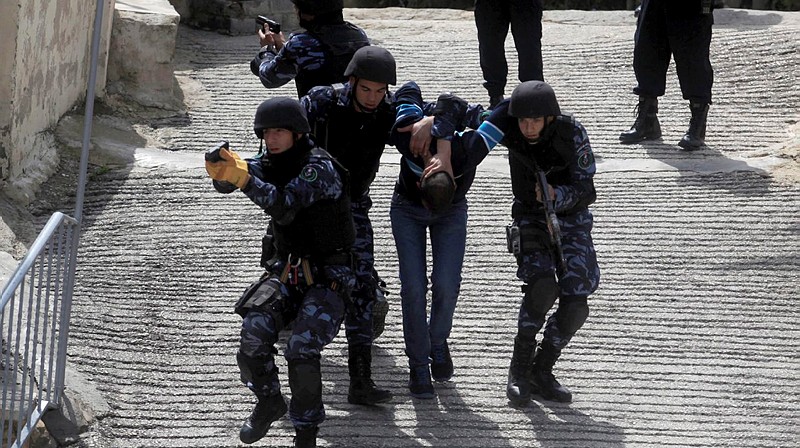
“We have an enormous appreciation for the Tulkarem police department,” he added.
Shwartz sees clear benefit in the security cooperation between the IDF and the Palestinian Authority.
“It’s one of the successes that has been most meaningful for us,” he said. “I hope that it’s mutual.”
In the past year, Palestinian police officers and members of the Palestinian Authority security services have foiled uncounted attacks against Israelis, he said.
For instance, in April, PA police arrested three Palestinian teenagers — one of them from Jenin — armed with a submachine gun and grenades, who were allegedly planning to carry out a terror attack against Israelis.
But while the IDF may see PA police in a positive light, within Palestinian society there is considerable tension. Last month, PA security forces clashed with Nablus residents who took to the streets after a suspected criminal was beaten to death while in police custody.
Nowhere to unload
Cooperation between the Palestinian Authority and Israel is not the only thing preventing Tulkarem and Jenin from fully taking part in terror attacks over the past year; part of it is geographic.
Without a large-scale IDF presence within the Palestinian cities — as there is in Hebron — a Palestinian who wants to carry out an attack because he’s been influenced by incitement or knows someone arrested, killed or injured by Israeli forces, who wants to carry out an attack, “doesn’t have a place to unload his fury,” Shwartz said.
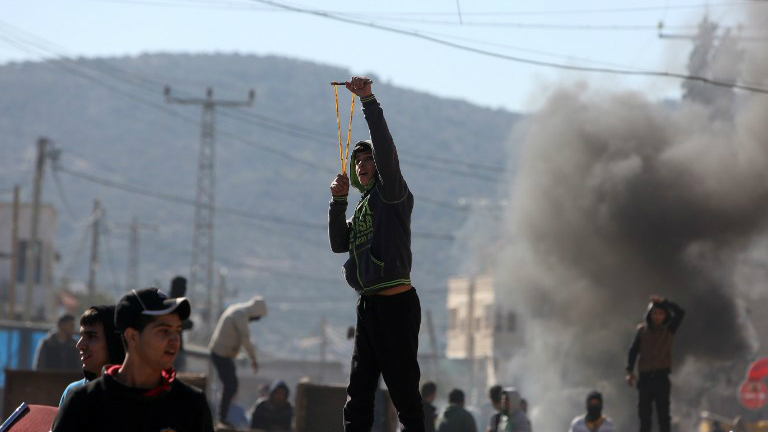
There are not as many Border Police officers on patrol to shoot or soldiers manning checkpoints outside his neighborhood to stab. Instead, that “furious Palestinian” must go to a fence to throw rocks or travel elsewhere — the relatively nearby Tapuah Junction or the farther Jerusalem — to carry out an attack, which acts as a natural disincentive.
That distinction also changes the way Israeli troops operate. Unlike in the southern and central West Bank, where soldiers split their time doing both security and counterterrorism operations, in Shwartz’s Menashe Brigade far more effort is put into the latter, as there are fewer settlements to guard, he said.
“There’s a whole lot of counterterrorism activity, and a whole lot of intelligence gathering,” Shwartz said.
“People know that if they express something [online] that makes it sound like they’re going to carry out an attack, we’ll come knocking,” he said.
Seeing a connection between social media posts and attacks, Israeli security forces have increasingly monitored popular websites and made arrests. In 2016, some 145 Palestinians were indicted for online incitement, according to the Associated Press.
For love and money
There are also economic reasons for the residents of Jenin and Tulkarem to maintain the quiet.
A stabbing attack at the Reihan, Eyal, Gilboa or Ephraim Gate checkpoints would shut down the crossing for at least a day, Shwartz said, meaning the “hundreds, maybe thousands” of Palestinians who enter Israel through any one of those checkpoints each day would be out of luck.
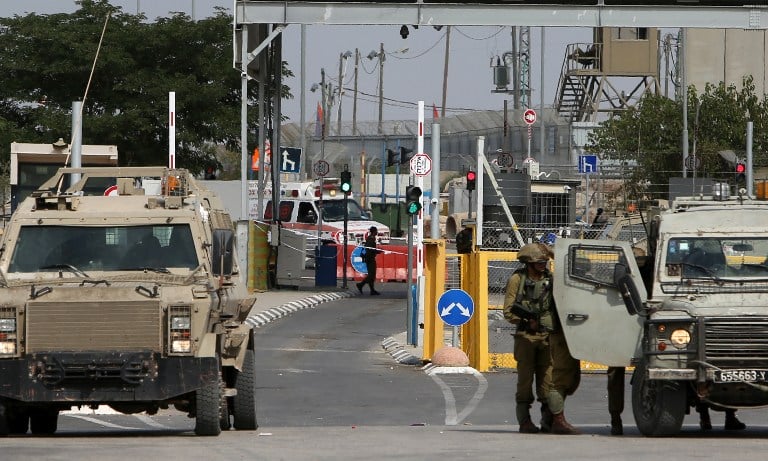
“If someone tried to carry out an attack with a knife, the person who would stop him is a member of his family, his neighbor. It would probably happen before we even noticed,” Shwartz said.
While the operations officer may be right, examples of such an incident are hard to come by, as Palestinians are generally loath to appear as collaborators with Israel.
There is, however, evidence of the ramifications Shwartz discussed. After a series of attacks and attempted attacks at the Gilboa Crossing, north of Jenin, the checkpoint was shut down for two days, in a move decried by locals at the time as an act of collective punishment.
To Reda Jaber, head of the Aman Center – The Arab Center for Safe Society, the reason has less to do with economic concerns than emotional ones.
“There’s no father or mother who sees their 16-year-old daughter or 13-year-old son going out with a pocket knife to a checkpoint where there are soldiers with M-16s, and doesn’t oppose it,” Jaber said.
‘To the last olive’
The coming month will see the convergence of two sensitive time periods in the West Bank: the Jewish High Holidays and the olive harvest.
The beginning of the Jewish lunar year — normally September and October — has regularly been a time period “susceptible to spikes in violent Palestinian activities,” according to military officials.
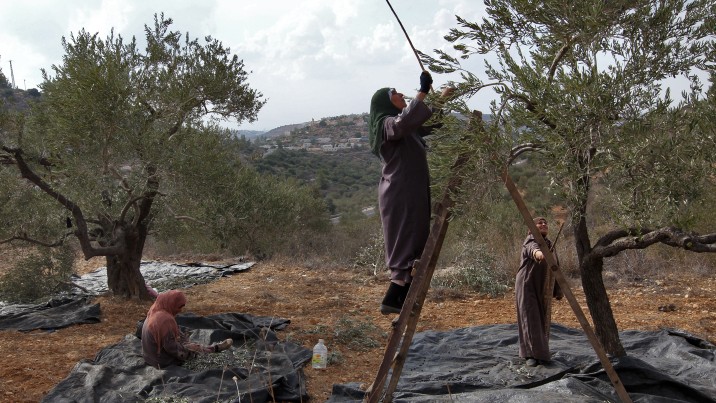
The annual olive harvest, meanwhile, is an event of immense cultural, economic and historical importance to Palestinians, which has in the past been marred by attacks on harvesters and on the olive trees themselves, sometimes by residents of nearby settlements.
A 2006 Supreme Court decision, won by the Rabbis for Human Rights group, guaranteed Palestinians the right to harvest their olives, with Israeli military protection.
Yet according to the Yesh Din human rights group, from 2005 to 2014 there were 260 attacks on Palestinian olive and fruit trees in the West Bank. The vast majority of those cases — 95.6 percent — went unsolved due to “investigative failures.”
This year’s harvest period, as with 2015, will come on the heels of already high tensions, after a number of attacks and attempted attacks in the West Bank and Jerusalem, which can both serve as a source of inspiration for future Palestinian attacks and a justification for Jewish Israelis to hassle and assault Palestinians.
Last year, that heightened situation meant that some harvests were interrupted and Palestinians were sent out of their groves “for their own protection,” according to Rabbi Arik Ascherman, an activist formerly with Rabbis for Human Rights and now with the Haqal human rights group.
So the pressure will be on for Israel’s security forces to keep the peace.
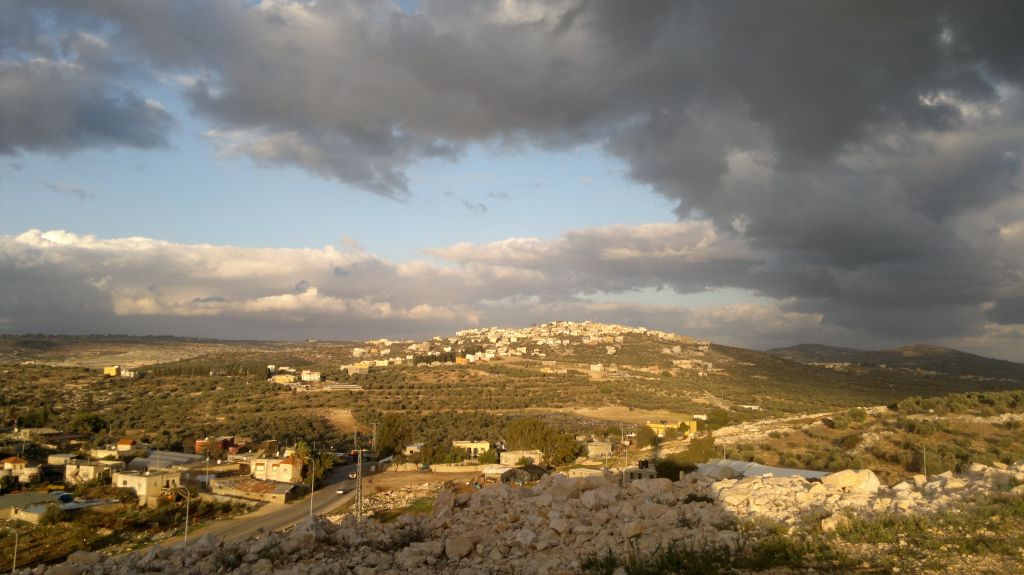
Towards the end of our interview, Shwartz said his overall mission is to make sure that both Palestinians and Israelis can live and let live, to preserve the “fabric of life.”
As such, he said, his soldiers will oversee the harvest to make sure that Palestinians can “pick to the very last branch, the last olive.”
Driving past the pastoral hills, groves and villages in the Menashe region, back to the brigade’s headquarters, Shwartz said, “One of the benefits of serving in this area is that it’s beautiful. Even when you have to do a patrol, you can enjoy the view.”







- Israel & the Region
- Israel Inside
- IDF Israel Defense Forces
- Jenin
- Tulkarem
- Gilboa
- Givati Brigade
- West Bank
- illegal weapons
- Palestinian police
- Palestinian security services
- security coordination
- Preventive Security Services
- High Holidays
- Arik Ascherman
- RHR Rabbis for Human Rights
- PA Palestinian Authority
The Times of Israel Community.