

WHO demands more data on coronavirus from Middle Eastern countries
Confirmed COVID-19 cases have surpassed 18,000 across region, with more than 1,000 deaths recorded in 7 countries, most of them in Iran
 Add ToI as a Preferred Source on Google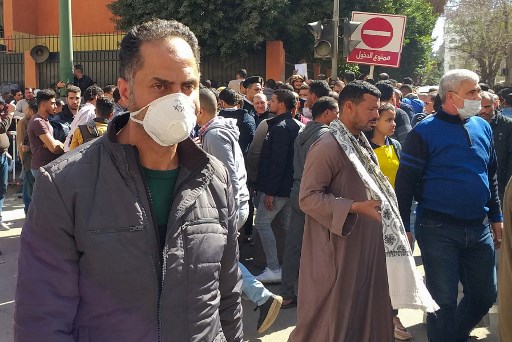
CAIRO, Egypt — The World Health Organization urged Middle Eastern governments Wednesday to be more forthcoming with information about new coronavirus infections in order to effectively combat the global pandemic.
“We can only control this disease if we have access to information that allows us to understand its dynamic in the region,” Ahmed al-Mandhari, WHO’s Eastern Mediterranean director, told an online press conference from Cairo.
“We have an opportunity to contain this pandemic in our region,” he added.
Confirmed COVID-19 cases have reached over 18,000 across the Middle East, with more than 1,000 deaths recorded in seven countries, mostly in Iran.
Despite being geographically located in the eastern Mediterranean, the State of Israel is not included in this WHO region, but is instead part of its European branch for political reasons.
Meanwhile Jean Jabbour, WHO’s Egypt director, explained how two deaths in a village in Daqahliya governorate, 150 kilometers north of Cairo in the Nile Delta, prompted Egyptian authorities to swiftly place 300 families in isolation this week.
“At the beginning when they started contracting the first cases in the village and died, [it] was [because of] a gathering in a wedding. Immediately the ministry took the measures in containing and quarantining the people inside the village, which is around 19,000 inhabitants,” Jabbour added.
Comparing it to Italy, he said the village had “an Italian flavor.”
Italy has become the epicenter of the pandemic in Europe, with more than 2,500 people dying from the virus.
Egypt’s health minister Hala Zayed said on Monday “cleansing procedures” were underway to prevent further infections.
“Now we have more families under quarantine and measures are being so strict in that area in order to avoid the spread to other communities,” Jabbour said, without specifying the total number of people in isolation beyond the 300 families.
Times of Israel staff contributed to this report.







The Times of Israel Community.