

Fearing jihadi attack on Israeli planes, Egypt sends troops to border
Cairo deploys hundreds of soldiers to Taba crossing area to stymie threat of missiles launched against aircraft heading for Eilat

 Add ToI as a Preferred Source on Google
Avi Issacharoff, The Times of Israel's Middle East analyst, fills the same role for Walla, the leading portal in Israel. He is also a guest commentator on many different radio shows and current affairs programs on television. Until 2012, he was a reporter and commentator on Arab affairs for the Haaretz newspaper. He also lectures on modern Palestinian history at Tel Aviv University, and is currently writing a script for an action-drama series for the Israeli satellite Television "YES." Born in Jerusalem, he graduated cum laude from Ben Gurion University with a B.A. in Middle Eastern studies and then earned his M.A. from Tel Aviv University on the same subject, also cum laude. A fluent Arabic speaker, Avi was the Middle East Affairs correspondent for Israeli Public Radio covering the Israeli-Palestinian conflict, the war in Iraq and the Arab countries between the years 2003-2006. Avi directed and edited short documentary films on Israeli television programs dealing with the Middle East. In 2002 he won the "best reporter" award for the "Israel Radio” for his coverage of the second intifada. In 2004, together with Amos Harel, he wrote "The Seventh War - How we won and why we lost the war with the Palestinians." A year later the book won an award from the Institute for Strategic Studies for containing the best research on security affairs in Israel. In 2008, Issacharoff and Harel published their second book, entitled "34 Days - The Story of the Second Lebanon War," which won the same prize.
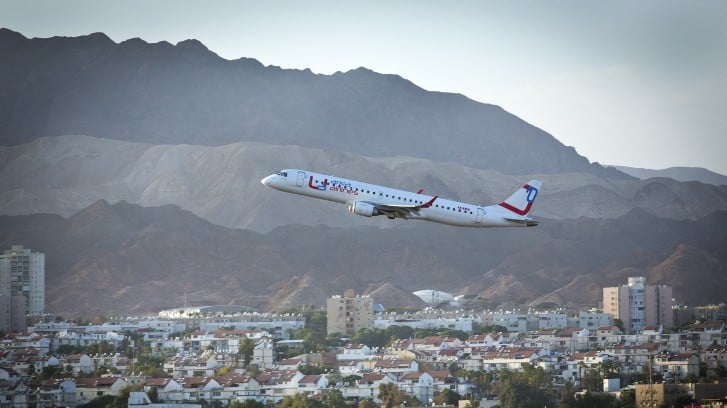
The Egyptian military has deployed a large military force near the border crossing with Israel at Taba in order to prevent rocket and missile attacks on Israel, and especially on Israeli civilian airplanes.
Egyptian sources estimate the force is about the size of a battalion, or several hundred men. The move was coordinated with Israel.
Egypt is concerned that jihadist operatives in the Sinai Peninsula who are affiliated with al-Qaeda may try to down an Israeli civilian aircraft flying near the border during its approach for landing in the resort town of Eilat.
In January, members of Ansar Bayt al-Maqdis, an Egyptian Islamist militant group, downed an Egyptian military helicopter, killing the five officers aboard. Investigation of the incident found that the jihadist group used SA-7 anti-aircraft missiles smuggled from Libya.
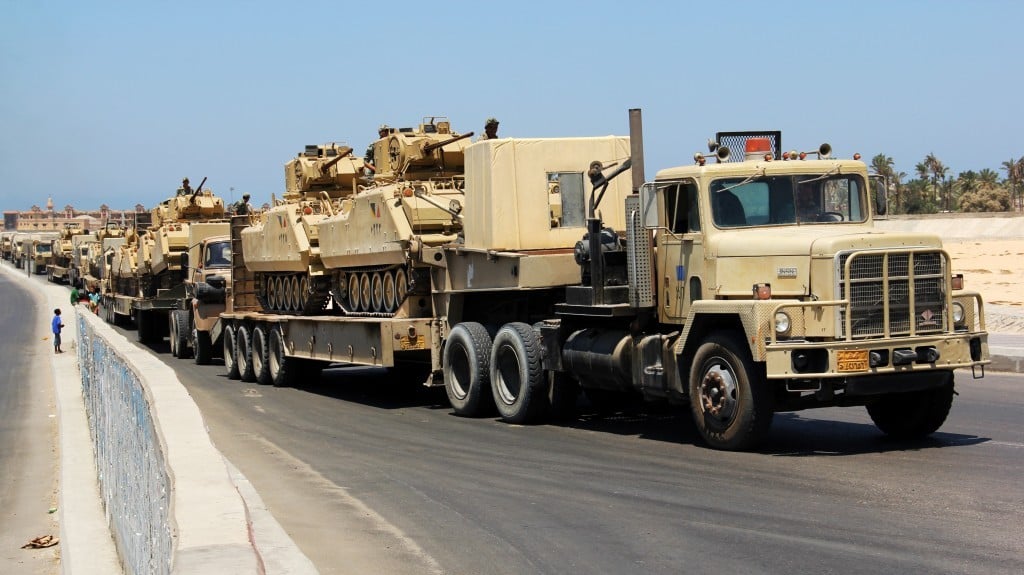
Since that incident, Israeli, Egyptian and Jordanian concerns have increased that these groups will try to down a civilian aircraft within range of such missiles. For that reason the Egyptian Third Army decided to deploy a battalion of soldiers near the Israeli border just outside Eilat in order to prevent similar occurrences.
January’s incident was not the first in which jihadist groups used missiles of this kind. During the attack on an Israeli bus near Eilat in August 2011, in which eight Israelis were killed, an IAF helicopter pilot reported that an RPG was fired at his aircraft. An Israeli investigation found that an SA-7 was used in that attack as well.
The threat of anti-aircraft weapons has the potential to inflict serious harm on the tourism industries of Egypt, Israel and Jordan in the Gulf of Eilat.
Over the past several years, numerous rockets have been fired at the southern port city of Eilat from the Sinai Peninsula. The Egyptian force will also serve to prevent similar attacks on Israeli civilians.








The Times of Israel Community.