

Mubarak and the Material Girl
Eli Yishai recalls some good advice he received from the former Egyptian president and Madonna lights up Tel Aviv
 Add ToI as a Preferred Source on Google
Joshua Davidovich is The Times of Israel's Deputy Editor
For five days, the criminals, the politicians and the hands of God and mother nature decide what is news, yet behold, on the sixth day, the reporters and editors decide what Israeli readers will see, putting their hard-earned features on the front page. Well, unless Madonna is in town.
The superstar/Queen of Pop/diva/Material Girl is about the only uniting factor across today’s Hebrew press, bedecked in a red and white cheerleading outfit on a Ramat Gan stage last night. But enough about her. (Really, enough already).
Yedioth leads off with the news, revealed on Channel 2, the night before, of a hissing fight between outgoing State Comptroller Micha Lindenstrauss and Attorney General Yehuda Weinstein. I won’t bore you with the gory details, but in a nutshell, Weinstein said that Lindenstrauss only a month ago ordered a criminal investigation into the Harpaz affair (in which a document purportedly linked to a member of Former IDF head Gabi Ashkenazi was drawn up to smear a potential successor for the army chief job), even though Lindenstrauss now claims he ordered such an investigation long before. Whew.
Maariv leads off with a warning that Israel will soon have the highest per capita refugee population rate in the West. Citing a UN report that puts Israel in third place with 7.5 asylum-seekers for every 1,000 citizens, the paper predict that within three months Israel will be in first place. Maariv has a large package on life for residents in the Hatkivah neighborhood of Tel Aviv — one of the refugee population centers — and a hard news story on the 11 youths arrested for terrorizing the African population.
The paper also has an interview with interior Minister Eli Yishai, one of the leading proponents of deporting the Africans. Among Yishai’s gems: “The infiltrators and Palestinians will quickly bring us to the end of the Zionist dream. We haven’t had a danger like this since the Second Temple was destroyed.” And “When I was industry, trade and labor minister I went to meet with [Hosni] Mubarak. He told me, ‘are you guys crazy? You are freeing these people and giving them work?’ The party is over.”
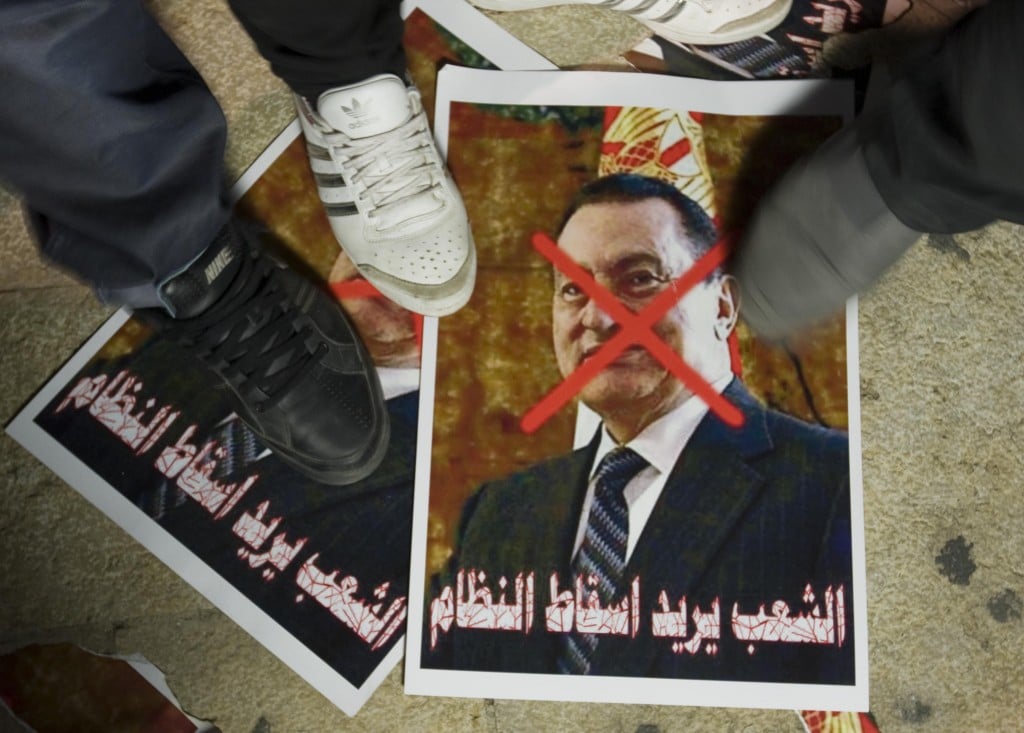
Speaking of Yishai’s good friend and adviser Mubarak, Israel Hayom leads with the news that he will be sentenced tomorrow. Boaz Bismuth writes in the paper that the ruling officials are in a bind. They don’t want to send a sick old man to the gallows, since that won’t look very good. “On the other hand, too light a punishment will bring the youth back to Tahrir,” he writes. “The youth, who saw their revolution snatched away by the Muslim Brotherhood, paradoxically do want too light a sentence, since it will give them a chance to go back to the square and reclaim the revolution.”
Haaretz’s lead story reveals that the government is mulling the possibility of moving the residents of the Givat Ulpana outpost, which is to be evacuated in the coming weeks, onto nearby land that had been appropriated for an army base. The story notes, however, that the High Court has in the past put the kibosh on such a move, since land appropriate for security purposes should be used, well, for security purposes.
The story is strange in light of the fact that Haaretz and Maariv both have stories detailing a letter sent by the state to evacuees of Gush Katif, saying the prefab homes they were to receive will instead go to those kicked out of the Ulpana outpost (and possibly Migron), instead of the families who have been waiting 7 years since their removal from the Gaza Strip. Right-wing MK Zvulun Orlev slams the move in Maariv, calling it “doubly criminal.”
Remembering Lebanon
Today marks 30 years (in the Hebrew calendar) since the start of the first Lebanon war. The continuing decades-long quagmire is sometimes thought of as Israel’s Vietnam war, and Yedioth notes the anniversary by devoting its whole weekend magazine to looking back at the impact the conflict has had on Israel and those who fought in south Lebanon. One piece by Shimon Shafir looks back at what happened in all those secret meetings between military commanders, politicians, Mossad agents and Israel-backed Bashir Gemayel during the early heady days of the war. An accompanying piece by a journalist who was in Lebanon when Gemayel, then president-elect, was killed in a massive explosion in Beirut, describes the scramble to get out as the situation deteriorated. “’Nobody is leaving here until they answer some questions,’ one of the commanders said, pointing his gun at us,” Smadar Pri recalls. “When Gutman tried to take a picture they pushed him with the butt of the rifle. ‘Don’t you dare,’ he warned.”
Another piece reveals the journal of a then-22-year-old soldier serving in the infamous Beaufort fortress in South Lebanon . “It was hell. How much fear there was. We went up there like kamikazes, like suicidal people.”
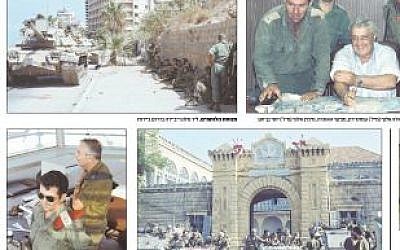
Israel Hayom also marks the anniversary with an album filled with only-recently released photos taken by a general in Lebanon. The photos, first published in Israel Defense this month, show Israeli soldiers outside the American University in Beirut and Israeli warships approaching the Lebanon coast, among others.
Stop being suckers
In Haaretz’s op-ed section, Nehemia Shtrasler writes a paean to Golan Telecommunications for revolutionizing the Israeli market. Now he says, it’s time for Israelis to stop being suckers in other areas: “For example, the big businessmen who took loans from us worth billions, via the provident funds and the banks, and with this money, bought gigantic monopolies and built splendid pyramids that cost us heavily. And when they failed, they tried to get their debt trimmed and continued to live it up at the same crazy standard of living, as if nothing had happened.”









The Times of Israel Community.