

Snubbed in Cairo, Hamas opts for attrition
With drip-drip rocket fire on the south, Hamas hopes it can ratchet up the pressure on Jerusalem for compromise

 Add ToI as a Preferred Source on Google
Avi Issacharoff, The Times of Israel's Middle East analyst, fills the same role for Walla, the leading portal in Israel. He is also a guest commentator on many different radio shows and current affairs programs on television. Until 2012, he was a reporter and commentator on Arab affairs for the Haaretz newspaper. He also lectures on modern Palestinian history at Tel Aviv University, and is currently writing a script for an action-drama series for the Israeli satellite Television "YES." Born in Jerusalem, he graduated cum laude from Ben Gurion University with a B.A. in Middle Eastern studies and then earned his M.A. from Tel Aviv University on the same subject, also cum laude. A fluent Arabic speaker, Avi was the Middle East Affairs correspondent for Israeli Public Radio covering the Israeli-Palestinian conflict, the war in Iraq and the Arab countries between the years 2003-2006. Avi directed and edited short documentary films on Israeli television programs dealing with the Middle East. In 2002 he won the "best reporter" award for the "Israel Radio” for his coverage of the second intifada. In 2004, together with Amos Harel, he wrote "The Seventh War - How we won and why we lost the war with the Palestinians." A year later the book won an award from the Institute for Strategic Studies for containing the best research on security affairs in Israel. In 2008, Issacharoff and Harel published their second book, entitled "34 Days - The Story of the Second Lebanon War," which won the same prize.
Hamas leaders have spent the weekend in Cairo warning that they will leave the ceasefire talks if Israel doesn’t accept their demands. Over and over we’ve heard them saying, “Watch out,” but there’s no sign that the threats are working.
Israel’s delegation is not in Cairo and it’s hard to see why it would be. For now the rocket attacks from Gaza are continuing and Israel has said that it won’t negotiate under fire. Hamas’s demands are far, far from the Israeli position — which speaks of a certain easing of restrictions at the border crossings, but certainly no establishment of a Gaza seaport or airport unless the Strip is demilitarized.
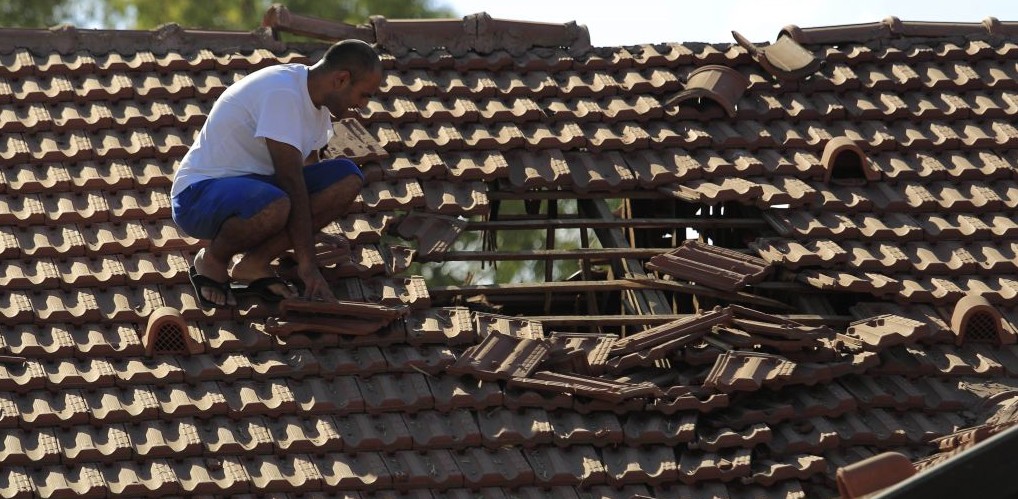
While issuing threats since it ended the truce on Friday morning, Hamas has also, through its actions, been indicating that it is not seeking a dramatic re-escalation of the conflict. Its fire on Israel has been relatively limited. That is to say, fewer rockets than at the height of the fighting, and with the salvos concentrated on the Gaza envelope. Only once, on Friday, was there fire on Beersheba. Also, it’s not actually Hamas that is firing. Hamas is allowing Islamic Jihad and the Popular Resistance Committees to fire but isn’t actually participating itself.
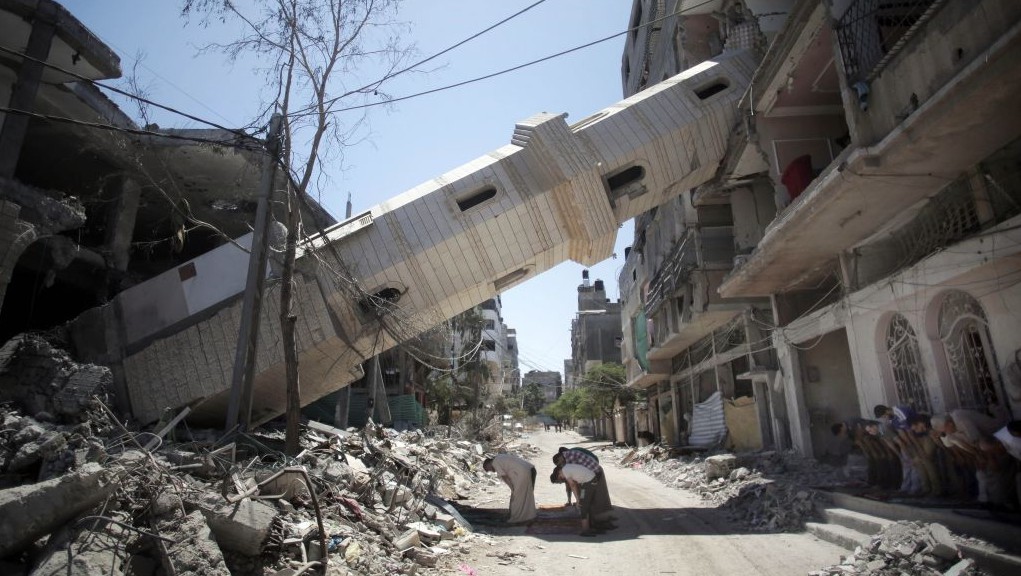
For its part, the IDF isn’t going wild, either, in its response to the drip-drip of rocket fire on the south. There is no ground force activity, and the airstrikes are more pinpointed — focused on rocket-launch cells and on the hideouts where Hamas stores its rockets, such as the mosque in Nuseirat that was hit on Saturday.
Israel and Egypt are jointly determined not to give Hamas what it wants. There’s an Israeli readiness to ease border restrictions and to expand fishing rights off the Gaza coast, but nothing more than that. Cairo, too, is emphasizing to Hamas that it can forget about a seaport or an airport unless or until all of Gaza is demilitarized.
For now, at least, Hamas wants to be seen as refusing to capitulate. Hence its decision to fire — or allow others to fire — a smattering of rockets and simultaneously hold negotiations. It agreed to those 72 hours of a truce, but was actually slammed by some of the Gazan public for halting the fire while getting nothing in return. It knows Israel is not planning to smash it; hence its attempt to steer toward attrition: shooting, but not too much shooting.
Facing this limited attrition, Hamas is hoping Israel will not impose too heavy a price on the civilian population of Gaza — whose situation is getting worse by the minute — and will not ultimately opt to bring down its regime. At the same time, Hamas hopes there’ll be enough pressure on Jerusalem, from the Israeli public and the international community, to compromise — to at least give Hamas some kind of gain that would allow it to come out from the corner it’s painted itself into.






The Times of Israel Community.