

The right decision, bafflingly implemented
Abbas supporters can’t understand why Israel would undermine its positive gesture by releasing the Palestinian prisoners in the small hours of the night

 Add ToI as a Preferred Source on Google
Avi Issacharoff, The Times of Israel's Middle East analyst, fills the same role for Walla, the leading portal in Israel. He is also a guest commentator on many different radio shows and current affairs programs on television. Until 2012, he was a reporter and commentator on Arab affairs for the Haaretz newspaper. He also lectures on modern Palestinian history at Tel Aviv University, and is currently writing a script for an action-drama series for the Israeli satellite Television "YES." Born in Jerusalem, he graduated cum laude from Ben Gurion University with a B.A. in Middle Eastern studies and then earned his M.A. from Tel Aviv University on the same subject, also cum laude. A fluent Arabic speaker, Avi was the Middle East Affairs correspondent for Israeli Public Radio covering the Israeli-Palestinian conflict, the war in Iraq and the Arab countries between the years 2003-2006. Avi directed and edited short documentary films on Israeli television programs dealing with the Middle East. In 2002 he won the "best reporter" award for the "Israel Radio” for his coverage of the second intifada. In 2004, together with Amos Harel, he wrote "The Seventh War - How we won and why we lost the war with the Palestinians." A year later the book won an award from the Institute for Strategic Studies for containing the best research on security affairs in Israel. In 2008, Issacharoff and Harel published their second book, entitled "34 Days - The Story of the Second Lebanon War," which won the same prize.
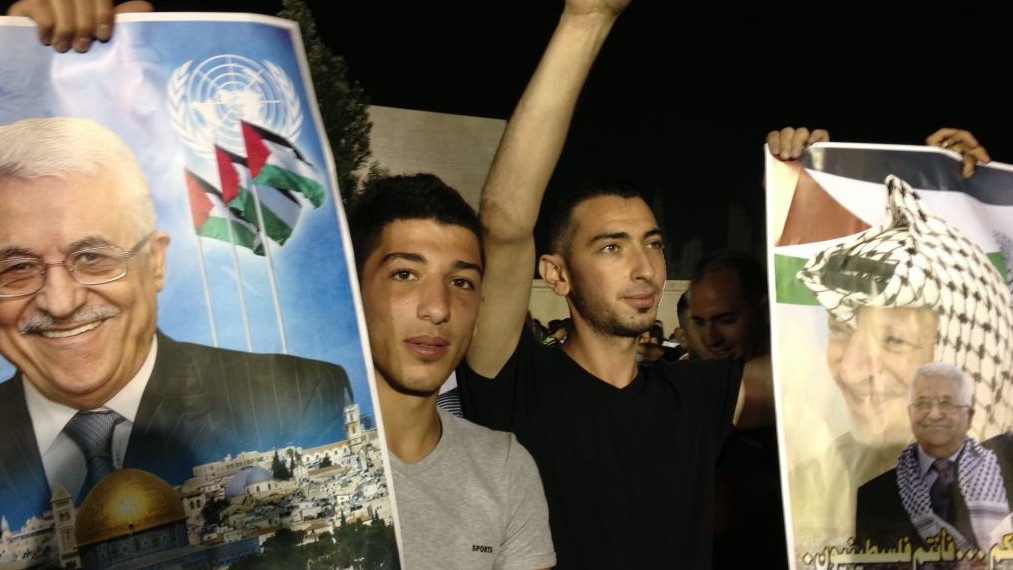
The Beitunia Crossing has “hosted” many released prisoners in the past, but the events there on Tuesday night were highly unusual.
Although the Israeli government agreed to release prisoners as a sign of good-will towards the PA (before resuming negotiations) it made every attempt to hide the festivities. When the same prime minister released 1,027 terrorists with blood on their hands in 2011, including several who would undoubtedly resume terrorist activity once released, he did so in broad daylight and made no attempt to hide Hamas’ extensive celebrations.
In concluding the deal to release Gilad Shalit, Benjamin Netanyahu’s previous government threw Hamas a life preserver, saving the organization as it neared rock-bottom. The atmosphere this week was much different. There was much bitterness in the air. Despite the significance of the gesture to the Palestinian president and people, Israel’s decision to release the long-term prisoners at night was viewed as an attempt to obstruct the peace process.
“Israel decided to impede upon the joy of the Palestinian people” said Amin Shuman, a senior Fatah official who witnessed the scenes. “If the prisoners had been released during the day, there would have been thousands of people here. Israel’s decision was a positive one, but I don’t understand why they insisted on insulting us. Nothing that Israel does can surprise us anymore. It’s like their decision to build in the settlements just as the peace talks begin.”
At 1:05 AM, two minibuses entered the Beitunia terminal located west of Ramallah, carrying 11 prisoners to be released inside the West Bank. Only some 100 people were there to greet them, compared to the thousands that arrived when prisoners were released as part of the Shalit deal or the generous gestures that former prime minister Ehud Olmert made to Mahmoud Abbas.
Dozens of young adults from the al-Am’ari refugee camp in Ramallah arrived, singing and dancing, to greet the released prisoners. A band played windpipes and drums, and loudspeakers were placed on the roof of a sparkling new white Hummer, playing national songs. The minibuses drove into Ramallah surprisingly quickly, without stopping for any kind of ceremony or to allow the prisoners to disembark and acknowledge the people who had arrived to greet them. At approximately the same time, 15 released prisoners entered Gaza, where unexpectedly, thousands of people awaited them.
After a brief drive through the streets of Ramallah accompanied by cries of victory and rejoicing, the newly released prisoners met with Abbas. Their families anxiously awaited them in the square outside the Muqata. Abbas hugged them and promised that the prisoners still being held in Israeli jails would soon be released as well. Seconds later, the prisoners were reunited with their families and lifted high in the air like returning heroes.
These “heroes” included men like Hosni Sawalha from Azmut who murdered Baruch Heisler in 1990, and Taher Zayoud from Silat El-Hartiya who murdered Abraham Cohen in February 1992. These images would be hard for any Israeli to stomach, but it nevertheless remains unclear why Israel would allow Hamas murderers and terrorists to be publicly photographed in broad daylight while trying to hide the released prisoners who were arrested for crimes committed years ago, before the Oslo Accords. The celebrations were more subdued than usual but continued until dawn.
Once the prisoners and their families had left the Muqata, the presidential guard asked the few people who remained to leave the premises. Deputy Palestinian Minister for Prisoner Affairs Ziad Abu Ayin, who spent quite a few years in Israeli prisons himself, lingered for several minutes longer. Like Israelis who cannot understand the Palestinians, he finds it hard to comprehend Israel’s objection to the prisoners’ release.
“These prisoners are soldiers who served the Palestinian people, who acted before the Oslo Accords,” he said. “Peace must be made with enemies, not with friends. These prisoners should have been released years ago. Israel must realize that they are presenting the Palestinians with a new alternative. Instead of capturing soldiers like Gilad Shalit and launching military operations that take thousands of lives and leave thousands of destroyed homes in their wake, we are renewing peace talks and Israel is releasing prisoners. This is the right thing to do. This is what builds hope.”
He added: “We hope that Israel will continue to release prisoners in order to build faith between the two nations. The right-wing parties in Israel that are working to keep these prisoners in jail must realize that their actions send a message to the Palestinian people that it is time for a new Gilad Shalit.”



The Times of Israel Community.