

1 in 5 UK university students ‘reluctant’ to share house with Jewish student — poll
In poll covering 170 institutions, about half of students report seeing glorification of proscribed terror groups; large majority (82%) say ‘globalize the intifada’ is antisemitic
 Add ToI as a Preferred Source on Google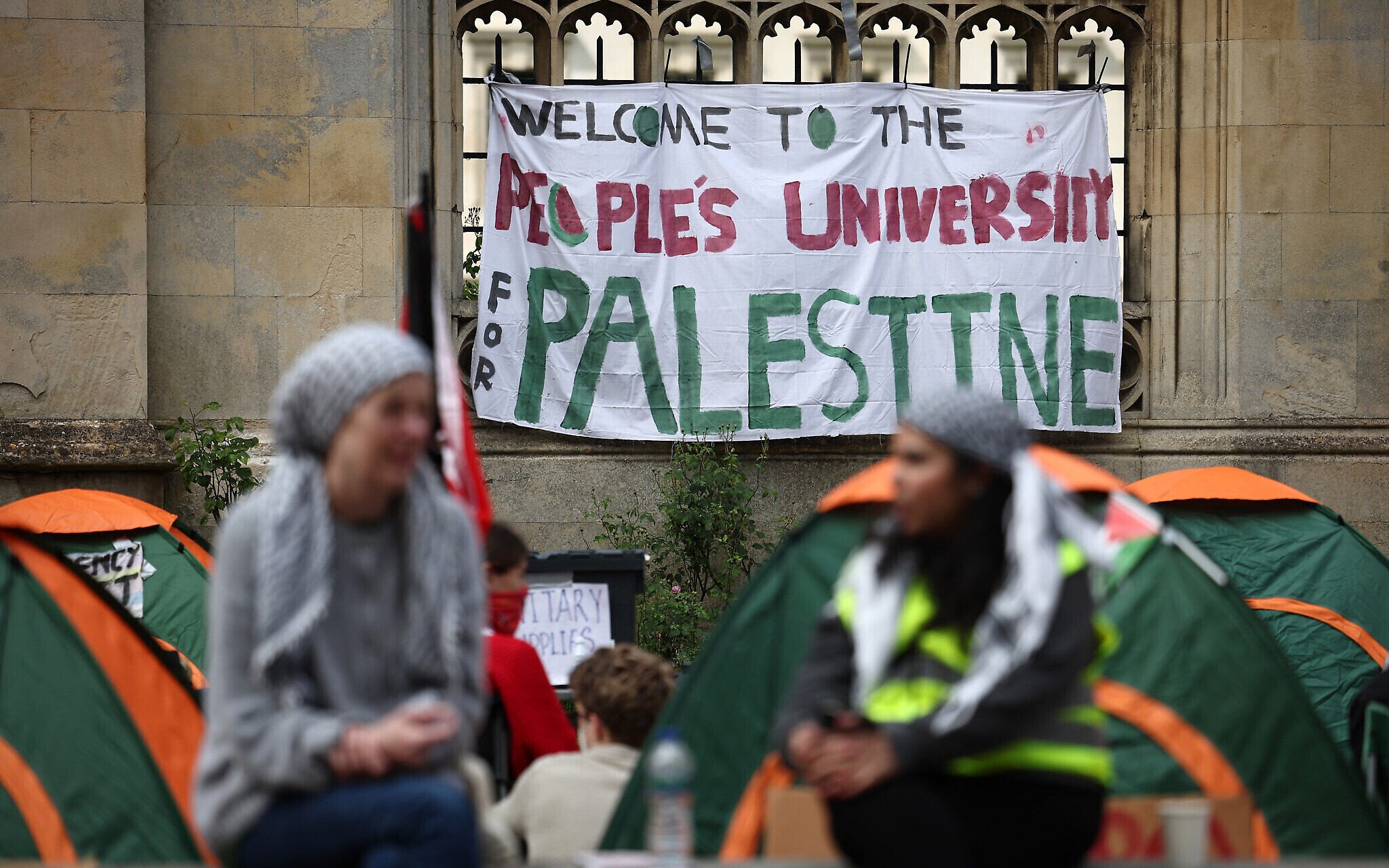
One in five university students in the UK would be “reluctant” to share a house with a Jewish student or would never do so, according to a poll commissioned by the British Union of Jewish Students and published Monday.
The poll was conducted by JL Partners between January 26 and February 4, and polled a representative sample of 1,000 UK university students at 170 institutions. The report did not give a margin of error, nor was the precise wording of all the questions immediately available.
The survey found that nearly one in four students (23 percent) had seen behavior that targeted Jewish students for their religion or ethnicity. Almost four in 10 (39%) who “witness regular Israel-Palestine protests” had seen frequent harassment of Jewish students, according to the poll.
In addition, close to half had heard chants or slogans “glorifying Hamas, Hezbollah or other proscribed groups on campus” (49%) or seen justification of the October 7, 2023, attack led by Hamas (47%), the poll said. Among those who encountered Israel-related protests regularly, the latter number rose to 77%.
A large majority (82%) said calls to “globalize the intifada” are antisemitic.
Most students (65%) said that protests had in some way disrupted their learning, and 69% said they disapproved of demonstrations that block access to learning.

In its report, UJS described a marked worsening of conditions for the UK’s roughly 10,000 Jewish university students in the two and a half years since the October 7 attack on Israel triggered a regional war, saying “relative inaction has bred a culture of normalized antisemitism.”
Along with its finding that one in five students “would be reluctant to, or would never, house share with a Jewish student,” UJS noted one instance when an apartment of non-Jewish students wrote on social media that they had “only one rule – no Zios in the flat,” using a term first popularized by white supremacists as an antisemitic slur.
The poll surveyed students’ opinions about what views or actions qualify as antisemitic, as well as what they believed should be protected as free speech.
According to the poll, 16% of students didn’t think it was antisemitic to claim Jews control the media, with the number rising to 24% when “Zionists” was substituted for “Jews.”
A similar number (26%) said it was not antisemitic to call for “Zionists” to be removed from campus. The report did not provide an equivalent figure about calling for Jews to be removed.
Glorification of Oct. 7 attacks sometimes veiled, often open
The poll found that “one in six (16%) students believes that glorifying the October 7 attack, including the murder of civilians and children, should be protected as free speech.”
It was not immediately clear from the report whether this was in reference to campus codes of conduct or British state law. The latter currently forbids expressing support for a proscribed terror organization, of which Hamas is one.
Full report: https://t.co/UBOWwC6bM6 pic.twitter.com/0draVKnFdL
— Union of Jewish Students (@UJS_UK) March 16, 2026
The report included graphics put out by student organizations with pro-Hamas imagery, including one that quoted a Hamas spokesman and depicted a fighter holding an RPG; an image eulogizing October 7 architect Yahya Sinwar; and a poster celebrating “one year of resilience” on October 7, 2024, with a photo from the attack itself.
Students reported anti-Israel activity that disrupted university life, with 27% of students saying classes had been cancelled or postponed as a result of anti-Israel activity, 23% saying they were stopped from accessing social spaces, and 20% saying they were unable to access university buildings.
Institutions ‘demonstrably care,’ but suffer ‘general paralysis’
UJS said that “Most institutions demonstrably care, deeply, about these issues, but have lacked the speed and conviction of action required to stem the normalization of antisemitism,” adding: “When everyone is somewhat responsible, no one takes the lead,.”
In light of the survey, UJS called for “new enforceable standards” for how universities probe and punish hate crimes, with mandatory reporting to the Office for Students state regulator. It called on the country’s Charity Commission to enforce schools’ rules for student unions.
The union also called for a “national counter-extremism strategy with a dedicated focus on campus radicalization,” as well as better coordination between universities, law enforcement, and government bodies.










The Times of Israel Community.