

A Galilee Christmas tour, in the footsteps of Jesus
The New Testament comes alive along the shores of Lake Kinneret
 Add ToI as a Preferred Source on Google
Jesus of Nazareth’s three-year public ministry began when he swept into Tab’ha on the shores of Lake Kinneret and attracted his first four disciples. Most of his sermons were delivered, and his miracles performed, near the sparkling lake known in the New Testament as the Sea of Galilee.
A lovely (wheelchair accessible) promenade stretches 3.5 kilometers from Tab’ha to Capernaum with paths descending to the lakeshore and to several important sites. The promenade runs parallel to Highway 87, so that visitors with two vehicles can leave one at each end.
The Arabic name Tab’ha comes from the Greek hepta pega, or seven springs. Since there are only three large springs at Tab’ha, the number seven may have another explanation. According to the gospel of Matthew, Jesus cured a man of leprosy immediately after the nearby Sermon on the Mount. Thus, the man’s subsequent immersion in water would probably have been in one of the Tab’ha springs.
Later pilgrims who visited the site rinsed themselves seven times instead of one. This custom referred to an Old Testament miracle: the healing of the Syrian General Na’aman, who also suffered from leprosy and was cured when the prophet Elisha had him dip in the Jordan River seven times.
The Gospels relate that Jesus preached all day to 5,000 men (and, in some interpretations, additional women and children) at a “remote spot” that some believe to have been Tab’ha. When evening came, the disciples suggested the people be sent home, for it was late and they were hungry.
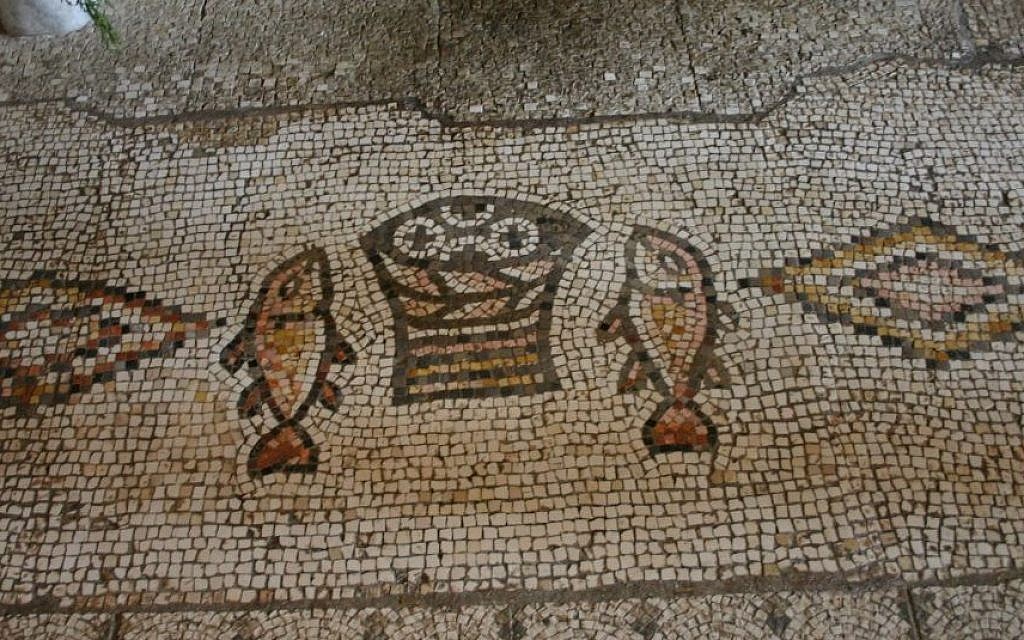
Instead, Jesus told his pupils to gather up all the food they could find – which turned out to be five loaves of bread and two fish – and to divide these among the crowd. Sitting on the grass in groups of hundreds and fifties the people ate their fill and not only was everyone satisfied, but there were twelve big basketfuls of fish and breadcrumbs left over.
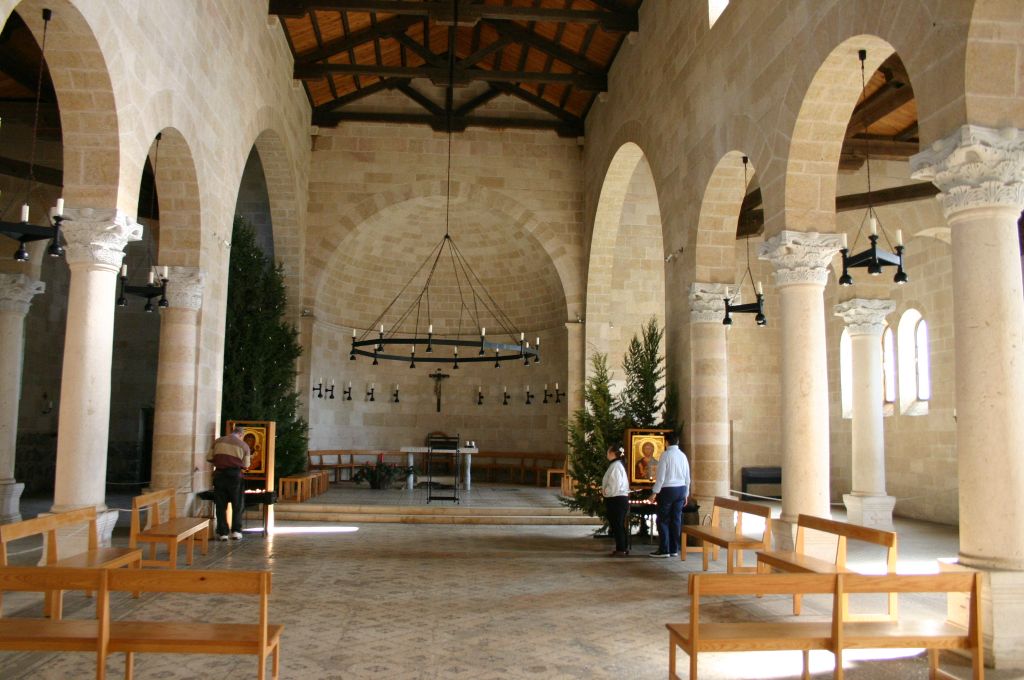
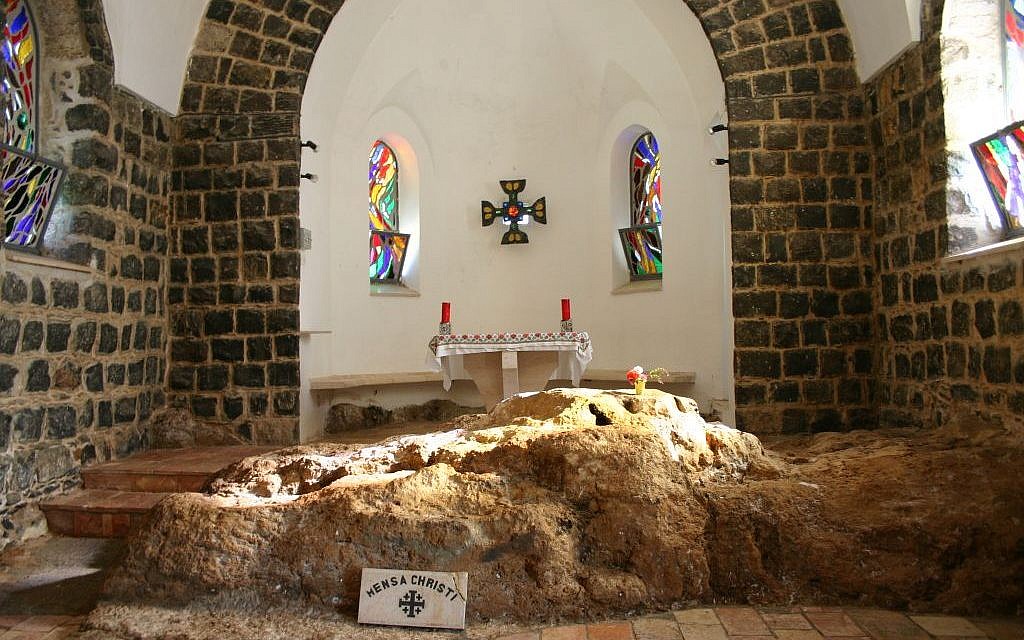
In the year 350, locals led by Joseph of Tiberias built a simple church here to commemorate the miracle and remains of the original apse can be seen in several spots. A much more elaborate house of prayer was constructed directly over the first chapel a hundred years later. The Byzantines who built it erected an altar directly above the rock on which Jesus was believed to have placed the food for the masses.
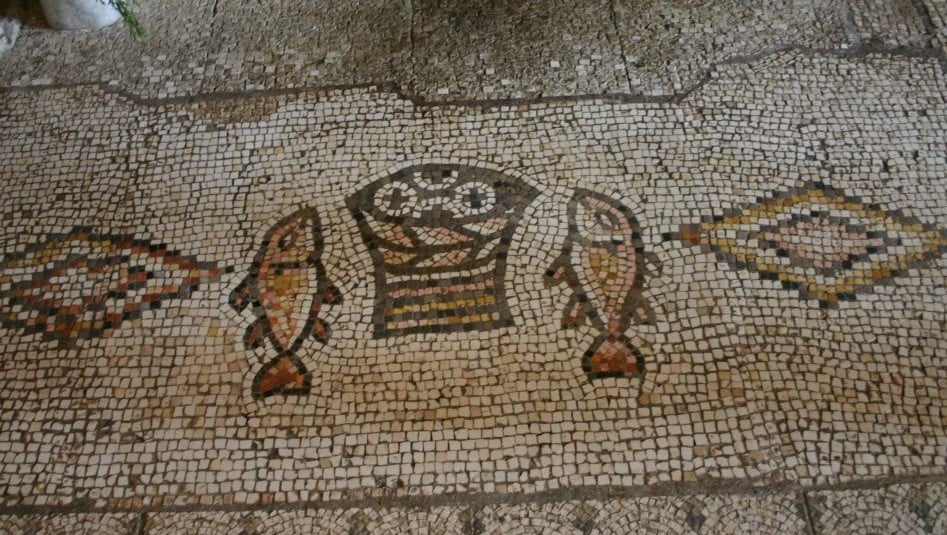
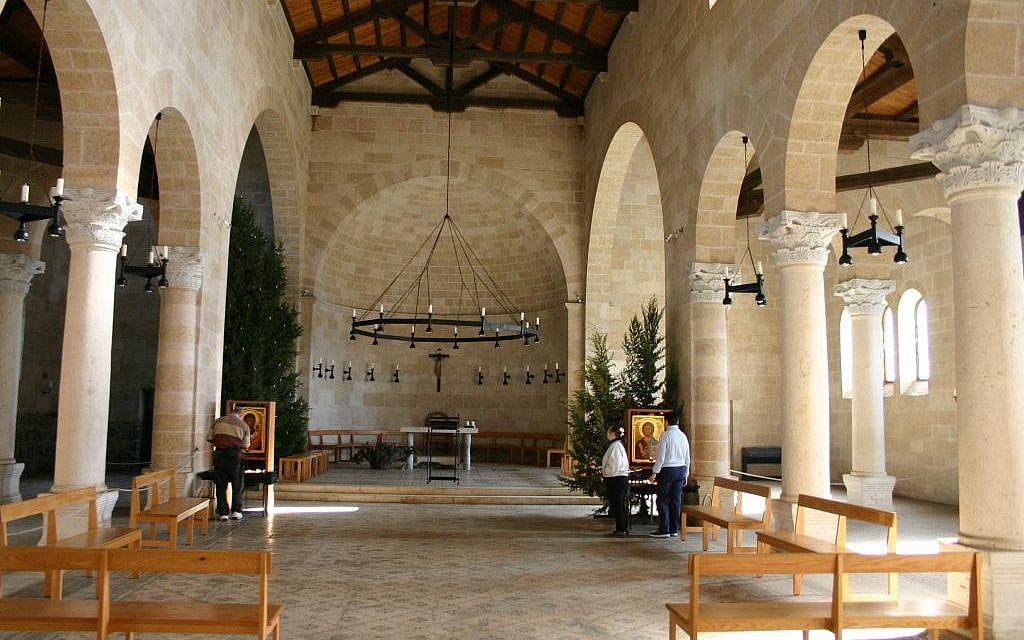
Rubble completely covered both churches until they were excavated in 1932; the current structure appeared in 1982. On view are mosaic floors from the Byzantine church that were extraordinarily well preserved; mosaics have been added so that what you see follows the exact design of the original. Twelve lamps on the wall above the altar symbolize the 12 baskets.
Heading north from Tab’ha, you immediately reach the Church of St. Peter’s Primacy and can follow a path all the way down to the banks of the lake. In winter, St. Peter’s fish congregate nearby, for they need warmth to survive and there are hot springs under the water.
Furthermore, warm waters from the Tab’ha springs flow into the lake a few meters to the south. Fishermen have come here for untold generations to catch St. Peter’s fish (amnun in Hebrew) in their nets.
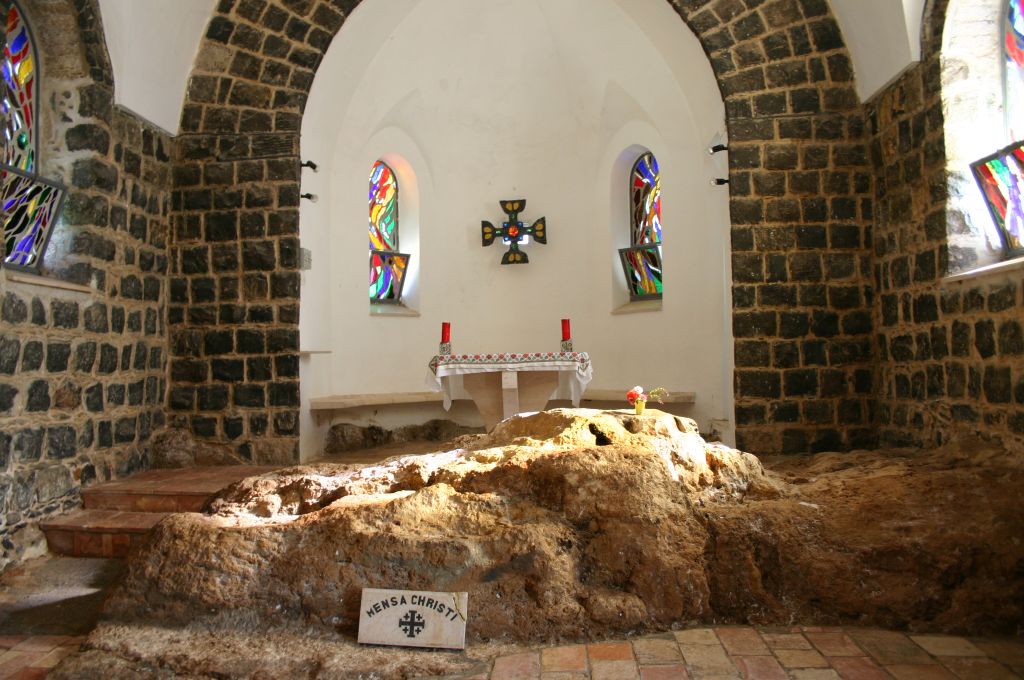
The Church of St. Peter’s Primacy is located on the beach where Jesus is believed to have breakfasted with a few disciples after the resurrection and Peter was commissioned to take over his mission.
Inside the church is a rock on which the men are thought to have dined. Pilgrims often walk right into the water here, and collect it in bottles that they take back home.
Not far from St. Peter’s Primacy, and across the highway, a dirt path ascends to the top of a hill. This site is considered by some Christians to be the true location of the Sermon on the Mount (others place it at the site of the Italian Church of the Beatitudes nearby). Further up the path is a cave that opens onto a view of the Sea of Galilee. Many believe that Jesus frequented this particular cave when he wanted to meditate.
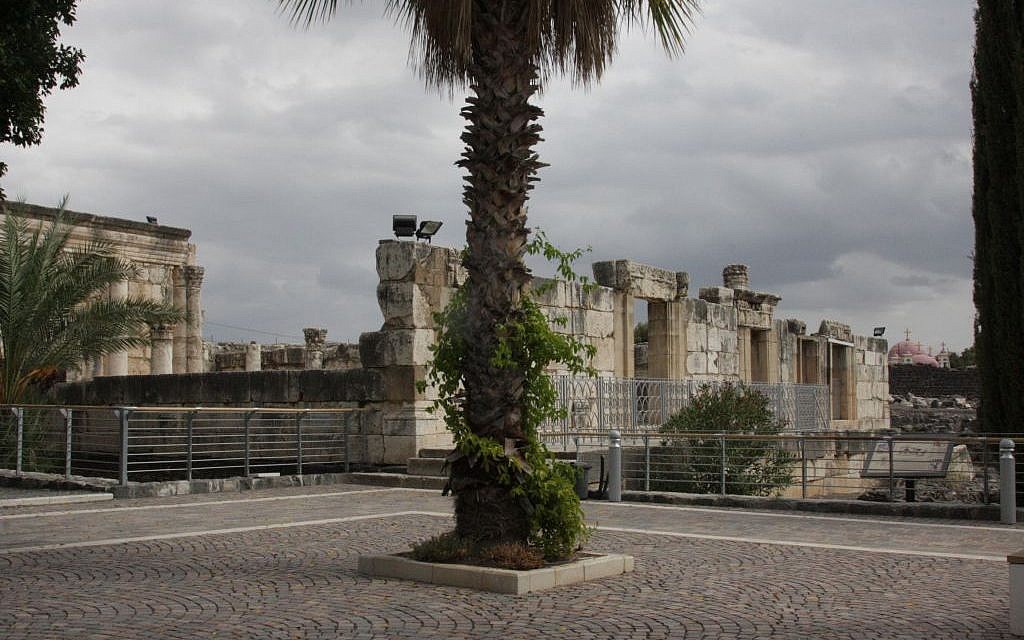
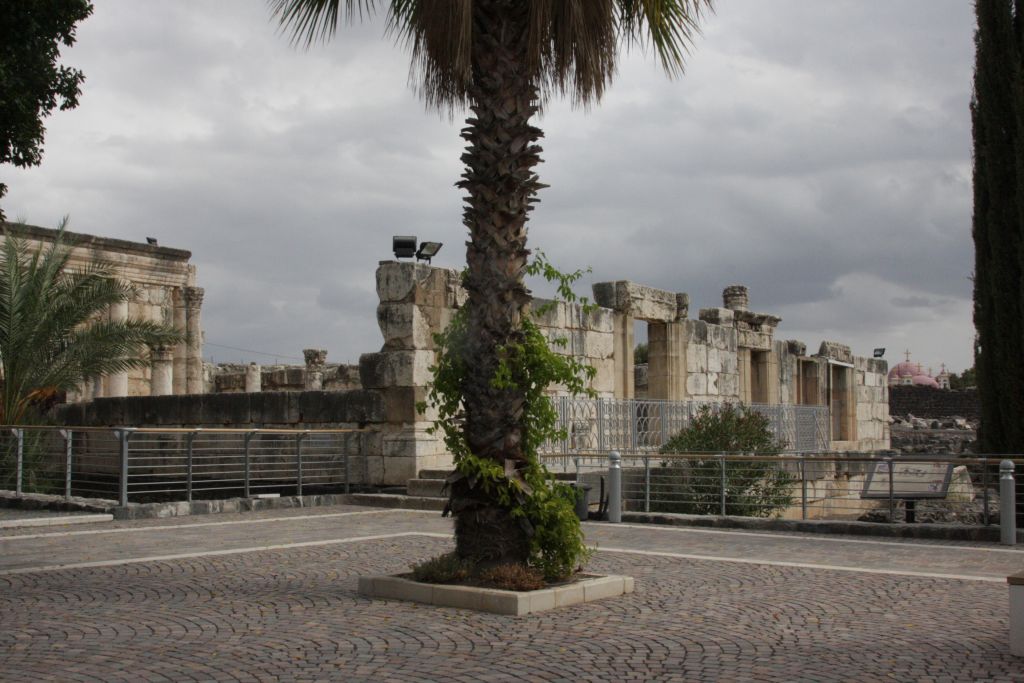
The next site on the promenade is Ancient Capernaum — Kfar Nahum, in Hebrew, or Nahum’s Village. Capernaum was a prosperous Jewish fishing village during the Second Temple period. It is not mentioned in the Old Testament, although there are a number of references in the Gospels.
After he married, Peter joined his wife’s family in Capernaum. Jesus stayed there often, and the village became the center for his Galilean ministry; after Jesus’ death, Peter’s home was the natural meeting place for followers.
For the next couple of centuries pilgrims flocked to the site, hungry to view and to touch stones from the house where Jesus sojourned in Galilee and eventually turning it into a church. It was kept in good repair, and researchers have found inscriptions from that long ago era: prayers to Jesus and some writings that refer to Peter.
Around the year 300 a chapel was built on top. And in 450 the Byzantines constructed an octagonal church over the earlier house of prayer, following the dwelling’s original design.
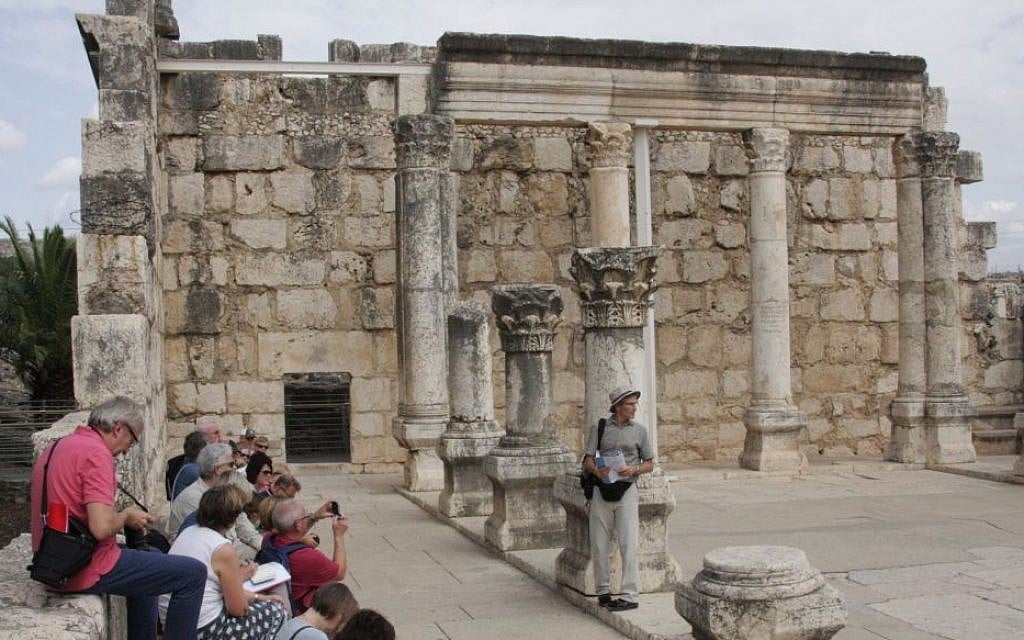
Right next to this church stand remains from the ancient city, including an elaborate synagogue built of gleaming white stone that forms a striking contrast to the region’s black basalt rock. Coins in the foundation level indicate that the synagogue was constructed from scratch around 390; an adjacent structure was probably a Jewish house of study.
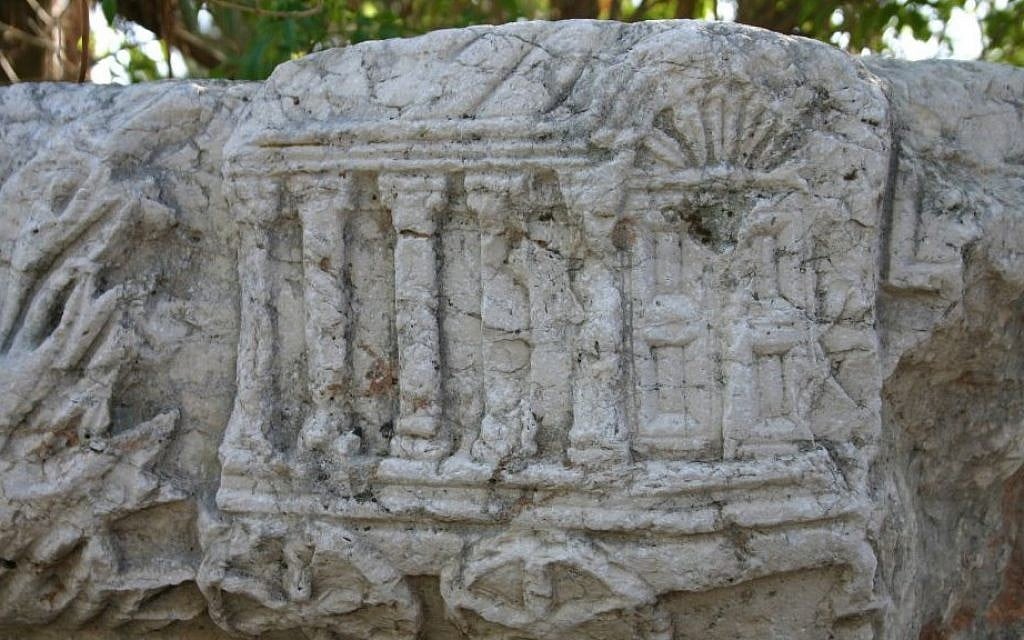
Fabulous stone carvings taken from the synagogue ruins are on display at the entrance to the site, including a Star of David. At the time the six-pointed decoration held no religious significance; it became a Jewish symbol only around 1600.
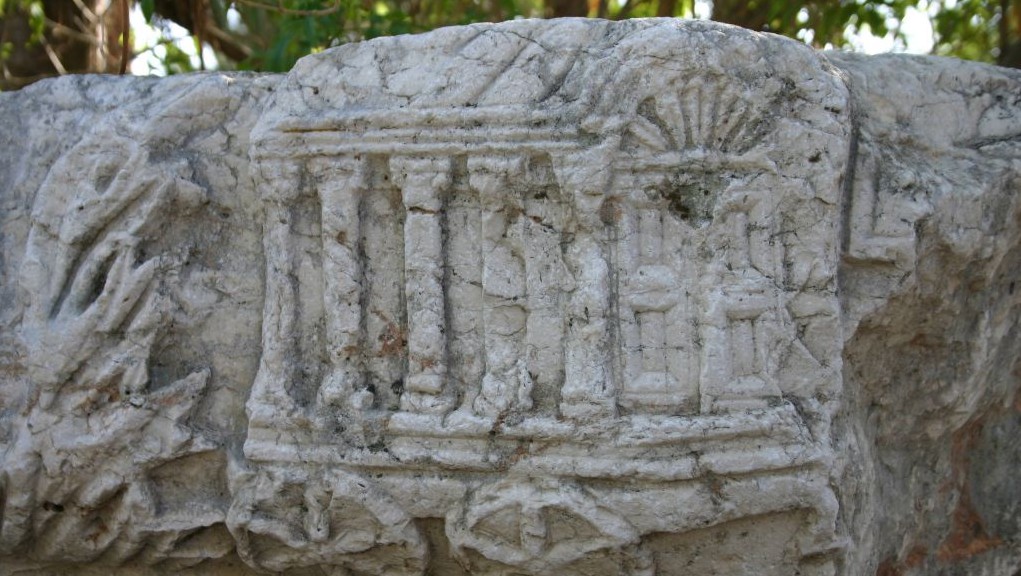
One stone is engraved with a representation of the Holy Ark being carried in a cart with wheels, perhaps reflecting its return from Philistine hands; other carvings include a seven-branched menorah crowning a Corinthian capital, a ram’s horn, grapes and pomegranates. Also on view: a palm tree carved into a synagogue lintel.
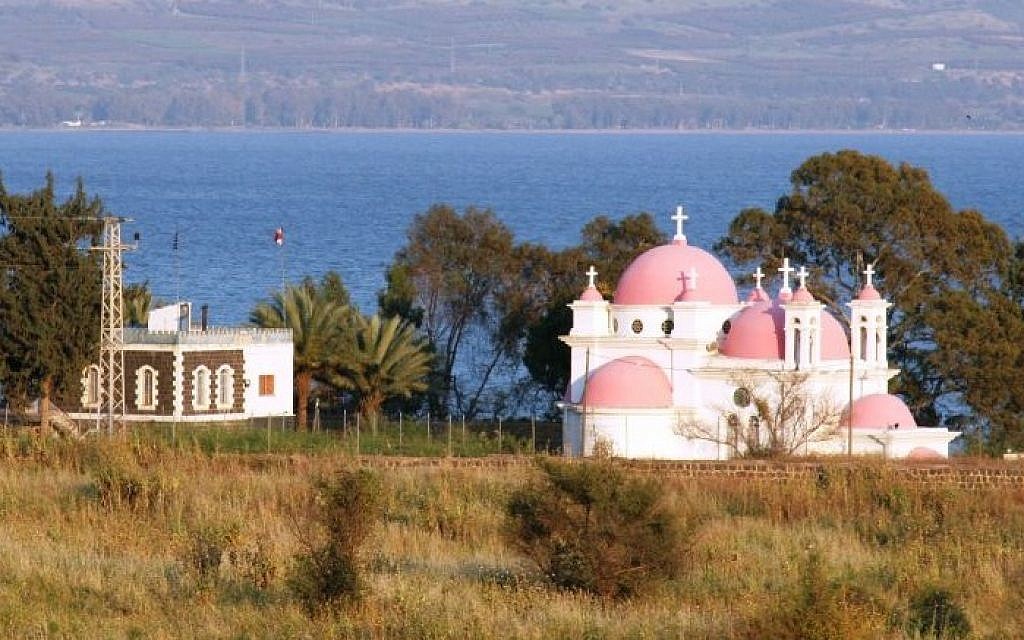
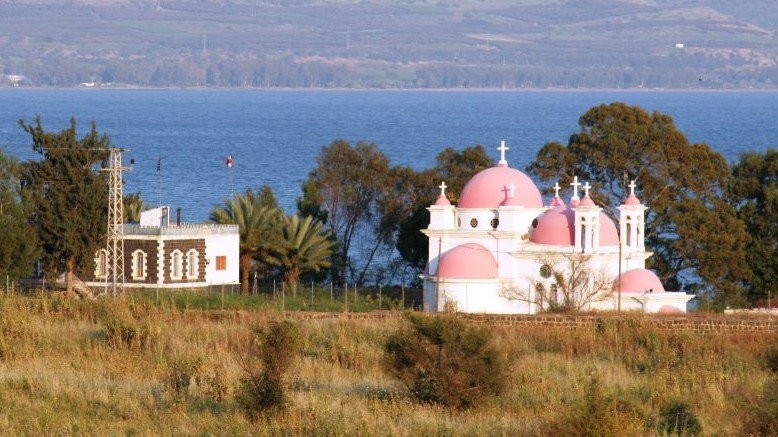
Practically next door, a striking Greek Orthodox church with bright pink domes stands on the shores of the lake. Built in 1931 near the excavations of Capernaum and on the eastern portion of that ancient village, the church is dedicated to the 12 apostles.
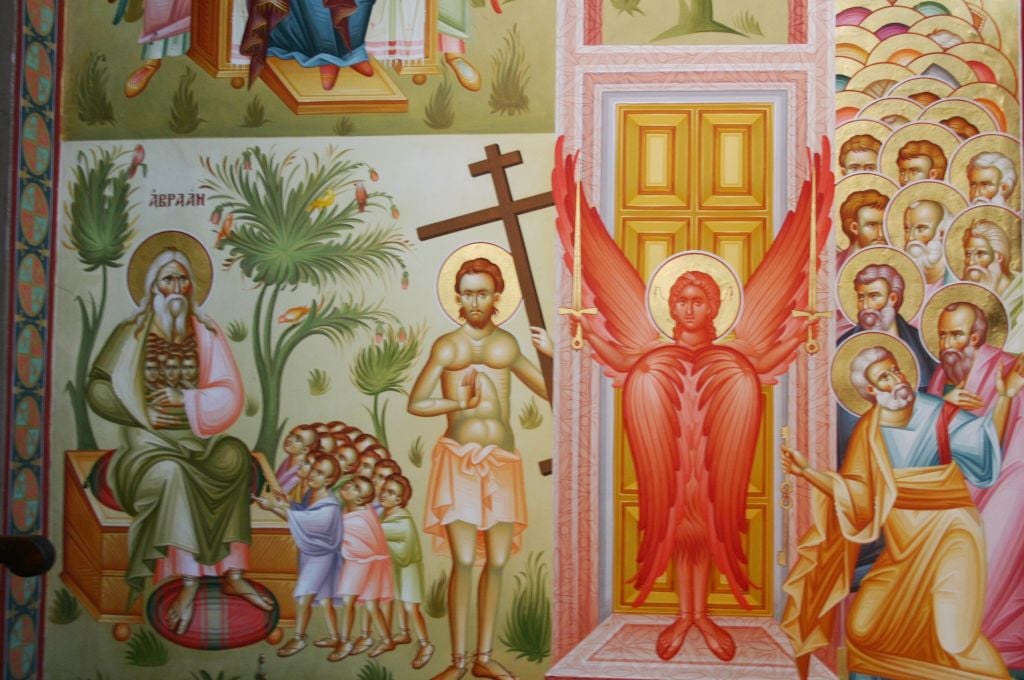
Two rounded ceilings inside the church feature colorful, symbolic pictures and the walls are covered with icons. Most interesting is the iconostasis, that portion of the church which separates the sanctuary from the main part of the building.
The iconostasis is made of a stunning red marble quarried in Jerusalem’s Gilo neighborhood near Bethlehem, a stone no longer available because the site has been taken over by developers.
In the year 2000, a pilgrimage site was built adjacent to the church. Besides a floating dock for pilgrims who sail over from the other side of the lake, there are long halls suitable for dining and for prayer, as well as a beautiful walkway along the shore.
—–
This article is adapted from a chapter in Aviva Bar-Am’s book Israel’s Northern Landscapes: Guide to the Golan Heights, Eastern Galilee and Lake Kinneret.
Shmuel Bar-Am is a licensed, tour guide who provides private, customized tours in Israel for individuals, families and small groups.
All rights reserved.








The Times of Israel Community.