

A general is killed, soldiers are praised
Tension rises in the north while battle commendations for the conflict in the south are given out
 Add ToI as a Preferred Source on Google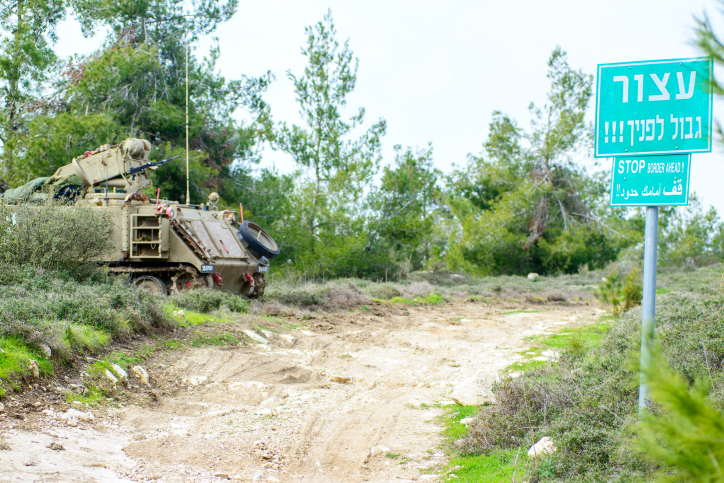
Two days after an alleged Israeli airstrike on Hezbollah targets in the Syrian Golan Heights, Iran revealed that one of its generals was also killed in the airstrike. That revelation ratcheted up the tension along the northern border, with fears of a Hezbollah retaliation.
This tension explains Israel Hayom’s bombastic front page headline quote from Netanyahu, “We’ll defend ourselves everywhere,” as both Iran and Hezbollah have threatened to respond anywhere at any time. Israel Hayom gives three pages of coverage to the threat, including an article on how the IDF has deployed Iron Dome batteries along the border – just in case.
Boaz Bismuth weighs in on what he calls “the new Middle East” and its new threats. “In our Middle East, when things change, it’s not usually for the better,” he writes. He would love if what happened on the other side of the fence stayed there, but unfortunately the groups in Syria want to knock down the fence and destroy Israel.
While Bismuth never says Israel was responsible for the attack (officially Israel has no comment), he says this new Middle East is a nightmare for us. With Iran on the other side of the fence, observing Israel, Bismuth writes that a message needed to be delivered. “The exact action yesterday was a clear message to terrorism: Israel has its hand on the pulse of Syria, and if necessary – also on the trigger.”
The Syrian situation is also top news in Haaretz, which reports on its front page that the UN reported seeing two drones cross from Israel to Syria before Sunday’s attack. Like Israel Hayom, the paper treads a fine line by not saying what everyone thinks: Israel is responsible for Sunday’s attack.
Even the paper’s military correspondent, Amos Harel, writes an analysis piece where he points that the only force in the region that has that type of air power, except from Syria, is Israel. Aside from the fact that all signs point to Israel, the attack represents a new level in the shadow war between Israel and Iran. Israel has accused Iran of supporting and arming Hamas and Hezbollah, while Iran claims Israel has killed its nuclear scientists and launched cyber attacks against its nuclear program. But this attack marks the first time hostility has been in plain sight.
The paper’s editorial questions the timing of the attack, saying that there are precedents for the use of military power during election seasons when the party in power is in trouble at the polls. It points to a number of examples like the bombing of the Iraqi nuclear reactor in 1981, Operation Grapes of Wrath in 1996, and Operation Cast Lead in 2008. While it doesn’t accuse Netanyahu of bombing for political reasons, it looks at the decision cynically. “It is difficult not to get the impression that politicians tend to take risks and approve military action with greater ease when some of the polls paint a gloomy picture of their standing with voters.”
Heroes of summer
Yedioth Ahronoth’s front page is almost entirely dedicated to the battle commendations given out Monday to 53 soldiers for their conduct during Operation Protective Edge. The paper puts the picture of each solider on its front page and gives four pages of coverage to say why each received his or her award. Included in the 53 soldiers were four women who helped identify and thwart terrorist infiltrations from the Gaza Strip.
Israel Hayom columnist Dan Margalit pays homage to the soldiers, saying that every generation has great warriors and we see this generation’s greats in the list of recipients. “Operation Protective Edge was 50 days. Not because the army couldn’t damage Gaza any further, but because it did not want to. But no matter how careful and responsible, war extracts a heavy price. This can be seen in the list of commendations, including those who did not return from the war. Stop for a moment and shed tears, be proud, and continue the morning as usual.”
Only 56 days…
No edition of the Hebrew paper would be complete without updates on the election front, and Tuesday’s papers don’t disappoint. Yedioth’s top political story is the poetic-sounding “Avi Dichter’s last battle.” The Likud Central committee has declared that Tzipi Hotovely won the 20th spot on the Knesset list, beating out Dichter by 32 votes. That decision pushes Dichter down to the 26th spot on the list, and if recent polling is correct, out of the next Knesset. But Dichter isn’t going down without a fight; he is challenging the results, saying that a decision cannot be made until all the votes have been checked. A source close to Dichter told the paper, “This is far from over.”
The Labor-Hatnua “Zionist Camp” has boosted its security credentials with the addition of a former intelligence chief. Haaretz reports that the former head of Military Intelligence, Amos Yadlin, joined Labor after being promised to be appointed defense minister or hold the intelligence portfolio. As the paper points out, Yadlin has deep ties to the Labor party, as his father Aharon Yadlin was one of the heads of Mapai (which merged into Labor in 1968) and served in Rabin’s first government.
While Labor and Likud put the finishing touches on their lists, Israel Hayom reports that Yair Lapid is working on Yesh Atid’s party list. Lapid has said there won’t be any major changes in his list, and party sources agree. There aren’t any primaries in Yesh Atid; instead, Lapid sets the list. Members reported getting phone calls from Lapid’s adviser simply informing them of their spot on the list, without negotiation.









The Times of Israel Community.