

A guide to the diverse groups of Jews living in 20 NY virus hotspot ZIP codes
Public mask burnings in Borough Park draw media attention, but who is living in the other afflicted areas where residents are mostly compliant with health guidelines?
 Add ToI as a Preferred Source on Google
Yaakov Schwartz is The Times of Israel's deputy Jewish World editor
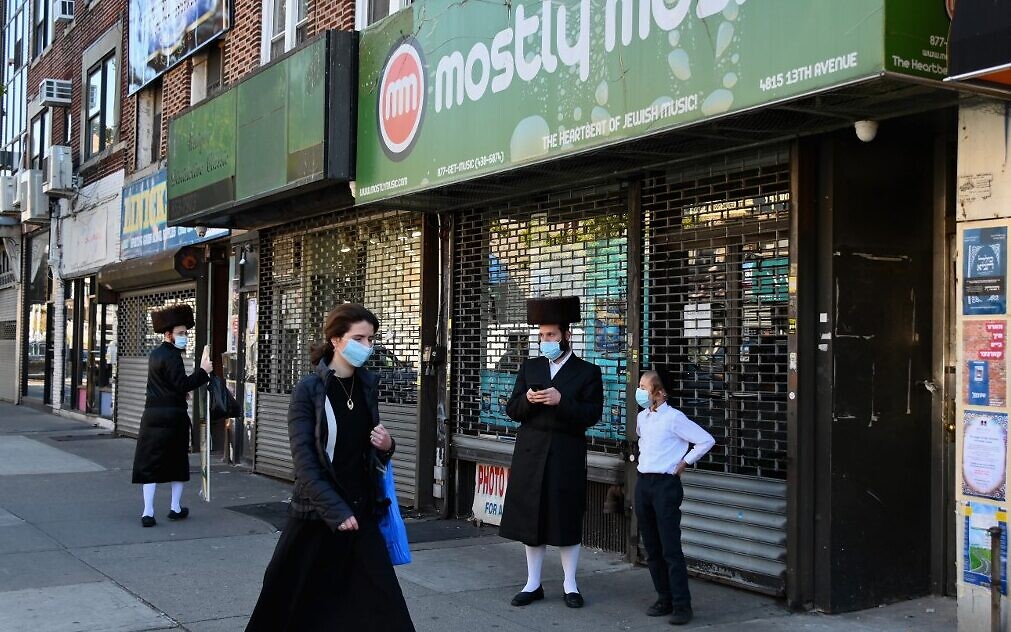
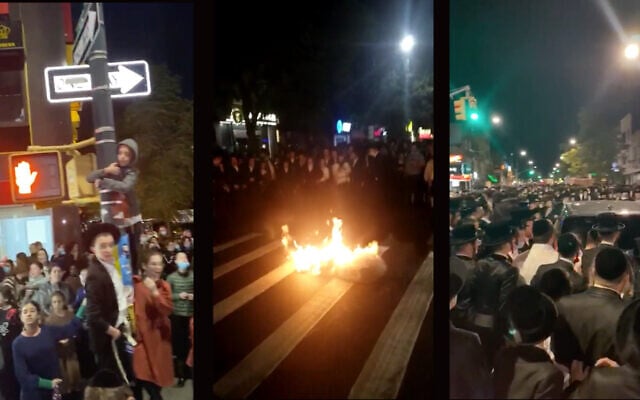
Over the last week, the Brooklyn, New York, neighborhood of Borough Park has been the scene of ultra-Orthodox demonstrations against renewed lockdown measures in so-called “Red Zones,” or areas with a significantly higher positivity rate for COVID-19 than the rest of the state.
It had appeared that the closure of schools, bars and restaurants, and tight restrictions on houses of worship were paying off for New York State — once the epicenter of the United States’ coronavirus outbreak — as it slowly began to get back to business as usual. But a sudden spike in cases in some areas has raised the prospect of a new wave of outbreak.
According to information released by Gov. Andrew Cuomo’s office on October 8, the state’s 20 hotspot ZIP codes, all located in or near New York City, were nearly six times more likely to yield positive coronavirus test results than the state as a whole, with their average positivity rate reaching 5.8 percent. On October 6, the ZIP code in which Borough Park is located had hit a peak of 10.6% positive results.
It is notable — and was much-noted in the press — that nearly all 20 of the hotspot areas are home to significant Orthodox Jewish populations.
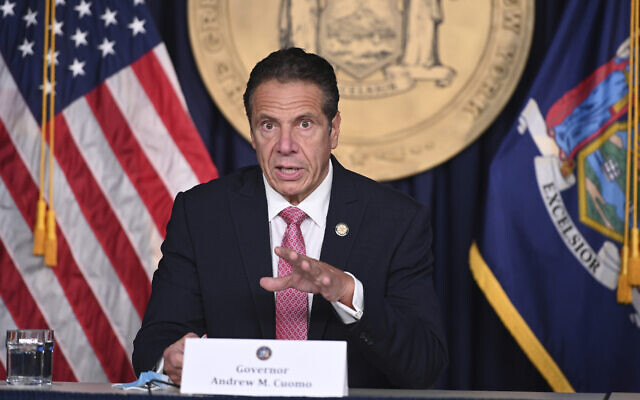
Encouragingly, Cuomo tweeted on Tuesday that the numbers had begun to drop, with the average positivity rate of the marked ZIP codes now at 3.7%. Cuomo’s tweet said that the state was “taking strong action to respond to these outbreaks and stop the spread” of the coronavirus.
The new restrictions for the most stricken areas include the closing of nonessential businesses and schools, and capping the number of people allowed at religious sites at 10. Appeals were separately lodged against the measures by the ultra-Orthodox Agudath Israel and a Catholic diocese, but they were quickly rejected by Federal Judge Kiyo A. Matsumoto, who said that “COVID crosses racial, religious and economic lines.”
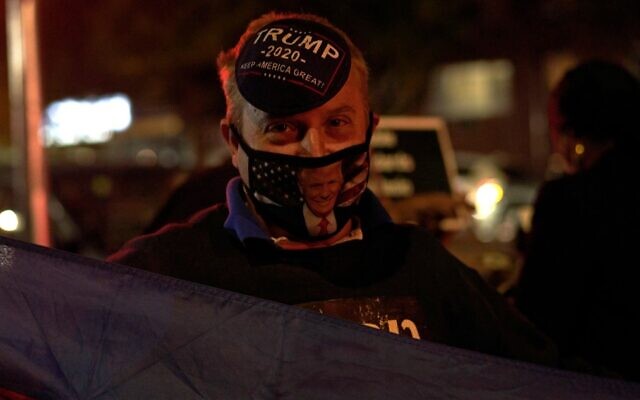
In today’s politically polarized US, issues such as mask-wearing as a safety precaution have become partisan. US President Donald Trump is accused of making light of and even discouraging mask use among his White House colleagues and political supporters nationwide, whereas most of the Democratic leadership has upheld the practice, citing scientific reports that masks prevent the spread of the coronavirus.
The Borough Park demonstrations have likewise become highly politically charged. Residents of the hotspot areas claim they have been singled out for their Judaism and their politics: Cuomo and New York Mayor Bill de Blasio are both Democrats, whereas large swaths of some of the designated areas support Trump, according to a New York Times map of American voting patterns.
Many protesters have also called the governor and mayor anti-Semitic, yet the two politicians have a track record of supporting their ultra-Orthodox constituents on other issues in the past.
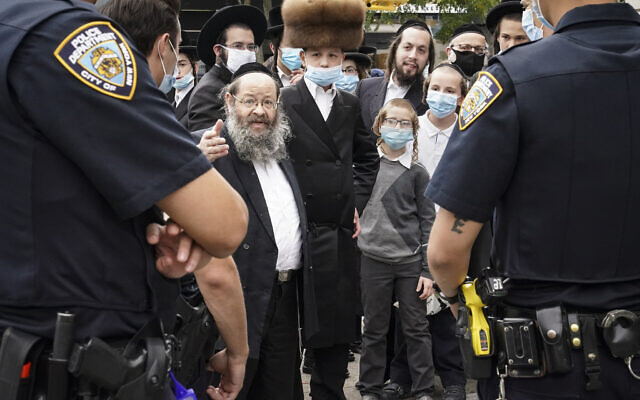
Further emphasizing the alleged partisanship of the rejection of coronavirus restrictions, on October 9, Cuomo said he believed the Trump campaign was encouraging the protests. He played a recording of an automated phone call which said the Trump campaign was urging people to come out and demonstrate with signs saying “Cuomo killed thousands.” A Trump spokeswoman said the campaign had no connection to the protests.
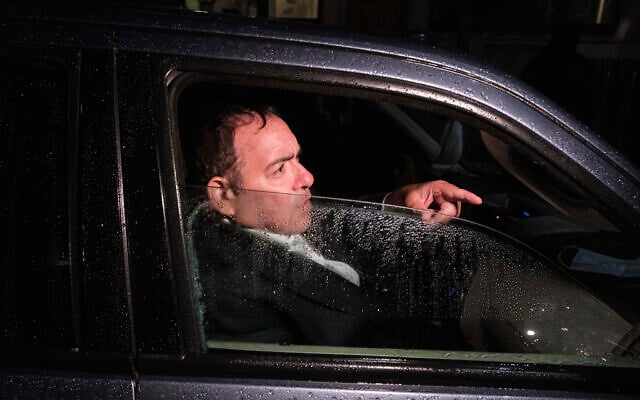
Cuomo also read aloud a tweet by the ringleader of the Borough Park demonstrations, right-wing radio host and city council candidate Heshy Tischler, which asked, “Urgent: Who can print ‘Cuomo Hates Jews’ and ‘Cuomo Killed Thousands’ on flags?”
Tischler has vowed that the protests will continue – even as he was released from jail on Tuesday after being arrested a day earlier on the charges of inciting a riot. After his release, Tischler said the continuing protests will be non-violent.
A breakdown of the diverse NY Orthodox communities
While news media visuals of mask burnings in an ultra-Orthodox neighborhood may give the impression that the hotspots are homogeneous, they in fact span New York-area Jewish communities that are geographically, religiously, politically, and socioeconomically diverse.
It should be emphasized that the vast majority of Orthodox and ultra-Orthodox people have refrained from public protest, and many have been consistently compliant with regulations and health guidelines aimed at preventing the spread of COVID-19.
The following is a broad breakdown of some of the largest Orthodox Jewish communities in the hotspot areas. The voting patterns are roughly estimated based on the New York Times map of 2016 voter precincts.
Orange and Rockland Counties
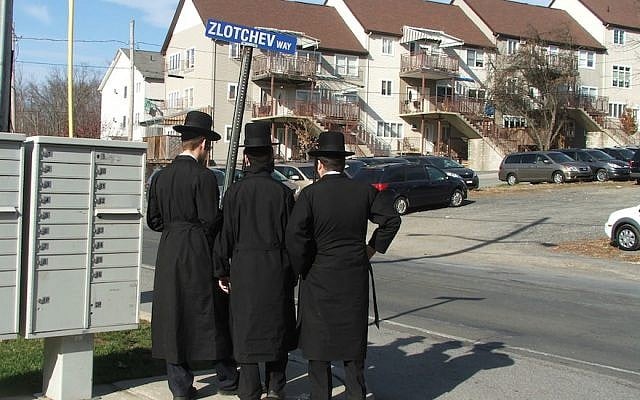
Five of New York State’s top 20 hotspot ZIP codes include or are adjacent to a cluster of predominantly Hasidic enclaves in Orange and Rockland counties, located about an hour’s drive outside New York City.
The larger sects or dynasties have tens of thousands of residents in the area, and a couple have founded their own villages. A number of smaller Hasidic groups and a significant non-Hasidic ultra-Orthodox population live in close proximity, as well.
Though there is a shared sense of community and residents often frequent and shop in the same areas, each sect has its own leaders, unique set of customs, religious schools, and synagogues.
10950
Average positivity rate in 14 days prior to October 8: 16.3%
Voting pattern in 2016 presidential election: Roughly 52% Republican, 42% Democrat
The Orange County ZIP code includes Kiryas Joel, a village of 25,000 named for the late grand rabbi of the Satmar Hasidic sect, Joel Teitelbaum, where the vast majority of residents belong to the devout Hasidic group.
10952
Average positivity rate in 14 days prior to October 8: 14.1%
Voting pattern in 2016 presidential election: 80% Republican, 15% Democrat
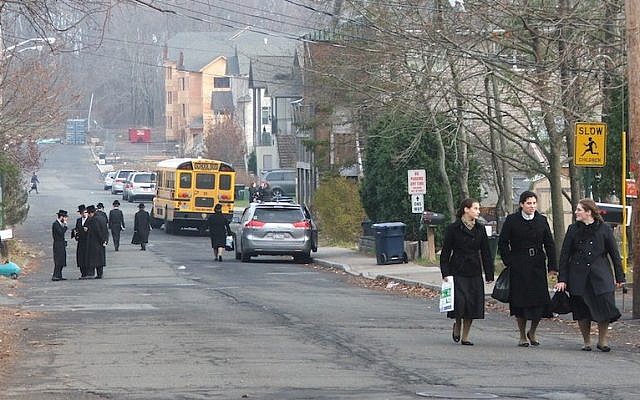
Rockland County ZIP code includes the hamlet of Monsey, population roughly 20,000, which is home to a number of smaller Hasidic groups including Vizhnitz, Spinka, Lizensk, Belz, and others. The names of the sects refer to the towns in Central and Eastern Europe where their founders hailed from.
10977
Average positivity rate in 14 days prior to October 8: 12.5%
Voting pattern in 2016 presidential election: 80% Democrat, 15% Republican
This Rockland County ZIP code directly abuts 10952, and contains the village of Spring Valley and its population of 32,000, home to many Hasidic and non-Hasidic ultra-Orthodox Jews.
It also includes the 8,500-strong Hasidic village of New Square, named for the Ukrainian town of Skvyra, where the Skverer Hasidic dynasty was founded. New Square has been listed as the poorest municipality in New York State, and its ascetic residents’ annual median income is reported to be $5,000 less than that of nearby Kiryas Joel.
While the ZIP code voted primarily blue in the 2016 presidential election, a pocket of strong Trump support can be traced almost exactly inside the perimeter of Spring Valley’s ultra-Orthodox neighborhoods. Meanwhile New Square, which votes as a bloc, cast 97% of its ballots for Hillary Clinton in the election.
Brooklyn
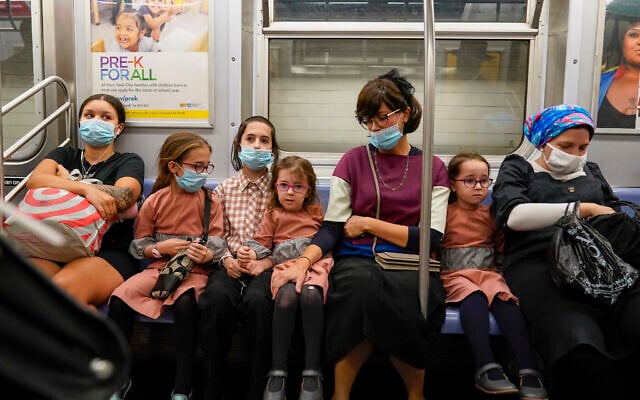
Brooklyn’s Jewish community is as diverse as its non-Jewish one, with a wide range of Hasidic sects, non-Hasidic ultra-Orthodox, Russian-speakers, Israeli expats, and a Syrian Jewish community numbering in the tens of thousands — to name just a handful of the cultural and religious affiliations to be found there. The borough contains scores, if not hundreds, of synagogues and Jewish institutions.
The Crown Heights neighborhood is home to the global headquarters of the Chabad-Lubavitch Hasidic group, and the neighborhood of Williamsburg is the second stronghold — in addition to Kiryas Joel — of the Satmar Hasidim, which is thought to be the largest Hasidic sect in the world.
Nine of the top 20 ZIP codes listed by Cuomo’s office are located in Brooklyn, also officially known as Kings County (the county shares the same boundaries as the New York City borough of Brooklyn). With the exception of the Hasidic enclave of Williamsburg, they are all located across a pocket of Jewish communities in south Brooklyn spanning from Borough Park to Marine Park.
Borough Park/ Flatbush (11223, 11230, 11219, 11204, 11210)
Average positivity rate in 14 days prior to October 8: 5.4% to 6.8%
Voting pattern in 2016 presidential election: Mixed
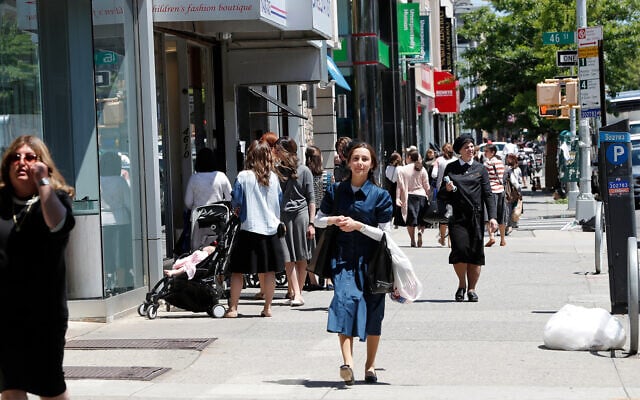
Though these ZIP codes technically encompass several neighborhoods, many Orthodox Jews in New York simply divide them into two neighborhoods. Borough Park is defined by its many Hasidic groups including Bobov, Munkatch, Vizhnitz, Novominsk, Ger, Satmar, and others. Flatbush contains large non-Hasidic ultra-Orthodox, Syrian, and Modern Orthodox communities.
Borough Park, the epicenter of the anti-restriction protests, has been the focus of attention recently — to the dismay of most of its insular residents. The surrounding areas, despite also being hotspots, have remained peaceful.
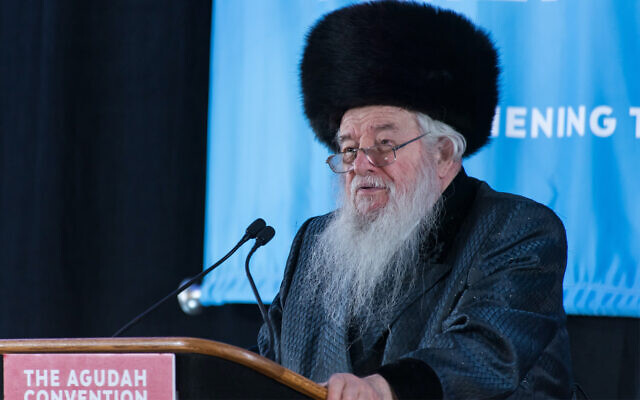
Prior to the protests, the highly influential Rabbi Yaakov Perlow, leader of the Novominsker Hasidic sect and president of the Agudath Israel ultra-Orthodox umbrella organization, urged followers to adhere to health guidelines. While Perlow died of COVID-19 in April, his funeral was notably limited to family only, despite his many followers, and eulogies and recitation of Psalms were done remotely.
The bloc’s southern reaches are home to approximately 30,000 Syrian Jews, making it the largest such community in the world.
Borough Park and areas with the highest Syrian Jewish concentrations had the highest percentage of Trump voters. Though some neighborhoods with both Jewish and non-Jewish populations contained a majority of Democratic voters, the more concentrated Orthodox areas clearly trend red, with an estimated 75% Republican voters.
Queens
Extremely diverse, the borough of Queens is home to a large number of Israeli expats, non-Hasidic ultra-Orthodox, Bukharian Jews, Modern Orthodox, and Conservative Jews. In the commercial hub along Main Street in Kew Gardens Hills, a mile-long stretch of almost exclusively kosher shops and restaurants, it’s common to hear Hebrew being spoken.
In some neighborhoods, massive stone houses are rising up, an occasionally controversial sign of new construction by the wave of Bukharian residents who arrived from the former Soviet Union’s central Asian territories — mainly Uzbekistan — following the fall of the Iron Curtain. Further out, upper middle-class Jews live in the more posh neighborhoods of Jamaica Estates and Holliswood.
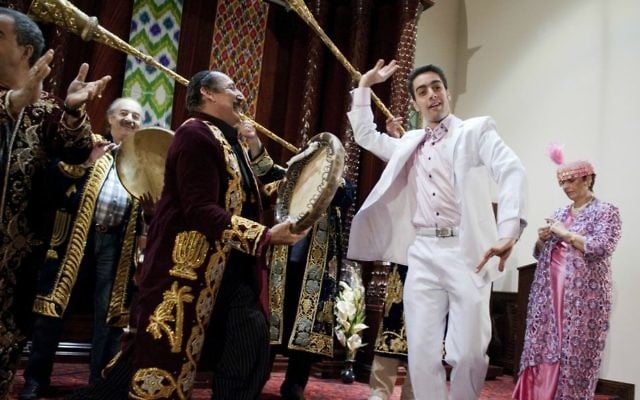
11367
Average positivity rate in 14 days prior to October 8: 5%
Voting pattern in 2016 presidential election: Blue, with pockets of Trump support
Kew Gardens Hills was listed as the sixth-highest rate of positive coronavirus cases among the state’s top 20 hotspots. In the very heart of the neighborhood there is a pocket of strong Trump support — between 60% and 75% — in a sea of blue, where there is a mix of Israelis and ultra-Orthodox. Another pocket can be found in the nearby neighborhood of Fresh Meadows, also home to a significant number of Israeli expats.
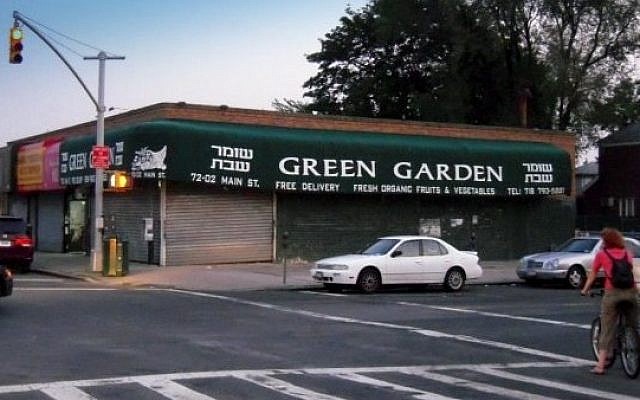
11691
Average positivity rate in 14 days prior to October 8: 3.2%
Voting pattern in 2016 presidential election: Mixed
The neighborhoods of Far Rockaway and nearby Bayswater are home to a large non-Hasidic ultra-Orthodox population, with many religious schools and synagogues. While the general public voted strongly Democratic in the 2016 presidential elections, the areas with the most Jewish residents are starkly red, and areas with lower but significant Jewish concentrations are more evenly split. The voting trend can be seen most distinctly in the area surrounding the Sh’or Yoshuv Institute, one of the more well-known men’s religious schools in Far Rockaway.
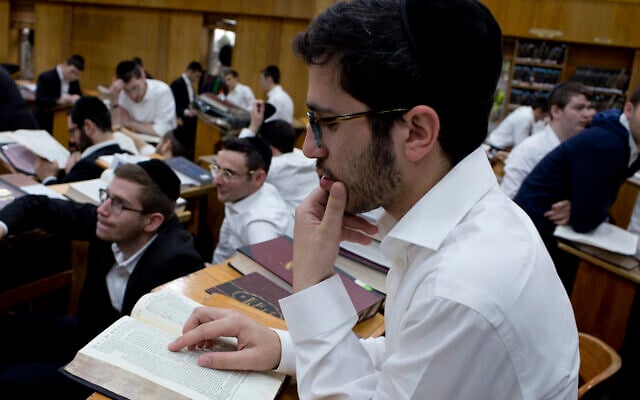
11374
Average positivity rate in 14 days prior to October 8: 2.7%
Voting pattern in 2016 presidential election: Between 60% and 70% Democratic, 25% to 35% Republican
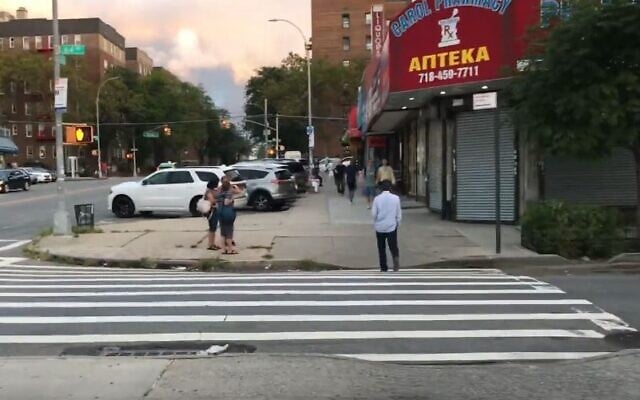
Rego Park and neighboring Forest Hills are home to between 50,000 and 70,000 Bukharian Jews — the largest such community outside of Israel. Speaking a mix of Russian and a dialect of Persian, the Bukharian community continues to maintain its unique customs, has dozens of synagogues, and has seen a long line of shops with Cyrillic signs along 108th Street — the Bukharian equivalent of nearby Main Street.
11432
Average positivity rate in 14 days prior to October 8: 2%
Voting pattern in 2016 presidential election: Almost entirely blue
The upscale neighborhood of Jamaica Estates had one of the lowest coronavirus positivity ratings of the top 20 hotspot ZIP codes, at just under double that of the state average.
It’s home to a large Modern Orthodox community and voted overwhelmingly for Clinton in the 2016 presidential election, with the exception of a small pocket in a strongly Modern Orthodox area that slightly favored Trump by a margin of 52% to 45%.



The Times of Israel Community.