

Before building collapse, MKs pushed stricter safety bill
New legislation seeks to enforce automatic 2-day closure of sites where workers die or are seriously injured
 Add ToI as a Preferred Source on Google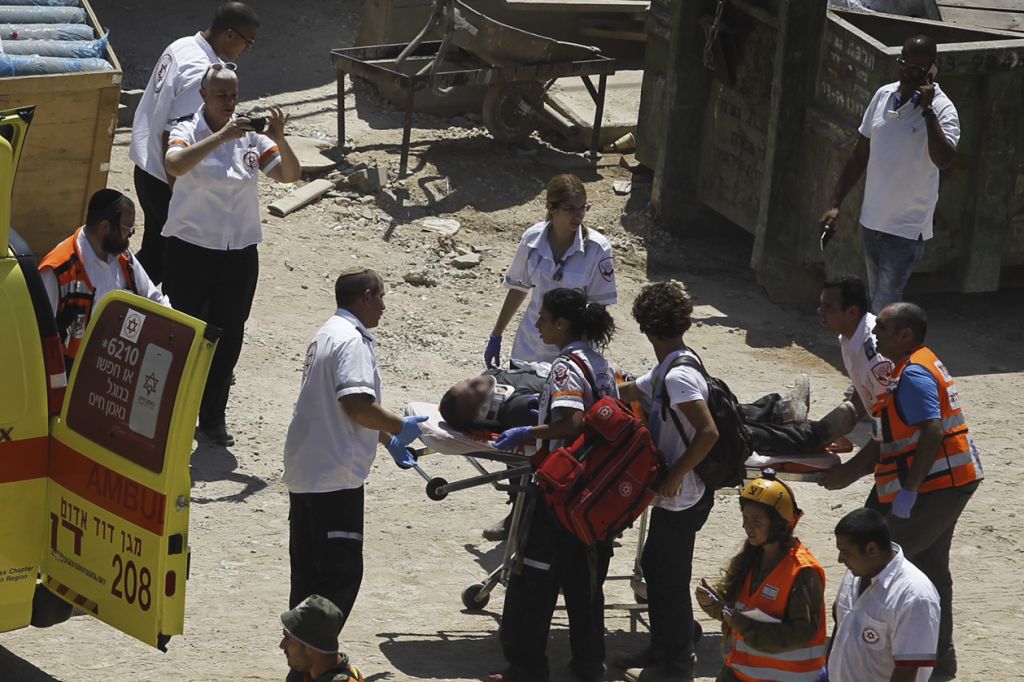
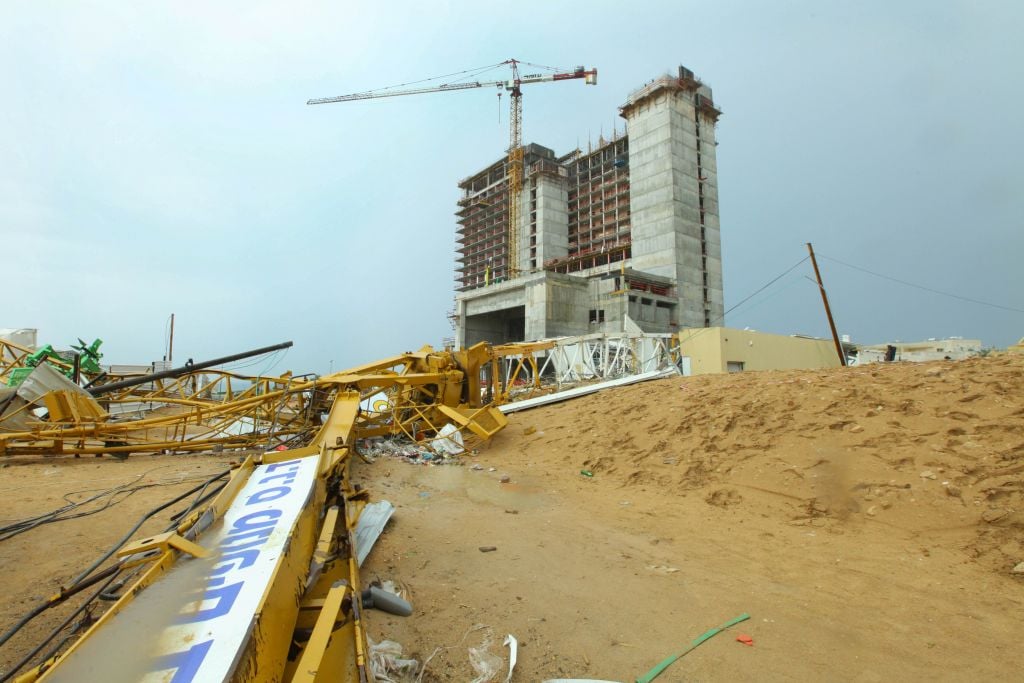
Lawmakers renewed calls to improve safety standards on construction sites Monday, hours after a parking structure in Tel Aviv collapsed, killing at least two workers.
The rate of worker deaths in Israel is among the highest in the West and double the European Union average, according to the findings of an Economy Ministry and National Insurance Institute report published in May.
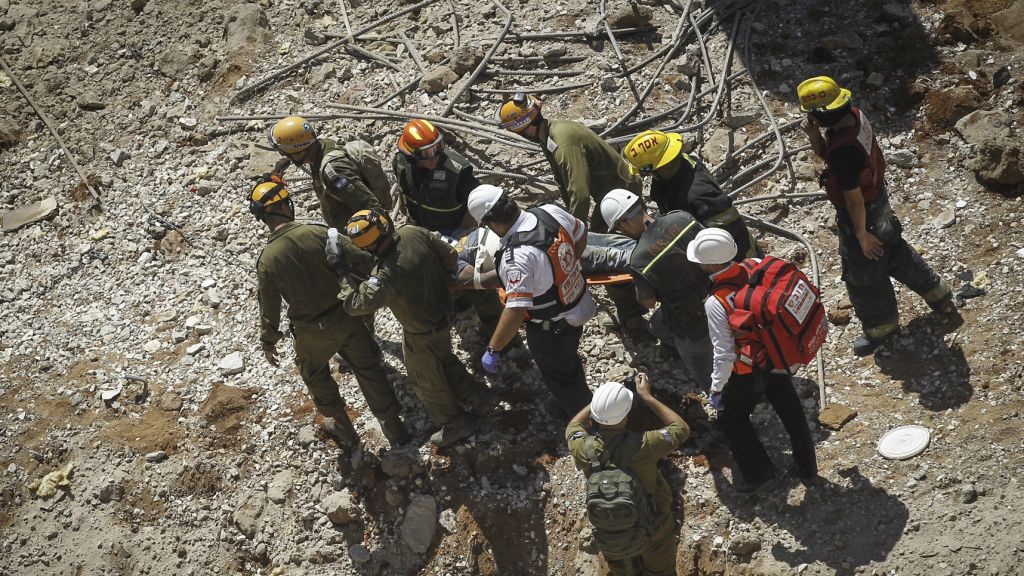
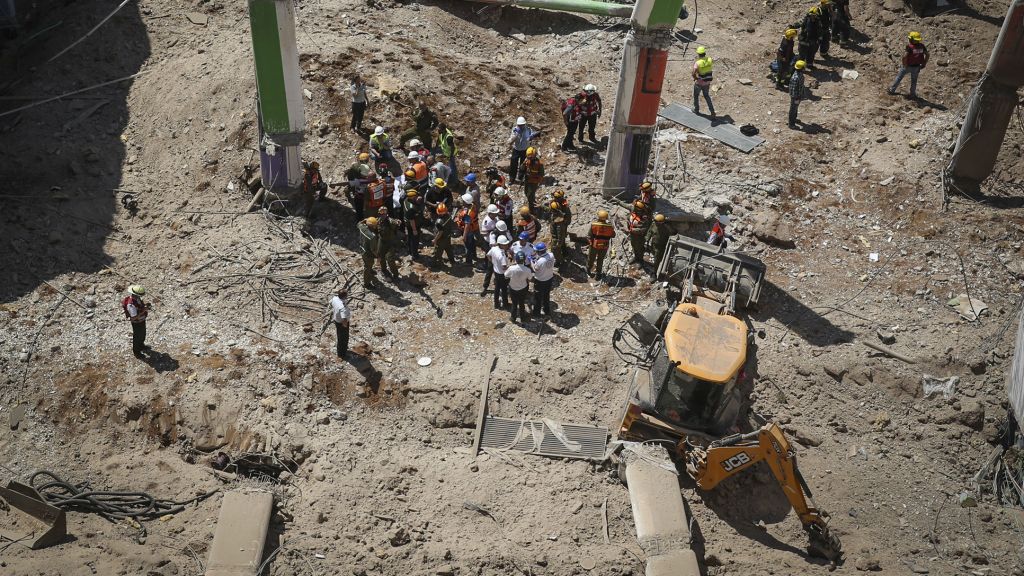
Rescue workers spent hours trying to locate and free workers buried in the rubble left behind from the collapse on the corner of Habarzel and Hanehoshet streets in Tel Aviv’s Ramat Hahayal neighborhood.
Rescue officials said two people were killed in the collapse and 24 injured. Seven more workers were still missing Monday afternoon and thought to be under the rubble.
Knesset Labor and Welfare Committee Chairman MK Eli Alaluf (Kulanu), who has spearheaded an effort to impose fines and prison sentences on building contractors with poor safety records, said Monday’s collapse could have been prevented.
“Unfortunately this tragedy that we are seeing again and have warned against has replayed itself in front of our eyes,” he said.
“At a time when these sorts of accidents have become more prevalent, I call on the Labor and Welfare Ministry to immediately implement the law that was advanced in the Labor and Welfare Committee and to close down the construction site,” he said, referring to a recently passed law that seeks to impose two-day closures on sites where there are serious accidents.

While accidents on building sites are common in Israel, most of those employed in construction in the country are Palestinian or foreign workers and the issue is rarely at the center of the public consciousnesses.
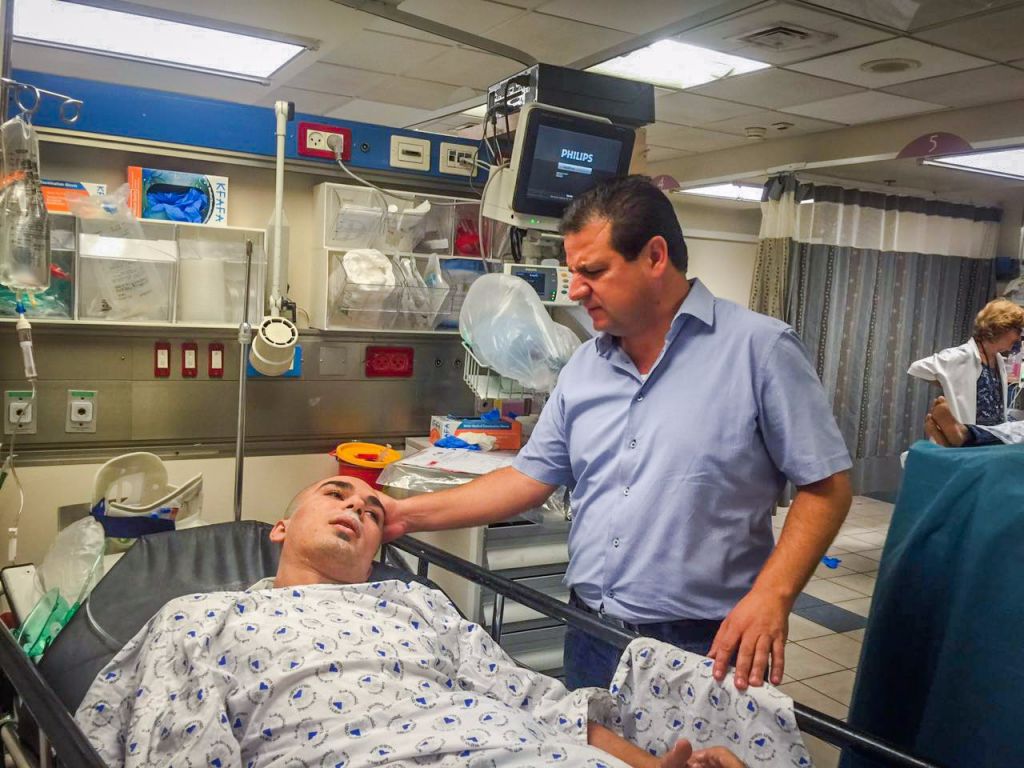
Visiting the wounded at Ichilov Hospital, MK Ayman Odeh, head of the Joint (Arab) List Knesset faction, called for an investigation into safety at the site.
“Thirty-two [construction workers] have died since the beginning of the year,” he said. “This requires, immediately, a state investigative committee.”
Odeh said the plight of construction workers, many of them Palestinian, who work in dangerous conditions has not received sufficient attention.
Monday’s injured came “from all parts of society,” including Jews and Arabs, he added.
Investigators have yet to say what caused the morning collapse of the building, but are reportedly considering it an engineering failure. A tractor reportedly drove over the roof of the structure just before it collapsed.
MK Eyal Ben-Reuven (Zionist Union) urged a government-level response to the issue of construction safety.
“This sort of incident demonstrates the negligence and carelessness in the field of construction site safety,” he said. “It’s a disgrace that we face repeated incidents that can be prevented. I call on the government to start working on the issue.”
In 2015, 34 laborers died while working on construction sites. The majority, 21 of the 34, fell to their deaths.
According to a Haaretz report in April, 15 people died in construction site accidents in the first quarter of 2016. The Economy Ministry found that in half the cases, there were no sanctions imposed on contractors following the deaths, according to the report.
Construction safety bill
Last month, the Knesset passed a bill that aims to tackle the issue of work accidents on construction sites by enforcing an automatic closure at any site where a worker dies or is seriously injured, as well as imposing fines or imprisonment on owners who don’t correct safety issues.
The bill calls for two-day closure of any construction site where there is a death or serious injury. In addition, labor inspectors will be authorized to close the site for a further three days if safety standards are inadequate.
Inspectors will also be authorized to order the correction of safety issues. Site owners who don’t comply could face two years in prison or a NIS 75,000 ($20,000) fine.
Sponsored by Alaluf, Ben-Reuven, and MK Abd al-Hakim Hajj Yahya (Joint Arab List), the law also stipulates that during any closure, construction workers will continue to be paid.
In July, the Knesset Labor, Welfare and Health Committee approved the bill for a second and third reading in the plenum, where it was voted into law in August.
Committee chair Alaluf said during the July meeting, “Every day there are accidents. There is a systemic breakdown. Our aim is not to close a site, but to correct it.”
The law had its opponents among construction companies, which balk at the potential closures.
Haim Feiglin, deputy president of the Israel Builders Association, the national trade body of construction companies, protested that the bill was too rigid.
“It is unimaginable that a construction site be closed without conclusively clarifying what the cause of death was,” he said. “What if it is a death by natural causes?”
The chief labor inspector at the Economy Ministry, Varda Edwards, rejected Feiglin’s concerns, telling the July committee meeting that “there are only a few isolated marginal incidents like that. If we start to create a process of clarification [for cause of death], it defeats the purpose of the bill.”
Times of Israel staff contributed to this report.








The Times of Israel Community.