

After Europe expansion, Israeli shared mobility firm hits Tel Aviv Stock Exchange
GoTo Global sets sights on solving congestion in city centers with micro-mobility solutions such as e-scooters, bikes, and shared cars
 Add ToI as a Preferred Source on Google
Ricky Ben-David is a Times of Israel editor and reporter
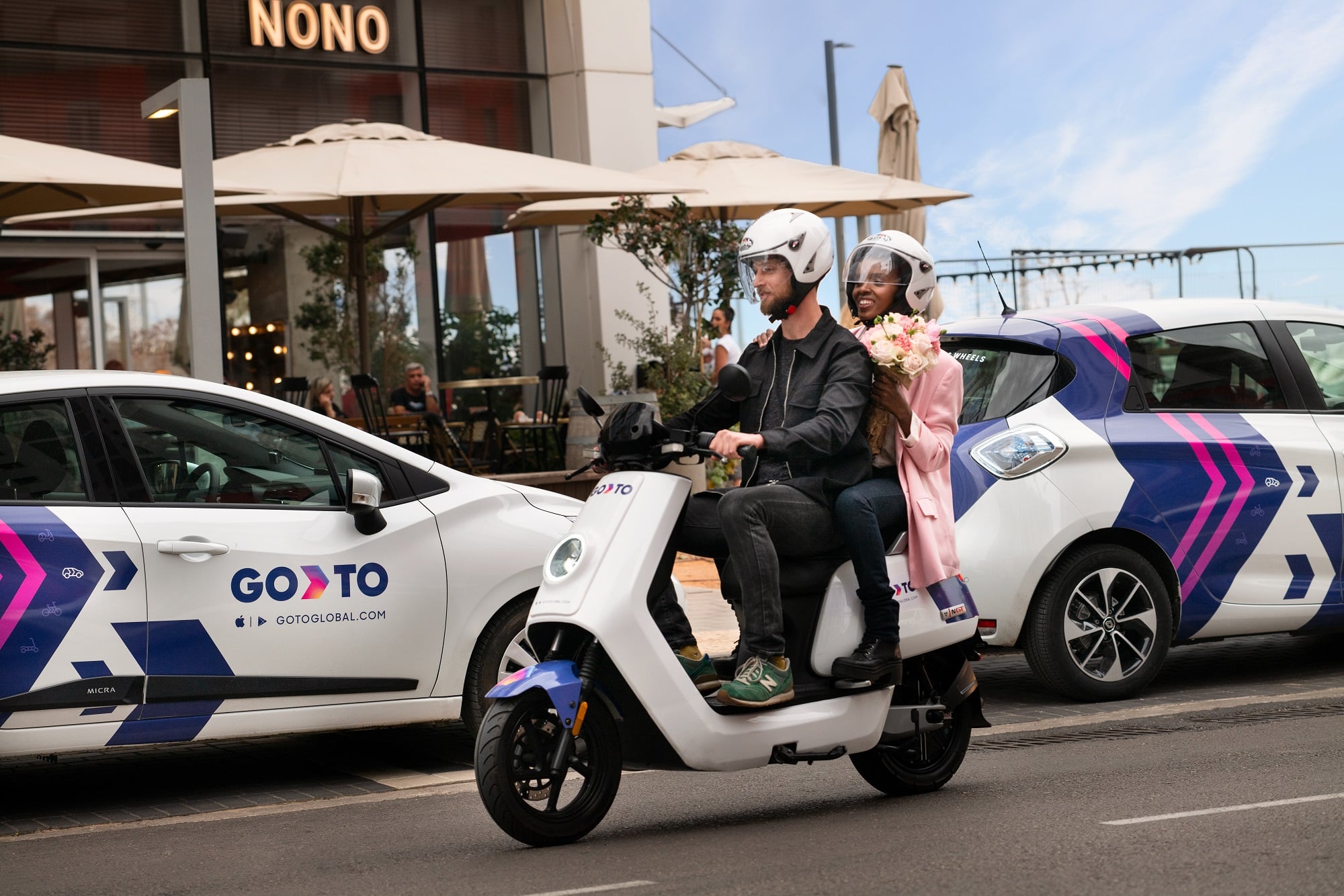
Months after acquiring a successful German company in a major boon to its European operations, Israeli mobility firm GoTo Global kicked off 2022 by hitting the Tel Aviv Stock Exchange in a merger with a special purpose acquisition company (SPAC) and a combined market cap valuation of $163 million.
The merger with Nera Tech Media, a publicly-traded holding company of Israeli audio content company Trinity Audio, was announced earlier this month in a deal GoTo CEO Gil Laser said was a significant milestone for the 14-year-old company.
In an interview with The Times of Israel ahead of the new year, Laser described the company’s trajectory from a small shared vehicle outfit for Tel Avivians, then known as Car2Go, to a major mobility provider of shared e-scooters, e-bikes, bicycles, and motorcycles in key European markets. GoTo Global’s sights are now set on North America and Asia.
The firm’s Israeli arm, GoTo Israel has been operating a fleet of cars and bikes in Israel for the past 13 years. The firm collaborates with the Tel Aviv-Yafo Municipality on the municipal car-sharing service Autotel, and has additional collaborations with other municipalities, such as Ra’anana, in which the cities designate parking spots and the vehicles are reserved via what is still known in Israel as the Car2Go app.
“Tel Aviv is the best city in the world for car-sharing, it really is,” said Laser, who also shared that he’s not owned a vehicle in the city for over six years.
“Parking in Tel Aviv can cost more than the monthly car payment,” he said. The notoriously congested city has a restricted and expensive parking problem.
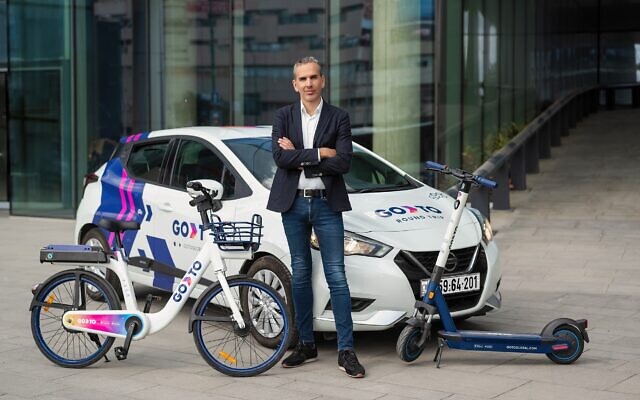
At the beginning of the GoTo journey, Laser said, “we wanted to be everywhere, in every city — Tel Aviv, Haifa, Netanya. In Ra’anana and Jerusalem, we are still operating, but in Rishon Lezion and Ashdod, no. These places are not really ready for shared vehicles, most people work outside the cities.”
Over the past decade, GoTo’s focus has been on growing its multi-modal mobility solutions, enhancing its software platform, and helping commuters get around congested city centers more easily while reducing regular car traffic. “We want to be a one-stop shop that covers all travel needs,” said Laser.
GoTo Global made its entry into the European market through Malta, followed by Spain and then Germany, with last year’s acquisition of Berlin-headquartered, shared e-scooters company emmy.
The purchase “was a big step” for GoTo Global, Laser said, and has allowed it to tap into an operation that includes a fleet of over 3,000 scooters across Berlin, Hamburg, and Munich, and some 350,000 existing subscribers.
In all four countries where it operates, GoTo Global runs about 6,000 assets of shared cars, motorbikes, bicycles, e-bikes, and electric scooters, and employs approximately 300 people.
Laser said he sees “huge potential for growth” in Germany and additional opportunities for expansion into the Netherlands and Austria, as well as future markets in North America, Australia, and Asia.
The GoTo CEO said he believes “more people want to use alternative transportation, but they need simplicity.”
“If I want to persuade people to give up their cars, I need to offer multiple mobility platforms — cars, mopeds, bikes — so they can get where they are going. I need to be on top of anything they can ride on,” Laser said. And whereas competitors usually offer one mode of transportation, such as a fleet of shared e-scooters, GoTo offers multiple ways to move around.
“We have all the right assets that customers can find in one place,” he said.
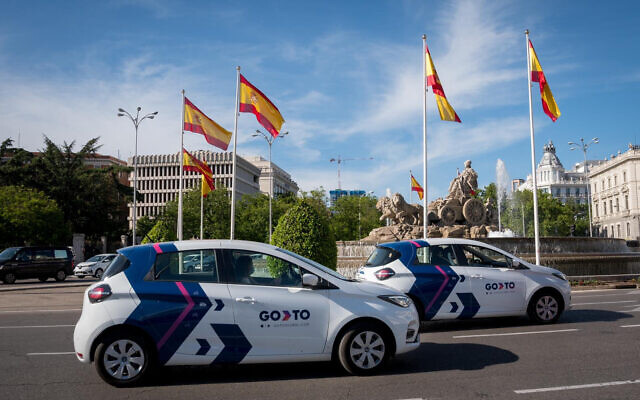
This approach is also beneficial for logistical reasons, Laser pointed out, because GoTo offers scheduling options. “If it’s a rainy morning, and you need to go out, everyone is going to be waiting for a taxi, people won’t be able to find a taxi from the same fleet,” he said. With GoTo, customers can book a shared vehicle of choice, take it to their destination, “and bring it back to the same place” for an hourly rate.
On the software end, Laser said GoTo uses tech to predict demand in geographic locations based on timing, events, and weather, Laser explained. The company’s app uses artificial intelligence-based software to predict by the minute where vehicles will be needed and allows the firm to rebalance its fleets to meet demand and report damaged vehicles, Laser said.
Its full fleet has mechanical bikes, electric bikes, electric kick scooters, and mopeds, or small motorcycles — which don’t need a license — in addition to electric cars for one-way services, and regular cars for longer round trips. The scooters and mopeds come with two helmets. The company also offers seven-seaters, nine-seaters and vans, on-demand, for its European customers.
The company said it generated nearly 3,000,000 rides in 2021.
It anticipates some $35 million in revenue by year-end, an increase of 58% over 2021’s reported revenue of $22 million. GoTo had revenue of $12.5 million in 2020, most of it from Israel.
Getting around
The pain point GoTo is trying to solve is congestion in city centers where car traffic can hinder access in and around town and interfere with quality of life, he said.
“Cities are dense, there are too many cars and too much pollution, and cities are looking to restrict access to private cars. We see huge potential here,” Laser added.
An important and growing customer sector for GoTo Global, he revealed, was the enterprise market “where businesses offer incentives for employees to take alternative transport.”
There are more than 1,000 business customers that use the service. Thirteen percent of GoTo Global’s income comes from the enterprise sector — from flower shop deliveries to accountants and lawyers — and it wants to raise that to 50% by 2025, Laser said previously.
The company has said it hopes to offer multimodal shared mobility in every major European city by 2025.
GoTo Global’s investors have included TelCar, a company owned by the Unger family, and the family office of Israeli-American entrepreneur Adam Neumann, the co-founder and former CEO of shared workplace giant WeWork.
Shoshanna Solomon contributed to this report.










The Times of Israel Community.