

Amid widening spat, Smotrich accuses Qatar of impeding hostage talks to serve Hamas
Finance minister calls Doha ‘biggest obstacle to returning hostages’; former IDF general Avivi says Israel needs to establish military control, settlements in Gaza to ensure security
 Add ToI as a Preferred Source on Google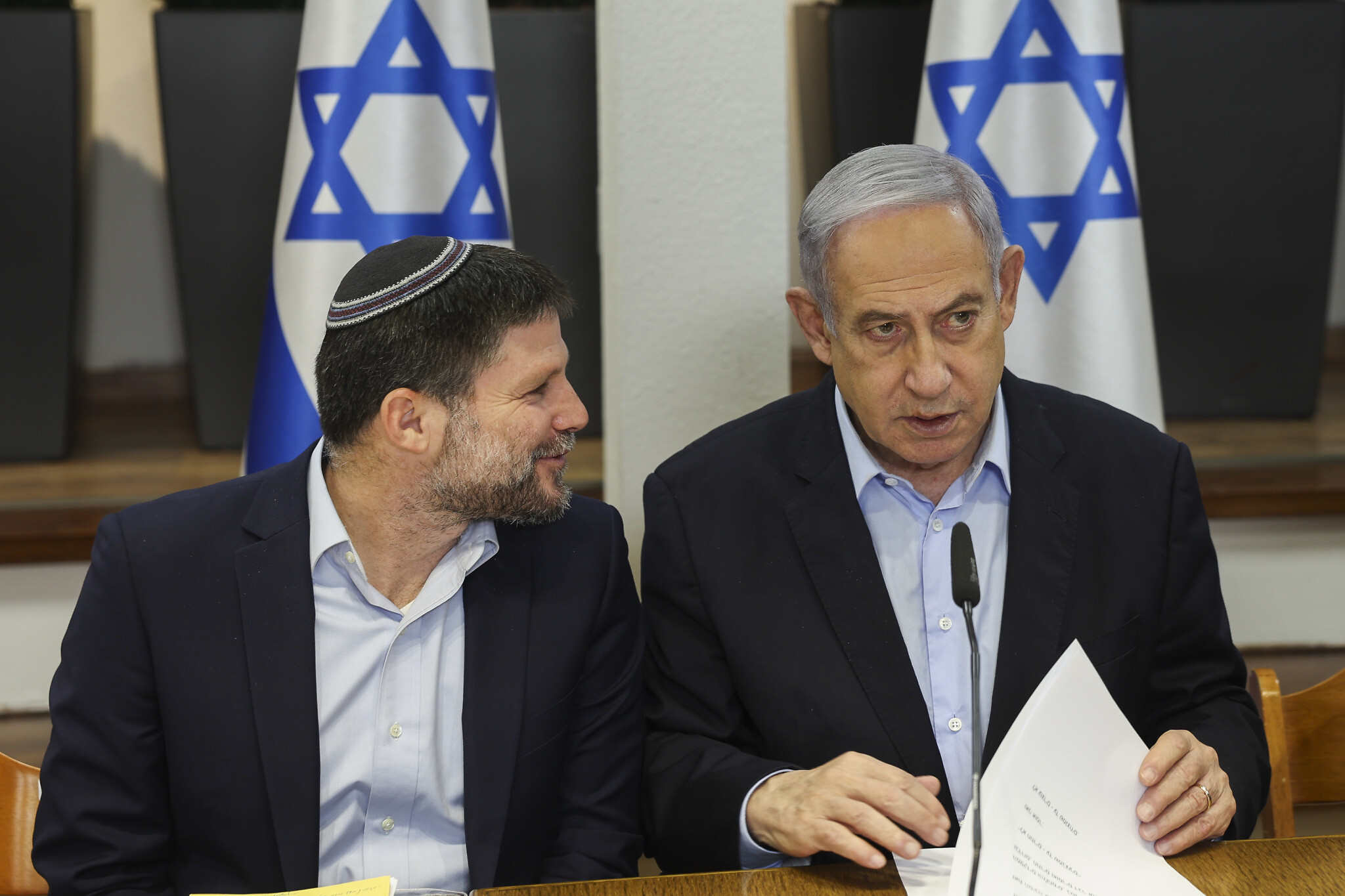
Finance Minister Bezalel Smotrich accused Qatar on Thursday of thwarting Israel’s efforts to destroy Hamas, alleging that the Gulf state was “cooperating” with the Palestinian terror group to keep hostages it is holding as a bargaining chip to halt the fighting and thereby preserve Hamas’s rule in the Gaza Strip.
“Qatar encourages terrorism, finances terrorism, pushes terror and is playing a double game,” said Smotrich at a conference of the Israel Defense and Security Forum in Ashkelon, stepping up criticism he voiced in a tweet on Wednesday evening after Doha’s foreign ministry said it was appalled at a report that Prime Minister Benjamin Netanyahu had badmouthed the Gulf state.
“Qatar is the biggest obstacle to returning the hostages. We could get all 136 hostages tomorrow if Qatar would give Hamas an ultimatum to return all the hostages, and if the West would give Qatar an ultimatum to do that,” the far-right politician charged.
Doha, which is a leading patron of Hamas and hosts its leaders, played a key role in negotiating the release of over 100 hostages in exchange for Palestinian security prisoners in November, and is a key mediator in current talks aimed at releasing the remaining abductees and negotiating a lengthy pause in fighting.
“Qatar has a clear interest in preserving Hamas, its survival and its rule in Gaza and outside of it after the war. And it is doing everything to thwart our efforts, of the State of Israel, to totally destroy the military and governance capabilities of Hamas,” Smotrich said.
The Religious Zionism party head said that the US has substantial leverage over Qatar and could pressure it to force Hamas to release the hostages, but was not doing so because “there are people with deep financial interests linked with Qatar.”
“This is huge hypocrisy, and Israel needs to remove the mask from this hypocrisy,” he added.
In his Wednesday night post on X, Smotrich said Doha was “Hamas’s patron and is largely responsible for the massacre of Israeli citizens Hamas committed [on October 7]. The West’s treatment of it is hypocritical and based on improper financial interests. The West can and should employ far stronger leverage and bring about the release of the hostages immediately.
“One thing is certain: Qatar won’t be involved in any way in managing Gaza the day after the war.”
Hamas denounced Smotrich’s “targeting of the brotherly State of Qatar,” asserting Thursday that the Gulf monarchy had “played an active political role to stop the aggression on our people and advance” exchange deals.
Smotrich’s words reflect Israel’s position, which is to obstruct a possible agreement on the exchange, Hamas senior adviser Taher Nunu added in his statement.
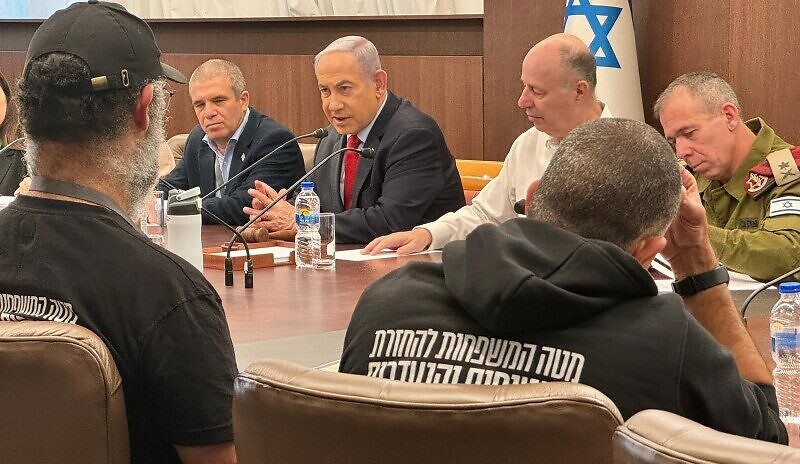
The developments came after Qatar’s foreign ministry on Wednesday chastised Netanyahu for saying that it was “problematic” that Doha was acting as the mediator between Israel and Hamas.
In a recording aired Tuesday by Israeli television, Netanyahu appeared to express disappointment with the United States for not applying more pressure on the Gulf state.
“I think you need to speak to the hearts of the international community to apply pressure on those who can apply pressure,” Netanyahu was heard telling the families of hostages in the leaked recording published Tuesday by Channel 12 news.
He said Qatar should be the first address, even as he noted that he has never thanked Doha publicly for its role.
“Qatar, from my point of view, is no different in essence than the United Nations… and the Red Cross, [Qatar] is even more problematic,” he said, adding, however, that he’s willing to speak to anyone “that would help me get them home.”
“I have no illusions about them. They have leverage [over Hamas]… Because [Qatar] funds them.”
Netanyahu said he got “very angry recently with the Americans” for renewing a deal to extend US military presence at a base in Qatar for another 10 years.
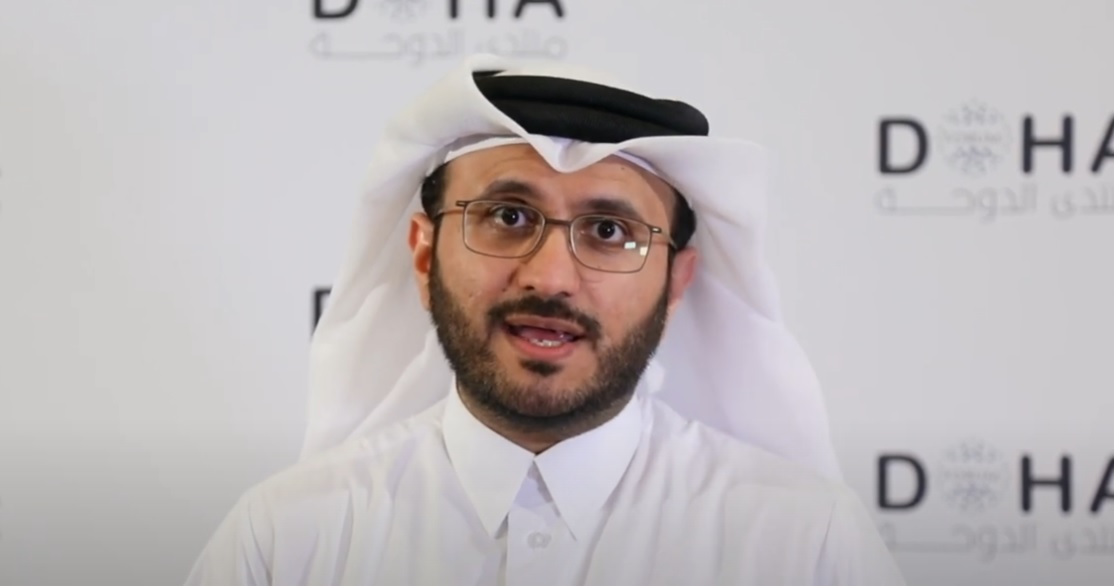
In response, Majed Al Ansari, the spokesperson for Qatar’s foreign ministry, said that Doha was “appalled” by the remarks, adding that if confirmed, they “are irresponsible and destructive to the efforts to save innocent lives, but are not surprising.”
Speaking at the Ashkelon conference, founder of the Israel Defense and Security Forum Brig. Gen. (res.) Amir Avivi laid out what his organization, a right-wing group with a hawkish stance on military and security strategies, believes should be the policies adopted towards Gaza by the government.
Avivi opined that Israel should take control of the Gaza Strip for a lengthy period of time, and also establish settlements there which, he said, would help secure the territory and Israel as a whole.
Speaking to The Times of Israel, he said that Israel would also need to “create a new atmosphere and society” in Gaza and create a “de-Nazification” process to make long-term changes.
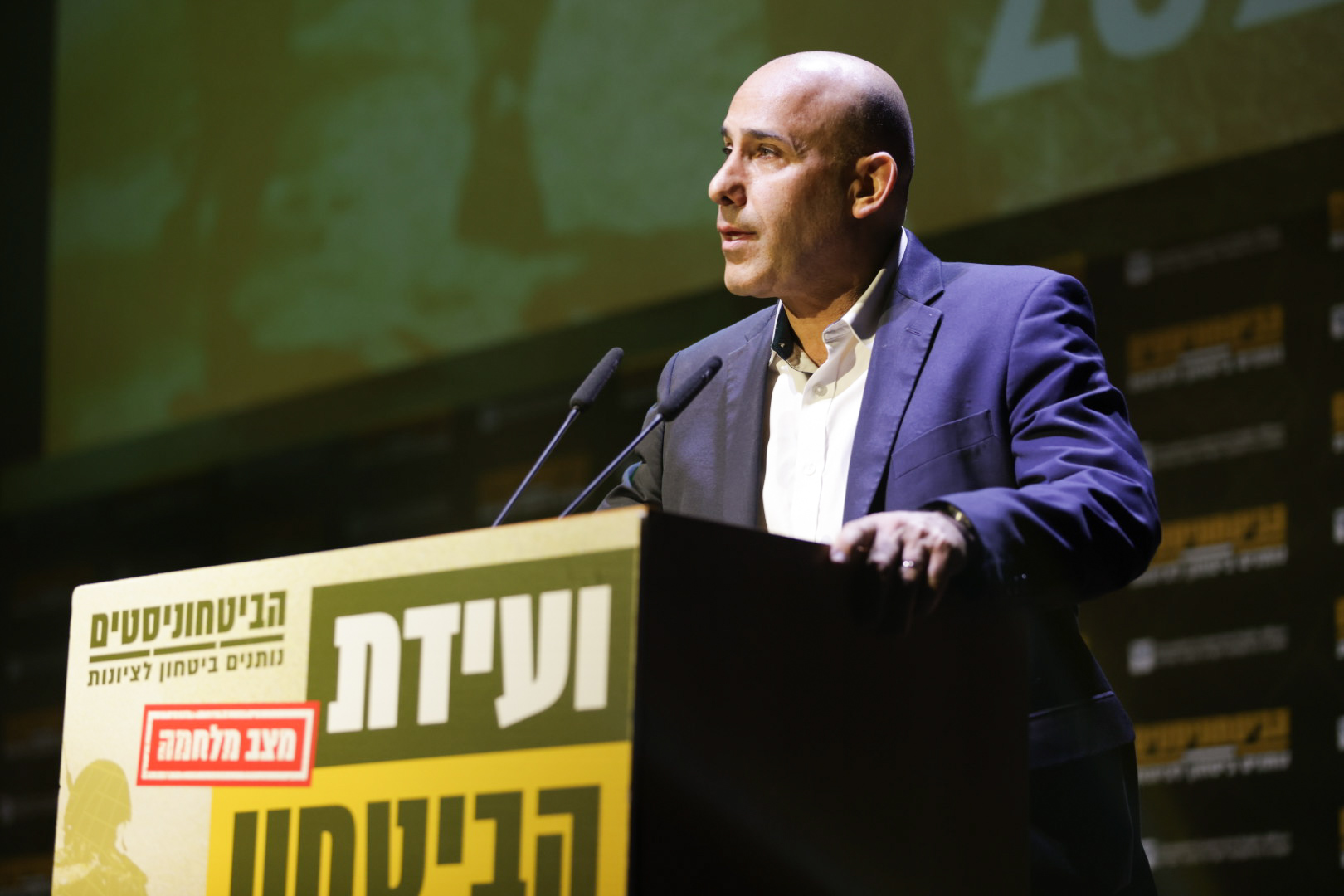
“I think what will happen on ‘the day after [the war]’ is military control. Israel will have to take control of the Gaza Strip, maybe for a long time,” said Avivi, who served as deputy commander of the IDF’s Gaza Division.
He said that during this period of military rule, Israel should build up a local Palestinian bureaucracy for the management of civilian concerns in each different city and municipal locality in Gaza, and utilize the civil councils that exist at present and were used by Hamas to manage everyday life in the territory.
“We need to create a new atmosphere and possibly a new Palestinian society, we’re talking about the de-Nazification of Palestinian society, changing the whole education system, the religious dialogue,” said Avivi.
The former general argued that “Jewish settlements” in Gaza would be necessary to establish security control.
He pointed to the severe security problems experienced by the IDF during its 15-year occupation of South Lebanon as an example of the difficulties faced by militaries in hostile regions where there is no civilian presence.
“In Judea and Samaria [the West Bank], you can take your car and drive anywhere you want without the army, without a convoy. That’s because of the civilians and the thousands of cars which are moving around the roads all day, and the presence of all these towns which creates control and security,” claimed Avivi.
“The only viable solution [for Gaza] is combining overriding security control over Gaza with Jewish towns, with settlement,” he contended.

Asked if such a system would be politically viable in terms of governing the Palestinians and diplomatically viable in the face of what would be intense international opposition to rebuilding Israeli settlements in Gaza, the former general said there were numerous countries around the world with “diminished sovereignty,” which could serve as a model for some form of self-governing Palestinian entity, citing the microstate of San Marino which lies entirely within the borders of Italy as an example.
And asked whether purely military and security arrangements can guarantee Israel’s long-term security in the face of the Palestinian desire for an independent state, Avivi said that limited Palestinian autonomy in what is now Area A and B of the West Bank, where the Palestinian Authority currently governs, would be sufficient to deal with such concerns.
“We need to set the terms to really, seriously secure Israel forever. The question is not if by any chance we will have a Palestinian [David] Ben-Gurion who will manage to get them to do peace for 30 or 40 years,” referencing Israel’s first prime minister.
“The question you need to ask is, once war is imminent and they are preparing for war, are the terms which were set something which will enable us to exist or will it be like what happened in Gaza, [with the Palestinians] exponentially building terror infrastructure to such an extent that you need the entire IDF just to deal with this small, shallow area by the sea?” asked Avivi.
Times of Israel staff contributed to this report.




The Times of Israel Community.