

An army of volunteer physical therapists treats aching IDF soldiers on the front lines
Realizing that exhausted troops need more than food and supply deliveries, UK-born Tasha Cohen launched Chayal’s Angels, which has touched over 2,000 and counting
 Add ToI as a Preferred Source on Google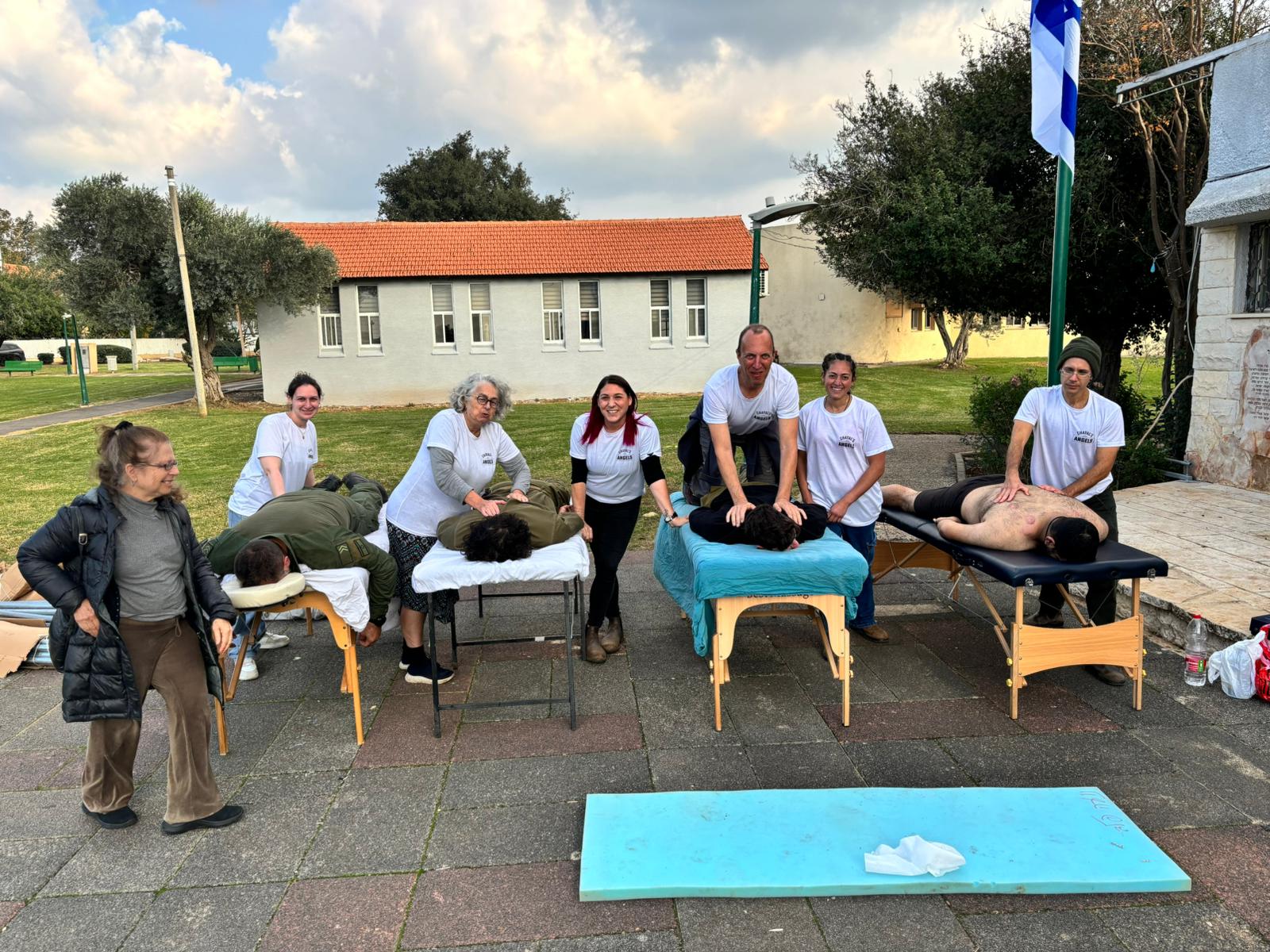
When Tasha Cohen volunteered to deliver food to IDF soldiers defending Israel’s borders after the outbreak of the war in Gaza and ongoing violence along the border with Lebanon, it didn’t take long for her to see the round-the-clock stress troops were living with — both emotional and physical.
“What these guys need just as much [as food] is healing — especially the reservists, who’ve been sitting in front of computers for years,” said the 38-year-old London native who now lives in Pardes Hanna.
“All our soldiers are hurting, but it’s especially hard on the older guys,” she said, noting that hauling heavy guns and duffels and sleeping on mats in two-man tents or rickety cots takes a toll.
Enter Cohen and her “Chayal’s Angels.” (“Chayal” is Hebrew for soldier.)
Cohen put out a call to action, asking physiotherapists, chiropractors, massage therapists, acupuncturists and yoga therapists to donate their time to the troops. When they answered, she began booking them into IDF bases across the country’s north.
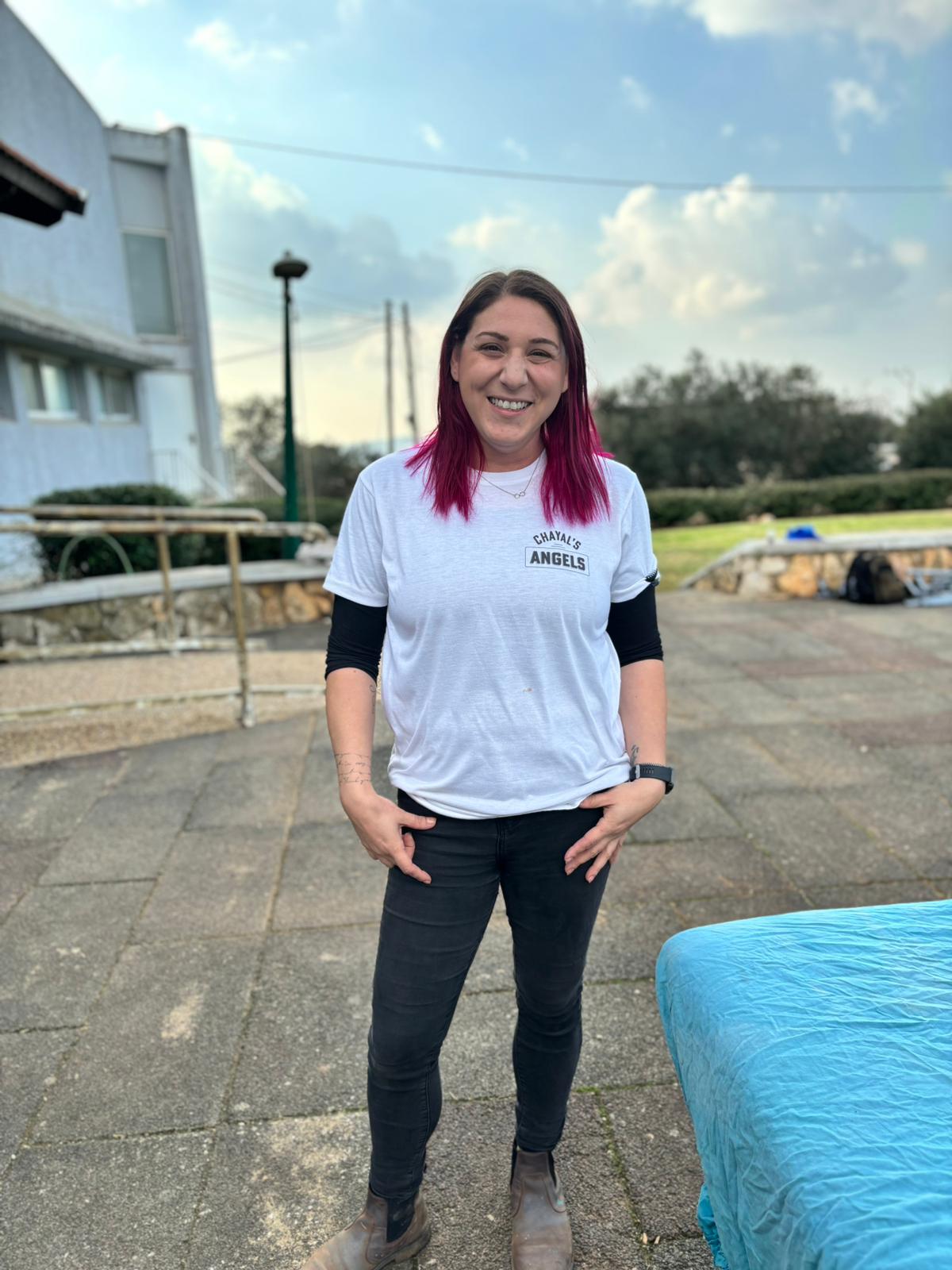
Organizing each base visit — packing therapists into cars with massage tables strapped on the roofs, then matching each soldier with the right healer — is where Cohen has been putting her own skills as a business operations manager to work. Her experience has been useful as her group of volunteers treats anywhere from 50 to 200 soldiers a day.
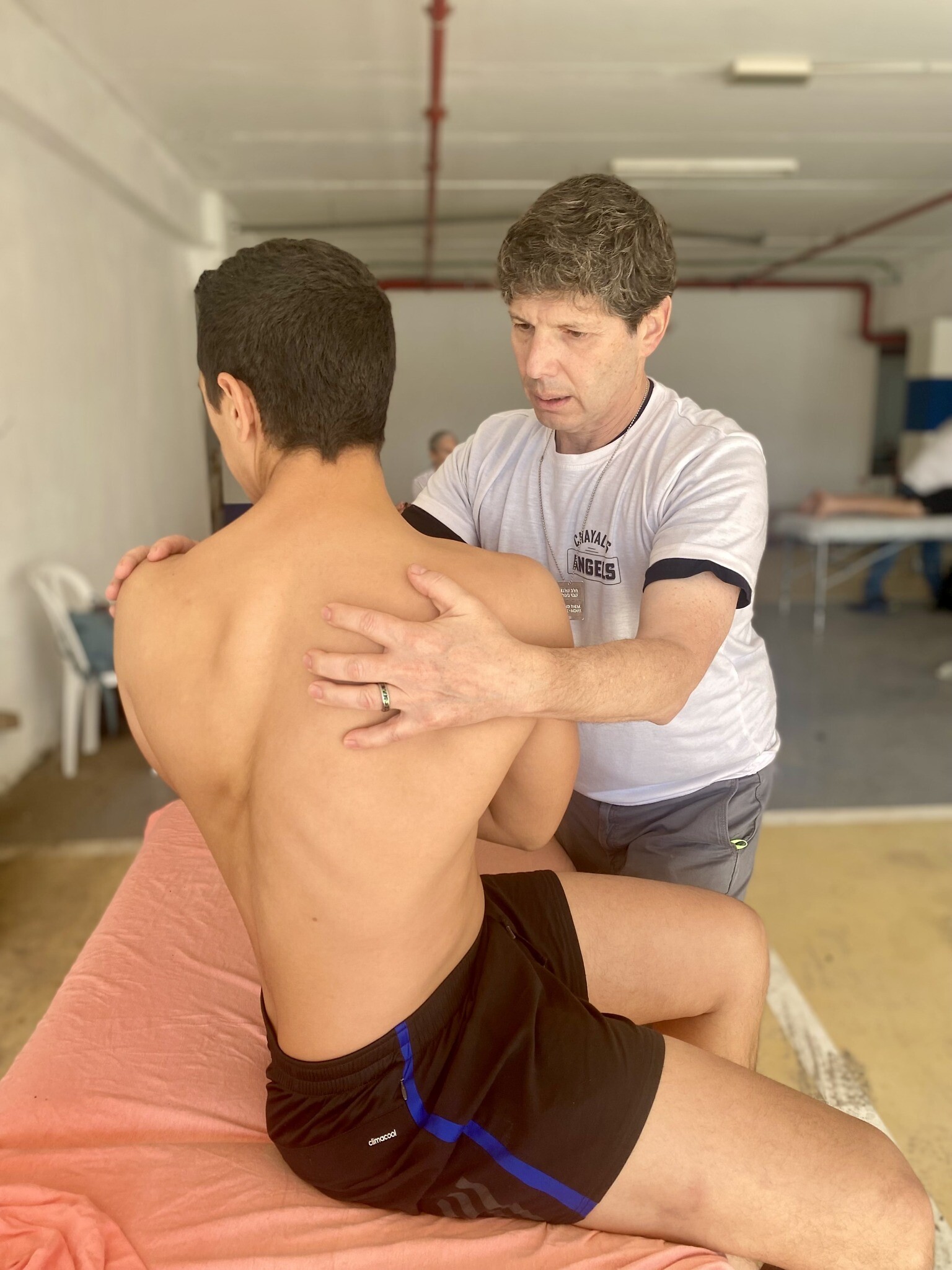
David Moshe is one of Cohen’s “angel” therapists. A native New Yorker who’s been working in the acupuncture and cranial-sacral fields for over 30 years, Moshe immediately answered in the affirmative when he got the call.
And, although many of the soldiers he sees are living with chronic back, neck and shoulder pain, “We never hear a complaint, just tremendous camaraderie and high morale,” said Moshe, whose daughter is serving as an IDF social worker.
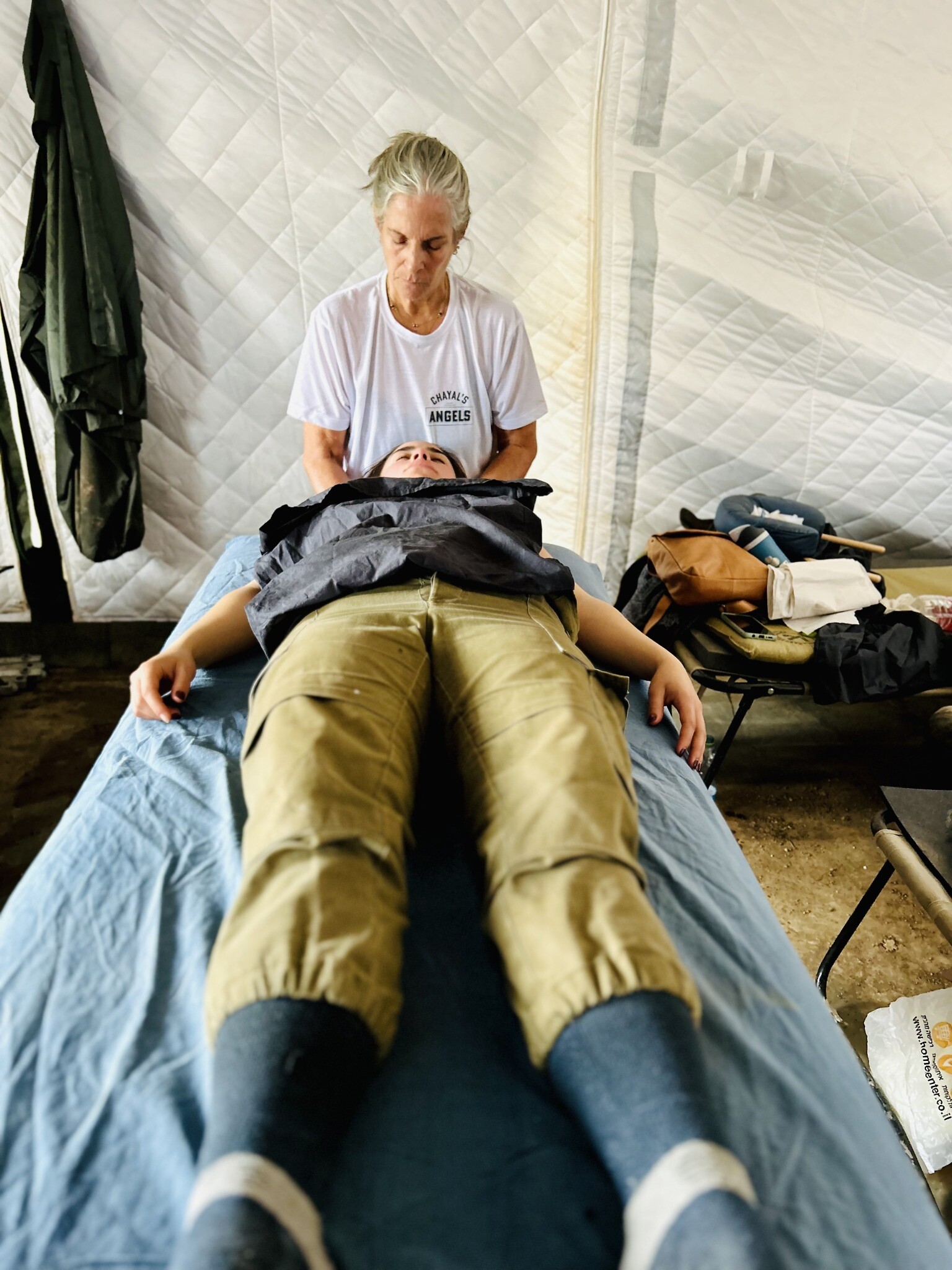
Massage therapist Debby Tamir has spent the last 25 years directing aquatics at Camp Ramah in Nyack, New York. She was inspired to volunteer by one of her lifeguards, who is among the soldiers taken hostage by Hamas in the Gaza Strip.
“Everything I do is for him,” she said.
The first base she worked on, Tamir said, “felt just like a MASH episode –– it was a makeshift tent in the mud and they were in such need.”
A New York native who lives near Carmiel and teaches parents about childbirth, breastfeeding and emergency care, Tamir is no stranger to the IDF. At 65, she’s seen all three of her children serve as IDF combat soldiers.
“I feel so connected with the ones we’re treating — almost every one of them asks me for a hug afterward,” she said.
And some Chayal’s Angels volunteers don’t let distance stop them from doing their part. Matt Mesibov, a Minneapolis physiotherapist, flew to Israel with one desire: to serve the soldiers.
“Looking back on those two-and-a-half weeks, while I’ve never treated in a military situation let alone in a combat zone, I’ve also never done anything so personally meaningful,” said Mesibov, 62. “Tasha says we’re an army serving an army, and that’s how you feel when you’re on base.”
And it seems their service is having an impact.
Like hundreds of thousands of reservists, American-born Noah Levine — whose name, along with another soldier in this article, has been changed for his safety — is on full-time duty after nearly a decade of civilian life. Levine is a married father of two who works as a civil engineer.
His life changed radically along with the rest of his fellow Israelis on the morning of October 7, when thousands of Hamas-led terrorists stormed Israel’s borders and brutally murdered 1,200 people — most of them civilians — amid horrific atrocities, and kidnapped another 240 to the Gaza Strip. Following the massacre, the Israeli government vowed to remove Hamas from power in the Strip, launching the ongoing military campaign to eradicate the terror group.
Now, more than two months of late-night patrolling endangered kibbutzim on the northern border while burdened with heavy guns and equipment have taken a toll on Levine’s 35-year-old body.
“We’re all feeling it in our backs, shoulders, knees and feet,” he said.
When Cohen and her Chayal’s Angels showed up on base, Levine experienced his first encounter with acupuncture needles, followed by a massage.
“They wouldn’t leave until every single guy in our unit — all 60 of us — received at least one treatment,” he said.
When one officer told them about his chronic stabbing knee pain, “Tasha wouldn’t take no for an answer. She wouldn’t stop till he’d had four treatments and gotten some relief,” Levine said. “The whole day was an incredible morale boost. Chayal’s Angels is one of the creative ways our people are supporting us; it’s reminding us that we’re in this war together.”
Indeed, said native Chicagoan Yosef Green, whose name has also been changed for his safety, the healing the Angels bring is emotional as well as physical.
“Take a guy away from his wife, his kids and his job and he can act all macho but inside he doesn’t know what to do with his feelings,” said Green, who’s stationed along the northern border, far from his Efrat home. “And if you don’t express it, your body just absorbs it. The treatments and just having them here really helped with that.”
On the day the Chayal’s Angels were visiting Green’s base, things briefly went sideways when the missile siren sounded and everyone had to stop mid-treatment and run for the bomb shelter. But the volunteers didn’t appear shaken, Green reports. “In the shelter, they just picked up where they’d left off.”
Indeed, Cohen says she can see the soldiers relax before her eyes.
“They’re always on their guard and ready to jump, so the therapeutic deep relaxation can stop the cycle of soreness, strain and pain,” she said. “In many cases, nobody has touched them in any kind way for months and here they are getting 30 minutes of pure attention, helping them physically and emotionally.”
Part of the emotional release is having someone to speak openly with, Cohen said.
“They might not tell their families everything so they don’t worry, but they can tell us honestly how they’re feeling. And afterward, they say they have the energy to get back to work with less pain and more power,” she said.
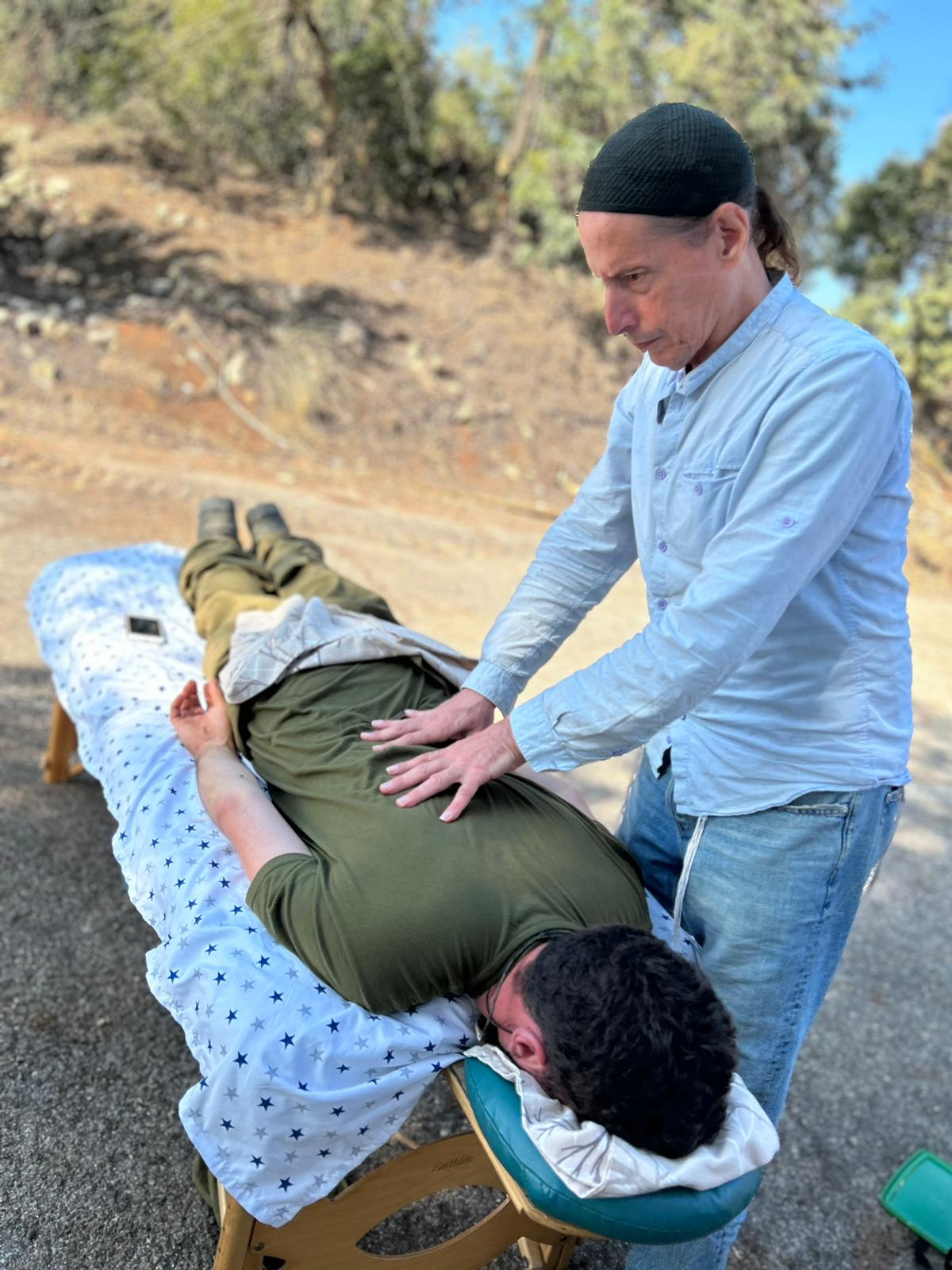
“You feel when you walk onto a base that you’re part of this incredible country and that in some small way you’re serving too,” said acupuncturist Moshe. “When our backs are against the wall we’re there for each other.”
As for Cohen, as deep as she is in treating soldiers now — more than 2,000 of them and counting – plus raising money for equipment and transportation — she’s also got an eye on the end game.
“When this war is over, we as a country are going to have to deal with all kinds of trauma, with injuries, depression and difficulties in getting back to life,” she said.
Her vision includes a Chayal’s Angels veteran’s clinic and being able to pay the therapists who are now working for free.
“We could give some relief to an overburdened healthcare system afterward with physical and mental therapy,” she said. “Even a halfway house to ease veterans back into life.”
But for now, it’s enough for Cohen to make sure hundreds of soldiers each week get some relief.
“Sometimes I’m so exhausted I just want to crawl under the duvet and hide,” she sighed. “But as soon as I get on a base, I know that everything in my life has led up to this moment.”





The Times of Israel Community.