

‘An insatiable curiosity’: Reservist killed in Gaza fighting gets posthumous PhD
Widow, parents of Zechariah Haber, 32, collect Tel Aviv University diploma; biologist sought to improve crop productivity in harsh climatic conditions; others to continue his research
 Add ToI as a Preferred Source on Google
Reporter at The Times of Israel

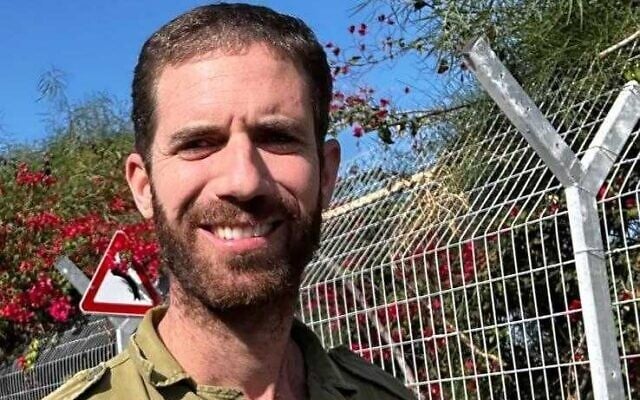
Master Sgt. (res.) Zechariah Pesach Haber, 32, who was killed fighting in the Gaza Strip six months ago, was awarded his PhD posthumously from Tel Aviv University on Thursday for his research in improving the productivity of crops in harsh climatic conditions.
The biologist and father of three from Jerusalem served in the 14th Armored Brigade’s 87th Battalion when he was killed in battle on January 16, along with Sgt. Maj. (res.) Yair Katz, 34, from Holon.
His widow, Talia, and his parents, Miriam and Aharon Haber, accepted the diploma on his behalf to a standing ovation. More than 300 other PhD candidates and their families attended the ceremony.
“We shook the rector’s hand and got his diploma,” said his mother, Miriam, after the ceremony. “We’re proud of him and his work but it was very bittersweet.”
She said that the family is grateful to the university for “honoring him so beautifully,” and to the other graduates and their families “for their huge show of support.”
Haber had been working on his doctorate in Dr. Nir Sade’s laboratory at the university’s Institute for Cereal Crops Research. The title of his thesis is “Systems Biology Approach for Stress Resistance and Yield Traits in Crops.”
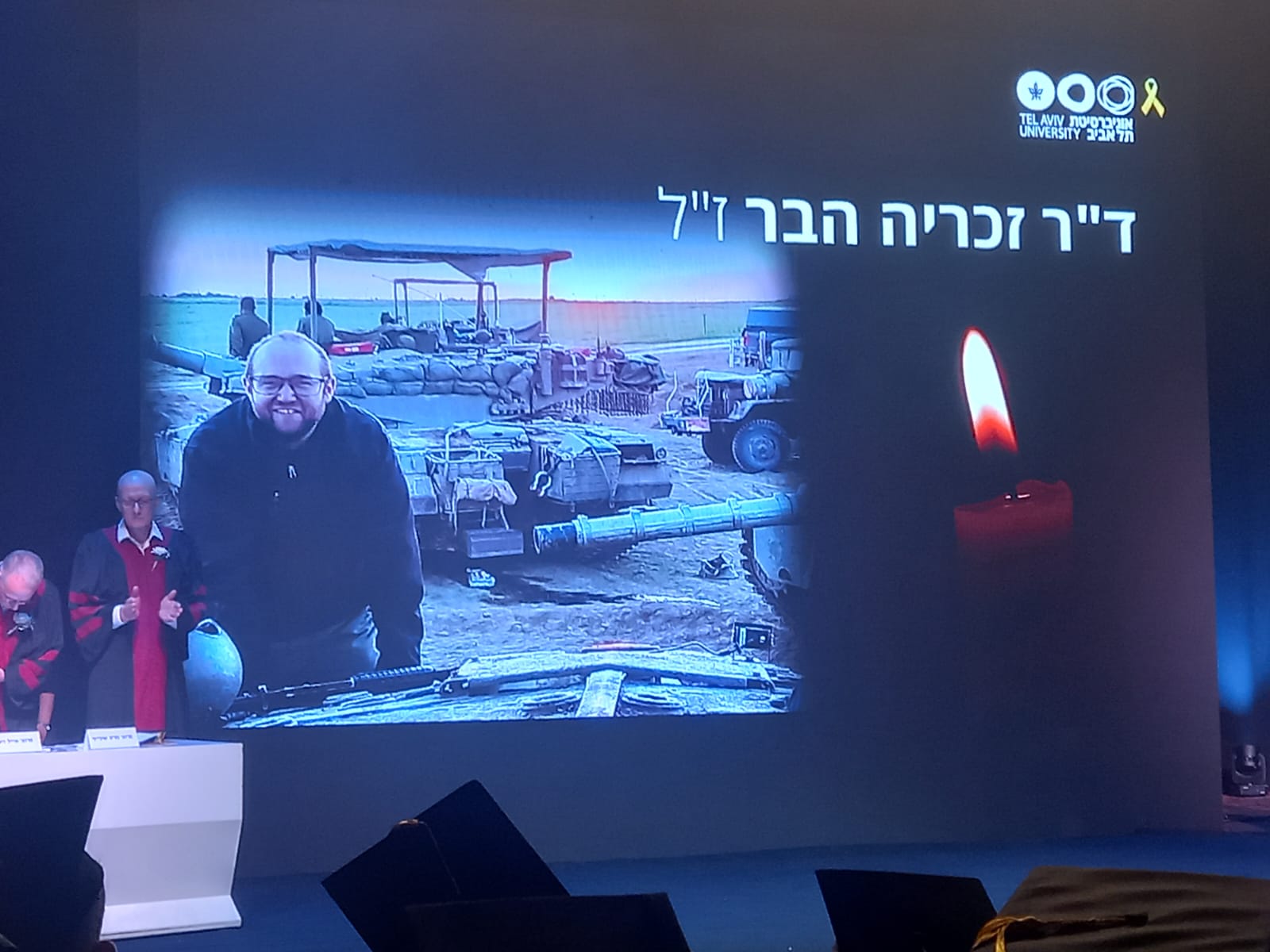
Haber’s doctoral thesis concerned improving the productivity of crops in harsh climatic conditions, Sade said, “a topic that is a priority for plant researchers worldwide.”
“In the future, I would like to explore desert and marine plants, as potential future crops, allowing us to combat intensifying desertification, biodiversity loss and water scarcity,” Haber said in an interview with The Journal of American Society of Plant Biologists in 2021.
Sade said that Haber’s work focused mainly on wild and domesticated wheat and tomatoes.
“He used computational biology, genetic engineering and a variety of measurements,” Sade said. “His important findings were published in first-class journals and have already greatly influenced the field.”
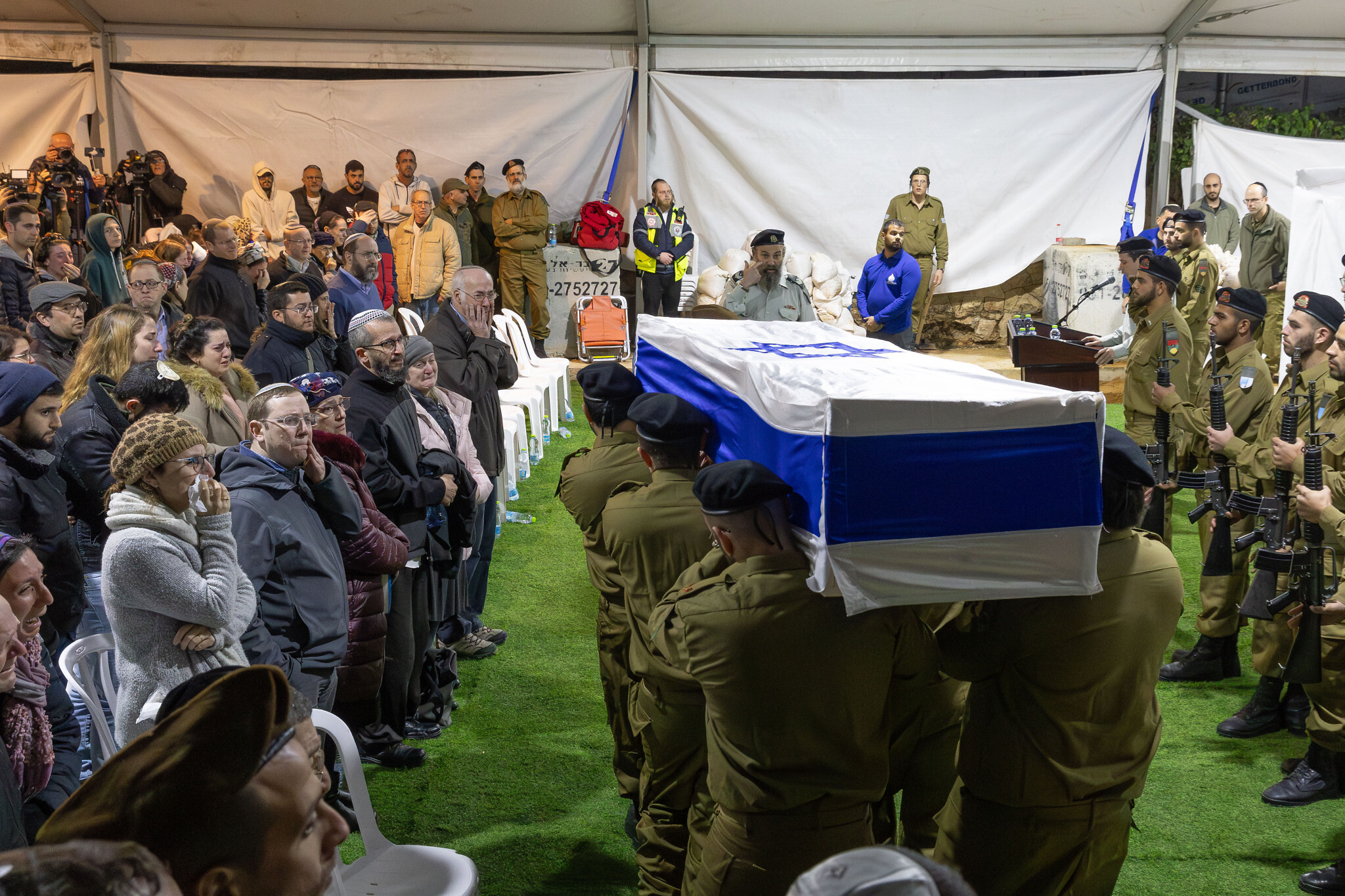
Haber was born in the United States and immigrated to Israel with his family when he was eight. He was the eldest of four brothers.
After high school, he studied at the Hesder Yeshiva Har Etzion in Alon Shvut. He wrote a Talmudic encyclopedia that will be published by the yeshiva.
Following his mandatory IDF service in the Tank Corps, he completed two degrees in Plant Sciences at the Faculty of Agriculture of the Hebrew University in Rehovot.
Haber studied photosynthesis, the process by which plants and algae convert light energy into sugars, said Prof. Shilo Rosenwasser of the Hebrew University, where Haber was his first student.
“He was truly special in so many aspects, and this was reflected in his achievements,” said Rosenwasser. His achievements “are rare for such a young student who is just taking his first steps into science.”
“He had an insatiable curiosity,” Miriam said, “but above all, he was kind.”
In the lab at Tel Aviv University, Haber’s work “will be used for future research,” Sade said.


The Times of Israel Community.