

At Ben Gurion Airport, Israeli soldiers process incoming Ukrainian refugees
New two-step system, aimed at speeding up departure from Eastern Europe, provides for partial checks in countries bordering Ukraine, completion of procedure in Israel
 Add ToI as a Preferred Source on Google
Sue Surkes is The Times of Israel's environment reporter
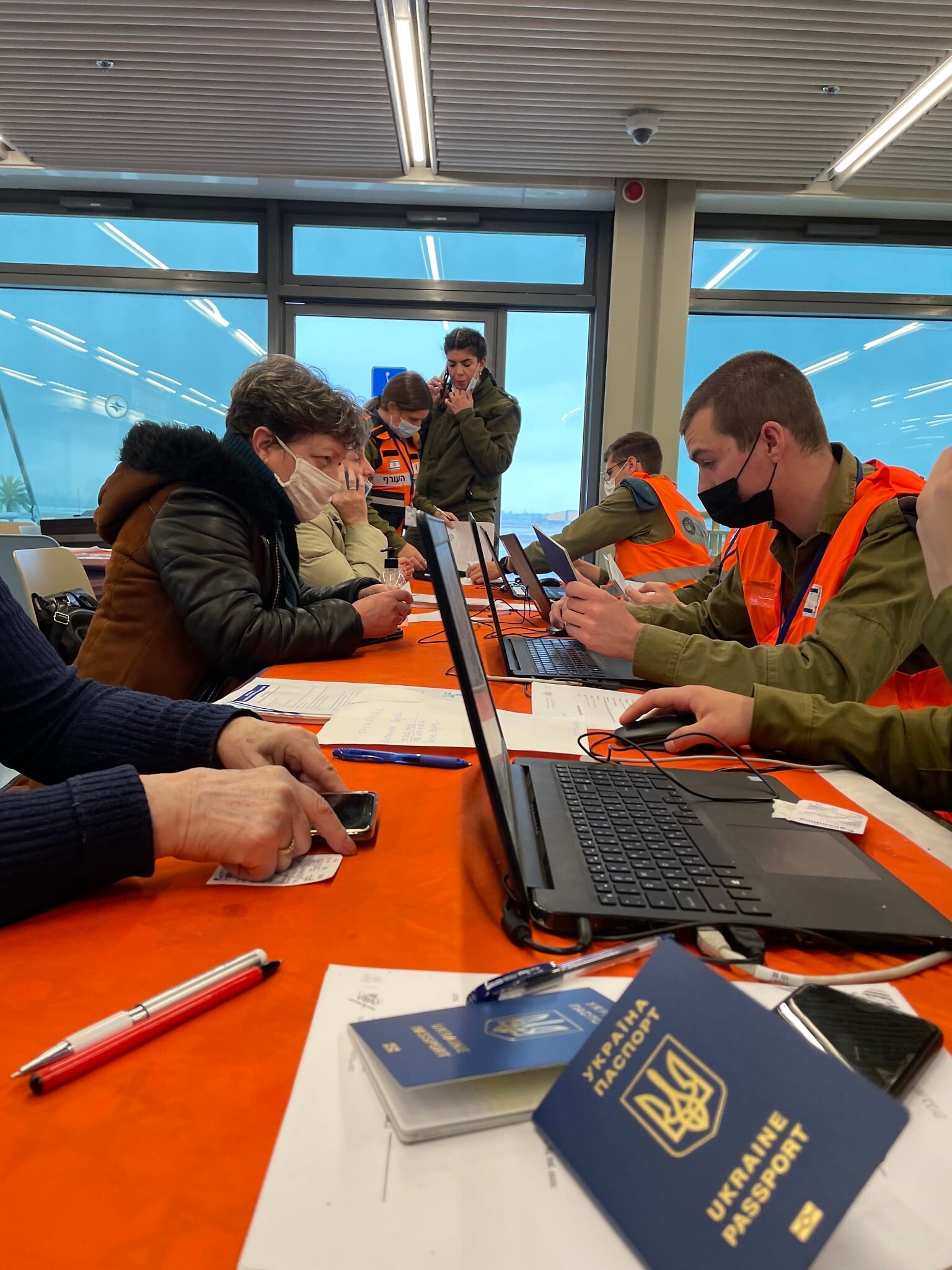
The government has taken over Terminal 1 at Ben Gurion Airport and turned it into a reception center for refugees from Ukraine, manned by the military’s Home Front Command and the Immigrant Absorption Ministry.
Since last Monday, a two-step process has been operating in a bid to clear a bottleneck of applicants for immigration from Eastern Europe.
Whereas previously the whole process of approval had to be completed before the applicant could fly to Israel, the new system, known by officials as “Go, No Go,” allows people to have their documents checked in Europe and to complete the application in the Jewish state.
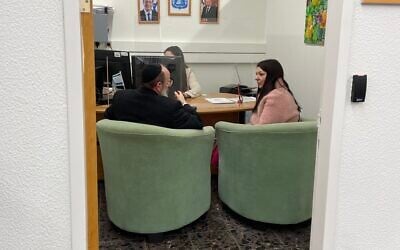
On arrival at Ben Gurion Airport, those who already have permission to immigrate are directed to the Immigrant Absorption Ministry hall, where they receive their new immigrant certificates and an aid basket.
Those who have only completed part of the process are directed to the departure hall of Terminal 1, where they are called in turn to sit opposite Home Front Command soldiers at computer terminals.
The soldiers, Russian- or Ukrainian-speakers, record passport details and inform the new arrivals about the hotels to which hotel they are to be bused. PCR tests are conducted at the airport.
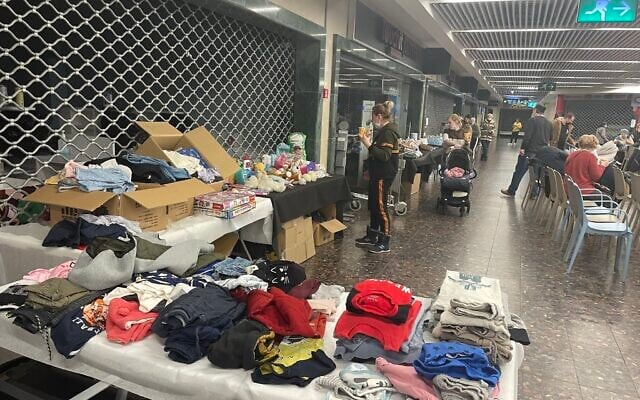
Those arriving to the hall find refreshments and donated toys, games, baby equipment, and clothes for their use. There is also a play area to occupy children while their parents sit with the soldiers.
People who are being picked up by relatives or friends are told whom to contact to continue the process of applying to immigrate.
Ievgen Ornatskyi said that his first feelings on arriving at Ben Gurion Airport from Chisinau in Moldova were “relief.”
A retired mechanical engineer, he left Kyiv with his wife shortly after the Russian invasion.
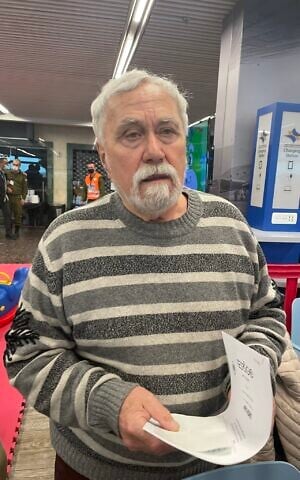
His brother, who is responsible for university students, has remained in Kyiv, even though Russia has occupied the Hostomel airfield, right next to his home, Ornatsky said.
His nephew was on his way to Germany.
“Hesed (a social services organization run by the Joint Distribution Committee) contacted us. We left our car at home and went to the Brodsky Synagogue. There were three buses, which were escorted out by police,” Ornatskyi said.
“We passed cars that had been shot up, barricades against tanks, blocked roads, and checkpoints. There were armed police everywhere.”
The Ornatskyis, whose children live in the US and Germany, have relatives in Israel, but said they did not want to “impose” upon them.
They would go to whichever hotel they were assigned to self-isolate, until their PCR tests results came in, and would then see where they would go.
A Home Command Officer who withheld his name said it was “a great feeling” to be taking part in the arrival of Ukrainian refugees, adding, “It gives me a lot of pride.”






The Times of Israel Community.