

Author reimagines classic Jane Austen with reality TV spin
With an abiding love of Yiddish, Curtis Sittenfeld buries a Jewish sub-plot in ‘Eligible,’ her ‘Pride and Prejudice’ remake that hits the shelves this week
 Add ToI as a Preferred Source on Google
Of the four siblings in the Sittenfeld family, writer Curtis Sittenfeld is the only one who has not been to Israel.
“My younger brother and sister both went on a Birthright trip together,” the New York Times bestselling author of “Prep” and “American Wife” said on a recent phone interview. “And my older sister — a lobbyist in Washington, D.C. – went on a similar trip. I am the only one of the four Sittenfeld children who has not yet been.”
Sittenfeld’s brother, an American politician running for US Senate in the family’s hometown of Cincinnati, describes himself as a “Catholic Jew,” she said, and is involved in the local Jewish community there.
Despite being raised in an interfaith household – her father was Jewish and her mother Catholic — Sittenfeld, 41, identifies as unaffiliated. “Whatever this means,” she said chuckling, “I have a Jewish personality.”
“I do like Yiddish,” said Sittenfeld. “My father is a very verbally clever person and he likes Yiddish words.”
‘I have a Jewish personality’
No Yiddish made its way into Sittenfeld’s latest novel, “Eligible,” a “modern retelling of Jane Austen’s Pride & Prejudice” set to hit bookstores April 19. However, a very minor plotline involves the discovery of one character’s potential Jewish heritage.
While still honoring the original structure and main characters of the 19th century classic, “Eligible” manages to tackle contemporary issues of gender, class, marriage, and financial security. In this version, Chip Bingley, a handsome doctor and the star of a reality TV dating show, arrives in Cincinnati, Ohio. Hearing this news, Mrs. Bennet, mother to five daughters – Jane, Liz, Mary, Kitty and Lydia — has one thing on her mind: scheming how to marry off one of them to the local bachelor. At a Fourth of July barbecue, amiable and attractive Chip takes an immediate interest in Jane. Chip’s friend neurosurgeon Fitzwilliam Darcy is, however, much less charming.
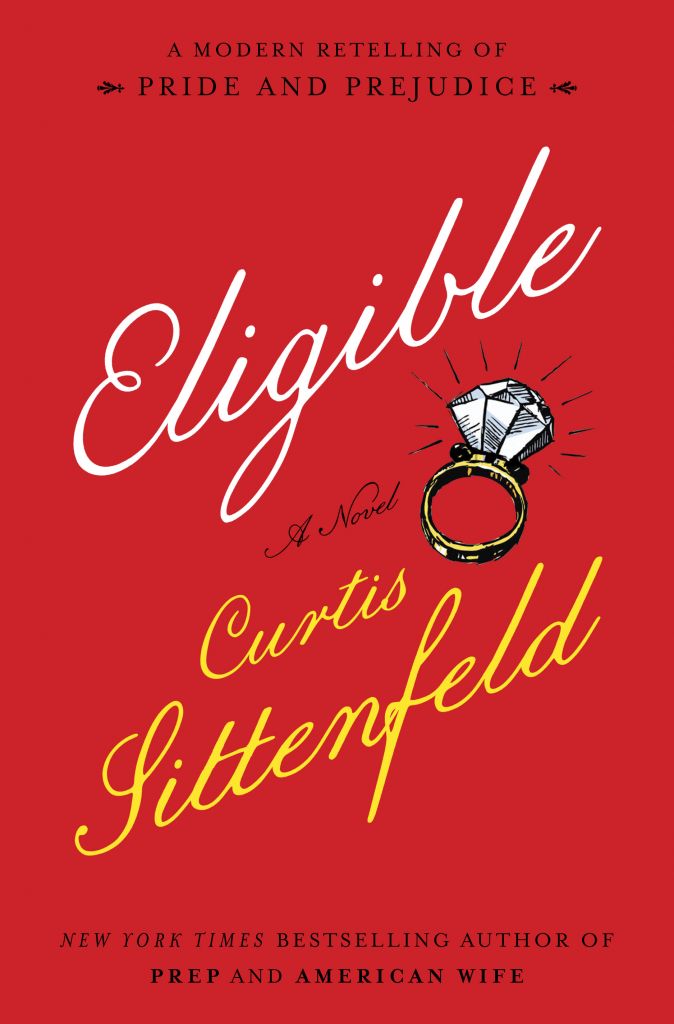
The idea to take on Austen came via a British publisher who invited Sittenfeld to participate in “The Austen Project,” in which six contemporary novelists would each be assigned an Austen novel to reimagine in modern times. Sittenfeld admitted she was a bit intimidated at first, but said, “it turns out when someone offers you such an opportunity, it’s impossible to say no.”
“I thought, ‘Why don’t I reread Pride and Prejudice to see if I can do this, to see if I have ideas that spring to mind,’” Sittenfeld recalled. “The first question — since I was transplanting the story from a 19th century British village to Cincinnati — was why locals would know that this bachelor had arrived in town. Well, if he had been on a reality TV show, everyone who lived in town would know.”
In this version of the Bennett family, Liz is a magazine writer in her late thirties living in New York City. Her older sister Jane is a kind, mild-mannered yoga instructor. Jane and Liz return to their childhood home, a previously sprawling, but now crumbling Tudor in Cincinnati, when their father, Mr. Bennet, suffers a health scare. The entertaining novel captures the spirit of the original, while cleverly weaving in elements (bypass surgery, the Paleo diet, and high tech millionaires) with social commentary (racism, feminism, and gender fluidity) that make the story very much a product of the 21st century.
Mindful that many readers would have read “Pride and Prejudice,” but that this narrative would need to hold its own, Sittenfeld explained she was very influenced by Austen’s original.
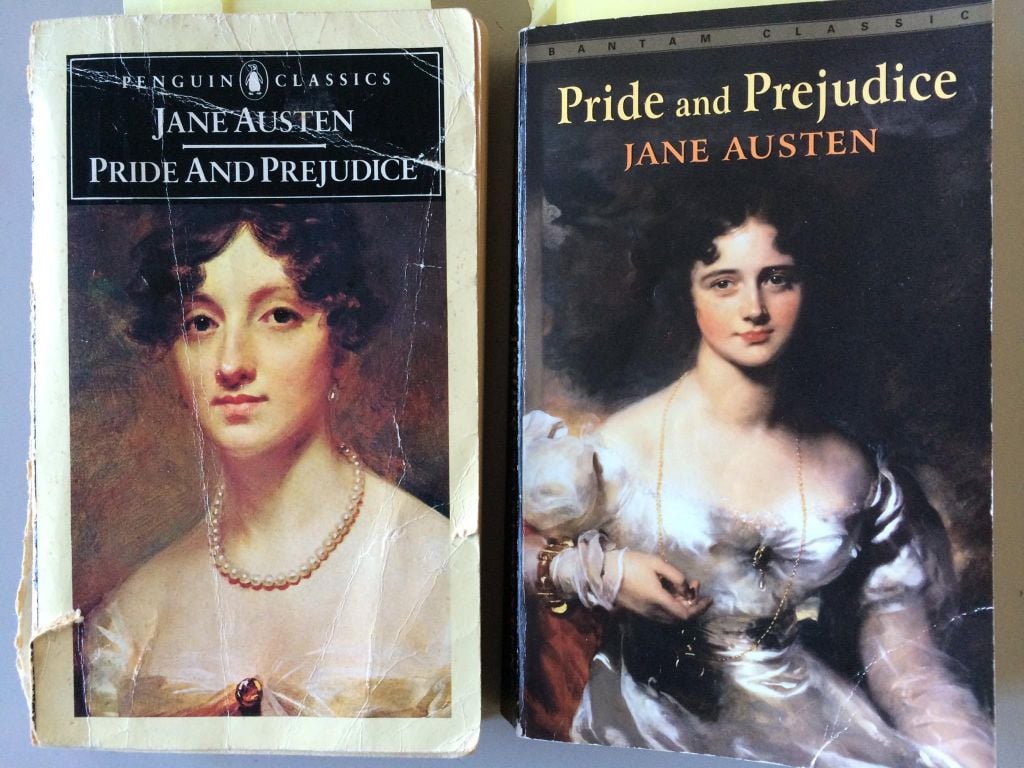
“I tried to create parallels for the most important scenes. I broke down the scene where Darcy rather abruptly declares his love, and examined the dialogue, and my scene very closely mirrors that one. Additionally, I tried to replicate emotions from the original so that if someone, for instance, is scandalized in ‘Pride,’ I tried to make that person scandalized in ‘Eligible.’ But the action that causes those emotions is different because the world is so different.”
Some of the strongest and funniest scenes in the book include the type of sibling interactions those who come from big families might be familiar with. The Bennet girls are often crass and outspoken, especially with each other, and not always behind closed doors.
‘I tried to replicate emotions from the original’
“There is a dynamic among big families,” Sittenfeld replied, when asked if experiences with her own influenced her crafting of the Bennet sisters in “Eligible.”
“There are five Bennet sisters and there are four Sittenfeld siblings. And there is a certain kind of raucousness or exuberance in big families. I tried to capture that. There’s a way, too, siblings with a shared history talk to each other that can be very blunt,” she said.
“Families vary in how crude they are behind closed doors, in terms of what language they use and what subjects they refer to. I will say my family is pretty crude behind closed doors. Not everyone, but, at least 50% of us,” said Sittenfeld.
Sittenfeld said she understands some scenes in “Eligible” may be “polarizing,” but that she intends to write books she would enjoy reading if she hadn’t written them.
“I try to include the things I like and not the things I don’t like. No matter what, I want there to be some intelligence behind the writing. Even if it’s an ostensibly light or superficial subject, it can still be treated with intelligence and humor. That’s the number one thing I value in other people’s work and aspire to include in my own.”










The Times of Israel Community.