

Bank of Israel orders most retail banks closed, special services for elderly
Financial institutions urge public to avoid face-to-face transactions; bankers receive deluge of some 6,000 requests to delay mortgage payments
 Add ToI as a Preferred Source on Google
Luke Tress is The Times of Israel's New York correspondent.
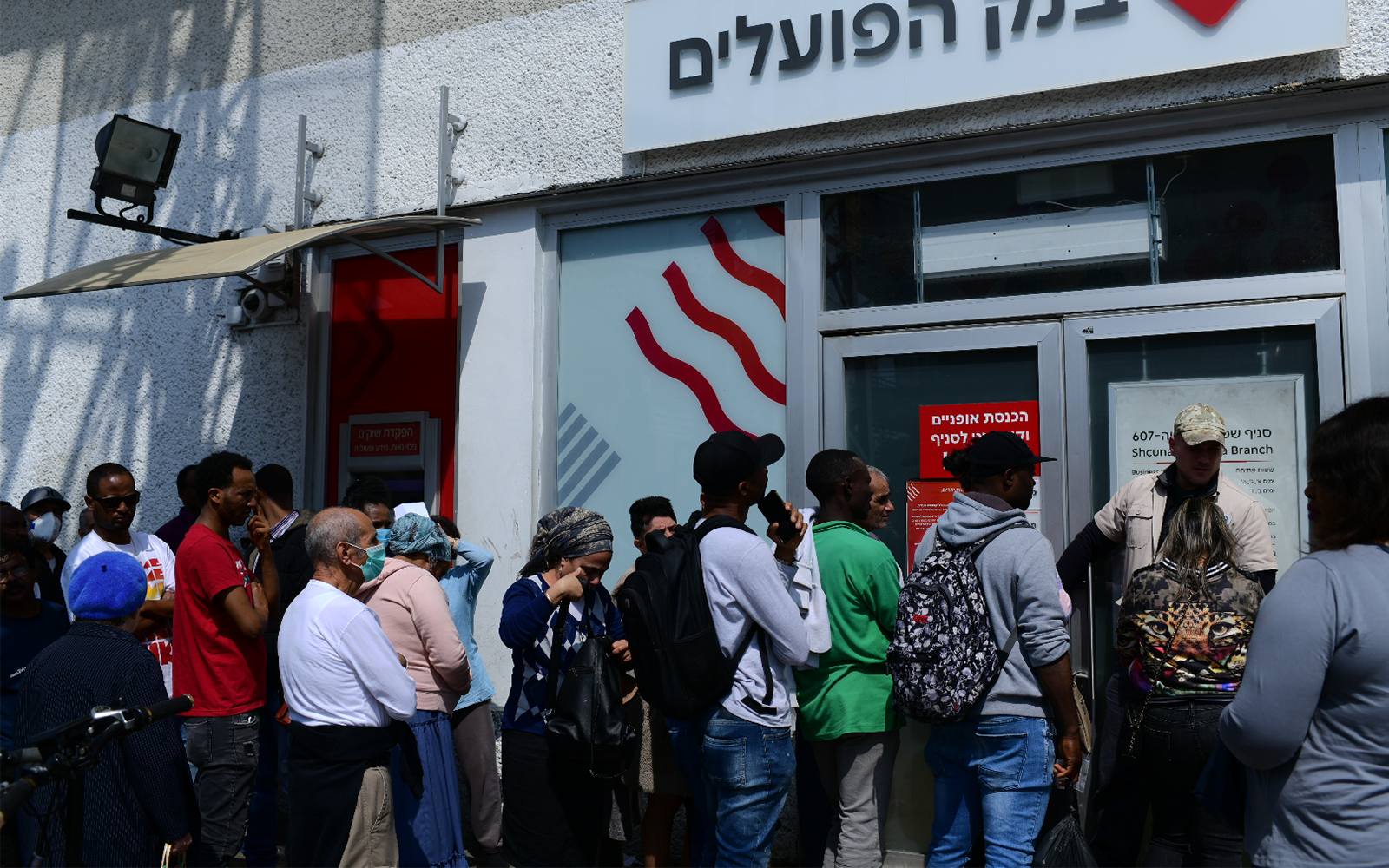
The Bank of Israel on Monday ordered retail banks to close most of their branches to customers and to provide special services to elderly people to help stem the coronavirus outbreak.
Banks were told to provided necessary face-to-face transactions at only “designated branches.”
ATMs will continue to operate at the branches that do not have public reception. At least 25 percent of each bank’s branches should remain open for face-to-face service, the Bank of Israel said.
The banks that remain open were ordered to minimize the risk of infections by regulating crowding, requiring customers to set up appointments and setting up a security station at the entrance.
The Bank of Israel’s supervisor of banks, Dr. Hedva Ber, said the decision had been made following instructions from the Health Ministry “to reduce activity and movement in the public space.”
“The measure will enable continuity in the provision of banking services to the broad public, while maintaining the health of the public and of bank employees,” Ber said.
She called on the public to carry out banking transactions via phone calls, ATMs, smartphone applications, and online.
The banks were encouraged to expand remote working for their employees “while managing the inherent risks.” Israel’s National Cyber Directorate warned last week of an increased risk of cyber attacks as more Israelis work from home.
The banking system employs some 40,000 people.
On Monday banks received some 6,000 requests to delay mortgage payments by several months, about 100 times the number they receive on a normal day, the Calcalist business daily reported. Some 800,000 households, or 30% of all Israeli households, owe mortgage payments.

The Bank of Israel and retail banks announced measures on Sunday to mitigate damage to the economy caused by the coronavirus pandemic.
The bank will be buying government bonds and offering repo transactions to Israeli financial institutions, using government bonds as collateral. The bank did not specify the size of the planned transactions, only saying it would buy bonds “in the necessary quantities.”
The move is intended to increase liquidity and decrease volatility in the markets as spending is curtailed by closed businesses, limited movement, consumer fears and plummeting equities.
The bank said it was responding to high volatility in financial markets in Israel and abroad and that the measures will support price stability, government economic policy and Israel’s financial system.
Retail banks will adjust policy to support the business sector and general public following a request from the Bank of Israel. The banks’ newly announced regulatory leniencies are aimed in particular at small and mid-sized businesses, which rely heavily on bank credit.
The banks will offer a delay in mortgage payments for a few months, loans to small and mid-sized businesses that are seeing liquidity problems, expanded digital services for remote transactions, and courier services for customers in quarantine.
The banks are expected to announce additional measures in the coming days, including easing policies on loans, credit, remote transactions, and ATM cash supplies.
Israel shuttered schools and most businesses over the past week in a bid to stem the spread of the virus in order to avoid overwhelming the country’s health infrastructure.
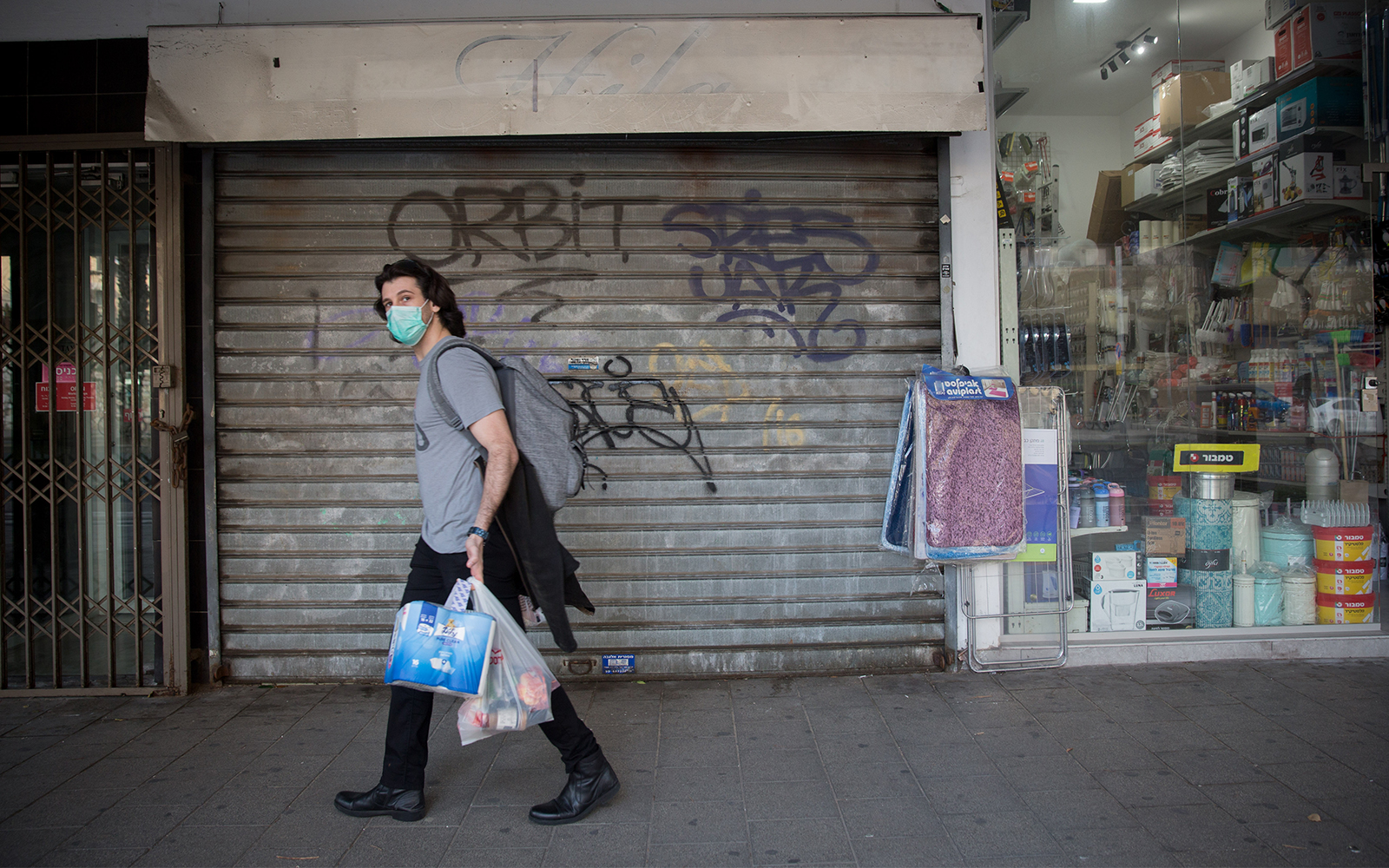
The Finance Ministry reportedly predicted that the partial shutdown would cost the economy some NIS 11 billion ($3 billion) in six weeks.
Similar efforts are underway around the world, especially in the hardest-hit nations of China, Italy, Iran, South Korea and Spain.
Global markets and the Tel Aviv Stock Exchange plummeted on Monday, despite a massive rate cut from the US Federal Reserve on Sunday.
The Finance Ministry reportedly reached an agreement with employer and labor representatives on Sunday to provide some NIS 3 billion ($817 million) relief to businesses. Employers pledged to hold off on layoffs until after the Passover holiday in mid-April.
Following the shutdown announcement on Saturday, Israeli retailers immediately placed thousands of workers on unpaid leave. Restaurants will be allowed to continue offering take out and delivery. The construction sector is expected to remain largely unaffected by the directives.
The Health Ministry on Monday reported an additional 42 cases of the novel coronavirus in Israel, bringing the total number of confirmed infections up to 255.
The majority have light symptoms, while 13 are listed in moderate condition and five are seriously ill, the ministry said, adding that 8,325 tests have been carried out.









The Times of Israel Community.