

Bloodied Egypt at a dead end
After the bitter fighting on ‘Black Wednesday,’ the Muslim Brotherhood has to pick from a number of bad options

 Add ToI as a Preferred Source on Google
Avi Issacharoff, The Times of Israel's Middle East analyst, fills the same role for Walla, the leading portal in Israel. He is also a guest commentator on many different radio shows and current affairs programs on television. Until 2012, he was a reporter and commentator on Arab affairs for the Haaretz newspaper. He also lectures on modern Palestinian history at Tel Aviv University, and is currently writing a script for an action-drama series for the Israeli satellite Television "YES." Born in Jerusalem, he graduated cum laude from Ben Gurion University with a B.A. in Middle Eastern studies and then earned his M.A. from Tel Aviv University on the same subject, also cum laude. A fluent Arabic speaker, Avi was the Middle East Affairs correspondent for Israeli Public Radio covering the Israeli-Palestinian conflict, the war in Iraq and the Arab countries between the years 2003-2006. Avi directed and edited short documentary films on Israeli television programs dealing with the Middle East. In 2002 he won the "best reporter" award for the "Israel Radio” for his coverage of the second intifada. In 2004, together with Amos Harel, he wrote "The Seventh War - How we won and why we lost the war with the Palestinians." A year later the book won an award from the Institute for Strategic Studies for containing the best research on security affairs in Israel. In 2008, Issacharoff and Harel published their second book, entitled "34 Days - The Story of the Second Lebanon War," which won the same prize.
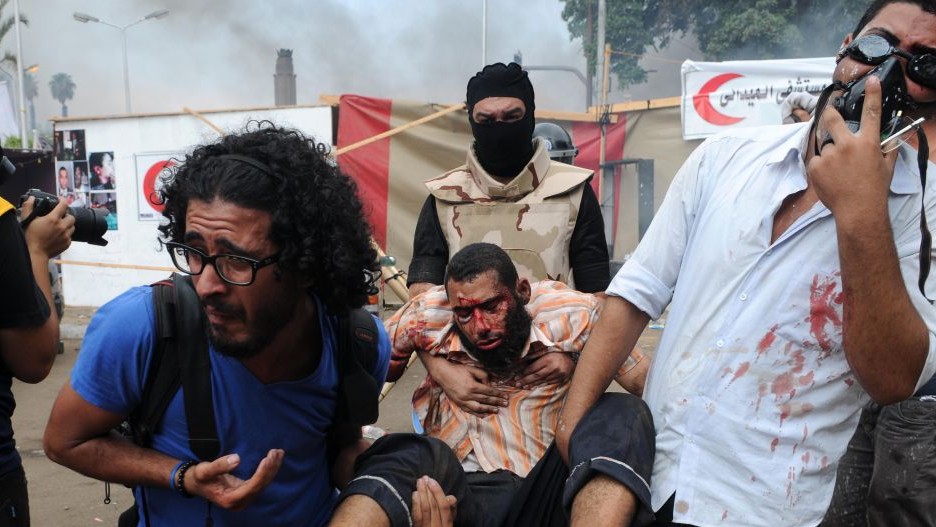
By Wednesday evening, the Egyptian army, along with the police, had managed to accomplish what in the morning seemed like mission impossible: it forcibly cleared all the protesters from Rabaa al-Adawiya Square in eastern Cairo. Earlier, the army cleared the smaller A-Nahda Square, facing Cairo University in the heart of the Egyptian capital. However, the price of the evacuation of the larger square was heavy, perhaps even too heavy, for the fledgling government.
According to the Muslim Brotherhood, during the evacuation of tens of thousands of demonstrators in Rabaa al-Adawiya Square, 2,600 people were killed. Even if that number is wildly exaggerated, several hundred people were killed in clashes with the army and police.
Thus, Defense Minister Abdel Fattah el-Sissi emerged victorious in the battle, and evacuated in relatively short order the Muslim Brotherhood demonstrators. But the campaign is far from over.
The best evidence for this is the resignation of Muhammed ElBaradei, the provisional vice-president, and the criticism from key political figures who supported the ouster of the Muslim Brotherhood just a month and a half ago.
Public support for the military is also expected to wane in the wake of “Black Wednesday.”
It is difficult to determine at this stage how this will affect the stability of the new government. Egypt, after the overthrow of president Mohammed Morsi, remains dependably unpredictable.
Interior Minister Muhammad Ibrahim reported Wednesday night that 43 Egyptian policemen, including 18 officers, were killed in the battles in Cairo. This underlines that at least some of the Muslim Brotherhood members were armed; the army published some of their pictures.
The big question now is how the Muslim Brotherhood will react after this first battle ended in military defeat. It is doubtful that the movement intends to alter its plan to keep demonstrating.
But most of the movement’s leadership is locked up, and the wave of arrests is expanding. If those leaders who remain free choose to continue the clashes, they are condemning Egypt to a long period of instability and bloodshed. But submission to the military’s demands may be unthinkable.
A third possibility is for the Muslim Brotherhood to choose to go back to where they were for decades — underground. This course, fraught with danger, would cancel out the political gains from a year ago. Given the manhunt the government is pursuing against them, however, it may be the least bad option.
The Muslim Brotherhood is hoping that the public will raise its voice and pressure the army to compromise, perhaps even to fire el-Sissi. But given the widespread disappointment with the movement over the last year, and Egyptians’ weariness from revolution and upheaval, it is possible that the Islamists may have to prepare patiently to better exploit another opportune moment down the road, and, at least temporarily, lower the profile of their protest.






The Times of Israel Community.