

Body art bares itself in Beersheba
Tattoos and the human canvases they decorate are the pet project of an artist who’s offering ‘tattoo therapy’
 Add ToI as a Preferred Source on Google
Jessica Steinberg, The Times of Israel's culture and lifestyles editor, covers the Sabra scene from south to north and back to the center

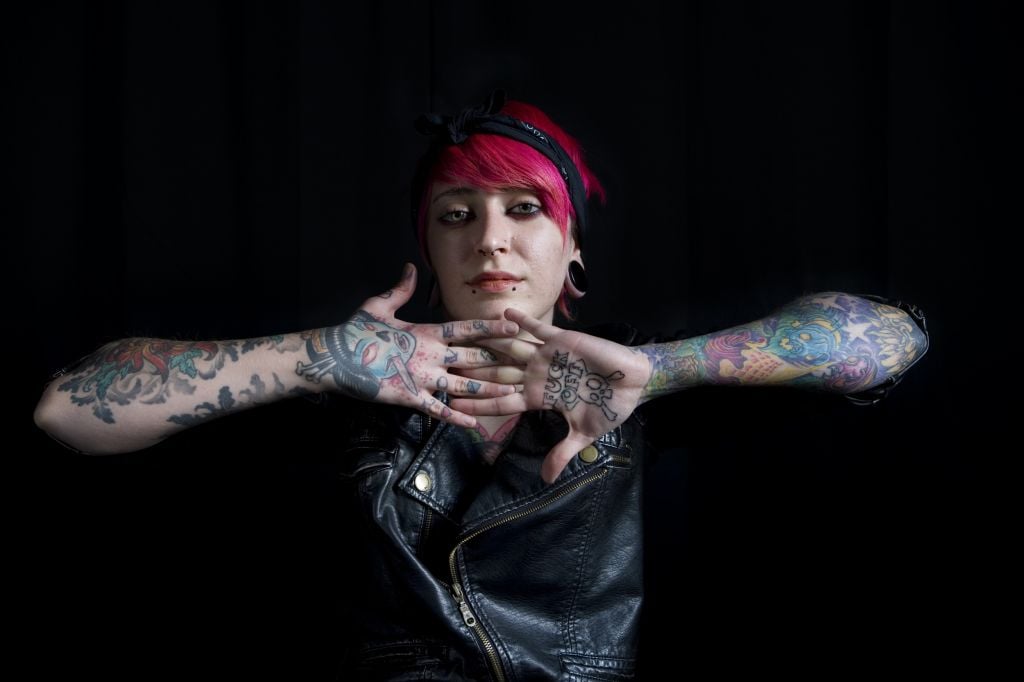
The encounter of ink and flesh is the subject of “Tattoos,” an exhibit that opened Tuesday at Ben-Gurion University of the Negev. It’s likely a first for Israel, according to curator Yasmine Bergner.
“It’s a first step,” said Bergner. “We want to show the Israeli public the depths to which tattooing has insinuated itself in global culture.”
A Bezalel Academy-trained artist and art therapist who turned to tattooing after living in India for two years, Bergner has been researching the history of body art.
“Tattoos are a kind of personal art form, and until 100 years ago they were only done by those on the margins of society,” she said. “But there are also ties to shamanism and rites of passage, and I found that knowledge bringing me back to what I had done earlier, creating a kind of tattoo therapy.”
Bergner enlisted artists who use tattoos as an art form — mostly Israelis but a few from abroad as well — then added an ad hoc collection of photos of BGU students and their tattoos. Her exhibit on the BGU campus was joined by another new exhibit, “The Body,” which opened in tandem on Tuesday at Beersheba’s HaBeer gallery, showing eight video works from the Teutloff Photo & Video Collection about the human body.
The whole subject of tattooing and body art is very current, said artist Haim Maor, one of the two curators of HaBeer, whom Bergner sought out in order to discuss his artwork deconstructing his father’s concentration camp tattoo. “Almost every third person is tattooed; it’s almost viral,” he said.
But despite the general proliferation of tattoos — and the subsequent move away from them as some people are now removing their ink with laser surgery — Israelis have been slower to tattoo themselves, possibly due to the Torah’s prohibition against marking one’s body.
“You can’t forbid it if it never existed,” pointed out Bergner. “I wanted to see if I could find a place in Judaism that could accept tattooing, seeing how everyone can engage in it as a private ritual.”

It’s a touchy subject, and one that Bergner is handling carefully, she said, given her own secular background and a mostly unstated desire to find some kind of allowance for tattooing in Jewish culture. She isn’t the first to venture into this area; a much discussed New York Times article last fall covered another Israeli tattooing trend: children and grandchildren of Holocaust survivors who had their relatives’ concentration numbers inked into their own arms as a kind of memorial.
Bergner said she did find proof that tattooing existed in ancient Jewish times, possibly during the time the Kabbalah was written, or when there was a broader sense of worship among the Jewish people, she said.
“I wanted to find a place where there could be more acceptance, a softer, more feminine understanding of it,” she said.
“Tattoos: Tattoo Representations in Contemporary Art,” Senate Gallery, Ben-Gurion University of the Negev.
“The Body,” HaBeer, 19 Trumpeldor Street, Old City, Beersheba.
Closes January 31.
“Tattoo: The History of Humanity through Pain and Permanence,” a lecture by Dr. Lars Krutak, a tattoo anthropologist from the Smithsonian Institution: National Museum of Natural History, Washington DC, will be held on November 12, 4 pm, Building 18, Room 004, Ben-Gurion University of the Negev.








The Times of Israel Community.