

Bolstered elections committee staff to prowl polling stations with cameras
Amid warnings of vote disruption, 5,000 specially appointed monitors will now be able to film without first requesting specific permission from Central Elections Committee
 Add ToI as a Preferred Source on Google
Raoul Wootliff is a former Times of Israel political correspondent and Daily Briefing podcast producer.
Speaking Saturday to over a thousand Blue and White activists, party leader Benny Gantz repeated a charge he has made several times on the campaign trail in recent days, warning that Prime Minister Benjamin Netanyahu “is going to disrupt election day.”
“He has done it in the past, and will do it by more sophisticated means on this election day,” Gantz said, without providing details. He was apparently referring to past attempts by Likud to chill voter turnout in Arab communities by placing hidden cameras in voting booths, or pushing the Central Election Committee to place its own devices. “We are preparing for every scenario and I urge you to be vigilant on the ground and to report back any suspicion of forgery and deception. It is important.”
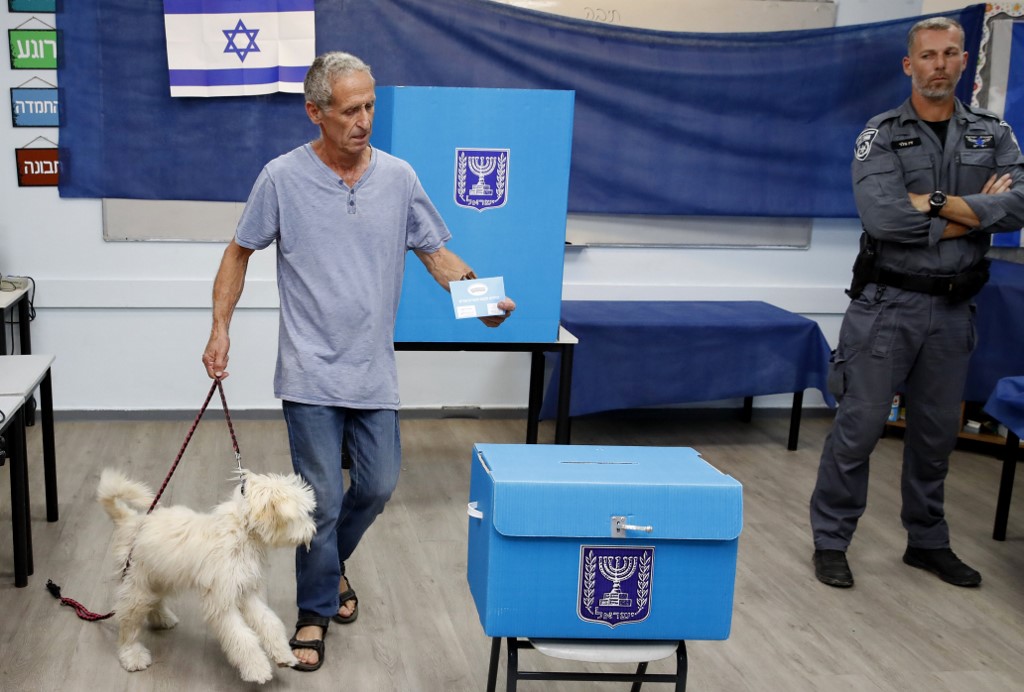
To prevent any irregularities, and claims of them, the Central Elections Committee has once again mapped out supposedly problematic polling stations around the country and will be sending monitors, equipped with cameras, to them.
As in September’s election, the monitors are to film and report any unusual events during voting or the later counting of the results. In total, the committee will deploy 5,000 representatives to monitor the vote nationwide, an increase of 2,000 from the September vote.
Unlike September, however, the monitors will now be able to film without first requesting specific permission for the Central Elections Committee, a limitation criticized during the last election and lifted by the new chair of the committee, Supreme Court Justice Neal Hendel. According to Hendel’s ruling on the matter, they may film whenever there is “a reasonable fear of material harm to the integrity of the elections.”
The issue of cameras in polling booths initially came up on the first of the three election days in 2019-2020.
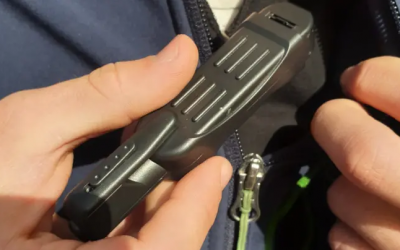
On the April 2019 election day, Likud activists brought hidden bodycams into 1,200 stations in Arab areas. The political marketing firm that masterminded the operation boasted on Facebook that the move had helped depress Arab turnout, which had indeed declined in the April race. Likud itself denied that was the reason for the cameras, and the firm quickly deleted the post.
The Central Elections Committee, charged by law with managing Israel’s parliamentary elections, barred Likud from taking similar action in September, leading Netanyahu to attempt unsuccessfully to push a bill through the Knesset that would have allowed party observers to bring cameras into polling stations.
But while banning camera use by activists, the elections committee decided to set up its own body of monitors, equipped with cameras, who were sent to watch proceedings at certain polling stations suspected of irregularities.
At the same time, the day before the September vote, Netanyahu’s Likud party installed dozens of cameras outside polling stations in Arab cities, and then leaked that fact to the media, apparently as part of a bid to discourage members of the minority group from voting.
The efforts were widely perceived as part of Likud’s campaign strategy targeting right-wing fears of Arab influence, with Netanyahu warning throughout the campaigns ahead of the two previous national elections that anti-Zionist Arab political factions were poised, through their purported influence over Blue and White leader Gantz, to gain control of Israel’s government.
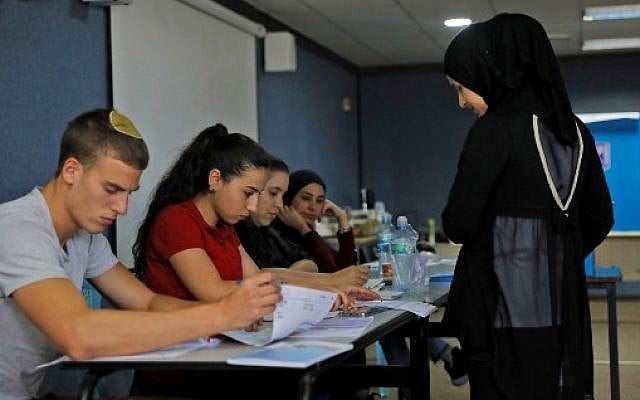
However, the campaign appeared to backfire, according to analysts and Arab leaders. Overall Arab turnout rose sharply between April and September, by almost one-fifth, to 59.1 percent of the community’s eligible voters, a figure still 10 points short of the 69% overall turnout. The percentage of Arab voters who voted for Arab-majority parties also rose, from an estimated 71% in April to 81% in September — though some argued this was due to the Arab factions’ decision to join together in a single Knesset slate between the two votes.
Likud’s claim of irregularities in the Arab community vote has not been substantiated by evidence, and a police investigation into voter fraud has found only minimal tampering, with some known cases of fraud benefiting Likud itself or the ultra-Orthodox Shas party.
Times of Israel staff contributed to this report.








The Times of Israel Community.