

Breaking with PM, 74% of Israelis back war-ending deal to free all hostages — poll
Nearly half of respondents to Channel 12 survey say Netanyahu’s insistence on phased deal stems from political rather than security reasons
 Add ToI as a Preferred Source on Google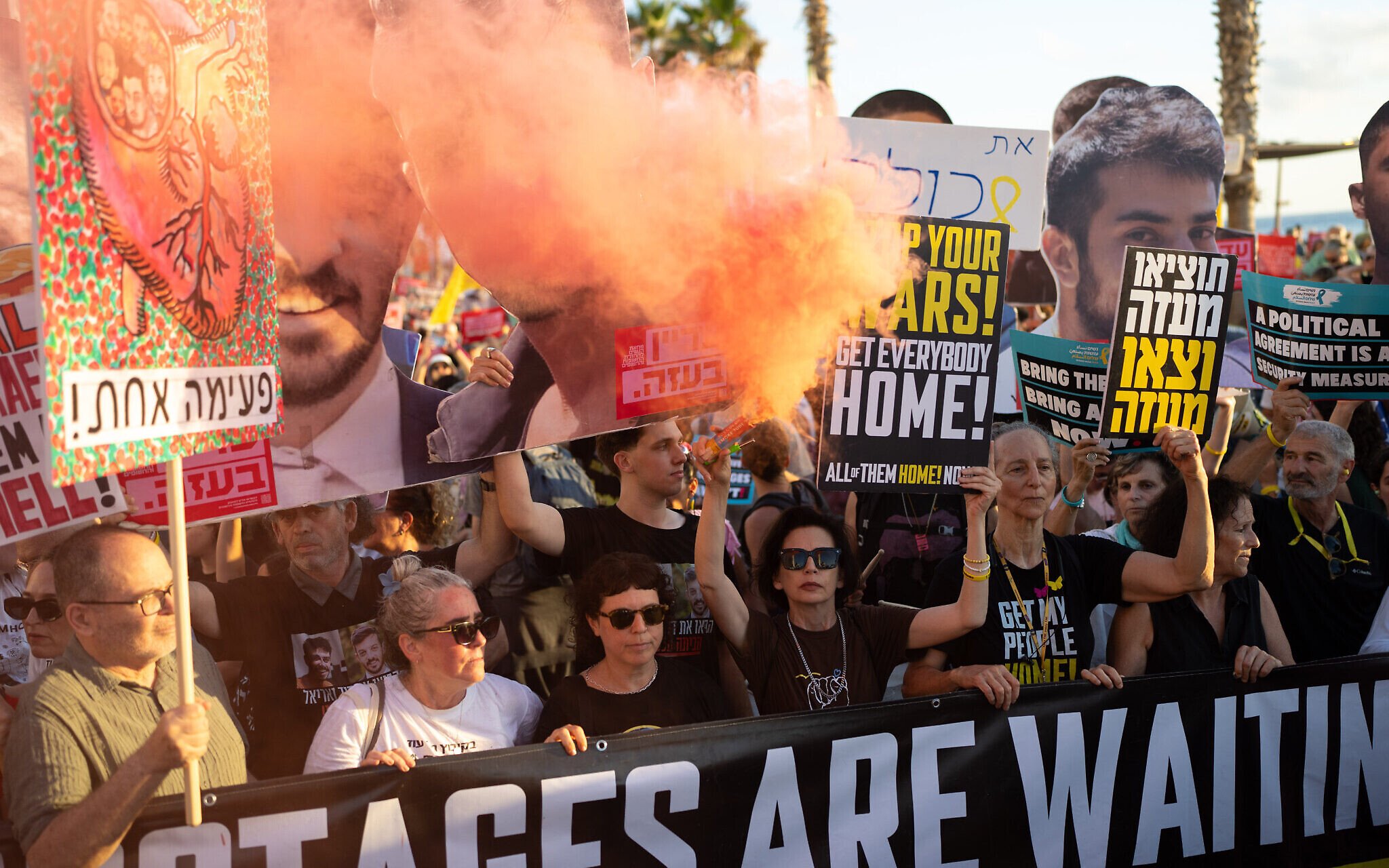
Seventy-four percent of Israelis, including 60% of people who voted for Prime Minister Benjamin Netanyahu’s coalition, back an agreement with Hamas that would release all the hostages at once in exchange for an end to the Gaza war, according to a poll aired Friday on Channel 12.
Just eight percent of respondents backed the deal being advanced by the prime minister, which would release half of the hostages and set the stage for negotiations on a permanent ceasefire and the release of the rest of the hostages. Twelve percent rejected any deal that includes an end to the war, and six percent said they didn’t know.
Asked why Netanyahu was insisting on a phased hostage deal, 49% of respondents said his reasons were political, 36% said his reasons were security-oriented, and 15% said they didn’t know.
Netanyahu said in a meeting with hostage families in Washington on Wednesday that a comprehensive deal to bring back all the hostages at once was “never an option,” according to the Kan public broadcaster.
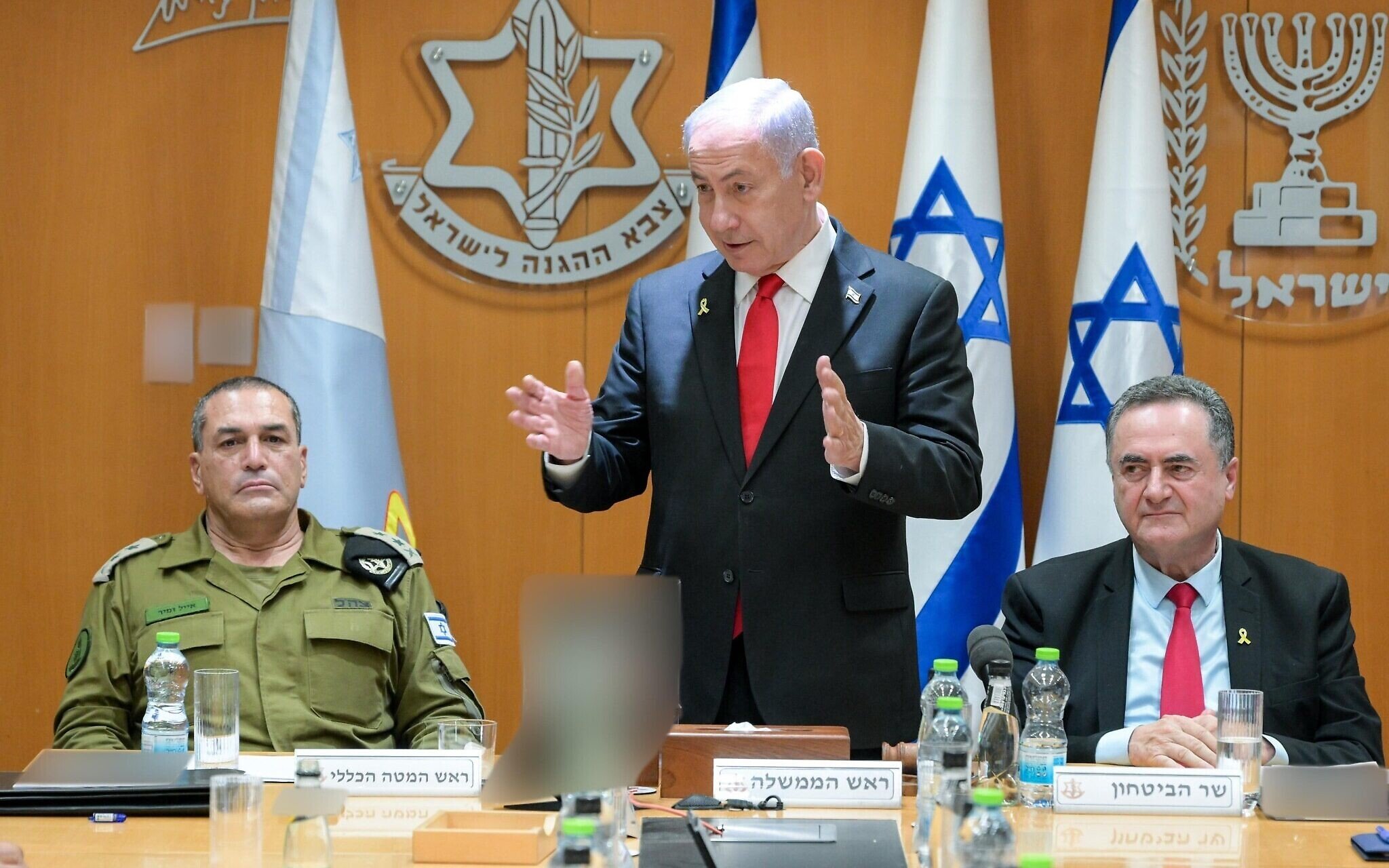
Meanwhile, 55% of respondents to the Channel 12 poll said Netanyahu’s handling of the war in Gaza was bad, as opposed to 41% who said it was good and four percent who said they didn’t know. Asked how they rated Defense Minister Israel Katz’s handling of the war, 52% said it was bad, 37% said it was good, and 11% said they didn’t know.
IDF Chief of Staff Lt. Gen. Eyal Zamir, who has reportedly clashed with the government over its conduct of the war, was the only one of the three top officials to have a positive margin: 62% of respondents rated his handling of the war as good, 24% as bad and 14% said they don’t know.
Amid the possibility that Netanyahu could resign as part of a plea deal that would end his years-long corruption trial, 55% of respondents, including 27% of coalition voters, said he should take that option, while 34% said he should stay on and contest the next election and 11% said they didn’t know.
Asked what would determine how they vote in the next election, 27% of respondents said the economy and price of living; 26% said the Gaza war and the Hamas onslaught that caused it; 14% said Haredi enlistment to the IDF, or lack thereof; 13% said Israel’s internal divide; 8% said the Iranian nuclear program, which Israel heavily damaged in last month’s 12-day war with Iran; and 12% said they didn’t know.
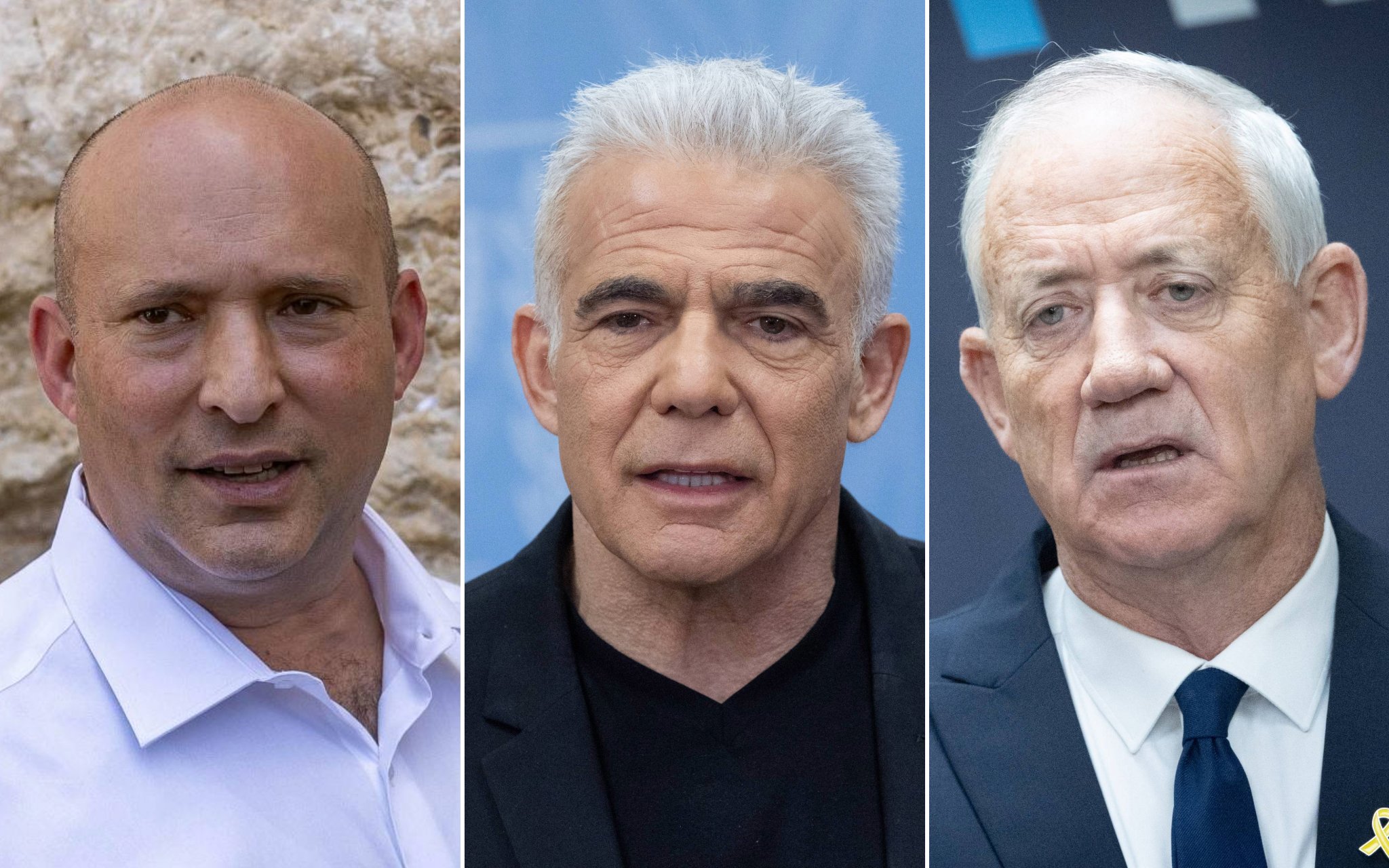
Asked who they think is best suited to lead the anti-Netanyahu bloc in the next election, 35% of opposition voters said former Prime Minister Naftali Bennett; 13% said Blue and White chair, the centrist former IDF chief Benny Gantz; 12% said current Opposition Leader Yair Lapid, head of the centrist Yesh Atid party; 12% said Avigdor Liberman, head of the hawkish-secularist Yisrael Beytenu; 11% said Gadi Eisenkot, a former IDF chief who recently left Gantz’s party; and 6% said former IDF deputy chief Yair Golan, head of The Democrats, an alliance of two smaller left-wing parties.
Though political blocs in Israel — as opposed to the factions that constitute them — don’t formally have leaders, parties that wish to form a governing coalition after an election need to coalesce around a single candidate for premier. The Channel 12 survey indicated that a plurality of opposition voters would like for that candidate to be Bennett.
Bennett’s new party, tentatively called Bennett 2026, completed its registration process last month. The former premier has in the past run to Netanyahu’s right, but was rejected by many right-wingers after forming a short-lived government in 2021-2022 that included left-wing and Arab parties.
The next election is scheduled for October 2026 if the government doesn’t fall apart until then. Opposition figures have demanded new elections over the government’s failure to avert the Hamas onslaught of October 7, 2023, which sparked the war in Gaza.
Within the coalition, Netanyahu’s ultra-Orthodox partners have threatened to trigger new elections due to the government’s failure to codify Haredi yeshiva students’ exemption from military service. On the other hand, his far-right coalition partners have threatened to bring down the government if he ends the war in Gaza.
Netanyahu has publicly vowed to keep fighting until Hamas is vanquished, but is reportedly working with US President Donald Trump on a plan that would end the war, re-commit Israel to a two-state solution to the Israeli-Palestinian conflict, and normalize Israeli-Saudi and Israeli-Syrian relations.
The Channel 12 survey was conducted by pollster Mano Geva’s Midgam firm in cooperation with the iPanel firm. The network did not provide a sample size or margin of error.



The Times of Israel Community.