

Buried trunk at Pittsburgh synagogue reveals past and future of Reform Judaism
Cataloged and preserved sermons from over a century ago, found underground, add detail to the influence of Rabbi J. Leonard Levy, whose progressive ideas were ahead of his time
 Add ToI as a Preferred Source on Google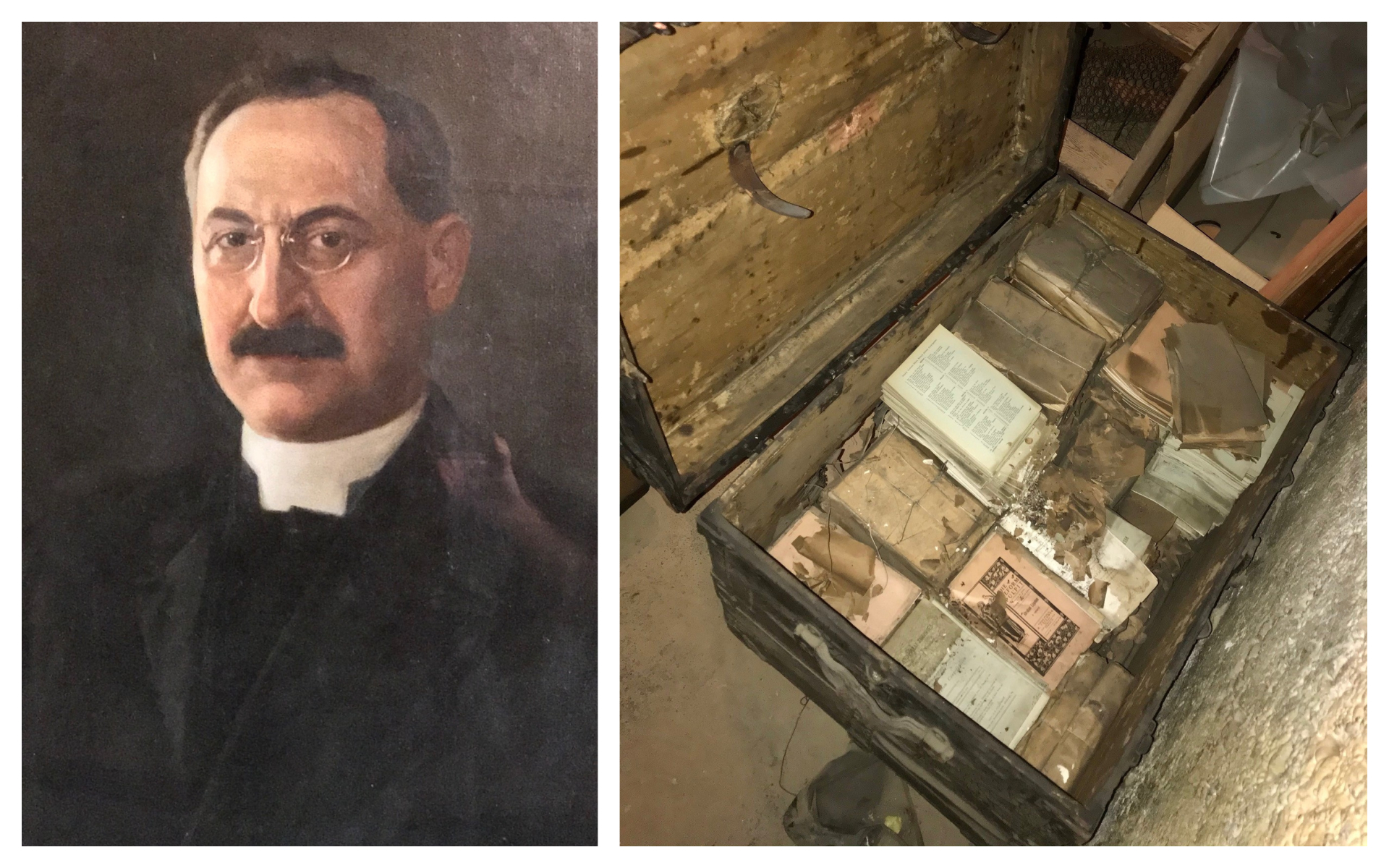
PITTSBURGH JEWISH CHRONICLE — Matthew Falcone noticed something unusual during the final walk-through of a recent sewer replacement project at Rodef Shalom Congregation.
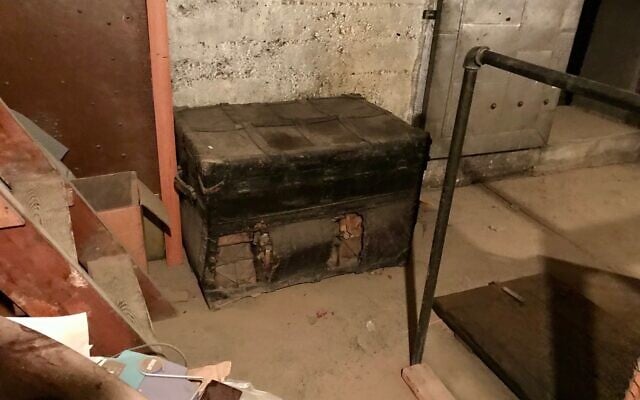
Falcone, the congregation’s new president, spied a large steamer trunk, battered and covered in dust. Partially obscured by blankets, it sat on a subterranean floor of the synagogue, boxes piled around it.
When the large, early 20th-century trunk was opened, Falcone discovered it was filled to the brim with packages wrapped in brown paper.
“They were absolutely filthy, covered in what I’m assuming is a century’s worth of coal ash,” he said.
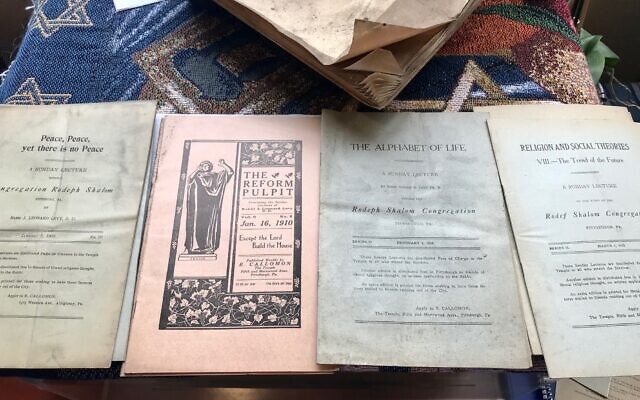
When several of the packages were taken from the dark basement to be examined in better light, Falcone was surprised to see they contained the sermons of Rabbi J. Leonard Levy, who served the congregation from 1901 until his untimely death in 1917.
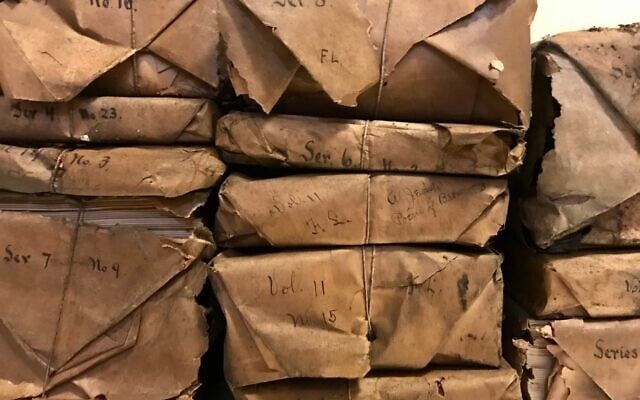
Each package was cataloged, marked by volume and series.
“Somebody had put a tremendous amount of thought and care into trying preserve them,” said Falcone.
He also noticed something interesting about the trunk’s location in the sewer: It sat below the congregation’s ark and bimah on the floor above.
“It’s fascinating to think that just when you assume you know every corner of the building and what’s there… this has been a total revelation,” Falcone said.
The trunk and its contents are now being studied by Rodef Shalom’s archivist, Martha Berg.
To date, Berg has made her way through the first third of the large container. What she has found so far has been mostly duplicate copies of sermons. The archivist said she already had 399 of Levy’s sermons in her database; of all the newly found sermons, she added just one, bringing the total to the rounder 400.
As part of Levy’s contract, Berg explained, the congregation published pamphlets that contained all his sermons during his tenure at the synagogue.
“That was a normal thing, for rabbis to be published,” she noted.
Berg said she had been fascinated by the rabbi for years because of his progressive stance on social justice issues in the early part of the 20th century, and the fact that he was a pacifist.
“Like most rabbis, he would preach on current topics,” she said. That one newly discovered sermon was about women, written during a time when the rabbi was transitioning from a more traditional perspective on women’s roles toward women’s rights, “which later on, in the 19-teens, he was quite active in. So, I think it’s significant,” Berg said.
Cataloging what was stored in the chest might seem a lot of work for a little reward, said Berg, but it helps to paint a more complete picture of the rabbi’s time at the synagogue.
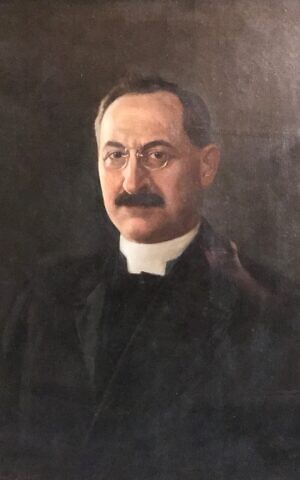
“Rabbi Levy was really significant in Reform Judaism in the early 20th century,” she said. “He was probably one of the four or five best-known rabbis at that time in the US, and had an international reputation.
“Now,” Berg continued, “no one knows very much about him. I think that anything we can do to resuscitate his reputation and tell new stories about him is really valuable.”
Noting its proximity to the ark, Rabbi Aaron Bisno, the congregation’s senior rabbi, compared the find to the works kept at the Cairo Genizah — a repository of some 400,000 Jewish manuscript fragments and holy books that contained the name of God and therefore couldn’t be discarded under Jewish law.
He noted that Levy led the congregation through unsure times, and was “the rabbi who would move them from downtown to this property east of the city — it was a big gamble to move east,” Bisno said.
Bisno surmised that Levy and the congregation may have been mirroring the messaging of the early Reform movement, which was establishing the next iteration of Judaism.
“My definition of the Torah is that it’s the best efforts of the Jewish people at addressing and describing the human condition,” he said. “Arguably, their idea was the latest sermon is also part of Torah writ large, the newest interpretation.”
In addition to Levy’s stance on social issues, Bisno said, the congregation may have contributed in more subtle ways to the position of Reform Judaism in America: Rodef Shalom’s sanctuary faces north rather than toward Israel, as had been the tradition.
“In some ways, theologically, the early Reform movement was saying, ‘We are in the Promised Land, we’re no longer orienting ourselves toward Jerusalem. Our aspiration can be reached here,’” said Bisno.









The Times of Israel Community.